


Mexico remains a high-violence country in global terms, yet safety conditions vary sharply between regions and cities. For expats and digital nomads, the central question is not whether Mexico is safe in the abstract, but which specific urban areas currently present comparatively lower risks and more predictable security environments. This briefing outlines the national context and highlights cities that, as of early 2026, stand out for relatively stronger safety indicators and more manageable risk profiles.
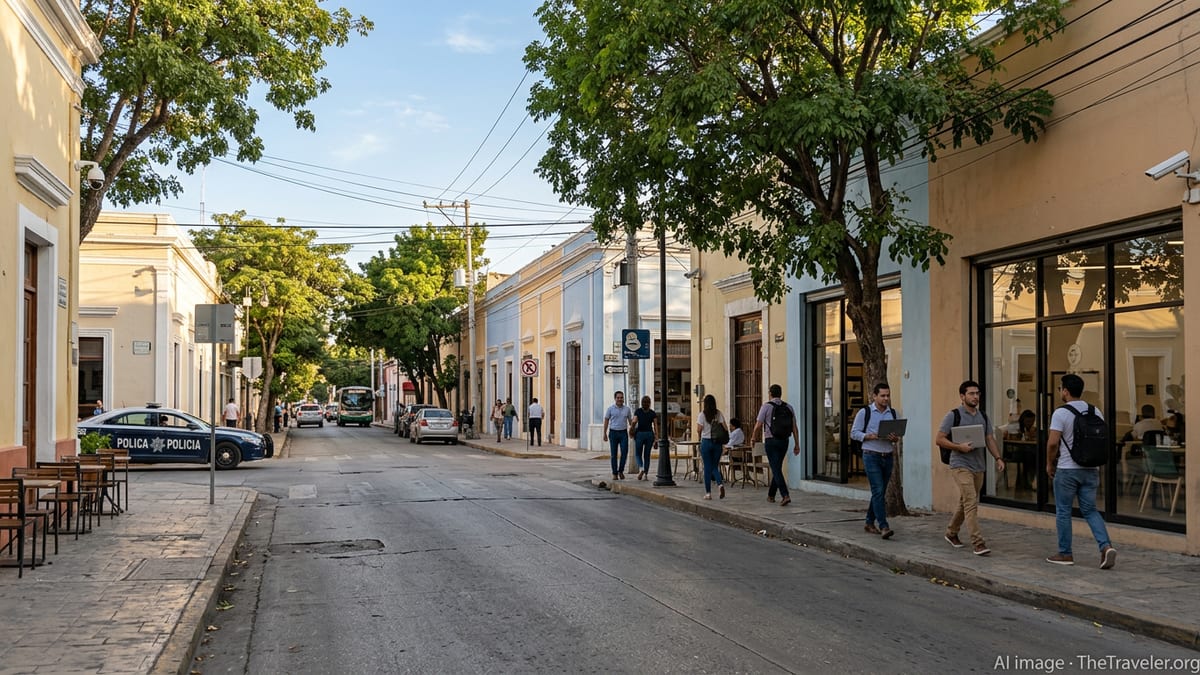
National Security Context: Why City Choice Matters
Mexico’s national homicide rate has declined in recent years but remains high by OECD standards, with official figures indicating around the mid-to-high teens per 100,000 inhabitants in 2025. This is significantly above typical Western European levels and broadly comparable to or higher than many major United States cities. At the same time, violence is highly concentrated in specific states and corridors affected by organized crime and drug trafficking.
Official statistics and independent analyses consistently show strong intra-country variation. Some states, such as Colima, Guanajuato and parts of Baja California, register very high per capita homicide rates, while others, notably Yucatán and certain central regions, report rates several times lower than the national average. For relocation planning, this means that safety assessments must be granular and city-specific rather than based on national-level narratives.
Data quality also warrants caution. Differences between federal, state and independent counts of homicides and disappearances indicate underreporting and classification issues in some areas. For expats and digital nomads, the practical implication is that formal crime rates should be interpreted alongside on-the-ground risk signals such as visible policing, local incident reporting, and neighborhood-level reputation.
In this context, identifying the safest cities in Mexico is less about finding places without risk and more about isolating urban areas where violent crime rates are comparatively low, day-to-day security is predictable, and risks are more aligned with common urban concerns such as petty theft rather than systemic violence.
Methodology for Identifying Safer Mexican Cities
Determining which cities in Mexico are “safest” for foreign residents requires combining several data points rather than relying on a single ranking. Commonly used inputs include official state and municipal crime statistics, national victimization and public safety perception surveys, and international peace or security indices focused on Mexican states. These sources are updated regularly but often lag by several months to a year.
Key indicators typically considered for city-level safety assessments are homicide rate per 100,000 inhabitants, reported rates of robbery and assault, trends in extortion and kidnapping, and the presence or absence of large-scale organized crime confrontations. For expats and digital nomads, these macro indicators should be cross-checked against micro-level factors such as safety of central neighborhoods, reliability of public and private transport, and presence of established foreign communities.
Perception surveys conducted in Mexico’s main urban centers regularly identify large differences in how residents feel about walking after dark, using public transport, or allowing children to move around unaccompanied. Cities that combine relatively low violent crime rates with high perceived safety and visible investment in security infrastructure are generally treated as better candidates for relocation.
Based on recent data and consistent multi-year trends, a number of cities repeatedly appear in analyses and expert commentary as relatively safer environments for foreign residents. These include Mérida, parts of Mexico City, Querétaro, Puebla, Aguascalientes, and selected mid-sized cities in regions with comparatively low organized crime activity. The following sections examine these locations from a security-only perspective.
Mérida and Yucatán: Benchmark for Urban Safety
Mérida, capital of the state of Yucatán, is frequently cited as one of the safest large cities in Mexico. Yucatán as a state has repeatedly reported the lowest or among the lowest homicide rates nationally in recent years, with firearm-related homicides per 100,000 inhabitants often dozens of times lower than in the most violent states. Public data and independent analyses describe violent crime as relatively rare, with local security concerns more focused on property crime and traffic incidents than on assault or extortion.
Security infrastructure in Yucatán has benefited from sustained investment, including expanded surveillance systems, additional patrol vehicles, and coordinated state and municipal policing. Mérida’s central and northern neighborhoods, where most expats and remote workers reside, are characterized by strong residential presence, a visible police profile in commercial corridors, and relatively high night-time foot traffic. Residents and long-term foreign communities commonly report feeling comfortable walking in many areas after dark, a perception not shared in many other Mexican cities.
For digital nomads, Mérida’s security advantage lies mainly in consistency. While petty theft exists, the likelihood of exposure to armed robbery or organized-crime-related incidents is generally considered low in comparison with much of the country. That said, the wider peninsula region still requires standard precautions on intercity roads, particularly at night, and isolated rural areas should not be assumed to share Mérida’s urban security profile.
In practical terms, Mérida functions as a benchmark: if a prospective destination in Mexico does not meet or approach Mérida’s indicators on homicide rate, safety perception and visible policing, it should typically be classified as a higher-risk option for long-term foreign residents.
Mexico City: Safer Districts Within a Megacity
Mexico City is both a national capital and one of the world’s largest urban areas, which makes its security profile complex. City-level homicide rates have fallen significantly from peaks earlier in the decade and now sit well below the national Mexican average, and broadly in line with or below some large United States cities. However, risk is highly uneven between boroughs and even between adjacent neighborhoods.
Central and west-side districts such as Cuauhtémoc, Miguel Hidalgo and Benito Juárez, where most international offices, co-working spaces and expat neighborhoods are located, benefit from dense policing, high commercial activity and extensive surveillance networks. These areas see relatively lower rates of violent crime compared with outlying eastern and northern boroughs that face greater socio-economic pressures and, in some zones, more entrenched criminal structures. For digital nomads working from established hubs, the primary security threats tend to be non-violent theft, opportunistic street robbery, and transport-related risks rather than targeted violent attacks.
Perception surveys usually show that residents in wealthier central boroughs feel substantially safer walking at night than those in peripheral zones, though overall concern about crime in the city remains high. Public transport security varies, with some metro and bus lines experiencing higher levels of pickpocketing and harassment. Ride-hailing services and vetted taxi options are commonly used tools to mitigate transport risk for foreigners.
For relocation decision-making, Mexico City can be considered a medium-risk but manageable environment if restricted to safer boroughs, within which security standards are closer to those of a typical major Latin American or United States city. Living or working in fringe or under-served areas, however, substantially changes the risk profile and is generally not recommended for new arrivals.
Querétaro, Puebla and the Central Corridor
Several mid-sized and large cities in central Mexico have gained reputations as relatively safer options than many northern or Pacific-coast urban centers, particularly for corporate transfers and remote professionals. Querétaro City, capital of Querétaro state, has benefitted from economic growth and relatively lower levels of cartel-related conflict than neighboring states. Official statistics place state-level homicide rates below the national average, and the city’s industrial and residential zones have, in recent years, reported fewer high-profile violent incidents than cities in more contested regions.
Puebla City, the capital of Puebla state, presents a more mixed picture but still tends to rank as safer than many northern and coastal hubs. While the wider state struggles with fuel theft and rural insecurity, the urban core frequented by expats and international students is characterized by concentrated policing and relatively predictable crime patterns. Common concerns involve vehicle theft, burglary and occasional armed robbery rather than systematic large-scale violence within central districts.
Across this central corridor, intercity highways can pose higher risks than the main urban cores, particularly at night, due to sporadic robberies and cargo theft. As a result, some relocation programs explicitly restrict night-time road travel between cities. Within the cities themselves, however, safety conditions in well-located neighborhoods are generally assessed as moderate and manageable for expats who apply basic urban security practices.
For digital nomads, these cities are often evaluated as trade-offs: they may not match Mérida’s very low violent crime levels, but they typically offer a more secure environment than high-violence border or Pacific-coast areas, making them viable for those who prioritize being in central Mexico for connectivity or business reasons.
Secondary Low-Risk Candidates: Aguascalientes and Selected Mid-Sized Cities
Beyond the well-known hubs, some smaller or mid-sized cities consistently appear in safety-focused rankings and official statistics as relatively low-risk environments. Aguascalientes City, capital of the state of the same name, is a prominent example, with historically lower homicide rates than the national average and fewer reported large-scale confrontations between security forces and organized crime groups in its urban core.
Other candidates sometimes highlighted include certain cities in states that have not experienced the highest intensity of cartel conflict in recent years. These may offer calm day-to-day environments, lower levels of street crime, and strong community cohesion. However, they may also have less developed foreigner infrastructure, fewer English-speaking services, and limited co-working ecosystems, which affects their attractiveness for digital nomads despite favorable security data.
For expats and remote workers considering these secondary cities, the key security question is not only overall crime rate but also stability over time. Sudden changes in trafficking routes or local power balances can rapidly alter risk conditions. Decision-makers should prioritize cities with multi-year records of relatively low violence and visible institutional investment in policing, justice and local prevention programs.
In practice, such cities may be best suited to expats relocating with Mexican employers or family connections who can provide local intelligence on neighborhoods and real-time developments. For independent digital nomads without local support networks, the lack of established foreign communities can make it harder to read subtle shifts in the security environment.
Cities to Approach with Greater Caution
While this briefing focuses on safer options, it is important to note that some popular tourist and short-term nomad destinations sit within states with elevated homicide rates or active organized crime disputes. Parts of the Pacific coast, sections of the northern border region, and certain interior corridors have recorded persistently high levels of lethal violence, even where tourist zones themselves are relatively protected.
Beach cities with intensive tourism infrastructure, such as some areas of Quintana Roo and Jalisco, may feel secure at street level in main hotel or expat districts due to heavy policing and private security. However, incidents of targeted killings, shootouts near entertainment zones, and sporadic kidnappings or extortions linked to local criminal groups are periodically reported. For long-term residents, this background risk environment is materially different from that of cities like Mérida or Aguascalientes where systemic violence is much lower.
Northern industrial hubs and border cities can also present a complex balance between economic opportunity and elevated security risks. Some neighborhoods may be stable and well-policed, yet broader municipal statistics often show homicide and kidnapping rates substantially above national averages. In such locations, corporate relocation programs typically implement stricter security protocols, including controlled commuting routes, vetted transport, and curfews for certain areas.
Prospective expats and digital nomads should therefore be cautious about treating tourism popularity or vibrant short-term nomad scenes as indicators of overall safety. Instead, state-level homicide trends, recent incident history, and local expert assessments should guide decisions about whether a city belongs in the “safer” or “heightened caution” category.
Comparing Safer Mexican Cities on Key Security Indicators
The table below provides a comparative overview of selected cities frequently identified as relatively safer for foreign residents. Figures are indicative and rounded, based on recent state-level and city-level reporting, and should be interpreted as approximate rather than precise measurements.
| City | State-level homicide trend | Urban security profile for expats |
|---|---|---|
| Mérida | Among the lowest homicide rates nationally, stable over multiple years | Generally calm; violent crime rare in expat areas; main issues are petty theft and traffic safety |
| Mexico City (central boroughs) | Below national average and declining compared with earlier in the decade | Varies by borough; central and west-side districts relatively safe with urban petty crime as primary concern |
| Querétaro City | Moderate homicide rate, lower than national average; limited large-scale conflict | Industrial and residential zones relatively secure; focus on vehicle theft and burglary prevention |
| Puebla City | State affected by specific crime types but urban core less exposed than some rural areas | Central districts moderately safe; risks include robbery and property crime more than systemic violence |
| Aguascalientes City | Consistently lower homicide rate than national average | Relatively calm mid-sized city atmosphere; fewer expat-oriented services but lower background violence |
For decision-grade planning, these comparative profiles should be complemented with neighborhood-level assessments before committing to leases or property purchases. In cities with internal disparities such as Mexico City, security conditions can change significantly within a few blocks, making micro-location choice critical to overall risk exposure.
Digital infrastructure and working patterns also intersect with safety. Remote workers who keep late hours due to time zone differences are more exposed to night-time movement risks. In safer cities like Mérida, walking home late from a co-working space in central districts may be feasible with normal precautions. In higher-risk cities, the same pattern could substantially elevate exposure, making door-to-door transport and restricted movement routes necessary.
The Takeaway
Mexico remains a country with structurally high levels of violence, but its internal diversity allows expats and digital nomads to identify cities with risk profiles closer to those of mid-risk urban environments elsewhere in the Americas. Mérida in Yucatán continues to stand out as a national reference point for low violent crime and strong everyday security, while carefully selected districts in Mexico City and cities such as Querétaro, Puebla and Aguascalientes offer moderate but manageable risk levels for informed foreign residents.
For relocation decision-making, the central principle is to treat safety as a layered, city-by-city and neighborhood-by-neighborhood issue. Official crime rates, peace indices and perception surveys should form the baseline, supplemented by current local intelligence and an understanding of how organized crime dynamics affect specific regions. Popularity with tourists or short-term nomads should not be conflated with structural safety.
Expats and digital nomads who prioritize cities with multi-year records of relatively low homicide rates, visible investment in policing and justice, and stable central neighborhoods can significantly reduce exposure to severe security incidents. However, no Mexican city is risk-free. Effective risk management still requires conservative routines, prudent movement patterns, and continuous monitoring of local developments.
Ultimately, the safest cities in Mexico for foreign residents are those where structural violence is comparatively limited and where individuals and organizations actively adapt their daily practices to the security context. With disciplined planning and careful city selection, relocation to Mexico can be aligned more closely with an acceptable risk threshold for many expats and remote professionals.
FAQ
Q1. Which Mexican city is generally considered the safest for expats right now?
Mérida, in the state of Yucatán, is widely regarded as one of the safest large cities in Mexico, with very low homicide rates and relatively rare violent crime in central residential areas.
Q2. Are parts of Mexico City safe enough for digital nomads?
Yes. Central and west-side boroughs such as Cuauhtémoc, Miguel Hidalgo and Benito Juárez are commonly used by expats and digital nomads and are considered relatively safe, although normal big-city precautions remain essential.
Q3. How does Mérida’s safety compare with typical United States cities?
Mérida’s homicide and violent crime levels are substantially lower than those of many mid-sized United States cities, placing it closer to low- to mid-risk urban environments in North America.
Q4. Is living in tourist beach areas automatically safer than inland cities?
Not necessarily. Tourist zones often have strong visible security, but many are located in states with high overall homicide rates and periodic cartel violence, which can affect long-term residents.
Q5. Are smaller Mexican cities always safer than big cities like Mexico City?
No. Some smaller cities in high-conflict states can be more dangerous than selected neighborhoods in Mexico City. Safety depends on local crime dynamics, not only city size.
Q6. How quickly can security conditions change in a given Mexican city?
Conditions can change in a matter of months if trafficking routes shift or local criminal balances are disrupted. Multi-year trends are useful, but ongoing monitoring is crucial.
Q7. Is it safe to use public transport in the safer Mexican cities?
In safer cities, public transport is generally usable with caution, but pickpocketing and harassment can occur. Many expats and nomads prefer ride-hailing services for added security, especially at night.
Q8. Do expat neighborhoods in safer cities eliminate security risks?
No. Expat-heavy areas may have better policing and private security but can also attract opportunistic theft. They reduce but do not remove risk, so basic precautions remain important.
Q9. How important is neighborhood choice within a “safe” city?
Neighborhood choice is critical. In cities like Mexico City and Puebla, security can vary sharply within short distances, so micro-location selection often has more impact than the city label itself.
Q10. Should security concerns alone prevent relocation to Mexico?
For many expats, security concerns lead to more careful city and neighborhood selection rather than a blanket decision against Mexico. If combined with disciplined personal risk management, relocation can align with acceptable risk levels for many professionals.