


Thailand is widely perceived as a relatively safe destination compared with many countries at similar income levels, yet risk profiles vary considerably between cities. For expats and digital nomads planning a medium to long term stay, understanding which Thai cities offer the most predictable and manageable safety environment is critical. This briefing reviews available crime data, safety indices and qualitative risk factors to identify safer urban options and to clarify the main threats that internationally mobile professionals are likely to face.
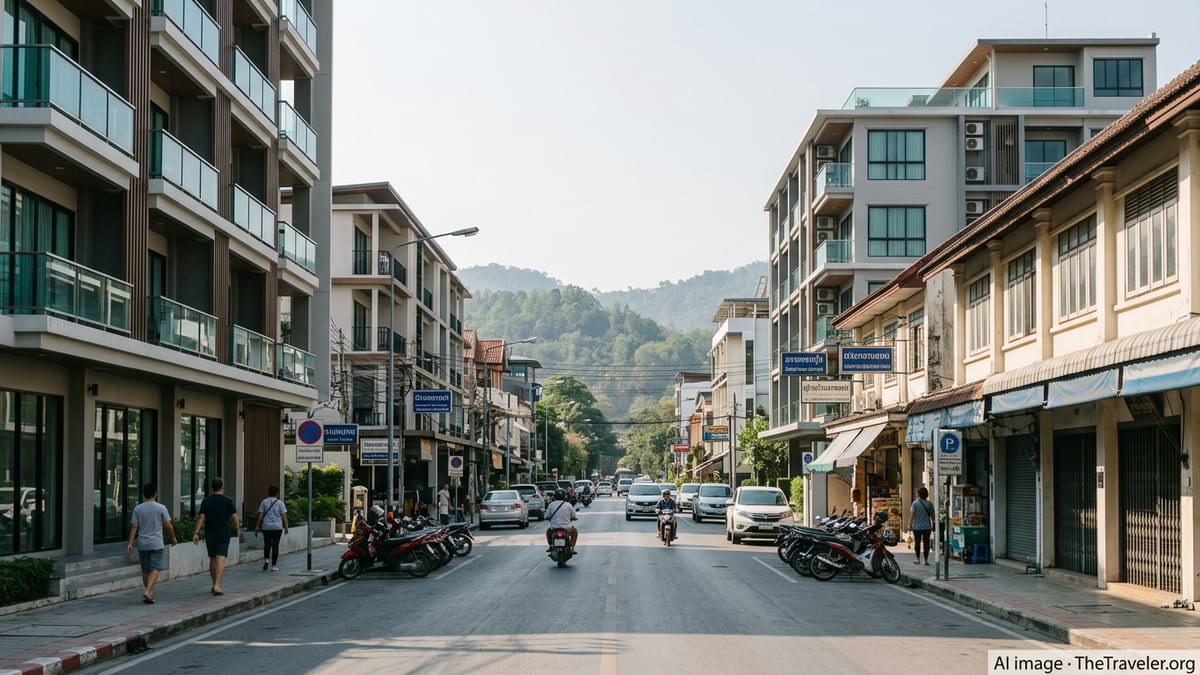
How to Interpret “Safety” for Expats and Digital Nomads in Thailand
Evaluating safety in Thailand requires moving beyond tourism perceptions and looking at specific risk categories relevant to foreign residents. Available international datasets suggest Thailand’s overall crime levels are moderate by global standards, with an intentional homicide rate of roughly 2 to 3 per 100,000 population in recent years, but with a gradual upward trend. Violent crime against foreigners is relatively uncommon outside nightlife areas and specific disputes. Everyday risks for expats are more often linked to traffic accidents, opportunistic theft, scams and environmental factors such as seasonal air pollution.
At city level, granular official crime statistics are limited in the public domain, so analysts frequently rely on composite “crime index” and “safety index” scores based on resident surveys and incident reporting. These indices for Thai cities generally indicate moderate crime concerns, but with notable variation between locations such as Bangkok, Chiang Mai and Pattaya. For relocation decisions, these figures should be interpreted as directional indicators rather than precise measurements, and cross‑checked against qualitative accounts from long‑term residents and corporate security assessments.
For remote workers and expats, the most relevant dimensions of safety typically include: likelihood of violent crime, prevalence of street theft and burglary, reliability of local policing, road safety, digital and financial scams, and predictable emergency response. Environmental safety, especially air quality, is also becoming a key decision factor in Thai cities where pollution episodes reach levels considered hazardous by international standards.
Overall Safety Landscape of Thai Cities
Regional comparisons place major Thai cities in the mid‑range of Southeast Asia on perceived crime and safety indices. In recent regional rankings, Bangkok recorded a crime index around the low 40s on a 0–100 scale and a corresponding safety index just under 60, indicating moderate concerns but not extreme risk compared with large cities in some other regions. Coastal and secondary cities tend to record slightly lower crime index scores, although sample sizes are smaller and volatility is higher.
Thai government monitoring indicates that total reported crime has fluctuated in recent years, with modest increases in some categories such as property crime and narcotics, and reductions in others. For everyday foreign residents, this translates into a generally low likelihood of being targeted in violent incidents, provided they avoid involvement in nightlife disputes, illegal drugs and high‑risk business ventures. Opportunistic crimes such as pickpocketing, bag‑snatching and non‑violent scams are more common in dense tourist zones and transport hubs, especially during peak seasons.
An important feature of Thailand’s safety environment is the gap between the visibility of isolated high‑profile incidents and the statistical rarity of such events. For example, Bangkok has experienced periodic mass‑casualty shootings in public places, and there are widely reported cases of serious assaults or fraud in nightlife destinations. While these events are newsworthy and serious, they remain a very small fraction of overall crime and do not represent everyday risk levels in most neighborhoods where expats and digital nomads typically reside.
Chiang Mai: Consistently Rated as One of the Safest Urban Bases
Chiang Mai in northern Thailand is repeatedly described by long‑term residents, corporate security reports and regional indices as one of the country’s safest sizeable cities for foreigners. Resident‑reported crime and safety indices typically place Chiang Mai in the “low to moderate” crime band, often ranking it among the safest cities in Southeast Asia across both violent and non‑violent categories. Qualitative accounts point to infrequent random violence, low levels of street robbery and a generally calm social environment outside a few concentrated nightlife pockets.
For expats and digital nomads, the main safety advantages in Chiang Mai include compact urban geography, relatively quiet neighborhoods, and a strong presence of international residents that encourages predictable policing in central districts. Petty crime does occur but tends to be limited to unsecured property such as unlocked motorcycles, unattended laptops in public places or break‑ins at poorly secured standalone houses. Many foreign residents report living in gated communities or modern condominiums where access control and on‑site security further reduce risk of intrusion.
However, safety assessments of Chiang Mai must also account for non‑crime risks. Road safety is a notable concern, as in most Thai cities, with frequent motorcycle accidents and limited pedestrian infrastructure. Seasonal air pollution during the agricultural burning season, usually from late December through April, regularly pushes fine particulate levels to several times international guideline limits. While this is primarily a health rather than crime issue, it materially affects overall personal safety and may influence whether remote workers consider the city a year‑round base or a seasonal option.
Bangkok: Manageable Crime Risk but Higher Exposure to Complex Incidents
Bangkok, Thailand’s capital and largest city, combines relatively moderate everyday crime rates with higher exposure to complex and high‑impact incidents due to its size, density and political significance. Crime index scores around 40 on a 0–100 scale indicate that residents experience noticeable but not extreme levels of crime. Most reported issues for foreigners involve pickpocketing, bag‑snatching, overcharging and non‑violent scams, especially in high‑tourism corridors and certain nightlife districts.
For expats and digital nomads, safety conditions vary significantly by neighborhood and lifestyle. Central business and high‑income residential districts tend to benefit from better lighting, more extensive CCTV coverage and quicker police response. Many international apartment buildings and condominiums offer 24‑hour security, controlled access and monitored parking, which lowers the risk of burglary and vehicle theft. Street‑level risks are more pronounced in crowded markets, informal transport nodes and entertainment zones where alcohol, late‑night activity and opportunistic offenders coincide.
Bangkok has also been the location of several high‑profile violent incidents, including mass shootings in shopping centers and markets and sporadic political unrest. Although statistically rare, these events highlight a structural background risk that is higher than in smaller Thai cities. Additionally, traffic accidents are a significant cause of injury and death, with high motorcycle density, inconsistent helmet use and complex intersections. For remote workers or corporate assignees relying on motorcycles or informal taxis, road safety may represent a larger cumulative risk than crime.
Environmental safety is another factor in Bangkok. Seasonal air pollution episodes have led to temporary school closures and public health advisories, with particulate matter levels exceeding national and international standards for days at a time. For expats considering multi‑year stays, especially families or individuals with respiratory conditions, this can be a determinant in neighborhood choice or in decisions to split time between Bangkok and cleaner secondary cities.
Pattaya and Other Coastal Cities: Mixed Safety Profile with Strong Zonal Differences
Pattaya, on the eastern seaboard, presents a particularly mixed safety picture. On one hand, recent regional safety indices have ranked Pattaya among the safer cities in Southeast Asia, with improvements attributed to expanded CCTV networks, targeted policing of entertainment areas and better cooperation between tourist police and private security. Local authorities emphasize declining recorded crime in core tourist zones and assert that public spaces are safer than the city’s historical reputation suggests.
On the other hand, Pattaya remains closely associated with nightlife, sex work and organized crime, which creates concentrated pockets of elevated risk for violent incidents, serious assaults and fraud. Long‑term observers note that while the typical expat or digital nomad living in residential neighborhoods may experience few direct problems, the probability of exposure to crime rises significantly when regularly frequenting certain bars, clubs or late‑night venues. Scams involving drink spiking, inflated bar bills and disputes over services are more common here than in quieter Thai cities.
Other coastal destinations such as Hua Hin and parts of Phuket tend to show moderate crime levels with variations between tourist strips and residential zones. Hua Hin is often perceived as calmer and more family‑oriented, with correspondingly lower street crime outside holiday periods. Phuket’s safety profile is more polarized, with some well‑policed residential areas used by long‑stay expats and retirees, contrasted with nightlife zones and informal taxi and jet‑ski operations where scams and confrontations are reported more frequently.
Secondary Cities and Provincial Capitals: Lower Crime but Thinner Infrastructure
Smaller Thai cities and provincial capitals such as Udon Thani, Khon Kaen, Nakhon Ratchasima, Surat Thani and others often exhibit lower overall crime visibility and less exposure to complex incidents than Bangkok or major tourist hubs. Resident reports typically describe everyday life as calm, with low levels of street harassment and relatively few random attacks. Foreigners living in these locations are often more embedded in local communities and less likely to be targeted as anonymous tourists.
However, lower recorded crime does not automatically translate to lower risk for all expats and digital nomads. Police capacity, CCTV coverage and emergency medical infrastructure may be thinner than in major urban centers, which can affect response times when incidents do occur. Informal conflict resolution and underreporting of crime are more common in smaller communities, making statistical comparisons less reliable. Traffic safety issues, including drunk driving and limited pedestrian facilities, remain prevalent across the country, including in otherwise quiet provincial towns.
For remote workers and international professionals who prioritize personal security above all else, carefully selected neighborhoods in these secondary cities can offer a favorable balance of low exposure to crime and minimal involvement in nightlife‑related risk. However, newcomers must account for the practical implications of more limited English‑language policing resources and the need to build local networks for information and support.
Key Risk Factors that Influence City Safety Rankings
Across Thai cities, several recurrent risk factors significantly influence how safe a location will feel and function for expats and digital nomads. These include: concentration of nightlife and alcohol‑driven activity, presence of organized crime or transnational fraud operations, prevalence of opportunistic theft, road traffic culture, and environmental hazards such as air pollution or flooding. Cities with extensive late‑night entertainment districts tend to exhibit higher rates of assault, theft and scams, particularly where alcohol, drugs and cash transactions converge.
Opportunistic property crime remains the most common issue affecting foreigners. Unattended phones, laptops and bags in cafes or shared workspaces, unsecured motorcycles, and visible valuables in parked vehicles are standard triggers for theft in many urban areas. Digital and financial fraud, including online relationship scams and investment fraud targeting foreigners, can be orchestrated from within Thailand even if incidents are not visible on the street.
Road safety is a dominant, often underestimated risk. Thailand regularly records high rates of traffic fatalities relative to population size, with motorcycles featuring in a large majority of serious accidents. For digital nomads who rely on scooters for daily mobility, the cumulative probability of an accident over a multi‑year stay can easily exceed the risk associated with street crime. Air quality, especially in northern cities during burning season and periodically in Bangkok, also reaches levels that international agencies classify as unhealthy or hazardous, particularly for sensitive groups.
Practical Safety Comparisons Between Leading Expat and Nomad Cities
From a relocation perspective, the main urban options for expats and digital nomads in Thailand can be compared on a small set of core safety dimensions. The following qualitative table summarizes relative positioning for typical foreign residents who avoid high‑risk activities such as illegal drug use or involvement in criminal enterprises.
| City | Everyday crime risk | Nightlife / scam risk | Traffic safety | Environmental safety |
| Chiang Mai | Low to moderate | Generally low outside small nightlife areas | Moderate accident risk, weak pedestrian infrastructure | Significant seasonal air pollution |
| Bangkok | Moderate | Higher in specific nightlife and tourist zones | High congestion and accident exposure | Periodic air pollution episodes |
| Pattaya | Moderate | High in entertainment districts, lower in residential areas | Moderate; mix of urban and highway risks | Generally better air quality than northern cities |
| Hua Hin | Low to moderate | Relatively subdued nightlife, moderate scam risk | Moderate | Generally favorable coastal air conditions |
| Phuket (residential areas) | Moderate | High in crowded tourist strips, variable by area | Moderate; winding roads, weather‑related risks | Generally acceptable, with localized issues |
These qualitative ratings should be interpreted as relative comparisons rather than precise rankings. Within each city, neighborhood choice, building security, commuting patterns and personal behavior will strongly influence individual risk exposure.
The Takeaway
For expats and digital nomads prioritizing personal safety in Thailand, city selection can meaningfully shape risk exposure. Chiang Mai commonly emerges as one of the safest sizeable options for everyday crime, with a calm urban environment and relatively low levels of street theft and violence. Bangkok offers extensive infrastructure and services with manageable crime levels in most residential districts, but higher exposure to complex incidents, heavier traffic risk and episodic air pollution. Pattaya and some coastal cities provide acceptable safety in residential neighborhoods but contain nightlife zones where the likelihood of scams, assaults and serious disputes is substantially higher.
Secondary provincial cities may provide some of the lowest direct crime exposure for foreign residents, but with trade‑offs in emergency response capacity, English‑language support and infrastructure. Across all locations, road safety and environmental conditions, particularly air quality, are at least as important as classic crime rates in shaping a realistic risk profile for long‑term stays.
Relocating professionals should therefore treat Thai city safety not as a binary safe or unsafe label, but as a set of overlapping risk dimensions that can be managed through informed city and neighborhood choice, building security, mobility patterns and seasonal planning. When these factors are aligned, Thailand can offer a comparatively secure base of operations within Southeast Asia for both corporate assignees and independent remote workers.
FAQ
Q1. Which city in Thailand is generally considered safest for expats and digital nomads?
Chiang Mai is widely regarded as one of the safest sizeable Thai cities, with relatively low levels of violent crime and moderate levels of petty crime compared with Bangkok and major coastal resorts.
Q2. Is Bangkok safe enough for long‑term relocation?
Bangkok is broadly safe for long‑term expats who choose secure neighborhoods, avoid high‑risk nightlife zones and manage traffic exposure. Crime against foreigners is usually opportunistic rather than targeted, though isolated serious incidents do occur.
Q3. How risky is Pattaya for foreign residents compared with other Thai cities?
Pattaya’s residential areas can be reasonably safe, but entertainment districts carry higher risks of scams, assaults and disputes than in calmer cities. Overall risk depends heavily on how often residents engage with nightlife zones.
Q4. Are secondary provincial cities safer than major hubs like Bangkok?
Many provincial cities show lower visible crime and very little random violence, but thinner police and medical infrastructure can be a concern. They may feel safer day to day, but support during emergencies can be more limited.
Q5. What type of crime most commonly affects expats in Thai cities?
The most common issues are opportunistic theft of phones, laptops, bags and motorcycles, along with non‑violent financial or service scams. Serious violent attacks on foreigners are relatively rare and often linked to specific disputes.
Q6. How significant is road safety as a risk factor in Thailand?
Road accidents, particularly involving motorcycles, are one of the most significant safety risks nationwide. For expats who ride scooters daily, cumulative accident risk is often higher than the risk from street crime.
Q7. Does air pollution affect city safety decisions for expats and nomads?
Yes. Air pollution in Bangkok and especially in northern cities like Chiang Mai during burning season can reach levels classified as unhealthy or hazardous, influencing decisions on city choice and timing of stays.
Q8. Are women traveling or living alone at particular risk in Thai cities?
Thai cities are generally considered safer for solo women than many comparable destinations, though the usual precautions apply. Nightlife zones, poorly lit streets and alcohol‑fueled environments present higher relative risks.
Q9. How reliable are safety index rankings when choosing a Thai city?
Safety indices are useful directional tools but rely on perceptions and self‑reported data. They should be combined with local knowledge, neighborhood‑level information and an understanding of personal risk tolerance.
Q10. What practical steps can expats take to improve personal safety in Thai cities?
Key measures include selecting secure accommodation in reputable neighborhoods, minimizing late‑night exposure in high‑risk areas, using helmets and reputable transport, securing valuables, and staying informed about local conditions and seasonal pollution.