


Salzburg is compact enough to explore in two days yet layered with history, music and mountain views that linger long after you leave. With Baroque church domes, the fast-flowing Salzach River, hilltop fortress walls and cosy coffee houses, it is a city best savoured on foot, with time built in for slow strolls and café breaks. This 2 day Salzburg itinerary is designed for first-time visitors who want to see the classic sights without feeling rushed, with concrete suggestions for where to walk, what to see, how to use the Salzburg Card and how to build in a small taste of the Alps.
Get the latest updates straight to your inbox!
How to Use This 2 Day Salzburg Itinerary
Salzburg’s historic core is compact and walkable, which makes a two day stay surprisingly productive. Most first-time visitors base themselves near the Altstadt on the left bank of the Salzach or around the main station, Salzburg Hauptbahnhof. If you stay in the Old Town you can walk to almost every sight in this itinerary in 15 minutes or less; from the station area it is usually a 20 to 25 minute walk or a short local bus ride to the river.
A useful starting point is deciding whether to buy the Salzburg Card, the city’s official sightseeing pass. In 2025 the card generally costs in the mid-30 euro range for 24 hours and low-40 euro range for 48 hours for adults, with slightly higher seasonal prices from spring to autumn. It includes free entry to major sights such as Hohensalzburg Fortress, Mozart’s Birthplace, many museums, the Untersberg cable car, plus unlimited use of city buses. If you plan to visit the fortress, at least one Mozart site and a couple of museums or take the cable car, the 24 or 48 hour card typically pays for itself.
This itinerary assumes you arrive the evening before Day 1 and have two full days in the city. Day 1 focuses on the Old Town, fortress, cathedral area and a classic Austrian evening. Day 2 gives you time on the right bank around Mirabell, the “Sound of Music” sights in the city, and either more museums or a half-day trip into the surrounding countryside, depending on interests and season.
Adjust the order of visits for weather and opening hours. For example, if rain is forecast on your first afternoon, you may want to swap the fortress and some outdoor viewpoints for more time in museums or churches that day and head up to the hilltop when skies clear.
Day 1 Morning: First Impressions of the Old Town
Start your first morning in Salzburg on the left bank of the Salzach, where the Old Town’s tight streets sit between the river and the cliffs of the Mönchsberg. Many visitors like to begin at Kapitelplatz or Residenzplatz, two broad squares framed by Baroque facades. You will likely pass the golden sculpture in Kapitelplatz and the fortress looming directly above, which sets the tone for the day. From here it is only a short walk into the narrow lanes of the pedestrianised historic core.
For a relaxed breakfast, seek out a traditional coffee house. Café Tomaselli on Alter Markt has been serving coffee and pastries for centuries and is still popular with both locals and tourists. Expect to pay roughly 4 to 5 euros for a Melange (similar to a cappuccino) and 4 to 6 euros for a slice of cake such as Sachertorte or apple strudel. If you prefer a modern style café with lighter options, smaller spots around Getreidegasse offer granola bowls and espresso-based drinks at similar prices. Either way, starting the day in a café slows you into Salzburg’s rhythm.
After breakfast, walk along Getreidegasse, the Old Town’s most famous shopping street, lined with wrought-iron guild signs, narrow medieval building plots and archways leading to courtyards. Even if you are not intending to shop at the international chains and local boutiques, it is worth wandering its side passages to find quieter corners. Around halfway down Getreidegasse you come to Mozart’s Birthplace, a yellow townhouse where the composer was born in 1756. Inside you can see period rooms and displays about his life; if you have the Salzburg Card admission is included, otherwise individual adult tickets are typically in the low teens in euros.
Continue west through the arcades and courtyards towards the river, then loop back via Judengasse and Goldgasse to reach the squares near Salzburg Cathedral. Each twist of the street reveals another view of a tower or cliff, and even with crowds you can find quieter back lanes within a block or two of the main artery.
Day 1 Afternoon: Salzburg Cathedral and Hohensalzburg Fortress
Midday is a good time to step indoors at Salzburg Cathedral and the adjacent churches. The cathedral’s pale interior, baptismal font and compact museum offer a quick introduction to the city’s ecclesiastical history. Entry policies can change, but as of recent years guests are often asked for a small donation or pay a modest admission charge, typically just a few euros. Combined tickets sometimes include nearby sites such as the DomQuartier, an extended museum route through former archbishop’s state rooms and galleries overlooking the squares, which can easily fill an hour or more if you enjoy Baroque art and architecture.
When skies are reasonably clear, dedicate the afternoon to Hohensalzburg Fortress, the walled citadel that crowns the hill above the Old Town. You can walk up in about 15 to 20 minutes on a steep path, or take the FestungsBahn funicular from near Kapitelplatz. A standard combined ticket, including the funicular up and down and access to key fortress museums, generally runs in the mid to high teens in euros for adults if bought on site. With the Salzburg Card you can ride the funicular and enter the fortress once without an extra charge, which is why many visitors time their card’s activation around this visit.
Inside the fortress you will find a sequence of courtyards, bastions, small exhibitions and a few café terraces. Even if you only skim the historical displays, allow time to walk the outer ramparts, where there are panoramic views across the Old Town roofs, the modern districts, and on clear days to the northern fringe of the Alps. In summer, extended opening hours often allow late visits, while in winter the site usually closes by late afternoon, so check the latest times locally and plan accordingly.
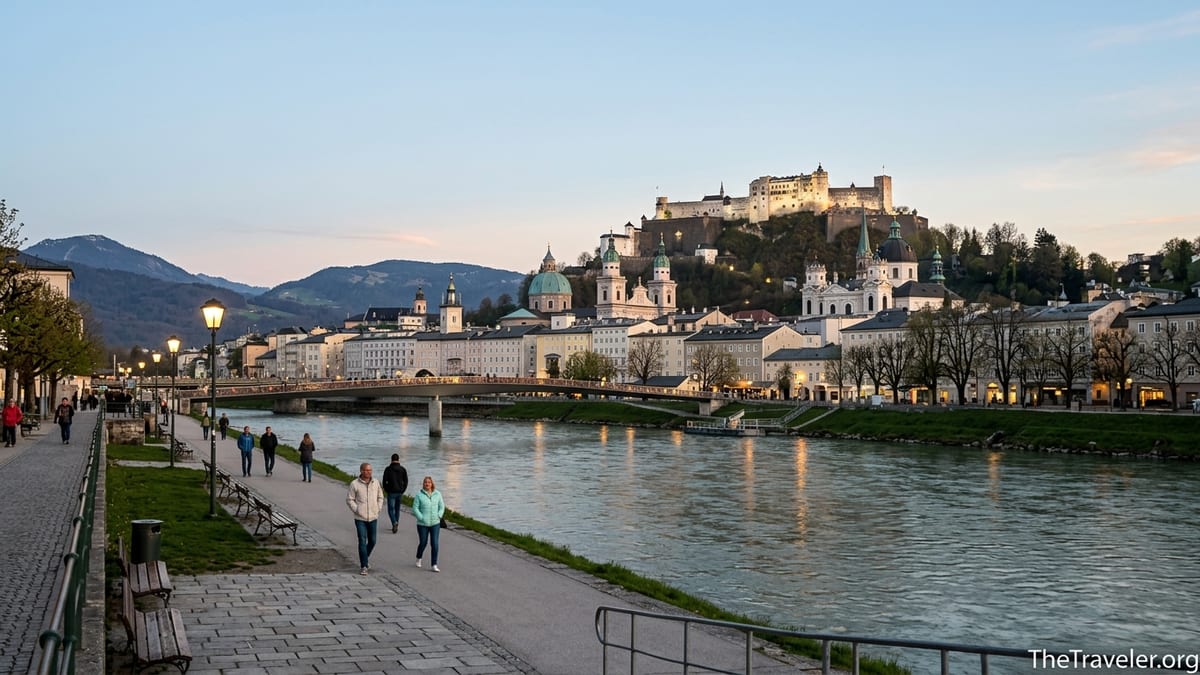
After touring the fortress, descend either by funicular or on foot and take a slow walk along the riverfront. The paved paths on both banks are ideal for an easy stroll of 20 to 30 minutes, and several pedestrian bridges let you cross back and forth. Many visitors enjoy stepping onto the Makartsteg pedestrian bridge, known for its love locks, to look back at the skyline of spires and the fortress above the rooftops.
Day 1 Evening: Food, Music and Nighttime Atmosphere
Salzburg’s evenings tend to be calm rather than raucous, but you can still find a lively buzz in the Old Town’s restaurants and beer halls, especially on weekends and in summer. For a casual but atmospheric dinner, consider one of the traditional beer halls such as Augustiner Bräu’s large complex on the Mönchsberg side of the river. Here you choose your own ceramic mug, rinse it at a fountain and have it filled at the counter, then pick food from stalls selling roast meats, dumplings and salads. A hearty plate might cost around 10 to 15 euros, with a beer usually in the 4 to 6 euro range depending on size.
If you prefer a sit-down restaurant, many places around the Old Town squares serve classics such as Wiener Schnitzel, Tafelspitz and seasonal dishes like asparagus in spring or game in autumn. Main courses in mid-range restaurants typically range between 16 and 25 euros, with house wine by the glass around 4 to 6 euros. Booking is a good idea in high season and on Friday or Saturday nights, especially if you want an outdoor table.
Music lovers often plan at least one evening event in Salzburg, whether a small classical concert in a church, a Mozart dinner concert in a historic hall, or a performance at the Marionette Theater. Ticket prices vary widely, from under 20 euros for simple church recitals to upwards of 60 or 70 euros for dinner concerts or higher-profile venues. If you are visiting in summer during the Salzburg Festival, major performances can sell out months ahead and command premium prices, but smaller fringe events and church concerts offer more spontaneous options.
Even without a booked performance, simply walking the Old Town after dark has its own charm. The fortress and church facades are illuminated, shop windows glow, and the riverfront paths stay active with locals out for an evening walk or cycle. This is a good time for a final drink in a quiet bar or a late coffee and dessert, as many cafés remain open into the evening, especially at weekends.
Day 2 Morning: Mirabell Gardens, Right Bank and “Sound of Music” Sights
On your second morning, cross to the right bank of the Salzach and start at Mirabell Palace and Gardens. The palace itself houses municipal offices and ceremonial rooms that open to the public on limited schedules, while the gardens are generally free to enter during daylight hours. Here you will find neatly clipped hedges, flower beds, the Pegasus fountain and balustrades familiar to fans of the “Do-Re-Mi” sequence from The Sound of Music. Arriving earlier in the day improves your chances of walking the steps and paths before tour groups build up.
Just beyond the gardens, the residential streets of the Andräviertel district offer a quieter, more everyday side of Salzburg. Linzer Gasse, running roughly parallel to the river, has a mix of bakeries, small boutiques and cafés that feel more local than the Old Town’s tourist-oriented shops. Grabbing a takeaway pastry from a bakery here, such as a simple buttered pretzel or sweet roll for a couple of euros, can help keep breakfast costs reasonable if you splurged on dinner the night before.
Travellers especially interested in The Sound of Music have two main choices for exploring filming locations. Many opt for a half-day bus tour, which typically costs in the range of 50 to 60 euros per adult and visits sites scattered around Salzburg and the surrounding lakes region, such as the gazebo associated with “Sixteen Going on Seventeen,” the lakefront used as the back of the von Trapp villa and the church in Mondsee where the wedding scene was filmed. Others prefer to independently visit accessible in-city spots, combining Mirabell Gardens with views towards the Leopoldskron Palace over its lake, or simply focusing on the broader cultural history of Salzburg beyond the film.
If you prefer museums to film locations, consider spending late morning at the Mozart Residence on the right bank, which presents another side of the composer’s life, or the Museum of Modern Art on the Mönchsberg, reached by elevator from the riverbank. Both are included in the Salzburg Card and generally cost a little over 10 euros for individual adult tickets outside of the pass.
Day 2 Afternoon: Choose Between More City Time or a Countryside Taste
For your final afternoon you can either dive deeper into Salzburg itself or take a brief look at the countryside that surrounds it. Staying in the city works well in cooler or rainy weather, when museums, churches and cafés offer shelter. A countryside excursion is better on clear days, when the mountains are visible and walking paths are pleasant.
One city option is to ride the Untersberg cable car, around 10 kilometers south of the center. Reached by city bus from the main train station or Old Town, the cable car whisks you to a high plateau with hiking paths and broad views across both the Austrian and Bavarian Alps. Return tickets for adults are typically in the mid-20 euro range, but the ride is included with the Salzburg Card, which makes it attractive for cardholders. Weather at the top can be substantially cooler and windier than in the city, so pack layers even in summer and sturdy footwear in shoulder seasons.
Another choice is Hellbrunn Palace, a short bus ride south of Salzburg, known for its trick fountains designed to surprise visitors with hidden jets of water. Entry tickets including the fountains tour and access to the park usually cost in the mid-teens in euros for adults, and the visit is generally included in the Salzburg Card. Children in particular tend to enjoy the playful installations, and the gardens provide room to roam. Nearby, the Salzburg Zoo offers an additional family-friendly stop, with combined tickets sometimes available that bundle both attractions.
If you would rather remain in the historic center, use the afternoon to revisit favourite spots or explore less crowded corners. Walking a quieter section of the Mönchsberg, reachable by paths from the Old Town or by a public elevator, gives alternative viewpoints and shaded woodland paths above the rooftops. Small specialty museums, such as those focusing on toys or local history, can be slotted in depending on your interests and how much museum time you already had on Day 1.
Practical Tips: Money, Transport and Timing
Salzburg is not among Europe’s cheapest cities, but careful planning keeps daily costs predictable. For a mid-range visitor, a realistic daily budget excluding accommodation might include 25 to 35 euros for food if you mix bakery breakfasts, supermarket snacks and one sit-down meal, plus 20 to 40 euros for attractions and transport depending on whether you use the Salzburg Card. Coffee in cafés often costs 3 to 5 euros, soft drinks a little less, and simple takeaway lunches such as a sandwich or slice of pizza typically range from 5 to 8 euros.
Public transport within the city consists mainly of buses and trolleybuses. Single tickets bought from machines or at tobacco shops cost a few euros; day tickets and 24 hour passes offer better value if you plan several rides. The Salzburg Card, if you choose to buy it, includes local bus travel within the city zone and to some nearby attractions, meaning you rarely need to buy a separate ticket during its validity. Many visitors simply walk within the central area and only use buses for the journey to sights like Hellbrunn, the Untersberg cable car or the main station.
From the main train station, frequent regional and long-distance trains connect Salzburg to Vienna, Munich and other centres. For example, fast trains to Vienna generally take around 2.5 to 3 hours, while Munich is often reached in about 1.5 to 2 hours depending on service type. Booking advance tickets on national rail operators can secure lower fares, especially on busier routes. If you are arriving by air, Salzburg Airport lies only a short bus or taxi ride from the city and is particularly convenient if you are flying on European carriers.
Tourist seasons affect crowd levels and opening hours. July and August are typically the busiest months, especially when the Salzburg Festival is underway, leading to higher room rates and more competition for tables and tickets. December is another popular period because of Christmas markets set up in the squares. Late spring and early autumn often provide a balance of pleasant weather and slightly fewer visitors. In winter and shoulder seasons some attractions shorten hours, so always confirm current schedules locally and be prepared to shuffle indoors when the weather turns.
The Takeaway
Two days in Salzburg is enough to get a well-rounded impression of the city: its fortress and church spires, its musical heritage, its riverside walks and its proximity to Alpine landscapes. By concentrating on the Old Town and fortress on Day 1, then exploring the right bank, Mirabell Gardens and either the surrounding hills or additional museums on Day 2, you can leave feeling that you have seen the essentials without rushing from sight to sight.
Using tools such as the Salzburg Card, planning one or two anchor activities per day and building in relaxed time for coffee, cake and viewpoint strolling turns a short visit into something more substantial. Concrete choices like whether to ride the Untersberg cable car, take a Sound of Music tour or linger in the DomQuartier shape your personal version of the itinerary, but the city’s compact size and efficient transport make it easy to adapt plans on the fly.
Instead of ticking off a long checklist, think of your two days as an introduction that leaves room for surprise. You might find that the highlight is not a marquee sight but a quiet side street, a late evening on the riverbank or an impromptu concert in a small church. Salzburg rewards that kind of unhurried curiosity, and even a short stay can feel complete if you pace it with intention.
FAQ
Q1. Is 2 days really enough time to see Salzburg?
Two days is enough to visit the main Old Town sights, the fortress, Mirabell Gardens and one or two additional attractions or short excursions, while still having time for relaxed walks and café stops.
Q2. Should I buy the Salzburg Card for a 2 day visit?
The Salzburg Card usually makes sense if you plan to visit the fortress, at least one Mozart site and one or two other paid attractions, or if you will use buses to places like Hellbrunn or the Untersberg cable car. Compare its price with the sum of individual tickets based on your interests.
Q3. Where is the best area to stay in Salzburg for this itinerary?
Staying in or just next to the Old Town on either side of the river is ideal, because you can walk to most sights in 10 to 15 minutes. The station area can work on a tighter budget, but you will rely more on buses or longer walks.
Q4. Can I visit Hallstatt or the Eagle’s Nest during my 2 days in Salzburg?
It is technically possible to squeeze in a half or full day trip to Hallstatt or the Eagle’s Nest, but doing so leaves very limited time for Salzburg itself. Most travellers with only two days prefer to focus on the city and its immediate surroundings.
Q5. Is Salzburg walkable for visitors with limited mobility?
The historic center is largely flat and pedestrianised, but many streets are cobbled and the fortress hill is steep. The FestungsBahn funicular reduces climbing, and city buses help bridge distances, but anyone with mobility issues should allow extra time and choose accommodation close to places they plan to visit most.
Q6. What is the best time of year to spend 2 days in Salzburg?
Late spring and early autumn often provide pleasant temperatures and slightly fewer crowds than peak summer or the busy Christmas market period. Winter visits can still be enjoyable, but shorter days and cooler weather mean more time indoors.
Q7. How much should I budget per day in Salzburg excluding accommodation?
A typical mid-range visitor might budget roughly 50 to 80 euros per day for food, city transport and attractions, depending on whether they use the Salzburg Card, eat mainly in sit-down restaurants or rely more on bakeries and supermarkets.
Q8. Do I need to book Salzburg attractions in advance?
Most standard city sights, such as the fortress, Mozart museums and churches, can be visited without advance booking. Concerts, special exhibitions and popular tours, especially in peak season, are better reserved ahead to secure preferred times.
Q9. Is Salzburg safe to walk around at night?
Central Salzburg generally feels safe in the evening, with many people still out in the Old Town and along the river. Normal city precautions apply, such as keeping an eye on valuables in crowded areas and using licensed taxis or official public transport when returning late to more distant districts.
Q10. What should I pack for a 2 day trip to Salzburg?
Comfortable walking shoes, a light waterproof jacket and layers are useful year-round, since weather can change quickly. Even in summer, evenings on the river or at higher viewpoints like the fortress or Untersberg can feel cool, so bring an extra layer and something slightly smarter if you plan an evening concert or nicer dinner.