


Landing at Santiago’s Arturo Merino Benítez International Airport can feel surprisingly straightforward, as long as you understand how the airport buses and metro connect. For budget travelers, the combination of Centropuerto or Turbus buses with Santiago’s metro is usually the cheapest, most efficient way into the city. This guide walks you through the current routes, where to change for the metro, what has changed recently around República and Alameda, and the mistakes first‑time visitors most often make.
Get the latest updates straight to your inbox!
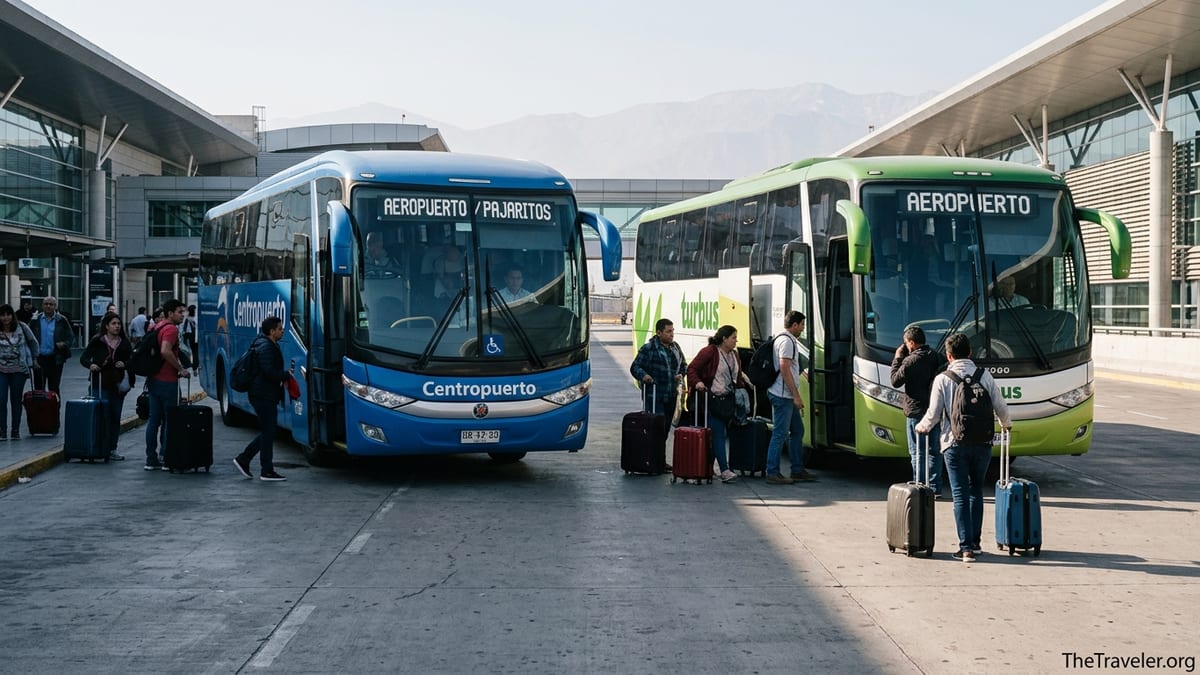
How the Santiago Airport Bus System Works Today
Santiago’s main airport sits in the western suburb of Pudahuel, roughly 15 to 20 kilometers from the historic center. Instead of a dedicated airport train, the city relies on frequent shuttle buses and the metro. Two private bus operators, Centropuerto and Turbus, run all-day services between the airport’s bus station and key transport hubs like Metro Pajaritos and the Alameda area. In parallel, a regular city bus route, 555, links the airport’s intermodal terminal to Metro Pajaritos for the standard city bus fare.
All these services leave from the airport’s bus station between Terminals 1 and 2, a purpose-built intermodal area with multiple platforms and ticket booths. The moment you exit customs in the international terminal, you will see signs pointing toward “Buses” or “Intermodal.” Follow these instead of heading straight for the taxis in the arrivals curb. A common scenario: a solo traveler arriving from Lima at 07:30 walks five minutes to the bus station, buys a Centropuerto ticket, and is on a bus into the city by 07:45, spending a fraction of the taxi cost.
Both airport bus companies primarily serve Line 1 of the Santiago Metro, the east–west backbone that crosses the city through downtown and on to business districts like Providencia and Las Condes. This means that, for most visitors, the bus plus metro combination is the most logical route, even if it requires one quick transfer. The key is knowing which bus gets you to the right metro station for your hotel or neighborhood.
Because timetables, starting points and even final stops have shifted with ongoing construction in central Santiago, especially around Alameda Avenue, it is important to check signage at the airport as soon as you land. However, the basic pattern has remained stable: frequent buses to Pajaritos, options toward central Santiago and Alameda, and integrated transfers with the metro along Line 1.
Centropuerto vs Turbus vs Red Bus 555
Centropuerto and Turbus operate very similar airport services, but there are small differences that matter if you are aiming for a specific part of the city or traveling at odd hours. Both run large, coach-style buses with luggage racks underneath and limited overhead space inside. Centropuerto typically focuses on a corridor of metro stations along Alameda, from República through Estación Central to Pajaritos. Turbus concentrates on connecting the airport with the Pajaritos intermodal and the Alameda terminal area near Metro Universidad de Santiago and Estación Central.
As a rule of thumb, Centropuerto is often favored by travelers heading to older central neighborhoods such as República, Barrio Brasil or around Estación Central, while Turbus is a popular choice if you are continuing onward by long-distance bus from Terminal Alameda or heading straight to Pajaritos to connect to metro or intercity coaches. For example, a backpacker planning to take a long-distance bus to Valparaíso later in the day might choose Turbus from the airport to Pajaritos, then walk directly to the intercity bus platforms within the same complex.
Alongside these private airport buses, the city’s Red Metropolitana de Movilidad runs route 555 between the airport intermodal and Metro Pajaritos. This is a standard city bus, not a special airport shuttle. It accepts the Bip! smart card used across Santiago’s buses and metro and operates roughly between 06:00 and 23:00. In practice, some budget-conscious travelers buy or top up a Bip! card at Pajaritos or in the city and, on their return to the airport during the day, use the 555 instead of the more expensive private buses.
Choosing between these three options depends mainly on your priorities. If you want the simplest, most tourist-friendly option with clear signage and staff at the airport, Centropuerto and Turbus are the safest bets. If you are familiar with Santiago’s public transport and comfortable navigating the Bip! system, the 555 plus metro can be slightly cheaper, especially if you are already using public transport for other journeys the same day.
Key Stops: Pajaritos, República, Alameda and Beyond
For most airport passengers, the names you will hear repeatedly are Pajaritos, República and Alameda. Metro Pajaritos, on Line 1, is the first major transport hub you reach when entering the city from the west. It combines a metro station, a bus terminal for intercity routes to Valparaíso, Viña del Mar and the coast, and platforms for both Centropuerto and Turbus. This makes it an ideal transfer point if you want to avoid navigating deeper into downtown before continuing elsewhere.
República, one or two stations closer to downtown from Pajaritos, serves a dense university district and traditional neighborhoods like Barrio República and Barrio Brasil. Until 2025, many guides mentioned Metro Los Héroes as the classic end point for Centropuerto buses. Due to ongoing construction and the Nueva Alameda project, Centropuerto has shifted its central city departure and arrival point to a temporary stop near Metro República, on Alameda with Echaurren. This change has confused some visitors who still expect to find airport buses at Los Héroes and end up walking several blocks along construction zones.
Alameda usually refers to the broad avenue whose official name is Avenida Libertador Bernardo O’Higgins. Around the Metro Universidad de Santiago and Estación Central area, several bus terminals cluster along or just south of Alameda, including Terminal Alameda and other long-distance terminals. Turbus airport buses typically connect the airport with this Alameda hub, which is convenient if you are catching an overnight bus to cities like Temuco, La Serena or Mendoza shortly after landing.
Once you are on Line 1 of the metro, you can easily reach other important areas. From Pajaritos, a 15 to 20 minute metro ride takes you through Estación Central and Universidad de Santiago into the historic center around La Moneda, Universidad de Chile and Santa Lucía, then onward to Providencia (Baquedano, Manuel Montt, Pedro de Valdivia) and finally to business districts like Tobalaba and El Golf. A traveler staying near Costanera Center, for instance, might ride Centropuerto to Pajaritos, take Line 1 to Tobalaba, and walk five minutes to their hotel.
Schedules, Tickets and Realistic Budgeting
Both Centropuerto and Turbus operate from early morning to late at night, with higher frequencies during the day and slightly reduced service overnight. Centropuerto’s first departures from the city toward the airport currently start just before 06:00, with buses leaving every approximately 10 minutes during busy daytime hours and spacing out late at night. From the airport toward the city, you can generally expect a bus every 10 to 15 minutes during the main part of the day, with slightly less regular service in the small hours of the morning.
Ticket prices are subject to frequent adjustment with inflation, so it is safer to think in approximate ranges rather than exact figures. As of mid‑2026, a one-way ticket on Centropuerto or Turbus from the airport to the city typically costs the equivalent of a few US dollars per person. In practical terms, a couple arriving from Europe might pay the equivalent of a modest café breakfast for both of them to reach downtown by bus, compared to taxi fares that often sit in the 20,000 to 30,000 Chilean peso range or higher depending on time of day and traffic.
You can buy tickets right at the airport bus station from staffed counters with clear signs for Centropuerto and Turbus, usually accepting cash and, increasingly, major debit or credit cards. It is still wise to carry some Chilean pesos in small denominations in case card terminals are offline. At city stops such as Pajaritos, there are ticket booths or kiosks where you can buy your return ticket to the airport on the spot. Travelers catching late-night flights often head to Pajaritos early, buy their ticket there and wait in the well-lit terminal area rather than on the street.
For the city bus 555, you need a Bip! card, not cash. If you are going to be in Santiago for more than a quick layover, it is usually worth buying a Bip! card at a metro station or major intermodal like Pajaritos, loading it with enough credit for a few trips, and then using it on both metro and buses. One realistic scenario: a traveler staying four days in the city buys a Bip! card, uses it for the metro all week, and then returns to the airport by taking Line 1 to Pajaritos and the 555 using the same card, with no need for separate airport bus tickets.
Luggage, Comfort and Safety on the Buses
Airport buses in Santiago are designed to handle suitcases, but there are limits and caveats that visitors often overlook. Larger luggage is stored in the underfloor compartment, with passengers placing smaller bags inside the cabin or overhead if space allows. Staff may help load bags at the airport bus station, but luggage remains the responsibility of the passenger. This means you should always keep valuables such as passports, electronics and cash on your person rather than in checked bags underneath.
On busy mornings, especially after several international arrivals, buses to Pajaritos can fill quickly with travelers carrying large backpacks and roller suitcases. It is common for people to stand in the aisle for part of the journey. If you are a solo traveler with two large suitcases arriving at a peak hour, consider waiting for the next bus if the first one looks uncomfortably packed, or traveling slightly later to avoid the heaviest crowding.
Pickpocketing on airport buses is less frequent than on some inner-city routes, but you should still assume that any crowded space is a target for opportunistic theft. Keep day packs zipped, wear them in front when standing, and avoid leaving phones or wallets in easy-to-reach outer pockets. A recurring story from visitors involves leaving a small handbag on the seat while loading luggage underneath, only to find it missing when they return. The safest approach is to strap your small bag across your body before you start handling larger suitcases.
At night, the bus ride itself is usually uneventful, but the areas around some central terminals can feel rougher. If you arrive late and plan to stay near República or Estación Central, it can be worth spending a little extra on a licensed taxi or rideshare for the last few blocks from the bus stop to your accommodation, especially if you are carrying visible luggage and traveling alone.
Using the Metro and Making Smooth Connections
The real advantage of Santiago’s airport buses is their connection to the metro. Line 1, which runs underground beneath Alameda and Providencia, is the backbone of the system and connects most areas where visitors stay. On weekdays, the metro runs from early morning until close to midnight, with high frequencies during rush hours and slightly wider intervals late at night and on Sundays.
When you arrive by bus at Pajaritos, you will be dropped inside or immediately next to the intermodal complex. Clear signage guides you down to the metro entrance, where you can buy or top up a Bip! card from ticket offices or machines. From there, trains toward Los Dominicos take you through Estación Central and downtown stations all the way to the eastern districts. For example, someone staying in the Lastarria neighborhood might ride from Pajaritos to Universidad Católica or Santa Lucía, both within walking distance of hotels and guesthouses in that area.
If your bus continues beyond Pajaritos and stops at stations such as Las Rejas, Universidad de Santiago or Estación Central, you can board Line 1 from any of these as well, though the surroundings vary in how comfortable they feel, especially at night. Many locals recommend Pajaritos as the simplest and safest place to transfer, particularly for those unfamiliar with the city, as it keeps you inside a dedicated transport hub instead of out on the street with luggage.
One important nuance is that the integrated fare system between metro and city buses applies only when using the Bip! card on Red network buses and the metro, not on private services like Centropuerto and Turbus. In practice, this means that when you take an airport bus and then the metro, you pay separately for each. If you want to take full advantage of integrated fares, you can combine a city bus like the 555 with the metro using a Bip! card, treating the airport intermodal as just another stop on the city network.
Tourist Mistakes to Avoid
Even seasoned travelers stumble over a few recurring issues when using Santiago’s airport buses. One of the most common is assuming that Centropuerto still runs to and from Metro Los Héroes in the heart of downtown. Construction along Alameda has shifted the primary city departure point closer to Metro República, and temporary stops can change again as works progress. A traveler who heads automatically to Los Héroes with heavy bags can easily waste 20 minutes and a lot of energy backtracking to the correct temporary stop on Alameda.
Another frequent mistake is underestimating peak-hour congestion. Some visitors arriving at 08:30 on a weekday assume they can glide into downtown in 20 minutes, only to find the bus crawling through heavy traffic around Estación Central and Alameda. In practice, it is safer to budget at least 45 to 60 minutes from airport to central stations like República during rush hours, and even more if there are ongoing roadworks. For tight connections, such as an intercity bus departing from Terminal Alameda, arrive earlier than you think you need.
Payment confusion also catches people out. Many first-timers show up at the airport bus station expecting to tap a contactless bank card on the Centropuerto or Turbus reader as they would on a city bus in Europe, only to learn that those services still rely primarily on traditional ticketing. Having a small reserve of pesos saves time and stress. Similarly, trying to board the 555 without a Bip! card at night or on weekends can be frustrating, as not every point of sale will be open when you need it.
Finally, some travelers misjudge neighborhood safety late at night. While historic central areas like Lastarria and parts of Providencia feel lively and walkable into the evening, zones around some bus terminals and stretches of Alameda can empty out and feel isolated. A classic miscalculation is getting off a late bus at Estación Central and walking 15 minutes with luggage to a cheaper hotel to save the equivalent of a short taxi ride. In practice, spending a few extra dollars on that last transfer often pays off in comfort and peace of mind.
The Takeaway
Santiago’s airport buses are one of the city’s strengths for budget-minded travelers. With frequent services, clear links to Metro Line 1 and modest ticket prices, they offer a practical alternative to taxis and private transfers for most visitors. Centropuerto and Turbus cover slightly different segments of the city around Alameda and Pajaritos, while the Red 555 bus offers an integrated, ultra-budget option for those already using the Bip! card system.
The decisions you make around where to get off the bus and how to transfer to the metro can shape your first impression of Santiago. Pajaritos is often the easiest and most secure transfer hub, especially for newcomers and those continuing to the coast or other regions by intercity bus. República and the Alameda terminals work well if you know exactly where you are going and are comfortable navigating a busier, sometimes chaotic urban environment.
By understanding the current routes, the shift of Centropuerto’s central stop toward República, the role of Pajaritos as a key interchange, and the most common mistakes other tourists have made before you, it becomes much easier to ride into Santiago like a local. Plan a little extra time at rush hour, keep your valuables close, and use the metro confidently, and the journey from runway to city street can be both inexpensive and surprisingly smooth.
FAQ
Q1. What is the cheapest way to get from Santiago airport to the city center?
The cheapest option for most travelers is usually to combine the city bus 555 between the airport intermodal and Metro Pajaritos with the metro, using a Bip! smart card. This treats the airport as just another public transport stop, taking advantage of integrated fares instead of paying for a separate private airport bus ticket.
Q2. How long does the airport bus take to reach central Santiago?
In light to moderate traffic, airport buses generally take around 25 to 35 minutes to reach Pajaritos and 35 to 45 minutes to reach the central Alameda area. During weekday rush hours or when there is construction on Alameda, it is safer to allow 45 to 60 minutes or more, especially if you have a tight onward connection.
Q3. Do Centropuerto buses still stop at Los Héroes metro station?
Current operations have shifted the main central city stop away from Los Héroes due to construction works on Alameda. Services now focus on a temporary stop near Metro República along Alameda, with additional stops at stations such as Estación Central and Pajaritos. Always check local signage and company notices on the day you travel, as arrangements can change with ongoing works.
Q4. Can I pay the airport bus fare with a Bip! card or contactless bank card?
Private airport buses like Centropuerto and Turbus typically sell separate tickets and do not fully integrate with the Bip! card system. You usually pay at ticket counters or on board with cash or, where available, debit or credit card. The city bus 555, by contrast, requires a Bip! card. It is wise to carry some Chilean pesos and not rely solely on tapping a bank card.
Q5. Which stop should I use if I am heading to Valparaíso or Viña del Mar?
For trips to Valparaíso or Viña del Mar, Metro Pajaritos is often the most convenient choice. Both Turbus and other companies run frequent intercity buses from the Pajaritos intermodal terminal to the coast. A common approach is to take an airport bus to Pajaritos, buy or collect your coastal bus ticket there, and transfer within the same complex without entering downtown.
Q6. Is it safe to take the airport bus at night?
The buses themselves are generally considered safe, even late at night, and are used by many locals and airport staff. The main concern is the area around some central stops, which can feel deserted or rough after dark. If you arrive late and are staying near República or Estación Central, consider using a licensed taxi or rideshare for the final leg from the bus stop to your accommodation, especially if you are carrying visible luggage.
Q7. Where exactly do I find the buses when I exit the airport terminals?
After passing through customs in either terminal, follow signs for “Buses” or “Intermodal” rather than heading straight outside to the arrivals curb. A short walk leads to the dedicated airport bus station between Terminals 1 and 2, where clearly marked platforms and ticket counters for Centropuerto, Turbus and the city bus connection are located.
Q8. Do airport buses run overnight in Santiago?
Centropuerto and Turbus both offer services covering most of the night, although frequencies are lower between roughly midnight and the early morning. You may wait longer than during the day, but it is usually still possible to catch a bus for early-morning flights or after late-night arrivals. Always allow extra time at night in case of longer intervals or unexpected delays.
Q9. Can I take large suitcases and sports equipment on the airport buses?
Yes, airport buses are designed to carry luggage, including large suitcases and many types of sports equipment, in the underfloor compartments. However, space is not unlimited, and at peak times buses can be crowded. Always keep valuables such as passports, electronics and cash in a small bag with you in the cabin rather than in the hold.
Q10. Should I get off at Pajaritos or continue closer to downtown?
If you are unfamiliar with Santiago or connecting to another bus, Pajaritos is usually the easiest and most comfortable transfer point, thanks to its integrated intermodal layout and direct metro access. If your hotel is in central neighborhoods near República, La Moneda or Estación Central and you are arriving during the day, continuing closer to downtown can save metro time, but be prepared for busier streets and more complex surroundings.