


More news on this day
Santorini, long framed by a single image of whitewashed domes under an Oia sunset, is emerging as a test case for how Greece can move beyond purely visual tourism toward deeper, more sustainable island experiences.
Get the latest news straight to your inbox!
From Postcard Sunsets to Pressure on a Small Village
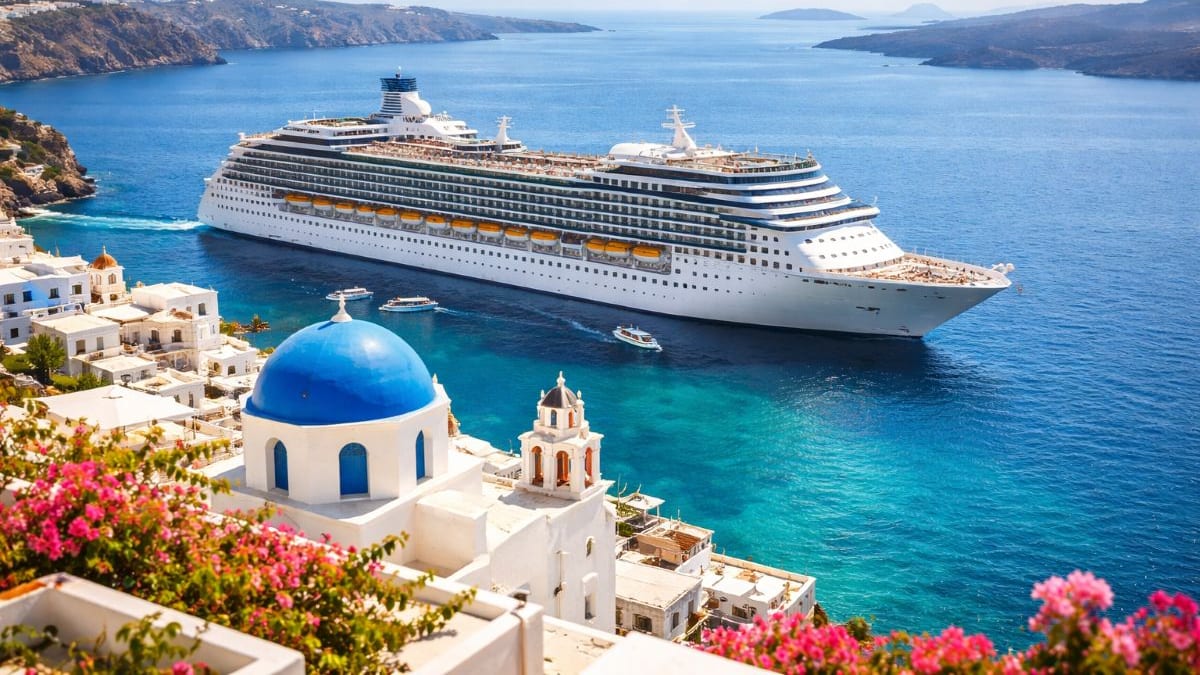
For more than a decade, Oia’s cliffside sunset has been one of Europe’s most photographed travel moments, helping propel Santorini into the ranks of Greece’s most desirable destinations. That success has also turned the village into a pressure point, with seasonal crowding, cruise ship surges and infrastructure strain increasingly at the center of debates about the island’s future.
Research on visitor flows notes that Oia has become the country’s most-visited single spot for sunset viewing, with the daily rhythm of tourism still shaped around the golden hour panorama over the caldera. Academic assessments of Santorini’s carrying capacity describe the spectacle as a double-edged driver of growth, concentrating people and economic activity into a narrow strip of built-up cliff while leaving other parts of the island comparatively underused.
Measures aimed at easing this pressure are now reshaping how visitors encounter the island. A berth management system that limits cruise passengers disembarking at Santorini to about 8,000 per day, compared with previous peaks of around 19,000, began taking effect in 2025, according to research presented at European urban and tourism conferences. The shift is intended to smooth demand curves so that Oia’s signature viewpoint is no longer the only organizing principle of a day on Santorini.
Publicly available visitor feedback from recent seasons suggests that while sunset vantage points remain crowded in high summer, travelers who adjust timing or explore early-morning and shoulder-season options are already experiencing a noticeably calmer Oia and using the village as a gateway rather than the entire destination.
Greece’s Wider Tourism Reset Reaches the Cyclades
The recalibration in Santorini comes as Greek tourism strategy pivots toward diversification, higher-value stays and a stronger sustainability framework. Policy documents and national tourism reports for 2025 and 2026 describe a sector that continues to set revenue records while seeing only modest increases in overall arrivals, indicating an emphasis on visitor spending and length of stay over simple volume growth.
Government and industry briefings outline a multi-year push to expand tourism beyond the classic “sun and sea” model. New action plans highlight mountain, cultural, agritourism and gastronomic offerings, alongside the “Unseen Greece” and similar campaigns designed to extend the season and disperse visitors more evenly across the country. Santorini, already emblematic in global marketing, is cited in several analyses as a place where better distribution of demand could yield both environmental and economic benefits.
International organizations tracking tourism performance, including the OECD, identify Greece as placing sustainability and evidence-based planning at the center of updated national strategies. The latest assessments point to improved monitoring of visitor numbers at sensitive sites, new tools for local authorities and a stronger focus on protecting cultural landscapes. Santorini’s caldera settlements and archaeological zones are frequently referenced in these discussions as landscapes where visual appeal must be carefully balanced with long-term resilience.
Industry research from Greek financial and business institutions similarly describes a maturing tourism model in which iconic islands like Santorini are expected to pivot from volume-led success to curated, higher-quality experiences that align with national climate and social objectives.
Beyond the Viewfinder: Volcanic, Cultural and Gastronomic Experiences
This broader strategic turn is visible in the way Santorini is being promoted to travelers who may know the sunset image but little else about the island. Destination content from Greek tourism bodies and regional organizations now emphasizes volcanic trails, traditional inland villages, wine routes and local agriculture alongside the well-known cliff towns.
The island’s volcanic geology, long a draw for cruise excursions, is increasingly framed as part of a more immersive narrative that includes guided hikes along the caldera rim, visits to the Nea Kameni islet and interpretation of the island’s seismic history. Travel features in international media spotlight the contrast between the busy sunset hours in Oia and quieter paths that trace old donkey routes through Pyrgos, Emporio and other settlements where daily life continues at a slower pace.
Wine and gastronomy are also central to Santorini’s repositioning. The island’s terraced vineyards, shaped by volcanic soil and persistent winds, feature in national initiatives to develop agritourism and gastronomic tourism networks. Policy documents on these sectors describe digital platforms and mapping projects intended to connect visitors directly with wineries, farms and food producers. On Santorini, that translates into tasting rooms, cooking experiences and vineyard walks that draw people inland, often at times of day when Oia’s lanes are most congested.
By highlighting these experiences, stakeholders are effectively encouraging visitors to treat the Oia sunset as one chapter in a broader island story, rather than the singular purpose of a Santorini trip. Travel reporting from recent seasons increasingly echoes this message, featuring itineraries built around early-morning views, archaeological visits at Akrotiri, and late-afternoon returns to lesser-known beaches or family-owned tavernas.
Smart Tools and New Itineraries Reframe the Iconic Sunset
Digital transformation plans for Greek tourism are also beginning to influence how travelers encounter Santorini. National strategies describe the rollout of intelligent tourism platforms, digital maps of destinations and data observatories designed to monitor visitor flows and provide real-time information. These tools are being developed with the aim of steering travelers toward lesser-known sites and off-peak times, reducing bottlenecks at headline locations.
Academic work on smart tourism and itinerary recommendation notes that algorithmic trip planning can shift attention from a handful of famous viewpoints to a wider constellation of points of interest based on personal preferences and time constraints. Applied to a place like Santorini, this approach could mean that an iconic Oia sunset remains on the schedule, but is accompanied by suggestions to explore nearby villages, coastal paths or cultural venues before and after the evening peak.
Greek tourism officials and industry bodies have spoken in general terms about using artificial intelligence and data analytics to better match visitor expectations with destination capacity. Public strategy documents describe pilot projects in which real-time data feeds inform crowd management and promotional messaging. Santorini’s role as a global showcase for Greek tourism makes it a likely candidate for early adoption of such tools, particularly in managing the flow of people through Oia’s narrow streets during sunset hours.
Travel coverage already reflects a quiet shift in on-the-ground behavior. Reports indicate that more visitors are structuring trips around sunrise views, private terraces or alternative caldera vantage points in Imerovigli and Firostefani, often guided by advice from digital platforms, social media communities and updated destination content that emphasizes comfort and authenticity over a single, crowded viewing terrace.
Santorini as a Laboratory for Sustainable Visual Tourism
The evolving balance between Oia’s world-famous sunsets and a more diversified island experience is being closely watched by planners and analysts looking for replicable models in other visually iconic destinations. Greece’s broader tourism framework, which places sustainability and dispersion at its core, positions Santorini as a kind of laboratory where new combinations of regulation, digital tools and product development can be tested.
International policy studies on sustainable tourism in Greece argue that the country’s most photographed locations carry particular responsibility for demonstrating that visual appeal can support, rather than undermine, long-term community well-being. On Santorini, practical steps such as cruise passenger caps, promotion of shoulder-season travel and investment in alternative experiences are among the measures being evaluated for impact.
At the same time, traveler narratives suggest that the emotional power of seeing the caldera at sunset remains central to the island’s allure. Rather than removing that moment from the visitor journey, current strategies seek to recontextualize it, encouraging smaller-scale, better-timed and more locally embedded ways of enjoying the view. This includes guidance on early reservations, recommendations for less crowded vantage points and messaging that underscores respect for residents and the fragile cliffside environment.
As Greece advances its national tourism plans toward 2030, Santorini’s transformation from a single-image destination into a more rounded proposition of landscapes, tastes and stories illustrates how visual tourism can evolve. The Oia sunset is still the island’s calling card, but it is increasingly being used to invite travelers into a richer, more nuanced experience of the Cyclades and of Greece itself.