


More news on this day
Transatlantic travelers are set to gain fresh connectivity between Scandinavia, the United States and South America as a new codeshare between Scandinavian Airlines (SAS) and Aerolíneas Argentinas moves to link key hubs in the Nordic region with Buenos Aires and beyond.
Get the latest news straight to your inbox!
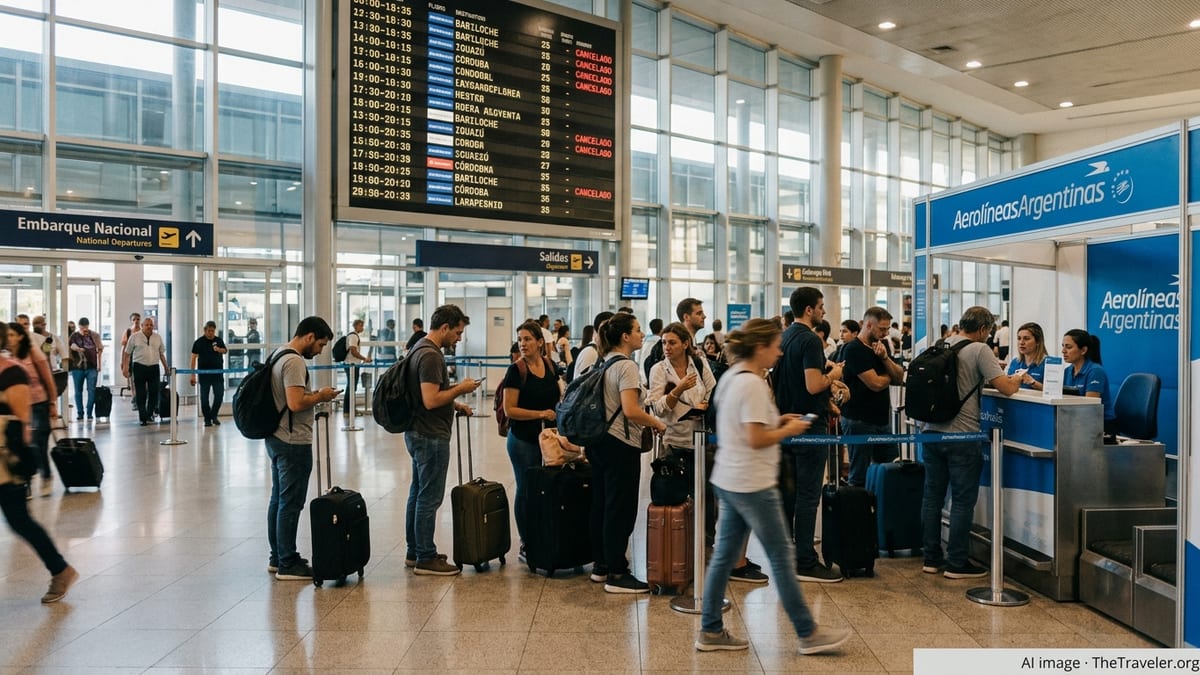
New Partnership Extends Scandinavia’s Reach Into South America
The planned codeshare builds on an existing interline and loyalty partnership between SAS, the joint flag carrier of Denmark, Norway and Sweden, and Aerolíneas Argentinas, Argentina’s state-owned flag carrier. Publicly available alliance data already lists Aerolíneas Argentinas among EuroBonus partners, and industry reports indicate the two airlines are now preparing to place their flight codes on each other’s services to create more seamless journeys.
Under a full codeshare arrangement, SAS would be able to sell itineraries that combine its Nordic and transatlantic flights with Aerolíneas Argentinas services from Buenos Aires, while the Argentine carrier could in turn offer customers one-ticket access to SAS destinations across Scandinavia. This structure typically allows coordinated schedules, shared booking classes and through-check of baggage, features that are increasingly expected by long-haul passengers.
The tie-up comes as both airlines look to deepen international cooperation. SAS has spent recent years broadening its global footprint through codeshares with carriers such as Virgin Atlantic, Air France-KLM, Aeromexico and WestJet, while Aerolíneas Argentinas has expanded bilateral agreements across Latin America and Europe, including new codeshares with LATAM, Avianca and Iberia. The emerging arrangement with SAS fits into this broader strategy of using partnerships to extend network reach without adding long-haul aircraft.
While final route maps have not yet been published, industry coverage suggests that Buenos Aires Ezeiza, Copenhagen, Stockholm and Oslo would form the backbone of the new flows, with onward domestic and regional connections on both sides of the Atlantic.
United States Gateways Become Crucial Link in the Chain
A distinctive feature of the developing SAS and Aerolíneas Argentinas cooperation is the pivotal role of United States hubs. SAS already relies heavily on US gateways such as New York JFK, Newark, Chicago, Washington, Boston, Los Angeles, San Francisco and Seattle to funnel traffic between Scandinavia and the Americas, often in partnership with other transatlantic carriers.
Industry analyses of SAS’s recent partnerships highlight a pattern: new long-haul connectivity is frequently built via North American and European partners, rather than only through nonstop flights from Scandinavia. The carrier’s expanded cooperation with Aeromexico, for example, routes travelers from Copenhagen, Stockholm and Oslo to Mexico City via key US and Canadian hubs, illustrating how intermediate points can efficiently connect Nordic passengers with Latin America.
A comparable structure is expected to underpin the SAS and Aerolíneas Argentinas codeshare. Travelers originating in the United States are likely to route either north to SAS hubs in Copenhagen, Stockholm or Oslo and then south to Buenos Aires, or south first to Buenos Aires on Aerolíneas Argentinas before heading north to Scandinavia. For many itineraries, itineraries that triangulate between US, Nordic and Argentine hubs can shorten travel time or reduce layovers compared with stitching together separate tickets.
For US passengers in major metropolitan areas, the practical effect would be a wider choice of single-ticket options to both Scandinavia and Argentina, particularly during peak winter and summer travel seasons when demand for Patagonia, Iguazu Falls, the Nordic capitals and the Arctic region typically increases.
More One-Stop Options for Leisure and Business Travelers
The proposed codeshare is poised to make it easier for leisure travelers to combine multiple destinations across three continents in a single itinerary. Tourists from the United States could, for instance, fly on SAS to Copenhagen, connect north to the Norwegian fjords or Swedish Lapland, and then continue to Buenos Aires on a shared-flight code before connecting on Aerolíneas Argentinas to domestic points such as Bariloche, Mendoza or Ushuaia.
Argentine and Scandinavian travelers stand to benefit in a similar way. Passengers from Buenos Aires could gain simple one-stop access to cities like Stockholm, Gothenburg, Bergen or Tromsø through SAS hubs, while also improving connections to US cities that feed into SAS’s network. For business travelers, this kind of integration often translates into shorter minimum connection times, aligned schedules and access to priority services where reciprocal benefits are offered.
Travel industry commentary notes that Aerolíneas Argentinas has been repositioning its international network as part of a broader effort to strengthen Argentina’s connectivity with strategic markets. At the same time, SAS has emphasized its mission to connect Scandinavia with the world while leveraging partnerships to reach deeper into regions such as South America without a large deployment of its own long-haul fleet.
In practice, codeshares like this can also simplify disruption management. When itineraries are sold under a single ticket, rebooking during delays or cancellations typically becomes more straightforward for travelers, an important consideration on long, multi-leg journeys between northern Europe, the US and southern South America.
Frequent Flyer and Alliance Dynamics
The cooperation also highlights the increasingly flexible nature of airline partnerships in an era when global alliances are no longer the sole organizing principle. SAS is transitioning toward integration with the Air France-KLM ecosystem, while Aerolíneas Argentinas is a long-standing member of SkyTeam. Despite these different alignments, both carriers continue to forge bilateral agreements that cut across traditional alliance boundaries.
According to loyalty program information in the public domain, Aerolíneas Argentinas is already listed among EuroBonus airline partners, indicating that some form of mileage earning and redemption is available between the two carriers. A deeper codeshare would typically be expected to expand those possibilities, potentially allowing more routes to qualify for points accrual and, in some cases, status benefits, although exact details have yet to be disclosed.
For US-based travelers, the implications will depend on how the new agreement is integrated into existing frequent flyer and joint-venture frameworks. Many North American passengers currently access SAS services through major US or European partners, while using SkyTeam carriers to connect with Aerolíneas Argentinas. A dedicated SAS and Aerolíneas Argentinas codeshare could create new opportunities to consolidate travel on fewer tickets and, potentially, fewer loyalty programs.
Analysts point out that such cross-alliance partnerships are increasingly common on routes where traditional alliance networks leave coverage gaps, and where smaller or midsize carriers see value in pooling traffic to sustain long-haul links.
Competitive Landscape and Outlook for Transatlantic Travel
The emerging link between SAS and Aerolíneas Argentinas enters a competitive transatlantic landscape in which European network carriers, US majors and Latin American airlines are all seeking to capture flows between North America, Europe and South America. Iberia, Air France-KLM, LATAM and others already offer extensive connectivity between Europe and Argentina, and several US carriers provide links into the region via their own hubs.
What differentiates the SAS and Aerolíneas Argentinas initiative is its focus on connecting the Nordic region with Argentina using the United States as a flexible bridge. For travelers in secondary US cities that feed into SAS transatlantic flights, the codeshare could turn previously complex multi-ticket journeys into more cohesive options, potentially making Scandinavian and Argentine destinations more attractive for both tourism and corporate travel.
Future growth will likely depend on aircraft availability, demand trends and regulatory approvals. However, recent moves by both airlines to broaden their web of bilateral agreements suggest that network expansion through partnerships will remain a central strategy. If the codeshare proceeds as reported, travelers may see new itineraries loaded into global distribution systems and online booking tools in phases, with schedules adjusted seasonally based on performance.
For now, the anticipated SAS and Aerolíneas Argentinas codeshare underscores how carriers from different regions are working together to serve increasingly global passenger flows, using US gateways as vital connectors between northern Europe and the southern cone of South America.