


More news on this day
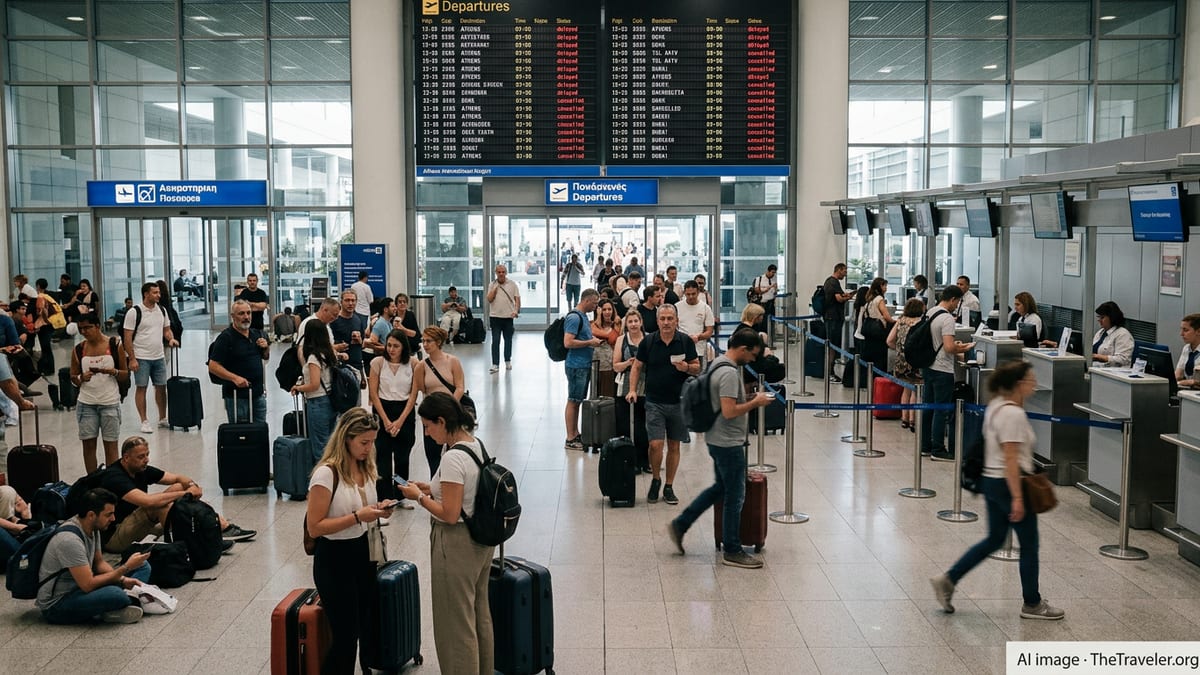
Travelers using Athens International Airport are facing disruption after a cluster of Scandinavian Airlines (SAS) cancellations and delays affected services on Sunday, straining connections to a string of popular Greek island gateways at the start of the peak summer season.
Get the latest news straight to your inbox!
Cluster of SAS Cancellations at Athens Raises Summer Travel Concerns
According to publicly available flight tracking data and schedule information, at least three SAS flights linked to Athens were cancelled within a short time window, with additional services operating with extended delays. The disruptions involve routes connecting Athens to major Scandinavian hubs, which are relied upon by both inbound tourists and Greek residents for onward travel to island destinations.
Data from flight schedule platforms shows SAS operates seasonal services between Athens and Copenhagen as well as Stockholm, providing key long haul and regional connections for passengers heading toward the Aegean islands. When even a small number of these flights are cancelled or heavily delayed, ripple effects quickly emerge, as many travelers book separate tickets from Athens onward to domestic destinations such as Lemnos, Milos, Naxos, Rhodes and Samos.
Reports indicate that on the day of disruption some SAS services between Athens and Copenhagen, and Athens and Stockholm, did not depart as scheduled, leaving passengers facing missed island connections or forced overnight stays in Athens. Other flights operated, but with departure and arrival times pushed back significantly, shrinking already tight transfer windows at Athens International Airport.
The timing is particularly sensitive, coming just as late May and early June schedules ramp up toward full high season frequency. Airlines serving Greece calibrate capacity closely to expected demand and aircraft availability, meaning there is often limited slack in the system when irregular operations occur at a major hub.
Knock-on Impact for Island Gateways Including Lemnos, Milos and Naxos
The immediate disruption is concentrated at Athens International Airport, but the broader impact is being felt across a web of island airports that depend on smooth connections from the capital. Flight schedule data for routes from Athens to Lemnos, Milos and Naxos shows a mix of daily and near daily services operated mainly by Greek carriers, often with small regional aircraft and tight turnaround times.
These services are designed to dovetail with banks of arrivals from European hubs. When SAS flights land late or not at all, travelers holding separate domestic tickets may arrive after their onward island flight has closed, particularly on routes where the last departure of the day leaves Athens in the late afternoon or early evening. In such cases, passengers may be forced to rebook for the following day or consider longer ferry alternatives from Piraeus or other mainland ports.
Lemnos, Milos and Naxos are all experiencing strong demand this year, based on recent booking trends and accommodation searches, with travelers often planning short stays that leave little room to absorb delays. A missed connection out of Athens can effectively cost visitors a full day on the islands, adding pressure to limited hotel availability and raising overall trip costs.
Travel forums and recent traveler experiences already highlight that flights from smaller island airports can be more vulnerable to disruption because of operational constraints and weather. The latest Athens related issues involving SAS add another layer of uncertainty for itineraries that rely on tight connections between international and domestic legs.
Rhodes, Samos and Other Major Airports Face Secondary Disruptions
Beyond the smaller Cycladic hubs, larger regional airports such as Rhodes and Samos are also exposed to the Athens disruption, even though they typically enjoy more frequent service and a wider mix of carriers. Public flight schedule data confirms that both islands have multiple daily flights to and from Athens in the late spring period, as well as growing direct international links operated by European airlines.
However, a portion of visitors still route through Athens on carriers like SAS, especially those connecting from Scandinavia or Northern Europe. When these Athens legs are cancelled, travelers may lose not only their original island connection but also reserved accommodation and prebooked activities at their final destination.
Operations at Rhodes and Samos can also be indirectly affected if aircraft and crew rotations depend on punctual arrivals from Athens. While Greek domestic operators tend to prioritize maintaining core frequencies on key trunk routes, even minor schedule reshuffling to absorb irregular operations in Athens can lead to revised departure times, gate changes or equipment swaps at regional airports.
The situation illustrates how a disruption centered on a single carrier can nonetheless reverberate through a multi airline network that links Athens to dozens of domestic airports, especially when demand is surging and spare capacity is limited.
Travelers Urged to Build in Buffer Time and Monitor Schedules Closely
According to published guidance from airlines and travel industry sources, passengers heading to the Greek islands in the coming days are being advised to monitor their itineraries carefully and build more generous buffer times into connections at Athens International Airport. Websites that track live flight status and airline specific travel alerts provide early indications of potential schedule changes, allowing travelers to adjust plans where possible before arriving at the airport.
Industry practice suggests that those connecting from an international arrival to a separate domestic ticket should avoid very short transfer windows, particularly when traveling on regional routes that may have only one or two departures per day. A longer layover can offer a margin of safety if inbound flights from carriers such as SAS, or any other airline, are delayed or rescheduled.
Travel planners also point to ferries as an important contingency option, especially for islands such as Milos and Naxos that are well served by high speed and conventional vessels from Piraeus. While sailings are likewise subject to schedule changes and weather, they can provide an alternative path to the islands if domestic flights are cancelled at short notice.
For those already in Greece, hotel staff and local travel agencies can assist with rebooking options when air links are disrupted. Given the tight availability on peak summer dates, acting quickly once a cancellation or major delay is confirmed can increase the chances of securing alternative seats or cabin space.
Early Season Stress Test for Greece’s Growing Air Network
The current wave of SAS cancellations and delays at Athens is shaping up as an early season stress test for Greece’s rapidly expanding air network. In recent years, more international carriers have added direct services into Athens and the islands, boosting capacity but also adding complexity to day to day operations.
Publicly accessible schedule information for late May and June shows dense banks of arrivals and departures at Athens, with limited gaps between flights on core domestic routes to island destinations. In such an environment, any unplanned withdrawal of aircraft or crew can quickly cascade into wider schedule adjustments, especially when passenger loads are already high.
Travel industry observers note that Greece’s popularity with visitors from Northern Europe, including Scandinavia, continues to climb, making reliable service from airlines such as SAS strategically important for both tourism and local economies on the islands. Periods of disruption, even if short lived, highlight the need for resilient contingency planning, clear communication through official airline channels and realistic expectations among travelers about the risks of tight same day connections.
As the summer season accelerates, attention will remain on how quickly schedules at Athens and across the wider Greek network normalize, and whether airlines adjust timetables, add capacity or modify connection guidance to better protect passengers heading to in demand destinations such as Lemnos, Milos, Naxos, Rhodes, Samos and other island gateways.