


More news on this day
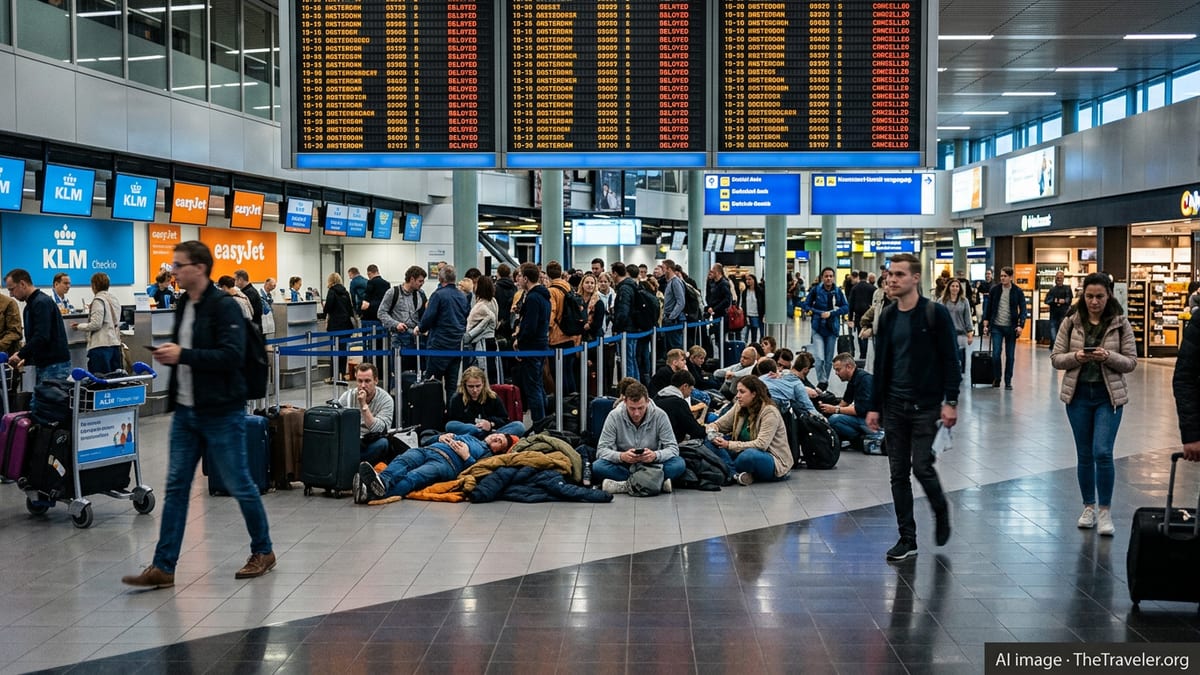
Hundreds of travelers were left sleeping in terminal chairs and queuing at service desks at Amsterdam Schiphol Airport after 255 flights were reported delayed and 20 canceled, disrupting a packed schedule of European and long haul services operated by KLM, Delta Air Lines, British Airways, Lufthansa and other major carriers.
Get the latest news straight to your inbox!
Major Hub Grapples With Fresh Wave of Disruption
Publicly available flight tracking and disruption monitoring data indicate that Schiphol once again ranked among Europe’s most affected airports, with delays far outnumbering outright cancellations. The imbalance meant many aircraft eventually departed hours behind schedule, while a smaller portion disappeared from departure boards entirely, leaving travelers scrambling for replacement options.
Reports on current operations show that the disruption affected both inbound and outbound services, creating a knock-on effect across the wider European network. As aircraft and crew struggled to remain in position, schedule gaps appeared on later rotations, adding further complexity for airlines trying to restore normal operations through the evening travel peak.
Coverage focused on Amsterdam notes that Schiphol has experienced multiple days of elevated delay levels in recent weeks, with cancellations compounding the impact on connecting passengers. The latest wave has reinforced concerns among frequent travelers that the airport remains vulnerable to operational shocks at busy times of day and during peak seasons.
Key Routes to London, New York and Paris Affected
According to publicly available departure boards and airline schedules, many of the affected flights were on heavily trafficked routes linking Amsterdam with major hubs such as London, New York, Paris and Dubai. Disruption on these corridors can quickly ripple outward, as missed connections in one city lead to late departures or additional rebooking pressures in others.
Transatlantic passengers bound for New York and other US gateways faced particular challenges, since long haul flights typically operate at or near full capacity. When cancellations or extended delays occur, rebooking can require complex rerouting via other European hubs or travel on different dates altogether, especially for those traveling in groups or during busy holiday periods.
Short haul travelers on routes to London and Paris encountered a different pattern, with more frequent options but far higher volumes of affected journeys. Even when seats exist on later flights, passengers report that long queues, heavy demand on airline apps and limited same day availability can turn a short hop into an all day ordeal.
Multiple Airlines Caught in Operational Bottleneck
Operational data and published coverage indicate that the disruption was not limited to a single carrier. KLM, which maintains its primary hub at Schiphol, saw a combination of cancellations and late departures, while alliance and codeshare partners such as Delta Air Lines, Air France and others reported cascading delays as congestion built up across the day.
Other major European and Gulf carriers, including British Airways, Lufthansa, Emirates and Qatar Airways, also appeared in delay statistics, highlighting how quickly an issue at one hub can affect airlines with only a handful of daily rotations. As slots shifted and turnarounds lengthened, departure times were repeatedly adjusted, prompting passengers to refresh airline apps and airport information screens for the latest updates.
Travel industry analysts note that the current situation at Schiphol follows a broader pattern seen across Europe this year, in which moderate numbers of cancellations combined with large volumes of delayed flights have created significant disruption for passengers and additional workload for airline operations teams.
Stranded Passengers Face Long Queues and Overnight Stays
Accounts shared on social media platforms and travel forums describe departure halls filled with travelers stretched out on benches and floors, as well as crowded customer service counters where passengers sought rerouting, meal vouchers and hotel accommodation. Many reported that digital tools such as airline apps were slow or unresponsive during peak periods, pushing more people toward already busy desks and phone lines.
For passengers with tight connections, even relatively short delays of 60 to 90 minutes proved critical. Once onward flights to destinations such as New York, London or Dubai departed without them, travelers often had to wait for the next available service, which in some cases meant an unplanned overnight stay in Amsterdam or a reroute via an alternate European hub.
Baggage handling also became a concern, with some travelers describing uncertainty over whether their checked luggage would follow revised itineraries. When rebooking takes place close to departure time, bags may need to be manually retrieved and retagged, a process that can lag behind updated passenger bookings and contribute to delayed or misplaced baggage on arrival.
Passenger Rights and Practical Advice for Upcoming Trips
Publicly available information on European air passenger rights emphasizes that travelers departing from or transiting through Amsterdam may be entitled to assistance when flights are heavily delayed or canceled. Depending on the cause of the disruption and the length of the delay, this can include meals, refreshments, hotel accommodation where necessary and, in certain cases, financial compensation.
Consumer advocates frequently advise passengers to retain boarding passes, booking confirmations and receipts for essential purchases such as food and toiletries if an overnight stay becomes unavoidable. These documents can be important both when submitting claims directly to airlines and when seeking reimbursement through travel insurance policies.
For travelers with upcoming itineraries through Schiphol, published guidance stresses the importance of checking flight status frequently on the day of travel and allowing additional time for connections, particularly on long haul journeys. Where possible, passengers are encouraged to verify gate and timing information through official airline channels before leaving for the airport and to monitor for schedule changes that may occur at short notice.