


More news on this day
Flight disruption affecting services in and out of Scotland is leaving passengers facing delays, cancellations, and missed connections, and many are unsure what airlines must provide and when compensation is actually due. While each case depends on the cause and how late you ultimately arrive, UK passenger-rights rules set clear minimum standards for rerouting, refunds, care such as meals and hotels, and in some situations fixed-sum cash payments.
Get the latest news straight to your inbox!
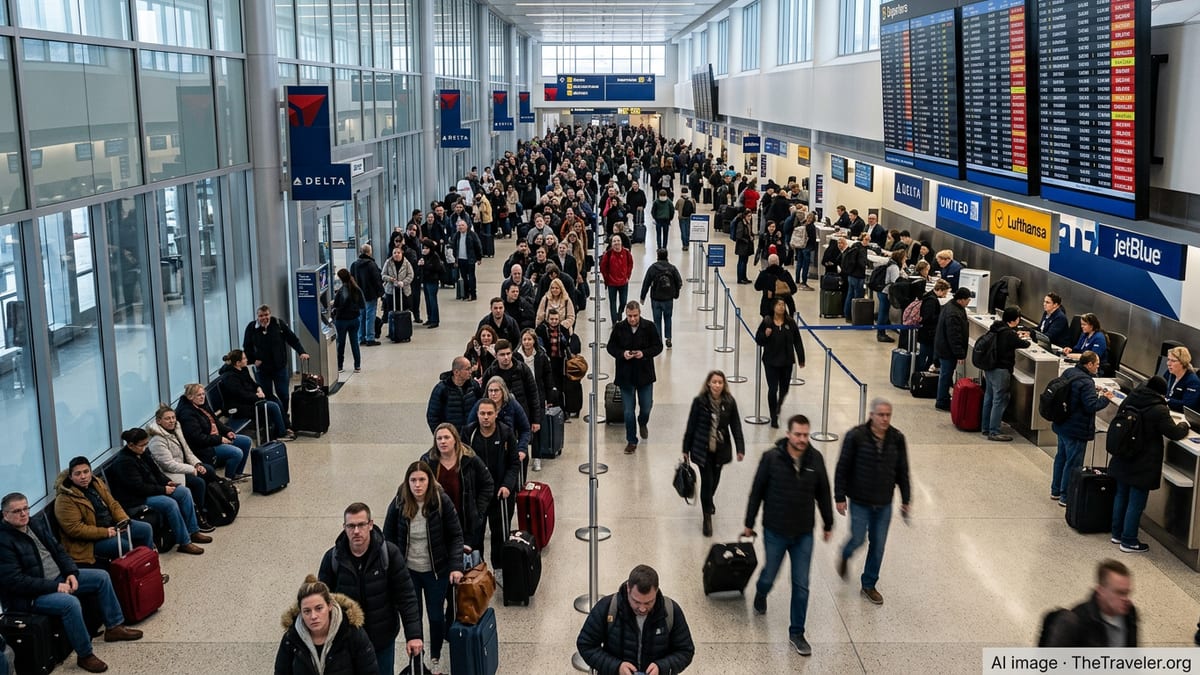
What’s happening with Scotland flights today
Published coverage on Monday, September 21, 2026 indicates a technical issue affected the U.K.’s national air traffic control provider, with knock-on disruption expected to continue through at least the end of the day. Reports link the incident to systems at the Prestwick center in Scotland, with impacts including delays and cancellations for flights in and out of Scotland, as well as parts of Northern Ireland and northern England.
For travelers departing Scotland, the immediate practical problem is that airport departure boards can change quickly as airlines wait for new departure slots, aircraft rotations, and crew duty-time limits. That means a “delayed” flight can still later be cancelled, and a short delay early in the day can translate into a much longer arrival delay once rerouting and congestion are factored in.
If you are traveling today, the key is to document the facts as they unfold: your scheduled departure and arrival times, the actual arrival time at your final destination, any rebooking offers made in writing, and receipts for essentials if the airline does not provide them directly.
UK261 basics: when the rules apply to Scotland departures
Flights departing from Scotland are covered by the U.K.’s passenger-rights regime known as UK261, regardless of the airline’s nationality. UK261 is the retained U.K. version of EU Regulation 261/2004 and sets minimum standards for assistance, rerouting or refund choices, and in some cases fixed cash compensation.
UK261 can also apply to flights arriving into the U.K. when you are flying on a U.K. or EU carrier. For example, if you are flying from an EU airport into Scotland on an EU airline, the protections generally still apply, although the practical process for complaining and escalation can differ depending on the airline and the route.
Two points trip up many passengers. First, “delay” rights focus on how long you wait and how late you arrive, not just what the departure board says. Second, compensation is not automatic and is separate from the airline’s duty to look after you while you wait.
Delays: care at the airport, refunds after five hours
If your Scotland flight is delayed, UK261 requires airlines to provide “care and assistance” once the delay reaches certain thresholds based on distance, including meals and refreshments, and a way to communicate (often vouchers, reimbursement, or access to phone or internet support). If the delay results in an overnight wait, the airline must provide hotel accommodation and transport between the airport and the hotel when required.
When a delay reaches more than five hours, you can choose not to travel and request a refund for the ticket (and, where relevant, for the part of the trip not made). UK guidance also highlights a practical trade-off: if you opt for a refund and stop traveling, the airline’s duty to provide ongoing care may no longer apply in the same way as it does when you are waiting to be carried to your destination.
If you are on a through-journey with connections, UK rules can require care if you miss a connection due to the initial delay and the new flight pushes your arrival beyond the applicable thresholds. Keep boarding passes and booking confirmations for all legs, because your rights are usually assessed at the final destination on the booking.
Cancellations: refund or reroute, and when airlines must cover hotels
If your flight from Scotland is cancelled, UK261 gives you a choice: a refund, rerouting at the earliest opportunity, or rerouting at a later date subject to seat availability. In practice, the “earliest opportunity” option may involve alternative airports or partner airlines, depending on what is realistically available during a disruption wave.
UK consumer guidance emphasizes that the airline must provide care and assistance for cancellations as well, including meals and refreshments, communication, and hotel accommodation with transfers if you are rebooked onto a later flight and need to stay overnight. This duty can apply no matter what caused the cancellation, even in scenarios where compensation is not payable.
If you end up arranging your own hotel or meals because nothing is offered, keep receipts and make sure the costs are necessary and reasonable. UK aviation guidance discusses that passengers may be able to recover such costs if the airline fails to provide required care.
Compensation: the cash amounts, and the “extraordinary circumstances” catch
Fixed-sum compensation under UK261 is separate from refunds and care. For delays, the standard test is typically arrival at the final destination at least three hours late, but compensation can be refused if the airline can show the disruption was caused by “extraordinary circumstances” and that it took all reasonable measures to avoid the delay or cancellation.
The compensation bands are set by flight distance and length of arrival delay. Published consumer-rights guidance commonly summarizes the standard amounts as £220 for flights up to 1,500 km; £350 for flights between 1,500 and 3,500 km; and £520 for flights over 3,500 km (with longer-haul thresholds often tied to a four-hour delay for the highest band). On some routes, especially where EU261 rather than UK261 applies, the compensation is expressed in euros at €250, €400, or €600.
Today’s Scotland disruption appears linked in published reporting to air traffic control systems, which can fall into the “extraordinary circumstances” category depending on the specifics. That does not remove your right to care, rerouting, or a refund where applicable, but it may affect whether you can successfully claim the fixed cash amount. If you are unsure, you can still submit a claim: airlines must assess the facts of your particular flight.
If your claim is rejected and you believe the refusal is wrong, U.K. guidance points passengers toward escalation routes such as an Alternative Dispute Resolution provider (where the airline is signed up) or the Civil Aviation Authority’s Passenger Advice and Complaints Team. Keep your claim factual and complete: booking reference, scheduled and actual arrival times, disruption notices, and itemized receipts.