


More news on this day
Airline passengers traveling from Scotland today are facing widespread delays and cancellations after a technical issue affected air traffic operations, with disruption expected to ripple through schedules into the evening. If your flight from Edinburgh, Glasgow, Aberdeen, Inverness, or nearby airports is delayed or cancelled, UK passenger-rights rules set out what your airline must provide immediately, and when fixed-sum compensation may, or may not, be available.
Get the latest news straight to your inbox!
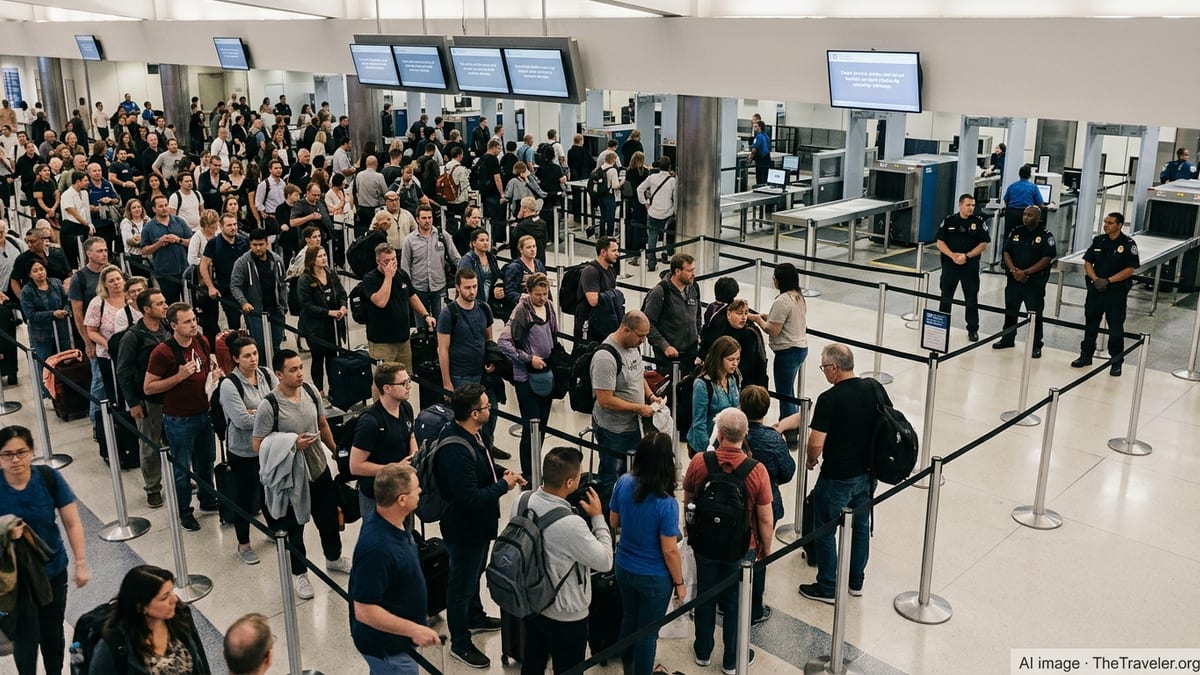
What happened, and why Scotland departures are being hit
Published coverage on Monday, September 21, 2026, pointed to a technical issue affecting air traffic services linked to operations in Scotland, triggering knock-on delays and cancellations for routes across Scotland, Northern Ireland and parts of northern England. Industry tracking cited in coverage indicated hundreds of flights across the U.K. network were affected, with major disruption concentrated at airports including Edinburgh and other key hubs used by Scotland-bound and Scotland-originating passengers.
For travelers, the practical consequence is that even flights that are not cancelled outright can become significantly delayed, and aircraft and crews may end up out of position. That can create additional cancellations later in the day, even after the immediate technical problem has been resolved, because airlines may have to reshuffle aircraft rotations and crew duty times.
The key point for passenger rights is that the cause of disruption matters. UK rules treat some events, including certain air traffic control-related incidents, differently from airline-controlled problems such as staffing issues or routine technical faults with an aircraft.
Your immediate rights at the airport: care, rerouting, or a refund
If your flight departs from the U.K., including any airport in Scotland, the airline’s duties are set out under the U.K.’s retained version of Regulation 261/2004, commonly called UK261. These rules apply regardless of ticket type, and they focus first on getting you looked after and transported, not on cash compensation.
When a flight is delayed or cancelled, airlines must provide assistance that is appropriate to the waiting time, including a reasonable amount of food and drink, and (where necessary) hotel accommodation and transport between the airport and the accommodation. Airlines often deliver this in the form of vouchers, but the duty is to provide the care, even when the disruption is outside the carrier’s control.
For cancellations in particular, UK261 also gives you a choice between a refund or rerouting. Rerouting can mean being placed on an alternative flight to your destination at the earliest opportunity, or traveling at a later date that suits you, subject to seat availability. If your journey involves connections and you decide not to continue after a cancellation, UK261 also covers rights that can include transport back to your original departure point in certain circumstances.
Compensation under UK261: when it’s owed, and when it isn’t
Separate from the “care and rerouting” obligations, UK261 can require fixed-sum compensation when a delay or cancellation meets certain thresholds and the disruption was within the airline’s responsibility. In general terms, compensation is associated with long delays to arrival (commonly 3 hours or more, depending on flight distance) and short-notice cancellations, but airlines can avoid paying compensation if they can show the disruption was caused by “extraordinary circumstances.”
In a statement issued on September 21, 2026, the U.K. Civil Aviation Authority indicated that disruption linked to the technical issue affecting the NATS Prestwick center in Scotland that day is likely to be considered the result of extraordinary circumstances under passenger-rights rules. In practical terms, that means passengers should still be looked after (meals, accommodation where needed, rerouting or refund), but fixed-sum compensation is unlikely where the delay or cancellation was directly caused by the incident.
If your disruption has multiple causes, the details matter. For example, if your flight from Scotland is cancelled late in the day because the aircraft and crew are out of position after the earlier ATC disruption, you may still be told the root cause traces back to the extraordinary event. At the same time, UK261 places the burden on the airline to explain the reason for the disruption and how it links to your specific flight.
How much compensation can be paid, and how to check your eligibility
Where compensation is due under UK261, it is based mainly on flight distance and, for some long-haul journeys, the length of the arrival delay. Publicly available guidance summarizing the standard bands sets out fixed sums aligned with the long-standing EU-style amounts: for shorter journeys up to 1,500 km, the headline amount is €250 (often shown in U.K. consumer guidance as about £220); for medium-haul flights of 1,500 to 3,500 km, €400 (often shown around £350); and for longer flights over 3,500 km, €600 (often shown around £520), with additional rules that can affect long-haul payments depending on the final delay.
The clock that matters is typically your arrival time at your final destination on the booking, not just the departure time from Scotland. That distinction is important for connecting itineraries, such as Edinburgh to London to New York, or Glasgow to Amsterdam to an onward destination, because a short initial delay can still translate into a missed connection and a much later arrival overall.
For cancellations, eligibility for compensation can also depend on when you were informed and what alternative transport was offered. Public CAA guidance explains that passengers given 14 days or more notice generally are not entitled to fixed-sum compensation, while shorter-notice changes may qualify depending on timing and rerouting. Even when compensation is not available, the refund-or-reroute choice and the duty of care still apply.
How to make a claim, keep records, and escalate a dispute
If you believe you qualify for compensation, start by submitting a claim directly to the operating airline, keeping the claim focused on the essentials: booking reference, flight number, date, planned departure and arrival times, actual arrival time, and the impact on any connections. Save screenshots of airport departure boards, delay notifications, and rebooking details, and keep receipts if the airline does not provide vouchers for meals, transport, or accommodation when those become necessary.
If the airline rejects your claim or you cannot reach agreement, CAA guidance points passengers to escalation routes. Depending on the airline, the next step may be an approved Alternative Dispute Resolution provider, or the CAA’s Passenger Advice and Complaints Team for airlines that are not signed up to ADR. These processes can require documentation, so contemporaneous records improve your chances of a clear outcome.
For passengers traveling between the U.K. and the EU, it is also important to know which version of the rules applies. UK261 generally covers departures from the U.K., while the EU’s Regulation 261/2004 framework can apply in EU scenarios, particularly where an itinerary departs the EU or involves an EU carrier on an inbound leg. In disruption days like September 21, 2026, that distinction can affect the claims process and currency, but it does not remove the airline’s core obligation to provide care and get you to your destination or refund you when your Scotland departure is cancelled.