


More news on this day
Rail passengers on ScotRail routes through Kilmarnock are being advised to prepare for significant disruption from late August, as a £13.5 million upgrade to the town’s station enters a critical construction phase that will temporarily close key sections of the Glasgow South Western line.
Get the latest news straight to your inbox!
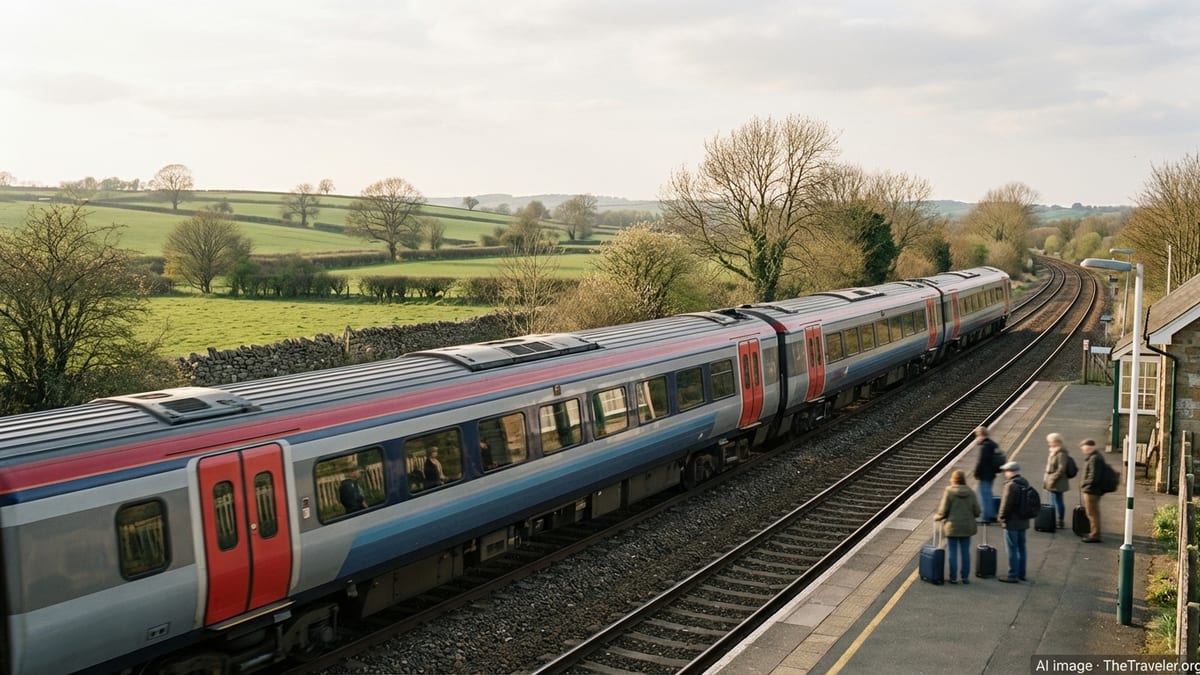
Major rail upgrade focuses on Kilmarnock bottleneck
Publicly available information from Network Rail and industry notices indicates that engineers will overhaul the track layout through Kilmarnock station over a concentrated period spanning late August and the first half of September 2026. The £13.5 million programme is designed to tackle long-standing infrastructure constraints that currently require trains to slow down as they pass through the busy Ayrshire hub.
Details published through National Rail’s engineering works page and regional construction coverage show that the work forms part of a wider package of investment on Scotland’s south west rail corridor. The project aims to modernise track, renew key components and improve signalling interfaces, with the objective of delivering more reliable, resilient journeys on services linking Glasgow, Ayrshire and Dumfries and Galloway.
According to project summaries reported by construction and rail industry outlets, Kilmarnock has been identified as a pinch point on the Glasgow South Western line, where converging routes towards Ayr, Stranraer and Dumfries all pass through a constrained station layout. The forthcoming upgrade is intended to remove some of these operational limitations, allowing trains to move more efficiently through the junctions north and south of the station.
Information made public by Scotland’s Railway and Network Rail suggests that the Kilmarnock scheme sits alongside other recent upgrades, such as electrification and new station facilities on the East Kilbride route and improvements on the Fife network. Together, these projects are framed as part of a long term plan to support modal shift from road to rail and to decarbonise passenger services.
Closures between Barrhead, Dumfries and Ayr set to reshape journeys
National Rail’s planned engineering calendar shows that no trains will operate between Barrhead and Dumfries, or between Kilmarnock and Troon, for more than two weeks while the core works at Kilmarnock are carried out. The shutdown is currently scheduled from Saturday 29 August until Monday 14 September 2026, covering one of the busiest travel periods at the end of the summer holiday season.
During this period, ScotRail services that normally run between Glasgow Central, Kilmarnock, Dumfries, Carlisle, Ayr and Stranraer will be curtailed, diverted or replaced by buses on the affected sections. Journey planners and service update pages indicate that replacement coach links will be provided to maintain connectivity for communities along the route, though passengers can expect longer travel times and reduced frequencies on many corridors.
Regional media in Ayrshire report that travellers heading to or from coastal destinations such as Troon, Ayr and Girvan, as well as inland towns including Auchinleck and Dumfries, are likely to feel the impact of the Kilmarnock closure. Regular commuters on the Glasgow to Kilmarnock corridor are also being warned that their usual direct trains may not be available for part or all of their journey during the works.
Separate disruption information published earlier in August for signalling faults between Barassie and Troon underlines how sensitive the Ayrshire network can be to infrastructure issues. The planned closure associated with the Kilmarnock upgrade is more extensive in scope and duration, with changes built into the timetable rather than arising from short notice incidents.
ScotRail passengers urged to plan ahead and check timetables
Rail journey planners and operator service update tools are already flagging future alterations on Kilmarnock routes, and passengers are being encouraged through public notices to check their journey details well before travelling. Industry guidance advises customers to use online planners close to their departure date, as finalised replacement bus schedules and platform information are typically loaded nearer the start of major works.
Recent disruption notices relating to faults on the Glasgow to Kilmarnock corridor show that ScotRail and National Rail Enquiries routinely direct passengers to digital channels, station information screens and help points for the latest details. Travellers are also reminded in these notices that journey times may be extended, connections may change and that seats on replacement buses are not usually reservable.
Based on previous large scale upgrades elsewhere on the Scottish network, including the prolonged closure of the East Kilbride line during electrification works, passengers can expect revised first and last train times and occasional gaps in the usual service pattern. Those connecting with long distance operators or onward flights may need to allow additional contingency time during the Kilmarnock works period.
ScotRail’s standard advice during planned engineering works, as reflected in recent public bulletins, is for ticket holders to consider travelling at quieter times of day where possible and to verify accessibility arrangements on replacement road services in advance, particularly for customers with reduced mobility or those travelling with bicycles.
Part of a wider push to modernise Scotland’s south west rail corridor
Coverage of the Kilmarnock scheme in Scottish construction and transport publications places the project within a broader strategy to modernise routes radiating from Glasgow into Ayrshire and Dumfries and Galloway. The Glasgow South Western line, which links Glasgow to Kilmarnock before continuing either towards Ayr and Stranraer or via Dumfries to Carlisle, is a key artery for both commuter and leisure traffic.
Network Rail’s investment updates emphasise that targeted schemes, such as track layout renewals at key junctions and station area enhancements, are intended to boost capacity and reduce journey times without the need for entirely new alignments. In Kilmarnock’s case, the work focuses on improving how trains cross and converge at the station throat, with the aim of reducing conflicts that can cause knock on delays along the wider route.
Other recent projects across Scotland’s Railway, including electrification in Fife and infrastructure upgrades around East Kilbride, demonstrate a pattern of phased works that alternate between different corridors to limit the cumulative impact on passengers. The concentration of activity at Kilmarnock in late summer 2026 reflects this approach, seeking to complete intensive works within a defined blockade rather than through a longer series of weekend closures.
Transport policy documents from the Scottish Government, along with investment plan progress reports, describe such schemes as central to delivering a more reliable and attractive rail offer in the run up to 2030. Although the Kilmarnock project focuses on conventional track and signalling, its anticipated benefits in terms of faster, more dependable journeys are presented as complementary to future decarbonisation and rolling stock changes on the wider network.
What rail users should do next
For passengers who rely on ScotRail services through Kilmarnock, industry sources advise a few practical steps in the weeks leading up to the blockade. The first is to confirm whether regular journeys fall within the affected period from 29 August to 14 September and to identify if rail replacement buses or alternative rail routes can meet their needs.
Travellers heading for major events, holidays or important appointments during that window may wish to consider alternative stations such as Glasgow Central or Ayr, or to look at coach services between Kilmarnock and Glasgow that are not affected by the rail works. Public timetables for Ayrshire bus routes show frequent express links already operating between Kilmarnock and Glasgow, which could help some passengers avoid the most heavily disrupted rail segments.
Passengers are also encouraged, via publicly available travel advice, to keep tickets and receipts where applicable, as standard rail industry compensation arrangements may apply if journeys are delayed beyond published thresholds once revised timetables are in operation. However, compensation policies typically relate to actual performance against the temporary timetable rather than comparisons with the normal service pattern.
With the closure now firmly scheduled and advance information in circulation, the emphasis from rail industry channels is on preparation and flexibility. While journeys for ScotRail customers through Kilmarnock will be more complicated for a few weeks, rail planners argue that the long term benefits of a modernised station and smoother flows on the south west corridor are expected to outweigh the short term inconvenience for passengers.
National Rail engineering works: Barrhead and Kilmarnock / Dumfries / Carlisle