


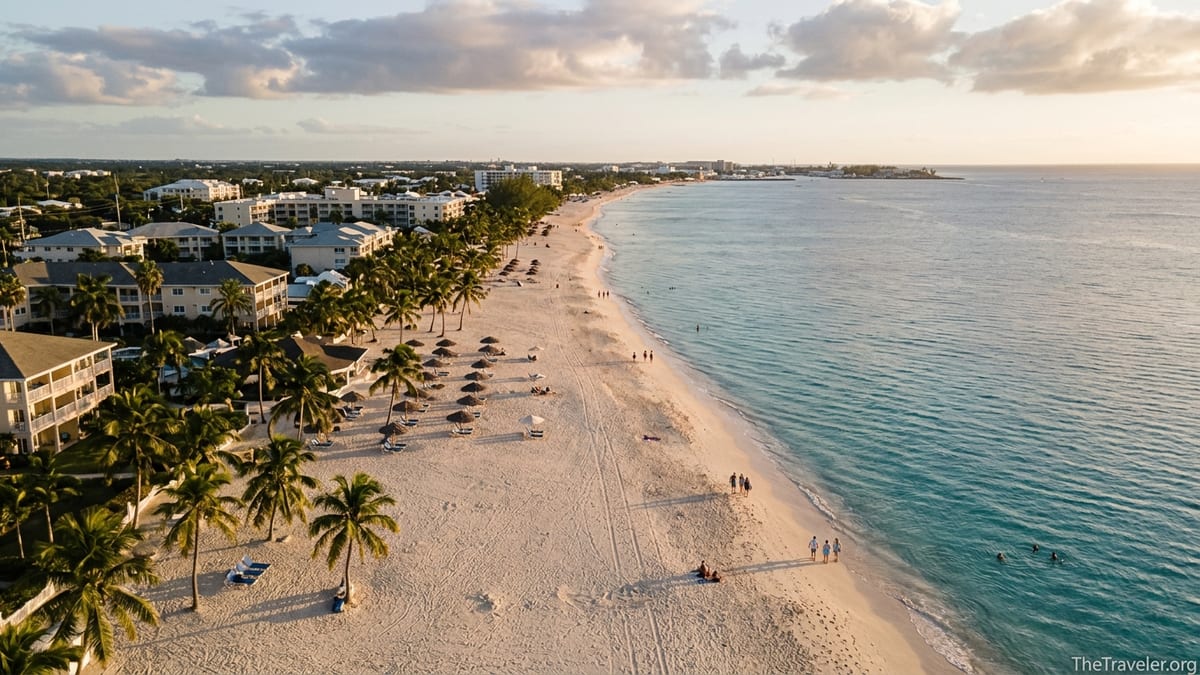
Seven Mile Beach on Grand Cayman is the island’s superstar shoreline, a long curve of pale sand and calm turquoise water that anchors the main tourist corridor. Stretching along the island’s western coast between George Town and West Bay, it is where most visitors sleep, swim, and spend their days. This guide explains where exactly Seven Mile Beach sits on Grand Cayman, how it connects to George Town, how the resorts and beach clubs line up along the sand, and what first-time visitors should know about using the corridor that ties it all together.
Get the latest updates straight to your inbox!
Understanding Where Seven Mile Beach Sits on Grand Cayman
Seven Mile Beach runs along the western shore of Grand Cayman, forming a broad crescent of coral sand that faces the open Caribbean Sea. In reality it is closer to 5.5 miles long due to natural erosion, but everyone still uses the traditional “Seven Mile” name. The beach begins just north of George Town, roughly around the Grandview Condos area, and curves gently north toward West Bay Public Beach, with uninterrupted views of the horizon and almost always calm water sheltered from the island’s prevailing easterly trade winds.
Administratively, this strip sits within both the George Town and West Bay districts, which hints at how central it is to island life. George Town occupies the southwest “knuckle” of Grand Cayman and includes the cruise port and financial district, while West Bay lies farther north as a primarily residential area. Seven Mile Beach bridges these two, which is why it has become the island’s most developed and popular tourist zone, filled with hotels, condos and restaurants hugging the sand or set slightly inland along the corridor road.
The geography matters for planning. From the heart of Seven Mile Beach around the large resorts, you are typically a 10 to 15 minute drive from downtown George Town in normal traffic, and around a similar distance in the other direction to the attractions of West Bay, such as the Cayman Turtle Centre and the quirky limestone formations at Hell. Taxi fares along this route are usually charged by zone rather than metered distance, so it is worth asking your hotel or driver for the current flat rate between your resort and the cruise port or airport before you ride.
Because the beach faces west, sunset is a daily event. Visitors staying anywhere along Seven Mile Beach can simply step onto the sand and watch the sun drop straight into the sea. On clear evenings, people gather near spots like Governor’s Beach or the open stretch by Public Beach with beach towels, picnics and cameras, while resort bars set out sunset happy hour specials overlooking the water.
How Seven Mile Beach Connects to George Town and the Tourist Corridor
The main artery that links Seven Mile Beach to George Town is West Bay Road, a surface road that runs parallel to the shoreline. Coming south from the West Bay area, West Bay Road passes the core Seven Mile Beach hotel strip before curving into North Church Street and then Harbour Drive as it enters the center of George Town. This is the corridor most visitors end up using daily, whether they are heading downtown from a beach resort or returning from a dive trip or a day of shopping.
Along West Bay Road you will find the practical side of holiday life: supermarkets, liquor stores, coffee shops, local jerk stands, and small plazas housing tour desks and casual restaurants. For example, the Camana Bay mixed-use development sits inland on the lagoon side, connected to Seven Mile Beach by pedestrian paths and a short drive across Esterley Tibbetts Highway. Many visitors staying on the beach walk or taxi over to Camana Bay in the evening for dining, a cinema, and boutiques in a more urban-feeling environment than the low-rise resort strip.
From the cruise port in George Town, reaching Seven Mile Beach is straightforward. On busy days, taxi vans line up along the waterfront offering per-person rides to Public Beach or specific resort drop-offs. The drive is usually under 15 minutes, but when multiple cruise ships are in port the roads through central George Town and out along West Bay Road can be congested, so shore excursion planners often schedule beach time in the late morning or early afternoon after the peak arrival rush has eased.
For those hiring a rental car, West Bay Road and the parallel Esterley Tibbetts Highway create a simple north-south pair of routes. The highway carries faster traffic slightly inland, while West Bay Road is slower and more scenic. Many visitors use the highway to bypass traffic when driving between the airport or the North Sound tourist marinas and their Seven Mile Beach accommodation, then switch to West Bay Road when they want to meander between beach bars, shops and snorkel spots.
Resorts and Condos Along the Sand
Seven Mile Beach is lined with accommodation that ranges from three-star hotels to luxury resorts and self-catering condos. In the middle of the strip, large names such as The Ritz-Carlton, Grand Cayman and Kimpton Seafire Resort and Spa offer full-service experiences with multiple restaurants, kids’ programs, spas and beach setups. These properties typically charge premium nightly rates, especially in the high season from December through April, but they give direct access to wide, well-groomed sections of sand with loungers and umbrellas reserved for guests.
Between and around the big brands are numerous condominium complexes that appeal to families and groups who prefer more space and kitchens. Places such as Coral Stone Club, Beachcomber, South Bay Beach Club, Villas of the Galleon, Caribbean Club and many more line the water, each with its own pool, small stretch of beachfront and self-contained apartments. These properties often operate like hybrid condo-hotels, with onsite managers and housekeeping but individually owned units, so interiors and nightly rates can vary. Booking a two-bedroom condo can be cost-effective for families compared with two separate hotel rooms, especially when you consider savings from eating breakfast and some dinners “at home.”
Closer to the southern end of the beach near George Town, you will find properties such as Grandview Condos and other low-rise complexes that mark the transition between the pure resort strip and the edge of town. Here the beach may be narrower in places, with occasional rocky patches, but you are within walking distance of George Town’s harborfront, which is handy for early-morning dive boats or business travelers who need access to the financial district.
Up toward the northern end near Governor’s Beach and West Bay Public Beach, the coast widens again and the vibe becomes slightly more residential. There are still resorts and condos, but you also encounter standalone villas and quieter complexes, popular with repeat visitors who prioritize peaceful surroundings over being right in the middle of the main bar and restaurant cluster. For example, properties towards the West Bay edge put you closer to North Sound Golf Club and to the departure points for Stingray City excursions while still being a short drive to central Seven Mile Beach.
Beach Clubs, Public Access and Using the Sand
All beaches in the Cayman Islands are public up to the high-water mark, which means the entire length of Seven Mile Beach is legally accessible, even where resorts line the shore. In practice, visitors reach the sand via a mix of public rights of way and resort or condo walkways. The government has signposted many of these public paths with brown “Beach Access” signs along West Bay Road, and local guides publish updated lists of access points and parking areas, including around Governor’s Beach and Seven Mile Public Beach.
Seven Mile Public Beach, often simply called “Public Beach,” is one of the most popular daytime hangouts, particularly for cruise visitors and locals on weekends. Located roughly in the central-north section of the strip, this area offers a wide swath of sand, a cluster of food vendors, shaded cabanas that can be reserved through the island’s Public Lands Commission, restrooms, and a free outdoor fitness park. Families appreciate the shallow entry and lifeguard presence on busy days, while independent travelers like the ability to arrive by taxi or rental car and set up on the sand without needing to be a guest of a specific resort.
Several beach bars and clubs line or sit just off Seven Mile Beach, offering loungers, drinks and sometimes day passes. Options evolve over time, but visitors can expect to find venues with menus of local Cayman-style fish, burgers, and tropical cocktails, plus rental of chairs and umbrellas for a daily fee. Daybed or cabana rentals at higher-end venues can reach premium prices, especially when bundled with food and beverage minimums, while simple chair-and-umbrella setups at more casual spots often cost less per person. It is wise to check current pricing and what is included when you arrive, as packages can change between seasons.
Because the sand is continuous, many visitors treat the whole of Seven Mile Beach as a linear park. You might start with a coffee at a café near the southern end, then walk north along the waterline for a kilometre or two, stopping to swim off Governor’s Beach where a white buoy marks an easy snorkel reef, and continue on toward Public Beach for lunch. The only real constraint is sun exposure: the sand can be very hot by midday and shade is limited outside resort areas, so plan walks early in the morning or late in the afternoon, and bring water and reef-safe sunscreen.
West Bay Road: Navigating Grand Cayman’s Main Tourist Corridor
West Bay Road is more than a simple coastal route; it is the spine of Grand Cayman’s tourist corridor. On one side you have the beach-facing resorts and condo complexes, on the other a string of plazas hosting everything from dive shops and car rentals to sushi bars and coffee houses. Mixed in are small local eateries selling conch fritters and jerk chicken, plus practical amenities like pharmacies and ATM machines that visitors rely on during longer stays.
Traffic along the corridor can be busy at peak times, particularly weekday mornings and late afternoons when local commuters mix with visitors. Pedestrian crossings near major resorts and shopping clusters slow the flow but make it safer for people to move between the beach and inland businesses. If you are staying in the central part of the strip, you may find it convenient to walk to dinner rather than drive, especially since onsite parking at some smaller venues can be limited at popular times.
For guests staying slightly off-beach, such as in accommodations set along the inland side of West Bay Road or closer to the Esterley Tibbetts Highway, beach access usually means a short walk to a designated path between waterfront properties. Many hotels and condo complexes clearly indicate which access point is closest and provide maps at reception. Public parking for beach visitors is generally free but can be tight on weekends and during holiday periods, so arriving earlier in the day improves your chances of finding a convenient space close to the sand.
Public transportation along the corridor takes the form of minibus-style “buses” that locals and some visitors use to travel between George Town, Seven Mile Beach, and West Bay. These are usually marked with route numbers, accept Cayman Islands dollars (and often US dollars at a simple exchange), and can be waved down along the road. They are an economical alternative to taxis for travelers comfortable with a more informal system, though they do not operate late into the night, so most visitors returning from dinner or bars rely on taxis or their own rental car after dark.
Planning Your Stay: Choosing the Right Part of Seven Mile Beach
Because Seven Mile Beach stretches across different districts and environments, choosing where to stay shapes how you experience Grand Cayman. The central section, roughly between the main cluster of large resorts and Public Beach, suits first-time visitors who want to be in the heart of the action. Here you can walk to multiple restaurants, beach bars and shops, with taxis and excursion pick-ups readily available and minimal need for a rental car, especially if your focus is pure beach time and occasional half-day tours.
Travelers seeking a quieter environment might gravitate toward the northern end near West Bay or the southern transition zone near George Town. The north offers easier access by car to attractions like the Cayman Turtle Centre, the departure docks for Stingray City and North Sound bioluminescence tours, and to less developed beaches beyond Seven Mile. The south, by contrast, places you closer to George Town’s harborfront, which can be convenient if you have early morning diving or business commitments, or if you enjoy browsing duty-free shops and museums on a regular basis.
Budget also plays into location. Nightly rates at full-service luxury resorts on prime beach frontage are often significantly higher than at inland hotels or condo-style stays a short walk from the sand. Some travelers choose to split their trip, spending a few nights at a higher-end beachfront property and then moving to a more economical condo or inland hotel while they explore the rest of the island by rental car. This approach allows you to enjoy the classic “step-out-to-the-sand” experience without paying top rates for your entire stay.
Seasonality is another factor. Peak season in Grand Cayman runs roughly from December through April, when weather in North America and Europe drives demand. During these months, availability at popular resorts along Seven Mile Beach can be limited unless you book well in advance, and minimum-stay rules may apply, especially around the Christmas and New Year period. Shoulder months like May, early June and November can offer more competitive prices and slightly quieter beaches while still providing warm water and generally good conditions.
The Takeaway
Seven Mile Beach is not just a beautiful strip of sand; it is the organizing axis of a wider tourist corridor that links George Town, West Bay, and many of Grand Cayman’s key attractions. Understanding where the beach begins and ends, how West Bay Road and the parallel highway connect it to the rest of the island, and how resorts, condos and beach clubs are arranged along the shore helps you choose the part of the strip that fits your travel style and budget.
Whether you base yourself in a full-service resort in the central section, a family-friendly condo near Public Beach, or a quieter complex closer to West Bay, you will share the same core asset: easy access to calm, clear Caribbean water and nightly sunsets straight off the sand. Add in the convenience of nearby dining, shopping and tour departures, and Seven Mile Beach becomes both a destination in its own right and an efficient home base for discovering Grand Cayman.
With thoughtful planning around location, transportation, and how you prefer to use the beach itself, you can make the most of this world-renowned shoreline, whether you are visiting for a single cruise-day stop or settling in for a week-long escape.
FAQ
Q1. Where exactly is Seven Mile Beach on Grand Cayman?
Seven Mile Beach runs along the western coast of Grand Cayman between the outskirts of George Town in the south and the West Bay district in the north, following the line of West Bay Road.
Q2. How far is Seven Mile Beach from George Town and the cruise port?
By road, the central section of Seven Mile Beach is usually about a 10 to 15 minute drive from the cruise port in George Town in normal traffic, slightly longer on very busy cruise days.
Q3. Are all parts of Seven Mile Beach open to the public?
Yes. By law the entire shoreline up to the high-water mark is public, so you can walk the full length of Seven Mile Beach, even in front of private resorts and condos.
Q4. Do I need to stay at a beachfront resort to enjoy Seven Mile Beach?
No. Many visitors stay in inland hotels or condos and use public beach access paths signposted along West Bay Road to reach the sand, especially around Public Beach and Governor’s Beach.
Q5. What is the difference between Public Beach and the rest of Seven Mile Beach?
Public Beach is a particularly wide, well-equipped section with facilities such as restrooms, shaded cabanas and food vendors, but it is part of the same continuous Seven Mile Beach shoreline.
Q6. Is a rental car necessary if I stay on Seven Mile Beach?
If you plan mainly to relax on the beach and join organized excursions, you can rely on taxis and tour transfers. A rental car becomes useful if you want to explore other parts of Grand Cayman independently.
Q7. Are there affordable places to stay along Seven Mile Beach?
In addition to luxury resorts, there are numerous condo complexes and some inland hotels near West Bay Road that offer more moderate nightly rates, especially outside the peak winter season.
Q8. Can cruise passengers visit Seven Mile Beach easily for the day?
Yes. Taxi vans and organized shore excursions run regularly from the cruise port to Public Beach and specific resorts, making it easy for cruise passengers to spend a few hours on the sand.
Q9. What is the water and wave condition like on Seven Mile Beach?
The west-facing position and protection from prevailing trade winds usually mean calm, clear water and gentle waves, ideal for swimming, paddleboarding and casual snorkeling close to shore.
Q10. When is the best time of year to visit Seven Mile Beach?
The classic high season runs from December to April with pleasantly warm, dry weather. Shoulder months can be less crowded and more economical while still offering warm seas and good beach conditions.