


More news on this day
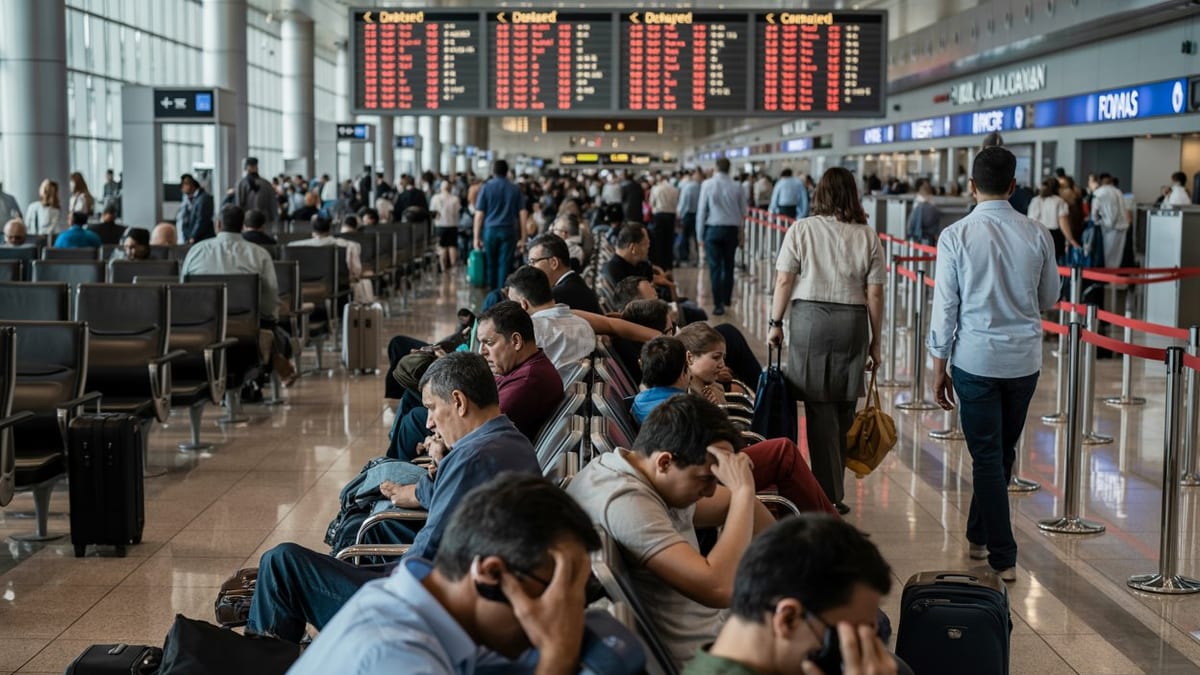
Travelers at Chicago O’Hare International Airport faced long queues, crowded gate areas and missed connections on June 6, 2026, as 267 delays and four cancellations affected services on United, American, Delta, Air Canada, GoJet and other carriers, disrupting flights across the United States, Canada, Europe, Latin America and Asia.
Get the latest news straight to your inbox!
Weather and Congestion Converge on a Critical Hub
Operational data and airport tracking platforms show that the disruption at O’Hare coincided with pockets of severe early summer weather across the Midwest, along with heavy traffic volumes at one of the country’s busiest hubs. Federal aviation reports for the June 5 to June 6 period flagged the potential for thunderstorm-related slowdowns in the Chicago region, and those forecasts aligned with mounting delays across inbound and outbound flights.
While Chicago O’Hare’s status page has indicated routine operations at various points during the day, airline-level data paints a more uneven picture, with rolling schedule adjustments as carriers attempted to work around storm cells and air traffic flow constraints. That combination of localized weather and national congestion has become increasingly common during peak travel days, according to publicly available federal guidance on summer air traffic patterns.
As the disruption unfolded, the effect at the terminal level was immediate. Passengers faced extended waits on the ground, lines for customer service desks and rebooking assistance, and uncertainty about whether their aircraft would depart in time to preserve onward connections. The impact was particularly acute for travelers using O’Hare as a connecting point between long-haul international services and domestic feeder flights.
United, American, Delta, Air Canada and GoJet Among Most Affected
Delay tallies compiled from real-time flight status platforms on June 6 show United Airlines and American Airlines bearing a significant share of the operational strain at O’Hare, consistent with their role as the airport’s largest tenants. Delta Air Lines, Air Canada and regional operator GoJet, which flies under major-carrier brands, also reported disrupted schedules, contributing to a total of 267 delays tied to O’Hare and four outright cancellations.
These figures reflect a mix of domestic routes and international services reaching into Canada, Europe, Latin America and Asia. Flights to and from major Canadian cities such as Montreal and Toronto, as well as transcontinental services linking O’Hare with West Coast gateways that funnel onward traffic to Europe and Asia, were among those listed with arrival or departure delays. Some of those flights operate under codeshare agreements, meaning disruption for one airline’s aircraft cascaded to partner carriers selling seats on the same services.
Regional aircraft operated by GoJet and other feeder carriers also featured in delay statistics, underscoring how issues at a major hub often begin or end on smaller jets shuttling passengers between secondary cities and large connecting airports. When those short-haul sectors fall behind schedule, their passengers can miss long-haul departures, forcing complex rebooking efforts and putting additional pressure on already constrained seat availability.
Global Ripple Effect on Connections and Missed Itineraries
Because O’Hare serves as both an origin and a crucial connecting hub, the 267 delays and four cancellations produced outsized ripple effects across several regions. In North America, late departures from Chicago translated into missed onward flights to secondary U.S. markets and Canadian destinations, leaving passengers to search for scarce later options on already busy weekend schedules.
Transatlantic and transpacific travel was also affected. Many long-haul flights from Europe and Asia rely on timely inbound connections at O’Hare to feed passengers from smaller U.S. cities. When those feeder flights arrived late or were rescheduled, travelers heading onward to Latin America or Asia frequently found themselves misaligned with their planned itineraries and forced into overnight stays or lengthy rebookings.
Latin American routes, often timed to connect with afternoon and evening bank structures at major U.S. hubs, experienced knock-on disruption when aircraft and crews were out of position. Even in cases where long-haul flights ultimately operated, schedules shifted enough that passengers missed important events or lost prepaid hotel nights at their destinations, adding financial and logistical strain to an already stressful travel day.
Passenger Experience: Long Lines, Limited Information and Crowded Gates
Accounts shared through public forums and social media channels on June 6 described crowded concourses, intensifying lines at customer service counters and packed seating areas around delayed departures at O’Hare. Many travelers reported waiting for updated departure times in small increments as airlines assessed weather windows and air traffic control programs, only to see further revisions posted to terminal boards and mobile apps.
As delays lengthened, access to basic amenities became a challenge in some areas of the airport. Passengers described competing for power outlets, navigating limited seating and enduring food and beverage queues that grew longer as the day progressed. Families traveling with children and international passengers facing language barriers were particularly vulnerable to the uncertainty.
In several cases, flights that eventually departed did so hours behind schedule, leaving travelers to improvise new connections or overnight stays at their destinations. For those on the small number of canceled flights, the rebooking process sometimes stretched into the following day as peak-season load factors left airlines with few immediately available seats on alternative services.
What Airlines and Regulators Offer Delayed Travelers
Consumer rights frameworks in the United States place most responsibility for compensation and care policies on individual airlines, and publicly available government dashboards outline what each major carrier pledges to provide in cases of controllable delays or cancellations. United, American and Delta each state that they offer meal vouchers for customers delayed three hours or more in situations within the airline’s control, along with hotel accommodations when overnight stays become necessary for the same reasons.
Weather-related disruptions, such as those contributing to the O’Hare delays, typically fall outside those “controllable” categories, meaning passengers are often entitled only to rebooking on the next available flight rather than cash compensation or guaranteed hotel coverage. Nevertheless, airlines sometimes extend additional flexibility or goodwill gestures, such as fee-free changes or limited travel credits, depending on the severity and duration of the disruption.
Federal transportation authorities advise passengers to monitor airport and airline status pages closely, arrive early on days with predicted storms and maintain updated contact details in airline profiles so that text and app notifications can reach them quickly. Travelers affected by the June 6 disruption at O’Hare are being encouraged through public guidance materials to retain receipts and documentation in case they seek reimbursement or submit formal service complaints at a later stage.