


More news on this day
Rail service on Houston’s METRORail Red Line was disrupted near downtown after a collision between a Houston Fire Department truck and a light rail train left one person injured and caused the train to derail.
Get the latest news straight to your inbox!
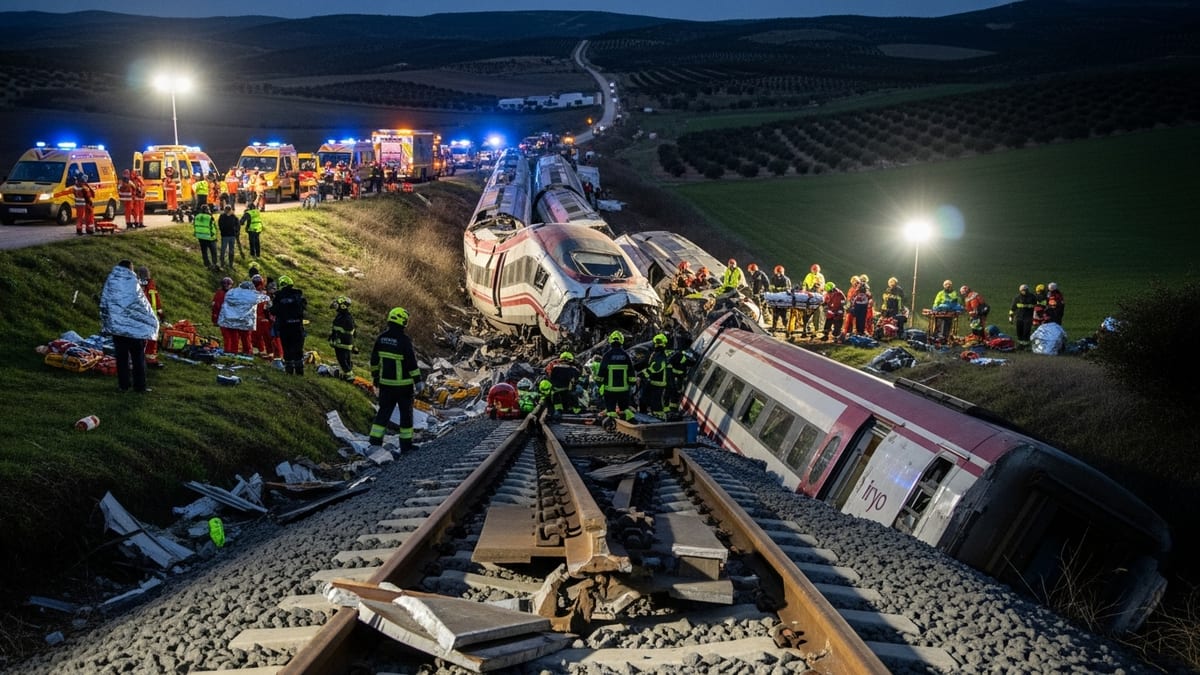
Collision Near North Main Street Disrupts METRORail
Publicly available information indicates the crash happened Friday afternoon on Hogan Street near North Main Street, just north of downtown Houston, in the city’s Near Northside area. The location sits along the METRORail Red Line corridor, which carries riders between Houston’s northern neighborhoods, the central business district, and the Texas Medical Center.
Initial reports describe a Houston Fire Department engine traveling through the intersection when it collided with an eastbound METRORail train. The impact was strong enough to push the train off the tracks, leaving at least one rail car visibly derailed and forcing an immediate halt to service in the area.
Images published by local outlets show multiple emergency vehicles surrounding the stopped train, with the fire truck positioned in the intersection and rail cars sitting at an angle on the tracks. Barriers were placed to block traffic while crews assessed the scene and checked for potential hazards on the rail line.
According to media coverage, one passenger from the METRORail train was transported to a hospital for evaluation with injuries described as non life threatening. No additional injuries to other passengers or to fire department personnel had been detailed in initial reports.
Emergency Response and Service Disruptions
Following the crash, Houston Fire Department crews on scene turned their attention from the original call to incident response, working alongside METRO Police and other city responders to secure the intersection. Photos and video from the area show firefighters and rail personnel walking along the tracks, inspecting the derailed train and looking for signs of fuel leaks or electrical issues.
Published coverage notes that METRO temporarily halted rail operations in the immediate vicinity while assessments were carried out. Shuttle buses and alternate routes are commonly used in such situations, although specific substitution details for this incident were not immediately outlined in early reports.
Traffic on nearby streets also experienced delays as lanes were closed to allow cranes, tow vehicles, and investigative teams room to work. Drivers heading toward downtown along North Main and surrounding corridors faced detours while crews coordinated removal of the damaged equipment and checked the integrity of the rail infrastructure.
Once the derailed cars are re railed or removed and inspections are complete, METRO typically restores service in phases, beginning with test runs to confirm signals, power, and track conditions before reopening the line to passengers.
Questions Around Right of Way and Emergency Vehicles
The circumstances of the crash, including the sequence of traffic signals and who had the right of way, remain under review. Reports indicate the HFD engine was responding to a separate emergency with lights and sirens activated prior to the collision, which raises familiar questions about how motorists and rail operators should react when emergency vehicles approach complex intersections.
Light rail systems in mixed traffic environments often rely on a combination of train signals, standard traffic lights, crossing gates, and audible alarms. When emergency vehicles enter these zones at speed, split second decisions by both operators and other road users can significantly raise the risk of a crash if anyone misjudges distances, signals, or stopping distances.
Publicly available background information on METRORail’s history notes that early years of the system saw a higher than average rate of collisions involving trains and vehicles at intersections along the Red Line. Over time, the transit agency has adjusted signal timing, installed additional signage, and conducted driver education campaigns in an effort to reduce such incidents.
Investigators examining this latest crash are expected to look at on board data from the rail vehicles, nearby traffic camera footage, and incident reports from first responders to better understand how the fire truck and train came to be in the intersection at the same time.
Safety Record and Community Concerns
The collision adds to local concerns about the safety of major transportation corridors near downtown Houston, where dense traffic, frequent construction, and multiple transit modes converge. In recent years, widely reported incidents in the broader region have involved freight trains, heavy trucks, and other emergency vehicles, underscoring the challenge of safely sharing constrained urban rights of way.
Houston’s light rail network, operated by METRO, serves tens of thousands of daily riders on lines that run through busy streets, including segments where rail vehicles operate alongside cars, buses, cyclists, and pedestrians. While serious crashes are relatively rare compared to the volume of trips, high visibility events such as a derailment can renew debate over intersection design and driver behavior.
Transit safety advocates often point to measures such as clearer lane markings, more prominent warning signs, and improved public awareness campaigns as relatively quick steps that may help reduce conflicts. Longer term solutions can include grade separation at particularly busy crossings or technology that coordinates emergency vehicle priority with rail and traffic signals.
Community reactions shared through local media and social channels frequently emphasize both appreciation for the work of firefighters and concern about how emergency responses intersect with everyday mobility, especially in neighborhoods that border downtown.
Next Steps for Metro and the Fire Department
According to publicly available information, METRO Police have opened a formal investigation into the collision and derailment. This process typically reviews operator performance, compliance with operating procedures, and the functioning of signals and communication systems at the time of the crash.
The Houston Fire Department is also expected to conduct its own internal review, a standard step after any significant incident involving department apparatus. Such evaluations can examine route selection, speed, use of lights and sirens, and coordination with other city departments when emergency vehicles intersect with fixed rail infrastructure.
Once preliminary findings are available, transportation observers will be watching for any recommended changes to protocols at rail crossings, particularly in areas where fire stations sit close to METRORail lines. Adjustments could range from updated training and dispatch guidance to changes in how emergency vehicles approach specific intersections along the Red Line.
For riders and residents near downtown, the immediate priority remains the full restoration of normal service and traffic patterns. In the longer term, the incident is likely to feed into broader conversations about how Houston balances rapid emergency response with the complex, shared transportation networks that serve its growing urban core.