


More news on this day
Train service on Houston’s METRORail Red Line was disrupted near downtown after a Houston Fire Department engine responding to a call collided with a light rail train and caused a derailment, leaving one passenger hospitalized and prompting fresh questions about safety at busy rail crossings.
Get the latest news straight to your inbox!
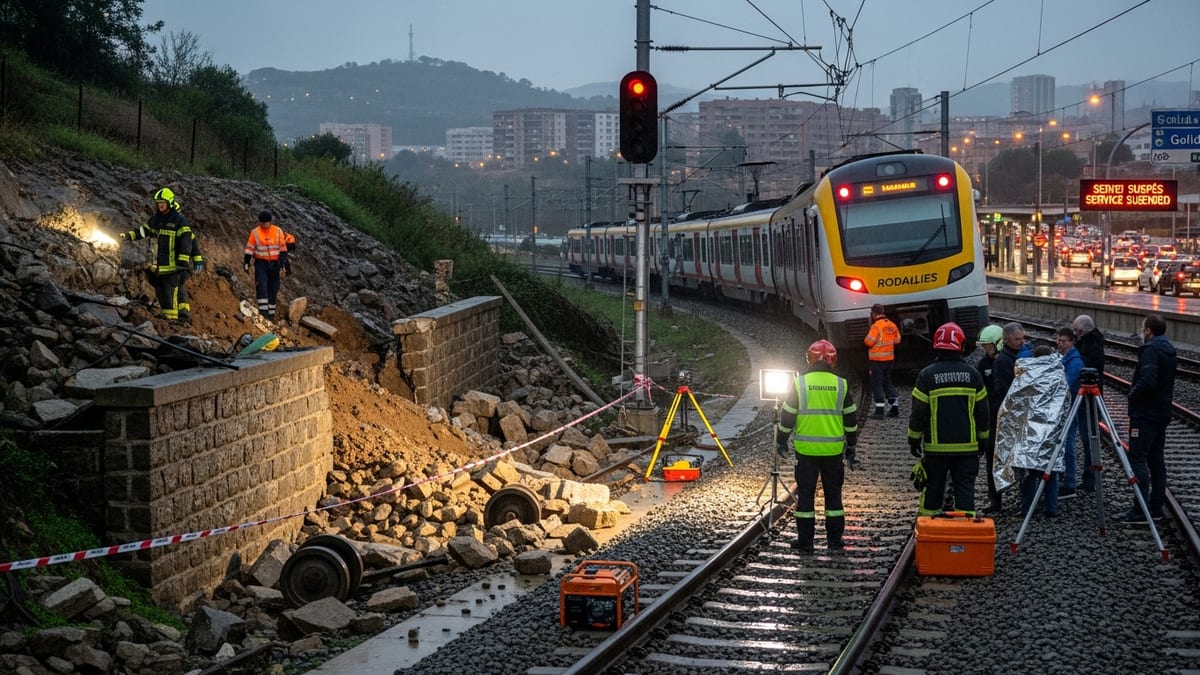
Afternoon Collision Near North Main and Hogan
Reports indicate the crash happened on Friday afternoon at the intersection of Hogan Street and North Main Street, just north of Houston’s central business district along the METRORail Red Line. The area sits between downtown and the Near Northside neighborhood, where trains share space with dense vehicle traffic and multiple signalized intersections.
Publicly available information shows that HFD’s Engine 9 was traveling with lights and sirens activated, responding to an emergency call, when the fire truck and the METRORail train entered the crossing at roughly the same time. The impact derailed at least part of the train and brought both vehicles to a stop in the intersection.
Images from local coverage show the train standing still on the Red Line tracks while emergency crews blocked off surrounding streets. The fire engine appeared to have front-end damage, while the train remained upright but off its usual alignment, indicating a low-speed but forceful collision.
According to published accounts, one train passenger was transported to a hospital for evaluation with injuries described as not life threatening. No serious injuries among the fire crew were immediately reported.
Service Disruptions on a Heavily Used Red Line
The derailment occurred on the METRORail Red Line, the oldest and busiest segment of Houston’s light rail system, which links downtown with neighborhoods to the north and south, including the Texas Medical Center and Houston Stadium at NRG Park. The line plays a central role during major events and on routine weekday commutes, carrying thousands of riders through the city’s core.
In the wake of the crash, trains were halted through the affected area while crews assessed the rail vehicles, inspected track and overhead equipment, and began rerailing operations. Published reports indicate that bus shuttles were dispatched to move passengers around the incident scene, a standard contingency when rail cars are disabled on the line.
The collision came on a weekend when Houston’s transit system is under heightened scrutiny and heavier demand, coinciding with World Cup activity and a surge of visitors relying on METRORail to reach downtown hotels, fan zones, and stadium events. Any prolonged disruption on the Red Line can quickly ripple across the network, lengthening travel times and crowding alternate routes.
As of early Saturday, publicly available information suggested that the derailment was localized, with no indication of long-term infrastructure damage. However, riders were urged through media coverage to check for updated schedules and potential delays as inspections and recovery work continued.
Ongoing Investigation Into Cause and Contributing Factors
Transit police and city investigators are reviewing video from the train and nearby cameras, along with data from both vehicles, to reconstruct the sequence of events. Early descriptions from METRO’s police department, cited in local news coverage, indicate that preliminary information pointed to the train being struck by the fire engine, but a full determination of cause is expected to take additional time.
Key questions include how traffic and rail signals were operating at the time, whether approaching motorists and the train operator had clear sight lines, and how the presence of an emergency vehicle using lights and sirens influenced right-of-way decisions in the intersection. Investigators are also expected to review the fire crew’s route, response protocols, and any communication between first responders and rail control.
Houston’s light rail system has experienced vehicle collisions before, particularly at surface crossings where trains operate alongside cars, trucks, and buses. Federal transit safety research notes that shared rights of way and complex intersections can increase interaction between trains and street traffic, making signal coordination and driver awareness critical to preventing crashes.
Once the immediate scene work is complete, rail safety specialists are likely to examine whether additional safeguards such as revised signal timing, enhanced warning signage, or modified emergency routing could reduce the chance of a similar incident at Hogan and North Main.
Safety Record and Community Concerns Around METRORail Crossings
Houston’s METRORail system has long been a focal point of both praise for its role in connecting dense urban districts and criticism over collision risks at street-level crossings. The Red Line, in particular, intersects numerous downtown and near-downtown streets, where left turns, cross traffic, and pedestrian movements converge with frequent train service.
National transit safety analyses have highlighted that the majority of light rail collisions in mixed traffic involve personal vehicles entering rail right of way, often during turning movements or when signals are misjudged. Houston’s layout, with trains running in medians or alongside general traffic lanes, places added emphasis on driver attentiveness and strict adherence to signals.
Local transit advocates have periodically raised concerns about intersection design and enforcement at busy METRORail crossings. The latest derailment is likely to renew those conversations, particularly around corridors like North Main where both commuter volumes and emergency responses are common.
Urban planners and transportation researchers often point to grade separation, physical barriers, and clearer lane markings as tools that can lower risk in high-conflict zones. For Houston, where major investments are already being marshaled for global events and long-term mobility projects, the incident may reinforce arguments for targeted safety upgrades along the Red Line.
What Riders and Drivers Should Expect in the Days Ahead
In the short term, riders using the Red Line near downtown should be prepared for possible slow orders, schedule adjustments, or substitute bus service as inspections continue and any needed repairs are completed. Media reports advise travelers headed to major venues or the central business district to allow extra time, especially during peak event windows.
For motorists around Hogan and North Main, intermittent lane closures and a continued presence of repair teams and inspectors are likely as crews finalize track work and confirm that signaling equipment is functioning properly. Drivers can expect law enforcement and transit personnel to manage traffic flow around the intersection during these operations.
Looking ahead, transportation observers say the collision offers a fresh case study in the challenges of mixing light rail with busy urban streets that also serve fire, police, and ambulance traffic. The outcome of the investigation and any recommended changes are expected to inform ongoing discussions about how Houston balances rapid transit expansion with safety for all road users.
For now, publicly available information indicates that the physical damage was contained, injuries were limited, and service is on track to resume through the corridor once the derailed train is removed and the line is cleared. How the city responds in terms of infrastructure and policy will determine whether this incident becomes an isolated disruption or a catalyst for broader improvements.