


Post Office travel insurance is one of the best known options on the UK high street, and for many travellers it is the default choice when they book a holiday. Familiar branding and easy online purchase can make it feel like a safe bet. Yet relying on habit alone is a poor way to buy financial protection for trips that may cost thousands of pounds. If you keep treating Post Office policies as a one-size-fits-all solution, you risk finding out the hard way that your cover is too thin, too narrow, or too hard to claim on just when you need it most.
Get the latest updates straight to your inbox!
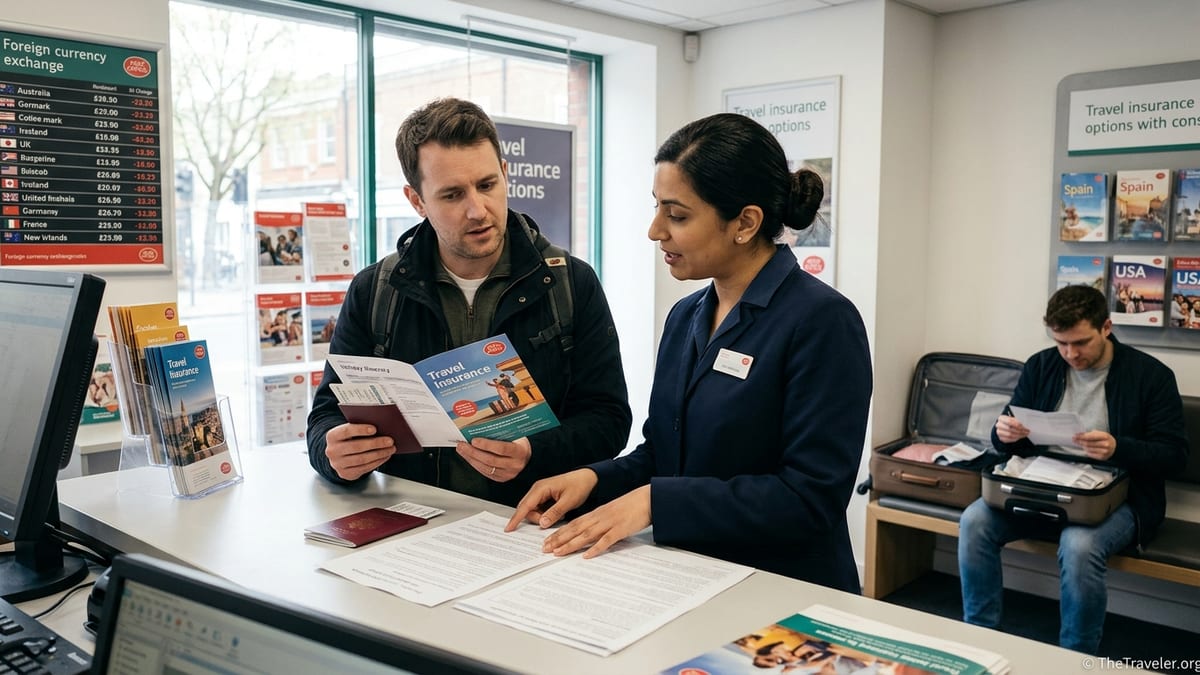
Stop Assuming the Default Level Is "Good Enough"
Post Office currently offers three main tiers of travel insurance for UK residents: Economy, Standard and Premier. Each tier has different limits for medical expenses, cancellation, baggage and personal liability. Independent reviews in late 2024 and 2026 have noted that while medical cover looks generous on paper, the cheaper tiers often have relatively low limits for cancellation and baggage compared with competitors in the same price range. If you simply click the cheapest option because it is branded Post Office, you may be accepting cover that does not match the real cost of your trip or belongings.
Consider a couple from Manchester booking a £4,000 package holiday to Florida for their family of four. An Economy-level cancellation limit that caps out around or below the per-person cost of the trip might not fully reimburse them if one child becomes ill before departure and they have to cancel the entire holiday. A traveller who does not check these limits could assume they are fully protected, only to find out at claim time that the policy will not cover the full loss.
The same problem crops up with baggage and valuables. Reviewers who have compared Post Office’s basic baggage limits with other brands often point out that single-item caps and overall baggage cover on the lower tiers are modest, especially for travellers carrying expensive cameras, designer luggage or sports equipment. If you are flying to a ski resort with £1,200 worth of skis and outerwear, an Economy policy where a single-item limit sits at only a few hundred pounds leaves a big uninsured gap if your gear goes missing.
Instead of defaulting to the cheapest Post Office option, line up the tier with your real exposure. Add up the value of your non-refundable trip costs and your most expensive belongings, then check which level of Post Office cover offers limits that comfortably exceed those figures. If even Premier looks tight, that is a signal to compare with other insurers rather than blindly proceeding.
Stop Ignoring Policy Wording on Covid-19 and FCDO Advice
Many UK travellers still assume that Covid-19 is treated like any other illness in every section of a travel policy. Post Office’s own Covid-19 guidance, updated regularly on its website, shows that the reality is more nuanced. The insurer typically provides medical cover if you catch Covid-19 abroad and need emergency treatment or repatriation, but is far stricter on trip cancellation, changes in Foreign, Commonwealth & Development Office (FCDO) advice, and claims that arise from government restrictions or fear of travelling.
For example, Post Office explains that there is no cover if you travel against FCDO advice where it states against all travel, or if new government restrictions make a place unsafe after you booked but before you go. There is also no cover if you simply decide not to travel because you are worried about catching Covid-19, or if you buy the policy after testing positive or while awaiting a test result for a trip starting within 14 days. In practice, that means a teacher from Birmingham who books a half-term city break to Rome, then cancels because headlines about a Covid spike make them nervous, will almost certainly not be able to claim back their £900 in flights and hotels from a standard Post Office policy.
Real-world reviews of Post Office and other major UK travel insurers show that many rejected claims stem from misunderstandings about these pandemic-related exclusions. People may see “Covid cover included” on a comparison site and assume that includes any scenario where the virus disrupts their trip. In reality, benefits are tightly defined. A positive PCR test that forces you or a named travelling companion to cancel could be covered, while a sudden rule change that makes you quarantine on return might not be.
To get better cover, stop skimming the Covid-19 summary and read the full wording around FCDO advice, government restrictions and testing conditions before you buy. If you are planning trips to destinations that have a track record of rapid policy shifts, consider whether a different insurer offers more flexible disruption protection, or whether you can shift more risk onto flexible airfares and hotel bookings rather than relying on insurance to fix every scenario.
Stop Underinsuring Medical Costs and Pre-existing Conditions
Post Office’s medical cover headline numbers can look impressive, with limits typically in the millions of pounds for emergency treatment and repatriation. Independent analyses in 2026 highlight these high ceilings as one of the product’s strongest features, particularly on Standard and Premier tiers. That said, large limits do not automatically mean you are personally protected, especially if you have any pre-existing medical conditions or if you choose a tier that requires you to pay a chunky excess on every claim.
Imagine a 62-year-old traveller with well-controlled type 2 diabetes booking a three-week tour of California and the national parks. They buy a Post Office Economy policy online without going through the full medical screening questions, assuming their condition is minor because they feel healthy. If they are later admitted to a US hospital with complications that a doctor links to their diabetes, the insurer could argue that the condition was pre-existing and not properly declared. Even with a £10 million medical limit, the claim might be refused entirely, leaving the traveller facing bills that can easily exceed £50,000 in the United States.
Real customer stories, shared in consumer media and on review platforms, repeatedly show that non-disclosure is one of the most common reasons for claim refusals across the UK travel insurance market. Post Office is no exception. In some cases, travellers reported that they did not realise they needed to declare long-resolved issues or mild conditions like high blood pressure or mild asthma. Others believed their GP’s reassurance that they were “fit to travel” meant there was nothing to disclose.
If you want better protection from a Post Office policy, treat medical screening as non-negotiable. Use the online questionnaire or call the screening line and declare anything that has required medication, investigation or hospital visits in recent years, even if it seems trivial. Accept that this may increase your premium or lead to a higher tier recommendation. Then check the excess on medical claims: a lower excess on a Premier policy may be worth paying extra for if you are travelling somewhere with very high medical costs like the United States, Canada or the Caribbean.
Stop Overlooking Baggage, Valuables and Gadget Gaps
Post Office’s marketing often highlights emergency medical and cancellation cover, but the fine print on baggage, valuables and gadgets tells a more complex story. The core policies set overall baggage limits, single-item limits and separate caps for valuables. Gadgets such as smartphones, tablets and laptops may be excluded from the standard baggage section altogether and only covered if you buy an additional gadget add-on arranged through a specialist partner.
Take a fairly typical scenario: a London-based graphic designer flies to Lisbon with a £1,000 smartphone, a £1,800 MacBook and a camera worth £700. Their suitcase with clothes and toiletries is worth another £400. If they rely on a Standard Post Office policy that sets a baggage limit around £1,500 and a single-item limit of a few hundred pounds, they will not recover anything close to the £3,500 total value if the cabin bag holding both devices is stolen from a cafe. Even if they purchase the gadget add-on, that cover is often subject to its own separate single-item caps, proof-of-ownership requirements and rules about not leaving items unattended in a public place.
Customer reviews of Post Office travel insurance on platforms like Trustpilot and independent comparison sites often mention frustration around baggage and valuables claims, especially when theft occurs from a hotel room, hire car or beach bag. Insurers typically require evidence of forcible and violent entry or a police report within a strict timeframe, and they may reduce or deny claims when items are left unattended, even briefly. That means that a traveller who leaves a bag on a bar stool while they go to the restroom could find their claim rejected on the basis that the item was not under their direct supervision.
To improve your protection, stop assuming that “baggage cover included” means your tech and jewellery are fully insured. Before you buy a Post Office policy, read the sections on valuables and consider whether the single-item and total limits match what you will realistically carry. It may make more sense to insure certain gadgets under your home contents policy’s personal possessions section, use a specialist camera insurance provider, or travel with less high-value gear rather than rely on add-ons that still leave big gaps.
Stop Treating Claims as an Afterthought
Analyses of Post Office travel insurance published in 2024 and 2026 highlight a recurring theme: on paper, the policies score reasonably well for breadth of cover, yet customer sentiment around claims handling is much weaker. Fairer Finance gives the brand strong product ratings but notes comparatively poor feedback on claims experience, and Trustpilot scores for Post Office travel insurance in 2025 and 2026 sit in the lower range compared with some rivals. Many complaints focus on slow responses, requests for repeated documentation, and confusion about what evidence is needed to pay out.
Consider a solo traveller from Glasgow whose flight to Bangkok is cancelled at short notice due to an airline technical issue. They rebook at their own cost to avoid losing the first night of a pre-paid hotel, then submit a claim under the travel delay and missed departure sections of their Post Office policy. Weeks later, they receive a request for original boarding passes, written airline confirmation of the cause of the cancellation, receipts for all additional expenses, and proof that they sought compensation from the airline first. Because they did not keep some of those documents or did not request written confirmation at the time, their claim is delayed or partially refused.
This kind of experience is not unique to Post Office, but the brand’s own claims guidance makes clear that travellers are expected to follow a structured process: notify the insurer or assistance provider quickly, mitigate losses where possible, and keep detailed evidence of what happened. Yet many people still buy the policy, file it away in their email, and only read it properly once something has gone wrong abroad.
If you want better outcomes from Post Office cover, stop treating the claims process as a distant problem. Before you travel, read the “How to claim” and “What we need from you” sections of your policy. Save the emergency assistance number and claims portal link in your phone. If something happens, gather documentation immediately: police reports for theft, delay confirmation from airlines, receipts for replacement purchases and medical reports translated into English where possible. The easier you make it for any insurer to see what went wrong and what it cost you, the more likely you are to see a prompt, full payout.
Stop Buying Annual Multi-Trip by Habit
Post Office sells both single-trip and annual multi-trip policies. The latter can look attractive if you travel frequently, but they are not automatically the better value or better cover. Annual products come with maximum trip lengths and age limits, and Post Office is no exception. Independent reviewers have noted that while there is no upper age limit on many single-trip policies, annual multi-trip cover tends to cut off at around age 75 and may restrict the number of days you can be overseas in a policy year.
Imagine a recently retired couple aged 68 and 70 planning three substantial trips in a year: a 21-day cruise in the Mediterranean, a 28-day visit to family in Australia and a 10-day city break in North America. They instinctively reach for a Post Office annual multi-trip policy, assuming it will be cheaper and more convenient than buying separate single-trip covers. However, if the annual policy caps individual trip lengths at 31 days and has regional pricing that makes long-haul destinations much more expensive, they may find that a mix of two single-trip policies with tailored medical and cruise add-ons provides stronger and potentially cheaper protection.
Another subtle risk is assuming that every trip you take will fall within the same risk profile. A simple city break in Paris where you use public transport and stay in a mid-range hotel is very different from a trekking holiday in Nepal or a self-drive safari in Namibia. Post Office policies include a range of sports and activities automatically, but more hazardous pursuits or trips at high altitude may require a bolt-on or a separate specialist insurer altogether. Buying a one-size-fits-all annual policy and then stretching it to cover radically different trip types is a recipe for disappointment if you later discover that your Everest Base Camp trek was outside the allowed activity list.
To get better cover, review your upcoming travel plans for the next 12 months before choosing between annual and single-trip. Price out a realistic basket of single-trip policies, including any cruise or winter sports add-ons, and compare that total with Post Office’s annual premium at the level of cover you need. For some travellers, especially those making several short European breaks, the annual option will still be a solid value. For others, particularly older travellers or those mixing standard holidays with adventure travel, a tailored mix of policies may provide superior protection.
Stop Comparing Only on Brand and Price
Post Office’s long history and high-street presence give it a strong halo effect. Many UK holidaymakers buy its travel insurance at the same time as currency or a travel money card, or via the Post Office travel app, without checking how its cover compares with independent specialists or products offered directly by insurers like AXA, Aviva or Allianz. Consumer finance outlets that have reviewed Post Office in 2024 and 2026 generally describe it as competitively priced but note that cheaper or more flexible options exist for certain traveller profiles, especially younger backpackers, those with complex medical histories, or people taking extended gap years.
Consider a 24-year-old graduate from Leeds planning a six-month backpacking trip around Southeast Asia. They see that a Post Office single-trip policy can cover trips up to a full year and quickly buy the Standard level. A closer look, however, might reveal that the policy caps individual stays in certain countries, has strict limits on manual or volunteer work, and charges a relatively high excess on non-medical claims. A specialist backpacker insurer, meanwhile, might offer more generous cover for activities like working in hostels, riding motorbikes under local licence rules, and losing pre-booked internal flights, even if the initial premium is slightly higher.
Another UK-based example could be a family in Bristol who book an all-inclusive resort in Mexico and add Post Office cover through a comparison site, selecting it primarily because it sits near the top of the results with a familiar name and mid-range premium. Without digging into the details, they may not notice that the policy’s cancellation limit only just matches their total trip cost and that its coverage for airline insolvency, excursion bookings or golf equipment is weaker than several slightly more expensive alternatives further down the search results.
Rather than leaning on brand recognition, build a short checklist of what matters most for your trip: cancellation limit, medical limit, policy excess, baggage and valuables caps, sports and activities list, and customer service reputation. Then compare Post Office against at least two or three other providers for the same destination and trip length. In some cases, you will find that Post Office offers a very solid package; in others, you may decide that a different insurer better matches your personal risk profile.
The Takeaway
Post Office travel insurance is far from a bad product. It is widely available, reasonably priced for many age groups and destinations, and backed by substantial underwriters. However, relying on it automatically, buying the cheapest tier, or assuming it will work like a safety net for any conceivable problem are all habits that undermine your protection. Real-world complaints and reviews show that gaps typically emerge not because the policy is uniquely poor, but because travellers misunderstand its scope or try to stretch it beyond what it was designed to cover.
If you want better cover, stop treating travel insurance as a last-minute checkbox and start treating it as a tailored financial tool. With Post Office, that means scrutinising the policy wording around Covid-19, FCDO advice and pre-existing conditions; checking that baggage and gadget limits reflect what you actually carry; understanding how claims must be documented; and questioning whether an annual multi-trip policy truly fits your plans. By stepping away from assumptions and into informed choices, you can either buy Post Office cover with confidence or recognise when another insurer is a better fit for your next journey.
FAQ
Q1. Is Post Office travel insurance good enough for trips to the United States?
For many healthy travellers, Post Office’s higher tiers offer strong emergency medical limits that are suitable for the United States, where hospital bills can be extremely high. However, you still need to declare pre-existing medical conditions, check the medical excess and make sure that the cancellation limit and any optional add-ons match the true cost and style of your trip, especially if you are cruising or hiring a car.
Q2. Does Post Office travel insurance cover Covid-19 cancellations?
Post Office typically covers cancellations when you or a named travelling companion test positive for Covid-19 and meet specific timing and documentation requirements. It does not usually cover cancellations because you are worried about travelling, because general government restrictions change, or because FCDO advice shifts to warning against travel to your destination. Always read the current Covid-19 section of the policy before buying.
Q3. Are gadgets like phones and laptops covered automatically?
Expensive gadgets are not always fully covered under the standard baggage section of Post Office travel policies. There are separate limits for valuables, and certain electronic devices may only be insured if you add a specific gadget extension, which comes with its own single-item limits and conditions about supervision and storage. If you travel with high-end tech, you should check the wording carefully and consider whether supplementary cover is needed.
Q4. What happens if I forget to declare a pre-existing medical condition?
If you fail to declare a relevant pre-existing medical condition, Post Office, like most UK insurers, can reduce or refuse related claims. That could mean no payout for medical expenses that doctors link to the undeclared condition, even if the policy’s overall medical limit is very high. To avoid this, you should answer the medical screening questions in full and update the insurer if your health changes before you travel.
Q5. Is an annual multi-trip Post Office policy always better value than single-trip cover?
An annual multi-trip policy can be cost-effective if you take several short holidays in a year, particularly within Europe. However, Post Office’s annual cover has age limits, trip-length caps and regional pricing that may not suit everyone. If your plans include long-haul journeys, extended stays or adventure travel, it is sensible to price up single-trip policies and compare both cost and coverage before deciding.
Q6. How can I improve my chances of a successful claim with Post Office?
To improve your chances, you should read the claims section of your policy before you go, keep digital and paper copies of receipts and booking confirmations, report incidents quickly to the local authorities and the insurer, and gather written evidence such as police reports or airline delay letters. Clear documentation and prompt communication are critical factors in how quickly and fully a claim is settled.
Q7. Does Post Office travel insurance cover adventure sports or activities?
Post Office includes a range of common sports and activities as standard, such as recreational skiing on marked pistes or snorkelling. More hazardous pursuits, like off-piste skiing without a guide, mountaineering, scuba diving beyond certain depths or organised endurance events, may require an upgrade or may not be covered at all. You should always check the activities list in the policy to confirm that anything you plan to do is included.
Q8. Can I rely on Post Office baggage cover for expensive jewellery or designer items?
Baggage cover with Post Office is designed for typical holiday possessions and applies overall and single-item limits, plus separate caps for valuables. These limits are often too low to fully replace high-end jewellery, watches or multiple designer outfits. If you plan to travel with items of that kind, it is wiser to keep them to a minimum and investigate specialist or home insurance cover that extends worldwide.
Q9. Is buying Post Office insurance through the travel app any different from buying online?
Buying via the Post Office travel app is mainly a matter of convenience; the underlying policies and cover levels are essentially the same as those available on the website. The app can make it easier to store documents, view policy details and access assistance numbers on the move, but you should still read the full wording and choose the level of cover based on your needs, not just on how simple it is to purchase.
Q10. When should I consider a different insurer instead of Post Office?
You might consider another insurer if you have complex or multiple pre-existing medical conditions, are over the age limits for certain Post Office products, plan extended backpacking or adventure trips, or need unusually high cover for baggage, gadgets or specialist equipment. In these cases, comparing Post Office with at least two or three specialist providers can help you find a policy that is better tailored to your circumstances.