


More news on this day
Escalating conflict involving Iran, Israel and U.S. forces across West Asia has prompted the U.S. State Department to tighten travel guidance for the broader Middle East, warning Americans to reassess nonessential trips and prepare for sudden disruption as regional skies and sea lanes face mounting security risks.
Get the latest news straight to your inbox!
Heightened Alerts as Regional Conflict Intensifies
Publicly available State Department materials updated in late July describe a "complex" security picture across the Middle East, citing heightened tensions and the potential for rapid, unforeseen escalation. The language reflects a conflict that has widened since U.S. and Israeli airstrikes on Iran earlier this year and subsequent Iranian missile and proxy attacks across the region.
The Worldwide Caution notice, revised in recent days, urges Americans to exercise increased vigilance, particularly in countries bordering the Gulf and eastern Mediterranean. The advisory highlights the risk that groups aligned with Iran could target locations associated with the United States, including businesses, hotels and other venues that attract Western travelers.
These warnings come as U.S. forces continue repeated strikes on Iranian targets and as shipping and aviation corridors that underpin regional travel face new threats. Reporting from major wire services in recent days has pointed to near-nightly U.S. military operations and repeated incidents involving commercial shipping near the Strait of Hormuz, a key channel for both energy exports and civilian traffic.
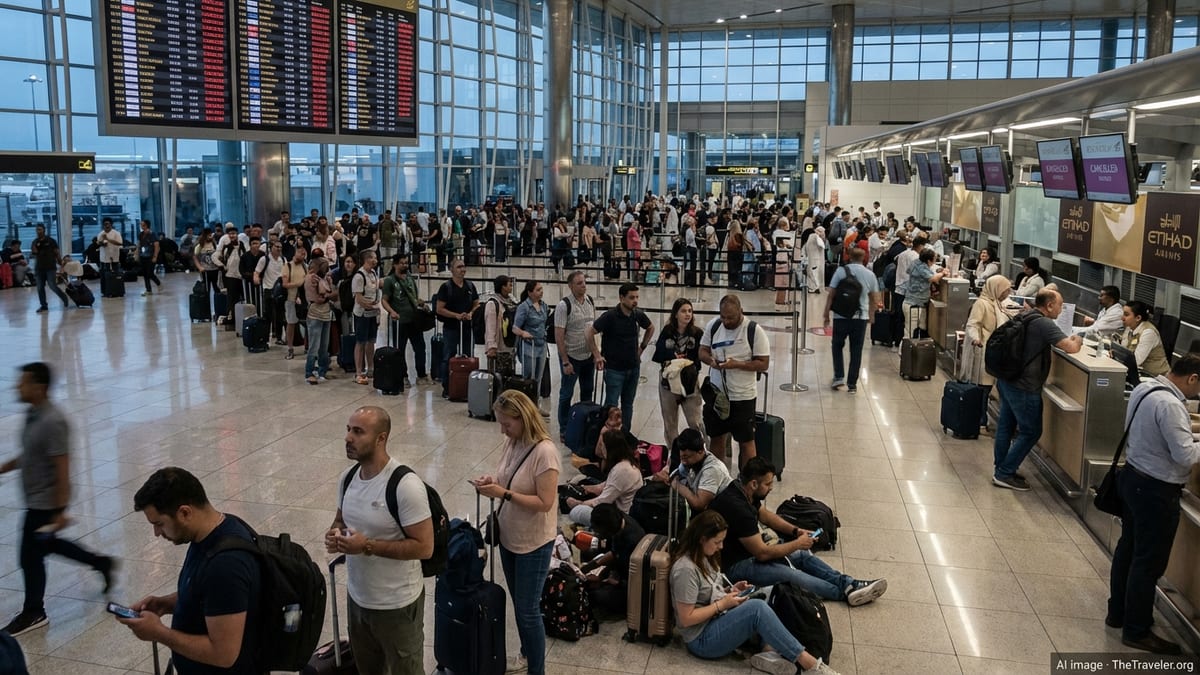
For travelers, the combination of open military confrontation, proxy activity and sporadic attacks on infrastructure has translated into higher uncertainty around flight schedules, airspace closures and the reliability of key hubs that have long functioned as regional gateways.
Country-Specific Advisories Tighten Across West Asia
Alongside the global notice, the State Department has refreshed a series of country-specific advisories covering what it categorizes as West Asia and the broader Middle East. Several destinations central to regional air travel and tourism now carry elevated warning levels, including repeated references to the risk of missile or drone attacks and the potential for renewed cross-border fire.
Lebanon is currently under a Level 4 "Do Not Travel" advisory, reflecting ongoing clashes along its southern frontier, the presence of armed groups and periodic strikes linked to the wider Iran conflict. The department has previously ordered the departure of nonemergency U.S. personnel and their families, a step that often signals concern about the ability to provide rapid consular assistance in a crisis.
In Iraq, updated guidance notes that nonemergency U.S. government staff have also been directed to leave, citing continued threats from militias and the risk of indirect fire or drone activity near diplomatic and military sites. Similar concerns underpin the warning levels applied to Israel, the West Bank and Gaza, where the confluence of local tensions and regional escalation has kept parts of the country at the highest risk category.
The United Arab Emirates, long viewed as a relatively stable Gulf hub, is subject to a heightened advisory that references the threat of armed conflict and possible attacks on locations frequented by foreigners. Earlier this year, the State Department instructed nonessential U.S. government employees and family members to depart the country, underscoring the degree to which the Iran confrontation has spilled into Gulf airspace.
Impact on Air Routes, Sea Lanes and Transit Hubs
The latest advisories and regional reporting point to growing concern around key transit arteries that many travelers use to cross West Asia without necessarily staying overnight. The Strait of Hormuz and the Bab el Mandeb at the entrance to the Red Sea are both described in international coverage as focal points of tension, with commercial tankers and shipping convoys facing intermittent attacks and near misses.
Although the State Department does not publish route-by-route safety guidance, notices to air missions and maritime warnings from U.S. and partner agencies have encouraged carriers to adjust flight paths and shipping lanes to avoid areas where Iranian forces or affiliated groups are active. Travelers may encounter longer flight times, emergency diversions or last-minute rerouting as airlines respond to shifting security assessments.
Regional airports that function as major connection points are also under pressure. Public updates from foreign ministries and aviation authorities in the Gulf describe periods of disrupted schedules, temporary airspace closures and tightened security screening after nearby strikes or intercepted projectiles. Even when airports remain open, cascading delays elsewhere in the network can leave passengers stranded or force involuntary stopovers.
For those relying on cruise itineraries or ferry services touching the eastern Mediterranean, Gulf of Oman or Red Sea, operators have begun adjusting routes and canceling port calls in response to insurance and security constraints. Travel industry commentary indicates that some carriers are quietly substituting alternative ports or suspending departures that would transit the most exposed waters.
Guidance for Americans With Imminent Travel Plans
Publicly available State Department materials emphasize that decisions about travel ultimately rest with individual citizens, but they lay out clear expectations for those who choose to proceed. Travelers are urged to closely monitor embassy alerts, enroll in the Smart Traveler Enrollment Program and maintain flexible, refundable bookings wherever possible to accommodate sudden changes in security conditions.
The advisory framework distinguishes between routine travel, high-risk trips and destinations that should be avoided entirely. In countries marked at Level 3, Americans are encouraged to reconsider nonessential visits, prepare detailed contingency plans and identify safe locations where they could shelter if conflict expands. Level 4 notices advise against travel and often mention a reduced capacity to assist citizens who choose to remain or enter despite the warning.
Insurance considerations have also become more prominent. Industry analyses note that many standard policies limit or exclude coverage for acts of war, terrorism or government travel bans, a factor that can leave travelers bearing the cost of canceled flights or emergency evacuations. Some specialized insurers offer riders that address security-related incidents, but these often come with strict conditions and higher premiums.
Travelers who decide to continue with plans to or through West Asia are encouraged, in public advisories and travel-security briefings, to maintain a low profile, avoid demonstrations, be aware of locations associated with Western diplomatic or military activities and have backup communication methods in case of network disruptions.
What This Means for Future Trips to West Asia
For the broader travel industry, the current escalation has raised questions about the resilience of West Asia as a long-haul transit region and tourism destination. Analysts tracking airline schedules indicate that some carriers have trimmed frequencies or swapped widebody aircraft for smaller jets on routes most exposed to conflict spillover, even as they attempt to preserve key connections between Europe, Asia and Africa.
Tour operators that once marketed multi-country itineraries across the eastern Mediterranean and Gulf are now focusing on more contained routes or delaying departures until the outlook becomes clearer. In parallel, some destinations outside the immediate conflict zone are promoting themselves as alternative hubs, emphasizing their distance from active hostilities and highlighting stable security ratings.
Travel planning timelines have shortened as well. Rather than booking months in advance, many international travelers are waiting to see how the situation evolves week by week, reacting to State Department notices and regional developments before committing. This pattern adds volatility for airlines and hotels but allows travelers to better gauge risks in a fast-moving environment.
While there is no clear indication in public reporting of when tensions might ease, the State Department’s recent moves signal that West Asia travel will likely remain complicated for the foreseeable future. Anyone considering routes through the region in 2026 is being urged, via official advisories and expert commentary, to approach plans with caution, flexibility and an expectation that conditions can shift with little warning.