


Antigua Guatemala is a small, walkable colonial city laid out on a simple grid, with pastel facades, cobblestone streets and church ruins framed by volcano views. For most visitors, the ideal place to stay is within or very close to the historic core so that you can walk safely to restaurants, cafes and sights in the evenings without relying on taxis. Because distances are short, choosing the right neighborhood is less about covering ground and more about finding the right balance between atmosphere, noise and budget.
Get the latest updates straight to your inbox!
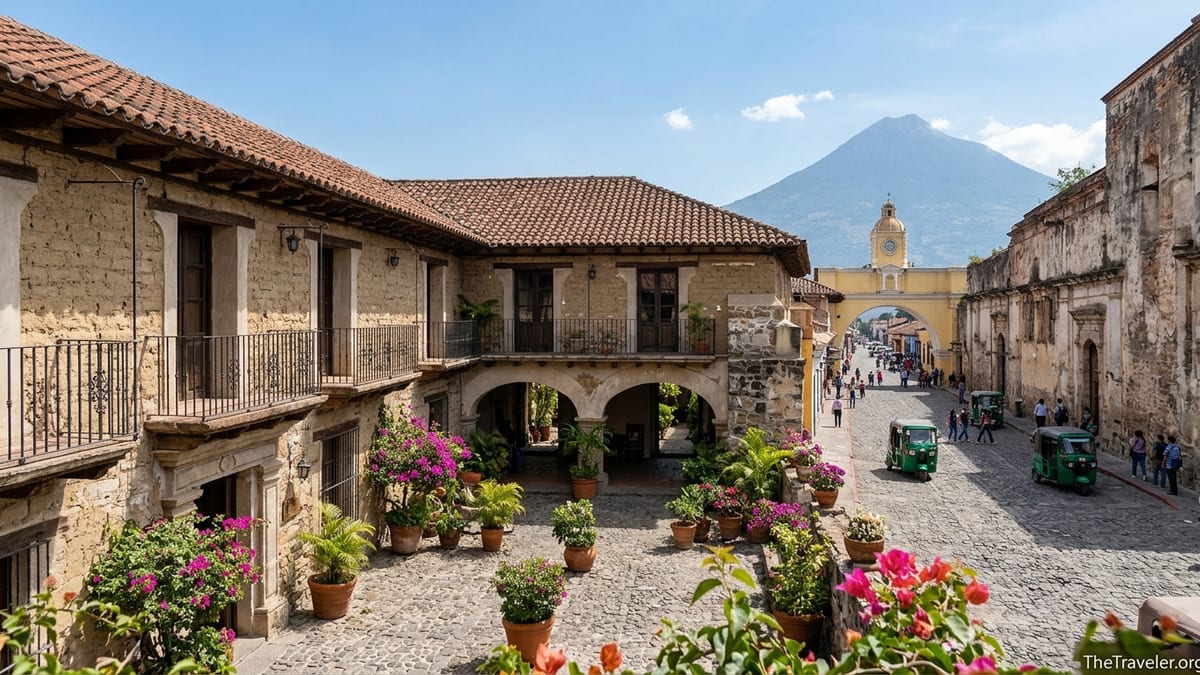
Understanding Antigua’s Layout and Main Lodging Areas
Antigua’s center is organized around Parque Central and a handful of main streets such as 5a Avenida, home to the famous Santa Catalina Arch. Most hotels, guesthouses and hostels are within a 10 to 15 minute walk of the park, which means first-time visitors rarely need to worry about being too far from the action. What matters more is how close you want to be to nightlife, traffic and church bells, which can ring early and often.
For practical trip planning, it helps to think in four broad lodging areas. The first is the immediate historic center in and around Parque Central and the main avenues. The second consists of quieter residential streets a few blocks away that are still easily walkable to the park. The third covers fringe and edge-of-town areas, sometimes with larger gardens and better views but longer walks. A fourth category includes countryside retreats in nearby villages and on the hillsides, which are not part of the walkable core but appeal to travelers seeking nature and seclusion.
Across these areas you will find a mix of property types, from grand converted convents and monastery-style hotels to compact colonial inns, contemporary boutiques, basic guesthouses and sociable hostels. Antigua does not specialize in large all-inclusive resorts or tower-style business hotels. Instead, most stays are low-rise, built around courtyards with thick walls, tile roofs and a strong sense of place.
Because many buildings are historic, room layouts can be quirky and sound can travel through courtyards. When choosing where to stay, it is worth reading recent guest feedback about noise, natural light, Wi-Fi and room temperature. Older structures can be cool and dim, which is pleasant in the dry season for some travelers but less appealing for others who prefer more modern comforts.
Staying in the Immediate Historic Center
The blocks directly around Parque Central and along 4a and 5a Avenidas are the most central addresses in Antigua. Here you can step out of your hotel and be surrounded by cafes, restaurants, tour agencies and main sights in minutes. This area is ideal for short first visits, travelers with limited mobility, and anyone who prioritizes atmosphere and convenience over absolute quiet.
The tradeoff is noise and crowds. Street performers, traffic over cobblestones, early morning deliveries and late-night bar patrons can all be audible, especially in rooms facing the street. Church bells from the cathedral and other nearby churches also start early. Many higher-end hotels mitigate this with thick walls and interior-facing rooms, but light sleepers should pay attention to room descriptions and ask for courtyard or rear rooms when possible.
In the high-end bracket, Hotel Museo Casa Santo Domingo stands out as an iconic convent-turned-hotel with on-site museum spaces, extensive gardens, a spa and multiple pools. Recent rates often start around the mid to high 100s in US dollars per night in lower-demand periods and climb higher on busy weekends and holidays. Another polished option close to the core is El Convento Boutique Hotel, which offers stylish suites, a pool and refined service in a converted colonial property that still feels intimate rather than resort-like.
In the midrange, properties such as Posada del Angel and Hotel Mesón de María typically offer classic colonial rooms built around leafy courtyards, within roughly a five to eight minute walk of Parque Central. For budget travelers who want a central base, hostels and budget hotels near the main streets, such as Hostal Antigua and several newer backpacker-oriented properties, provide dorms and simple private rooms. Some of these hostels emphasize a social but not all-night-party atmosphere, which suits many solo travelers and digital nomads who want to sleep reasonably well.
Quieter Residential Streets within Walking Distance
Just a few blocks away from the central square, Antigua’s residential streets feel noticeably calmer, especially at night. These areas still sit firmly within the historic grid, usually five to fifteen minutes’ walk from the park, but benefit from less through-traffic, fewer late-night bars and more local life. They work well for families, older travelers and anyone sensitive to noise who still wants to walk everywhere.
Because plots are slightly larger and traffic lighter, many of the city’s nicest midrange and boutique hotels are here. You will find colonial guesthouses with plant-filled courtyards, rooftop terraces with volcano views, and small pools tucked behind high walls. Typical nightly rates in these streets can range from roughly 60 to 130 US dollars in low and shoulder periods for well-reviewed midrange and boutique properties, rising toward 150 to 200 dollars at the upper end during busy weekends or holidays.
Examples in this quieter-but-central band include Cacao Boutique Hotel, which recent boutique roundups highlight for its intimate feel and strong guest satisfaction, and small inns such as Casa de los Sueños or similar courtyard-centered properties that emphasize tranquil gardens over street frontage. For digital nomads, hostels and small hotels slightly removed from the noisiest bar streets often receive better comments about Wi-Fi stability and the ability to work from communal areas during the day.
Budget-minded travelers will also find guesthouses and hostels in these residential blocks, sometimes in former family homes with shared kitchens and terraces. Prices for dorm beds in this zone can start around 12 to 18 US dollars in quieter periods, with simple private rooms beginning roughly in the 30 to 50 dollar range, depending on amenities. As always, checking the most recent reviews is wise, as management and atmosphere in smaller places can change over time.
Fringe and Edge-of-Town Locations with Gardens and Views
On the edge of Antigua’s grid and in the immediate outskirts, several higher-end boutique hotels and villa-style stays take advantage of slightly larger plots, more extensive gardens and better volcano views. Walking to Parque Central from these places might take 15 to 25 minutes, or you may prefer to use taxis or hotel-arranged tuk-tuks at night. In return, you gain a quieter, more spacious environment and often more resort-like facilities.
This area suits travelers who prioritize relaxation over being in the middle of everything. Couples on romantic trips and families looking for space and on-site pools often gravitate toward these fringe locations. You are still close enough for day and evening outings into town, but your base feels more like a retreat. The main downside is being less likely to pop back to your room in the middle of sightseeing or to stroll home very late at night.
Among high-end options, several boutique hotels highlighted in recent luxury and boutique roundups sit on the edges of the historic grid or just beyond, combining colonial architecture with contemporary comforts. These often feature pools, small spas, restaurant terraces and curated design, with nightly rates commonly starting in the low to mid 200s in US dollars during regular weeks and climbing for peak periods. Villa-style stays and small compounds with multiple rooms around shared gardens can also fall into this tier, providing semi-private experiences for groups or larger families.
Midrange travelers will find guesthouses and small hotels on the fringe that offer more garden space and sometimes parking compared with tightly packed central streets. For guests arriving with a rental car, this can be a decisive advantage, since some central hotels have limited or no on-site parking. Airport shuttle coordination and volcano tour pickups remain straightforward from these addresses, but it is sensible to confirm door-to-door pickup policies with both hotel and tour operator before booking.
Countryside Retreats Around Antigua
Beyond Antigua’s immediate outskirts, in nearby villages and on the surrounding hillsides, a handful of lodges, eco-stays and retreat-style properties provide a rural alternative. These might be located toward the slopes of Volcán de Agua or in small communities a short drive from town. They usually offer sweeping views, abundant gardens and a slower pace, sometimes with yoga classes or wellness programming built in.
These countryside retreats are not practical bases if you expect to wander Antigua’s streets morning and evening or experience the city’s cafe and restaurant scene daily. Reaching the central park typically requires a 15 to 30 minute drive, and you will rely on shuttles, taxis or private transfers, particularly at night. For that reason, they appeal most to repeat visitors, travelers combining remote work with nature, or those planning a few nights of decompression at the beginning or end of a Guatemala itinerary.
Price levels at these properties vary widely, from simple cabins that are only modestly more expensive than in-town guesthouses to upscale eco-lodges that command premium nightly rates comparable to top-tier city boutiques. When evaluating options, pay close attention to transport logistics, arrival instructions after dark, and whether the property can arrange reliable transfers from Guatemala City airport as well as volcano hikes and day trips into Antigua.
For safety and comfort, it is wise to confirm that countryside accommodations have recent positive reviews mentioning staff responsiveness, hot water reliability and internet connectivity if you plan to work remotely. Weather conditions in the hills can be cooler and wetter than in the city itself, so room heating, extra blankets and indoor common areas matter more here than in central Antigua.
Key Accommodation Types in Antigua Guatemala
Antigua’s most atmospheric stays occupy historic structures, including former convents, monasteries and large colonial mansions. These properties usually feature thick stone or adobe walls, cobbled courtyards, cloistered walkways and on-site chapels or ruins. Rooms may be spread across low-rise wings, and many open directly onto gardens or interior patios. Guests who value sense of place, local art and museum-like details gravitate toward these hotels, which sit mostly in the upper midrange to luxury price bands.
Midrange colonial hotels and inns are the backbone of Antigua’s accommodation scene. Typically family-owned or small-scale, they cluster within walking distance of the park and combine traditional architecture with practical modern amenities. Rooms often have high ceilings, wooden beams and colorful textiles, but air conditioning is less common than in newer builds. Travelers willing to accept fans and natural ventilation instead of full climate control usually find good value here.
Over the last decade, intimate boutique and design-forward properties have multiplied. These stays may be in refurbished colonial houses or newer buildings that echo traditional styles while incorporating contemporary interiors. Expect curated decor, small courtyards or plunge pools, rooftop terraces and personalized service. Strong Wi-Fi, coffee bars suitable for remote work and thoughtful lighting are more common in this segment than in some older hotels.
At the budget end, Antigua offers numerous guesthouses, hostels and hybrid hostel-hotels. Some specialize in party atmospheres with on-site bars and late music, while others explicitly brand themselves as social but not wild, catering to digital nomads and solo travelers who value quiet hours. Dorm beds can often be found from the low teens in US dollars in low season, with better-rated, centrally located hostels charging somewhat more. Private rooms in budget properties may lack windows to the outside, relying instead on internal courtyard light, so checking room photos is important.
Price Ranges and Seasonal Patterns
Nightly prices in Antigua fluctuate with season, day of week and demand from both international and Guatemalan travelers. Midweek nights in shoulder periods such as May or early September can be significantly cheaper than peak-season weekends. Broadly speaking, well-reviewed budget hostels and guesthouses in or near the center can range from roughly 12 to 25 US dollars for dorm beds and 30 to 60 dollars for simple private rooms in lower-demand periods.
Midrange colonial hotels and smaller boutiques that appeal to most first-time visitors commonly charge in the approximate range of 70 to 150 US dollars per night outside of holidays and major events, depending on room size and amenities such as breakfast, small pools or rooftop terraces. High-end boutique and convent-style hotels, particularly those with pools, spas and extensive grounds, often start in the mid to high 100s in US dollars and rise above 250 dollars on busy dates.
Semana Santa, which typically falls in March or April, is the clearest peak period. Studies of visitor flows and recent reporting from the Guatemalan tourism sector indicate that hotel occupancy in Antigua during Holy Week can approach or reach full capacity, and sector representatives regularly note advance reservations averaging well above normal weeks. Local and international travelers also drive up demand around Christmas, New Year and some national holidays, as well as popular long weekends.
Because there is no single official rule on when hotels sell out, patterns must be inferred from booking calendars, availability checks and traveler reports. Looking several months ahead of Holy Week, it is common to see limited availability and higher rates at the most sought-after central properties. For Semana Santa stays, booking many months in advance is prudent, especially if you want specific hotels, courtyard rooms or parking. For regular weekends in high season, reserving at least several weeks ahead usually secures the best choice of rooms and prices.
What to Look For in an Antigua Hotel
When comparing properties in Antigua, certain details matter more than they might in newer cities. One of the most important is whether your room faces a quiet courtyard or the street. Courtyard rooms tend to be calmer and cooler, but they can also pick up noise from common areas if the hotel has a popular bar or restaurant. Street-facing rooms may have balconies and more natural light but are exposed to traffic noise, festival processions and early morning activity.
Ventilation and temperature are also key considerations. Many older colonial buildings rely on thick walls, cross-breezes and ceiling fans rather than air conditioning. This can be comfortable during much of the year, but some travelers prefer the predictability of climate control. Rooms without windows to the outside, especially those opening only onto covered courtyards, can feel dark or stuffy for guests who value daylight. Examining room photos and reading recent comments about airflow and humidity is worthwhile.
For remote workers and longer stays, Wi-Fi reliability is as important as raw speed. Recent traveler feedback often differentiates between properties where the connection is stable across rooms and those where signal strength is limited to common areas. Cafes throughout Antigua offer good working environments, but if you plan to work from your room, consider hotels and hostels that receive consistent praise from digital nomads and business travelers.
Practicalities such as parking and transport support should not be overlooked. Not all central hotels have secure on-site parking, and street parking can be disrupted during processions or special events. If you are renting a car, prioritize properties that clearly state they provide parking and ask for confirmation before booking. Similarly, many hotels and hostels assist with shared or private shuttles from Guatemala City airport and can coordinate volcano hikes, coffee farm tours and other excursions. This is particularly useful in a compact city like Antigua, where local operators often pick guests up directly from their accommodation.
Antigua Is Not a Beach Resort Destination
Travelers accustomed to Central American beach towns sometimes arrive in Antigua expecting large all-inclusive resorts with expansive pool complexes and direct access to the sea. Antigua is completely different. It is an inland, highland city known for colonial architecture, cobbled streets, cultural festivals and surrounding volcanoes. There are no beaches in or around town, and the accommodation stock reflects that reality.
Most properties are small to medium-sized, built within existing urban blocks and focused on courtyards rather than wide lawns. Pools, where they exist, tend to be compact rather than lagoon-style. Bars and restaurants are often open to the public as well as guests, contributing to the city’s vibrant dining scene rather than being self-contained resort complexes. Understanding this helps set expectations and encourages travelers to choose Antigua for what it excels at: atmosphere, walkability and culture.
Those seeking a classic resort holiday often pair Antigua with Guatemala’s Pacific coast or Lake Atitlán, using the city as a cultural stop before or after time by the water. Several tour operators and shuttle companies run routes between these destinations, and many Antigua hotels can assist with bookings. In practice, this means you can enjoy boutique or historic accommodations in the city and then transition to a beach or lakeside stay elsewhere in the country.
By approaching Antigua as a walkable colonial hub rather than a resort zone, you can better appreciate the strengths of its accommodations: intimate scale, historic charm and proximity to plazas, markets and churches. Choosing the right neighborhood and property type simply fine-tunes how you experience that setting, from lively and central to serene and garden-focused.
Scenario-Based Recommendations
For a short first visit, especially if you have two or three nights, staying in or very close to the immediate historic center works best. Look for well-reviewed midrange colonial hotels or smaller boutiques within a five to ten minute walk of Parque Central that emphasize quiet rooms facing internal courtyards. These properties strike a good balance between atmosphere, walkability and price, and many can arrange airport shuttles and classic outings such as the Acatenango overnight hike.
For a romantic splurge, consider one of the high-end convent or monastery-style hotels in the historic core or a boutique retreat on the city’s fringe with generous gardens and a pool. Courtyard suites with fireplaces, in-room bathtubs or private terraces are common features at the top tier. Booking midweek outside major holidays can yield more attractive rates and quieter common areas, making it easier to enjoy on-site spas, candlelit dinners and museum-like grounds.
Families who want a pool and space for children to move around may be happiest in fringe or edge-of-town properties where gardens and courtyards are more expansive, and parking for rental cars is easier. Look for hotels that explicitly welcome families, provide larger rooms or interconnected units, and receive recent praise for staff helpfulness. Proximity to town still matters, but being slightly removed from late-night bar noise makes for more restful nights with younger travelers.
Digital nomads and long-stay visitors often favor quieter residential streets inside the grid, close enough to walk to cafes but away from the loudest nightlife. Hostels and small hotels that market themselves as work-friendly, with strong Wi-Fi, multiple common areas and clear quiet hours, are especially suitable. Budget backpackers, on the other hand, can prioritize central hostels with social atmospheres, free breakfasts and tour desks, while using earplugs or choosing non-party properties if they want to avoid late-night music. In every case, reading the latest reviews and checking location on a map relative to Parque Central will help align expectations with reality and ensure your Antigua base matches your style and budget.