


More news on this day
South Florida travelers faced extensive disruptions after a technology issue at American Airlines prompted a temporary ground stop, triggering waves of delays and cancellations across Miami, Fort Lauderdale and other regional airports.
Get the latest news straight to your inbox!
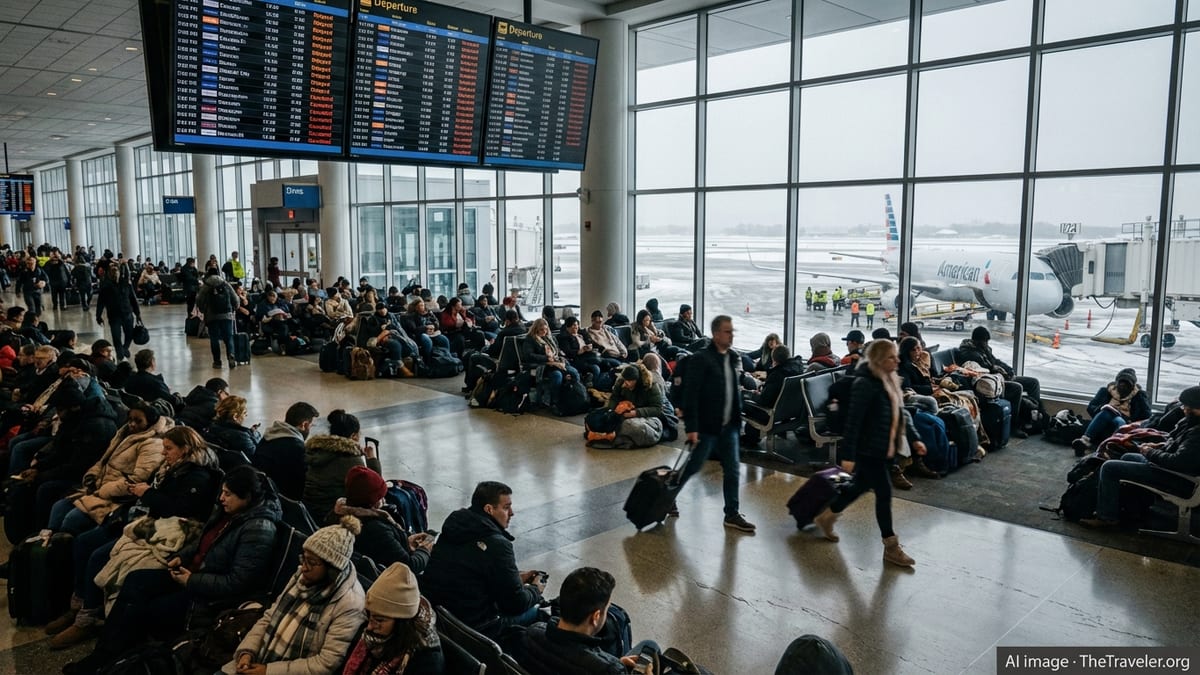
Tech outage triggers nationwide ground stop
Publicly available flight operations data and traveler reports indicate that American Airlines experienced an information technology failure that briefly halted its departures across the United States. The disruption led to a ground stop affecting aircraft that had not yet taken off, while flights already in the air were allowed to continue to their destinations.
The outage, which appeared to center on core operational and dispatch systems, prevented the carrier from processing routine tasks such as check-in, boarding, flight plan updates and crew assignments. As a result, departures paused at major American hubs and focus cities, including Miami International Airport, a primary gateway for the airline and its largest Latin America and Caribbean hub.
The tech issue was resolved within a relatively short period, according to industry and airport status updates, and the ground stop was lifted once systems were stabilized. However, the brief shutdown of such a large network during the busy summer travel season quickly cascaded into knock-on delays, misaligned aircraft and crew schedules, and scattered cancellations.
Observers noted that the disruption mirrored the pattern seen in previous large-scale aviation IT failures, where even a temporary loss of key systems leaves airlines struggling to recover normal operations for many hours after the initial problem is fixed.
South Florida airports see sharp spike in delays
Miami International Airport, Fort Lauderdale Hollywood International Airport and Palm Beach International Airport all saw elevated disruption levels following the outage. Flight tracking boards for Tuesday evening and early Wednesday showed clusters of American Airlines services running significantly behind schedule, along with a growing list of cancellations on regional and mainline routes.
At Miami, where American operates a dense schedule of domestic and international flights, the tech failure coincided with peak afternoon and evening departure banks. That timing left inbound aircraft and crews out of position for later flights, amplifying delays for departures to key domestic markets and to destinations in Latin America and the Caribbean.
Fort Lauderdale and Palm Beach, while smaller American operations compared with Miami, were not spared. Travelers reported extended waits at gates as departure times were repeatedly revised, even after the formal ground stop ended. Some shorter intra-Florida and Southeast routes were canceled outright, with passengers rebooked onto later services or routed through alternate hubs.
Regional airports in Southwest Florida and other nearby markets that rely on American’s South Florida hubs for connections also experienced schedule disruptions, as missed connections and crew duty-time limits forced the carrier to trim or consolidate flights.
Travelers report long waits and rolling rebookings
Accounts shared on social media platforms and aviation discussion forums described passengers stuck on aircraft awaiting clearance, while others queued in terminal concourses as departure times slipped. Some travelers reported sitting on taxiways for extended periods as crews awaited updated release times and confirmation that systems were fully restored.
Inside terminals, lines formed at service desks as customers attempted to switch to later flights, secure hotel vouchers or rebook through different American hubs. Airline mobile apps and websites also showed intermittent issues, complicating efforts by passengers to manage their itineraries digitally.
Travelers with tight connections through Miami and Fort Lauderdale were among the hardest hit. When early afternoon departures ran late, arriving passengers often missed onward flights, leading to a second wave of disruption as the airline tried to accommodate displaced customers on remaining evening services or on flights scheduled for the following day.
Reports also highlighted frustration among passengers who had already experienced weather-related and maintenance delays in recent weeks, viewing the tech outage as another setback in an already strained summer travel season.
Operational hangover expected through the day
Aviation operations specialists note that disruption of this scale rarely ends when a ground stop is lifted. Once core systems are back online, airlines must still reposition aircraft, reassign crews who are nearing legal duty limits, and rebuild the complex sequence of flights that make up a daily schedule.
In South Florida, that recovery challenge is particularly acute for American, given its heavy reliance on Miami as an international connecting hub. Aircraft that arrived late into Miami and Fort Lauderdale because of the outage often could not turn around in time to operate subsequent departures, forcing schedule adjustments well into the evening and early morning banks.
Travel planning tools and airport status boards showed lingering delays and scattered cancellations on American flights into and out of South Florida into Wednesday, even as other carriers operated more normally. Industry watchers suggested that passengers traveling on American through Miami, Fort Lauderdale or Palm Beach should anticipate possible residual disruption and allow extra time for connections.
Analysts also pointed out that summer travel demand remains strong, leaving fewer open seats on alternate flights and making it harder for disrupted passengers to find quick rebooking options, particularly on popular leisure routes.
What South Florida travelers can do now
Consumer advocates advise affected passengers to closely monitor their flight status through multiple channels, including airline apps, airport departure boards and third party flight tracking services. Because schedules can change rapidly as airlines adjust operations, the displayed status at check in may not reflect real time conditions at the gate.
Travelers experiencing significant delays or cancellations attributed to the outage are encouraged to review American’s customer service commitments, which outline when the airline may provide meal vouchers, hotel accommodation or rebooking assistance. While policies differ depending on whether a disruption is classified as within the carrier’s control, recent federal guidance has pushed airlines to more clearly communicate their obligations.
For those departing from South Florida, arriving at the airport earlier than usual may help navigate longer lines at check in and security, especially at Miami International, where American’s large presence can quickly lead to congestion when irregular operations occur. Carrying essentials such as medications, chargers and a change of clothes in hand luggage can also mitigate the impact of extended waits or unexpected overnight stays.
As American works to restore its schedule across the country, South Florida remains one of the regions most exposed to residual disruption because of its role in the airline’s network. Travelers with imminent departures are being urged by travel planners to maintain flexible plans and to prepare for the possibility of further last minute adjustments.