


More news on this day
South Korea is moving ahead with plans to phase out its first-generation KTX-I high-speed trains, the TGV-derived sets that launched the country’s bullet rail era in 2004, as new electric multiple units are readied to take over core routes in the 2030s.
Get the latest news straight to your inbox!
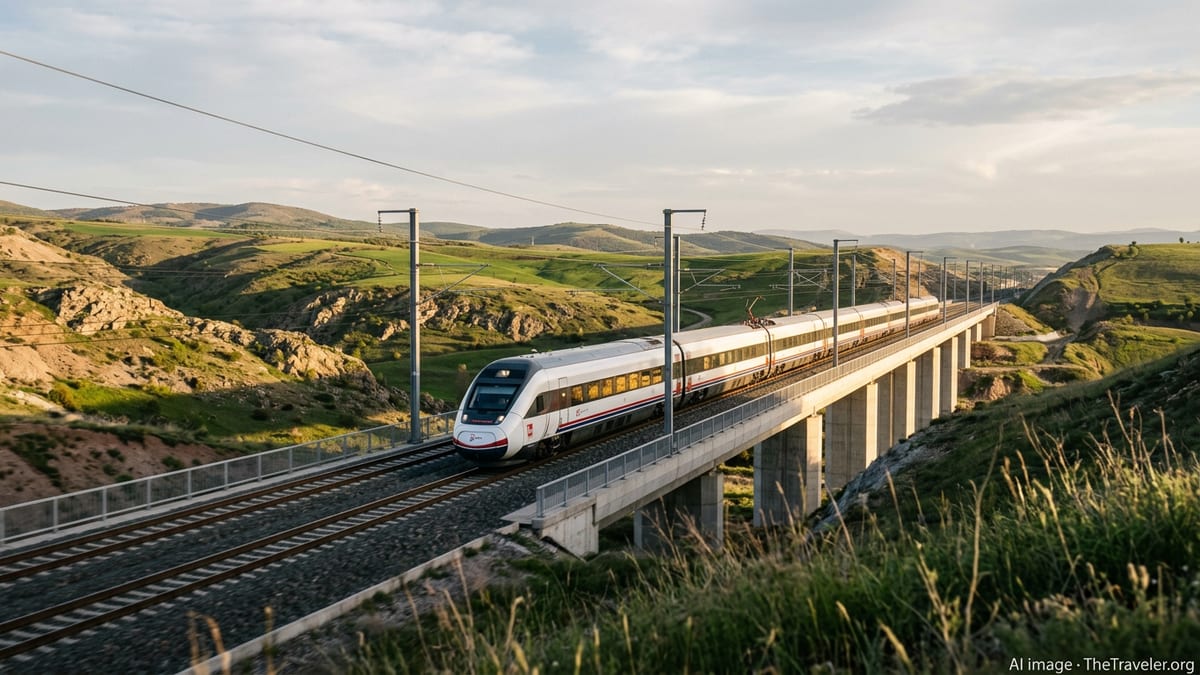
From French technology transfer to Korean high-speed icon
The KTX-I fleet, sometimes referred to as TGV-K in specialist literature, grew out of a 1990s technology-transfer agreement with France’s GEC-Alstom. Publicly available information shows that the trains are based on the TGV Réseau design but were adapted for Korean operating conditions, including mixed running on new high-speed lines and upgraded conventional tracks.
Initial KTX-I trainsets were built in France, with later units manufactured under license by Hyundai Rotem in South Korea. A total of 46 sets were delivered by the end of 2003, ahead of the commercial launch of Korea Train Express services between Seoul and Busan in April 2004. The trains, configured as 20-car push–pull sets, quickly became a symbol of the country’s rapid economic and technological development.
For two decades, KTX-I units have formed the backbone of high-speed services on the Gyeongbu and Honam corridors, carrying millions of passengers annually at up to 300 km/h. Their TGV lineage is still visible in the articulated trailers, power car layout and overall profile, even as South Korea has gone on to develop domestically designed high-speed rolling stock such as KTX-Sancheon and the EMU-typed KTX-Eum.
Industry analyses indicate that this first generation is now approaching the end of its planned technical life, prompting operators and policymakers to firm up replacement strategies that will keep pace with growing demand while upgrading energy efficiency and maintenance practices.
New EMU-320 fleet cleared to replace aging KTX-I sets
Recent coverage from Korean rail industry outlets and national news agencies indicates that Korail’s “next-generation high-speed train introduction project” has passed a key preliminary feasibility review. The program centers on the large-scale procurement of 16-car EMU-320 type trains, designed for 320 km/h operation and configured as distributed-power electric multiple units rather than locomotive-hauled sets.
According to project summaries reported in the Korean press, the investment is valued at around 5 trillion won and is explicitly framed as a replacement for the 46-strong KTX-I fleet once those sets hit their expected service-life threshold around 2033. The new trains are intended for deployment on the Gyeongbu and Honam high-speed lines, maintaining capacity on South Korea’s main north–south spine and key southwestern corridor.
The EMU-320 concept reflects a wider shift in global high-speed rail toward distributed traction, which can offer better acceleration, more seats within a given train length, and improved redundancy if a traction module fails. South Korea has already introduced shorter EMU-based high-speed units such as the KTX-Eum on secondary corridors, and the new 16-car sets are expected to extend this approach to the country’s busiest intercity routes.
Project documentation highlighted in domestic reports suggests that initial orders could be placed as early as next year, allowing time for design finalization, testing and certification before large-scale fleet deployment later in the decade. This timeline would enable a gradual, rather than abrupt, withdrawal of KTX-I trains as they reach the end of their economic life.
Phased retirement strategy and what travelers can expect
Publicly available planning materials and media analyses point to a phased retirement process for KTX-I sets rather than a single cutover date. Some of the oldest units are expected to be withdrawn first, with remaining trains cycling through heavy overhauls and life-extension work to bridge the gap until EMU-320 deliveries ramp up.
For travelers, the transition is likely to be most noticeable in interior design, passenger amenities and ride quality rather than in a headline change to maximum operating speed. Newer Korean-built high-speed trains typically feature improved seating layouts, modern passenger information systems, more power outlets and upgraded onboard climate control. Operators have also been focusing on accessibility features, such as better step-free boarding and dedicated spaces for passengers with reduced mobility.
Service patterns are also evolving in parallel with the fleet strategy. Separate from the KTX-I replacement program, the government and operators have been piloting closer integration between KTX and SRT services, including cross-operation on overlapping routes and test runs of coupled trains. Reports indicate that these changes are aimed at improving seat availability, simplifying route structures and making better use of track capacity as new high-speed rolling stock arrives.
While detailed withdrawal schedules for individual KTX-I sets have not been published, observers expect mixed operation of legacy and next-generation trains well into the early 2030s. This would mirror practice in other high-speed rail markets, where first-generation units are gradually cascaded to less demanding duties or retired as newer models take over flagship services.
Efficiency, maintenance and climate goals driving fleet renewal
Behind the high-profile discussion of train designs and passenger comfort, the move to replace KTX-I units is shaped by evolving maintenance and sustainability priorities. Korail has been promoting condition-based maintenance approaches on newer trains, using onboard sensors and data analysis to monitor components in real time. These methods can reduce unplanned failures, extend component life and optimize workshop scheduling, but they are more easily applied to modern EMU platforms designed with digital diagnostics in mind.
Energy performance is another key factor. Recent test results published by Korean media on KTX-Eum trains fitted with advanced energy-optimization systems suggest double-digit percentage reductions in traction power use on certain routes. Extending similar technology to new EMU-320 sets could help the rail sector cut operating costs and support national goals to lower transport-related carbon emissions.
South Korea has previously announced broader objectives to replace diesel passenger rolling stock with electric multiple units and to expand electrified, high-capacity rail links as an alternative to short-haul flights and highway traffic. In that policy context, the retirement of the TGV-based KTX-I fleet is being framed as part of a long-term modernization cycle rather than a standalone decision about a single train class.
Rail analysts note that first-generation high-speed trains in Europe have typically undergone mid-life refurbishments followed by progressive withdrawal once maintenance costs and technological obsolescence outweigh the benefits of keeping them in front-line service. The Korean plan to pivot toward domestically designed EMU technology reflects a similar lifecycle logic while consolidating local expertise in advanced rolling stock manufacturing.
Balancing heritage value with future-facing rail ambitions
As discussions about the KTX-I phase-out gain momentum, there is also growing interest among enthusiasts and some local communities in preserving part of the fleet for heritage and educational purposes. Although no official preservation list has been announced, it is common practice internationally for pioneering high-speed trainsets to be earmarked for museums or static display once they leave regular service.
The KTX-I trains hold particular symbolic value as the hardware that introduced high-speed rail to the Korean public and dramatically shortened travel times between Seoul, Busan and other major cities. Their TGV-derived engineering also tells a story of how technology transfer and international partnerships laid the foundation for South Korea’s present-day rail industry, which now exports its own designs to other countries.
Looking ahead, the gradual retirement of the KTX-I fleet is likely to be viewed as a milestone in a broader narrative: the shift from imported designs to homegrown high-speed technology tailored to local geography, demand patterns and policy goals. For passengers, the change should bring quieter, more efficient trains and more flexible timetables. For the rail sector, it marks the beginning of a new phase in which the country’s next-generation high-speed fleet becomes a showcase of domestic innovation rather than a derivative of French TGV technology.