


More news on this day
Train services across Devon’s English Riviera remain severely disrupted after a fire at Paignton railway station, which has now been extinguished but continues to impact Great Western Railway and local routes through the town.
Get the latest news straight to your inbox!
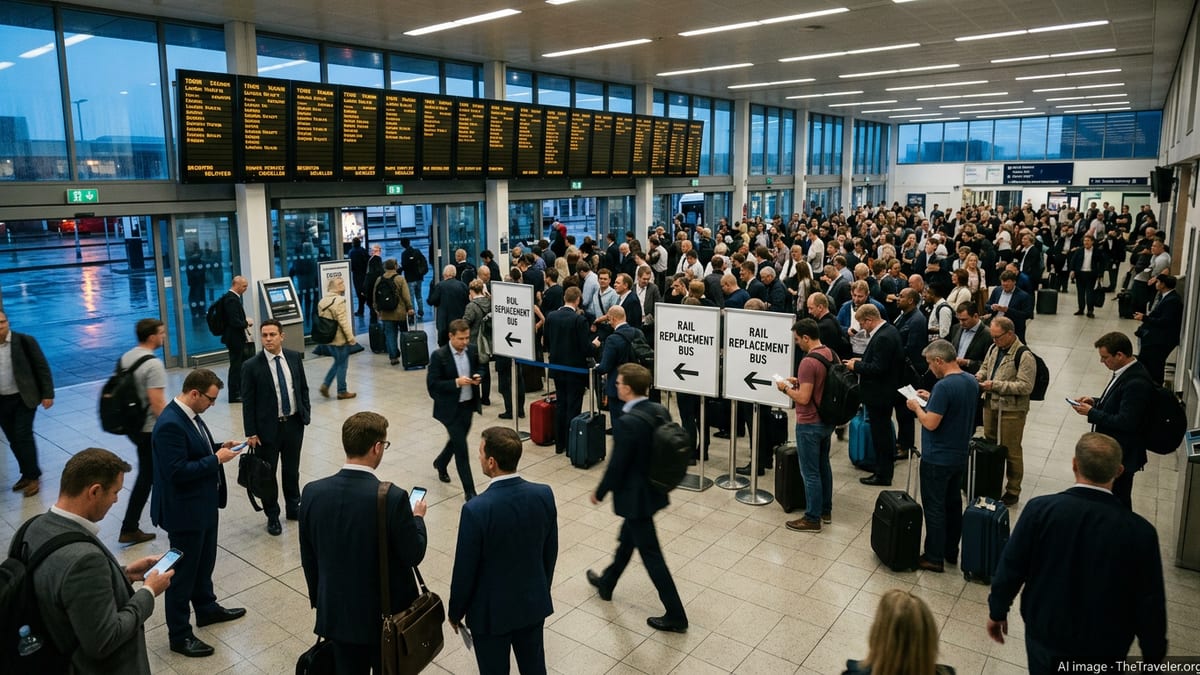
Blaze contained at busy Riviera gateway
Reports indicate that the fire broke out early on Tuesday 21 July at Paignton railway station, a key terminus for services along the Riviera Line in South Devon. Initial information suggests the incident affected part of the station environment close to the tracks, prompting an immediate halt to train movements in and out of the town.
Paignton station serves as a crucial hub for holidaymakers heading to the English Riviera resorts and for local commuters linking to Exeter, Newton Abbot and beyond. Publicly available information shows that emergency responses were rapidly deployed and the fire was brought under control within the morning peak period.
By late morning, reports from rail operators and local traffic updates confirmed that the blaze had been fully extinguished. Safety checks and inspections, however, have continued around the station area and adjacent infrastructure, significantly limiting the ability to resume normal services.
Early indications suggest there were no serious injuries connected with the incident, but the scale of the disruption has affected hundreds of passengers attempting to travel through Paignton and neighbouring Riviera resorts at the height of the summer season.
Major disruption across Great Western Railway services
Great Western Railway, which operates the mainline services into Paignton from Exeter, Plymouth and London, has reported extensive disruption following the fire. According to journey monitoring information and operator updates, trains have been delayed, diverted or cancelled as signalling checks and safety assessments are carried out.
Passengers travelling between Paignton and key interchange stations such as Newton Abbot, Exeter St Davids and Totnes have been advised to expect extended journey times. Some long-distance services from South Devon towards London have been altered to start or terminate short of Paignton, with revised stopping patterns introduced on remaining trains.
Live travel feeds indicate that disruption is expected to continue through much of the day while infrastructure teams assess any impact on signalling and trackside equipment. The complexity of operations at a terminal station like Paignton, combined with a busy level crossing beside the platforms, has heightened the need for thorough checks before full services can resume.
Rail users are being advised, via publicly available operator channels, to check live departure boards and service alerts before travelling, and to allow extra time for onward connections. Some passengers are being directed to alternative routes via Torquay or to replacement road transport where available.
Impact on local roads and the wider Torbay area
The incident has also had a knock-on effect on road traffic in Paignton and the wider Torbay area. Traffic monitoring information from local authorities shows restrictions and closures on approaches to the station, including sections of the A3022 around Victoria Street and Torbay Road, as emergency vehicles and rail engineers continue to operate near the site.
These closures have intensified existing congestion around Paignton’s town centre and seafront, where roadworks and seasonal visitor volumes already place pressure on the network. Buses serving the area, including links to Torquay, Brixham and local attractions, have reported delays as services divert around cordoned-off streets.
For visitors, the disruption is particularly acute because Paignton station sits at the heart of the resort, close to the beach, amusements and accommodation. Many holidaymakers arriving by rail rely on short onward walks or local buses from the station forecourt, meaning any closure or partial shutdown of the site has an immediate impact on tourism-related journeys.
Local travel information channels are advising drivers to avoid the immediate vicinity of the station where possible, and for rail passengers to plan additional time to reach platforms or alternative pick-up points if arriving by car or taxi.
Tourism and heritage rail services affected
Paignton is not only a mainline terminus but also the gateway to one of Devon’s most popular heritage routes. The nearby heritage operation that runs from Paignton towards Kingswear attracts large numbers of visitors, particularly in peak summer weeks, and often relies on seamless connections with Great Western Railway services.
While early reports focus on the main station site and its immediate approaches, the wider railway corridor around Paignton is busy with both regular passenger traffic and leisure-focused operations. Any restriction in capacity at the terminus can affect timetables, rolling stock positioning and staff movements for both modern and heritage trains.
The timing of the fire, in the middle of the main UK holiday season, raises concern for local tourism businesses that benefit from reliable rail links bringing visitors directly into the resort. Hotels, guesthouses and attractions along the English Riviera frequently promote rail access as a convenient alternative to driving on often-congested coastal roads.
Travel industry observers note that, even once services are restored, there can be residual effects on visitor patterns, with some travellers altering or cancelling trips after experiencing disruption. The incident may therefore have implications not only for today’s journeys but also for bookings over the coming days.
What passengers travelling through Paignton should know
Publicly available journey planners and rail information services indicate that disruption around Paignton could last into the evening, depending on the outcome of ongoing safety checks and the time required to restore full line capacity. Passengers are being encouraged to monitor live updates frequently, as train plans can change at short notice in the aftermath of an incident.
Many advance-ticket holders may find themselves rerouted via alternative stations or placed on different services running at similar times. In some cases, rail operators typically relax restrictions on ticket validity during major disruption, allowing travel on earlier or later trains where capacity permits.
Travellers heading to or from holiday accommodation in Paignton are advised to keep in close contact with hosts or hotels regarding revised arrival times. Those connecting with long-distance coach or domestic air services should allow generous buffers or consider rebooking where feasible.
As rail services gradually resume following the fire at Paignton station, attention will turn to understanding the full extent of any damage, reviewing response procedures and assessing how infrastructure resilience can be strengthened on this heavily used coastal route. For now, passengers are being asked to prepare for extended journeys and to use real-time information tools to navigate one of the most disruptive incidents to hit Riviera Line services so far this summer.