


More news on this day
Travelers across the United States are facing widespread disruption as Southwest Airlines records more than 1,000 delayed flights and several cancellations in a single day, disrupting high-traffic domestic routes that connect Dallas, Denver, Chicago, Las Vegas, Phoenix, Orlando, Nashville, Houston, Baltimore, and other major cities.
Get the latest news straight to your inbox!
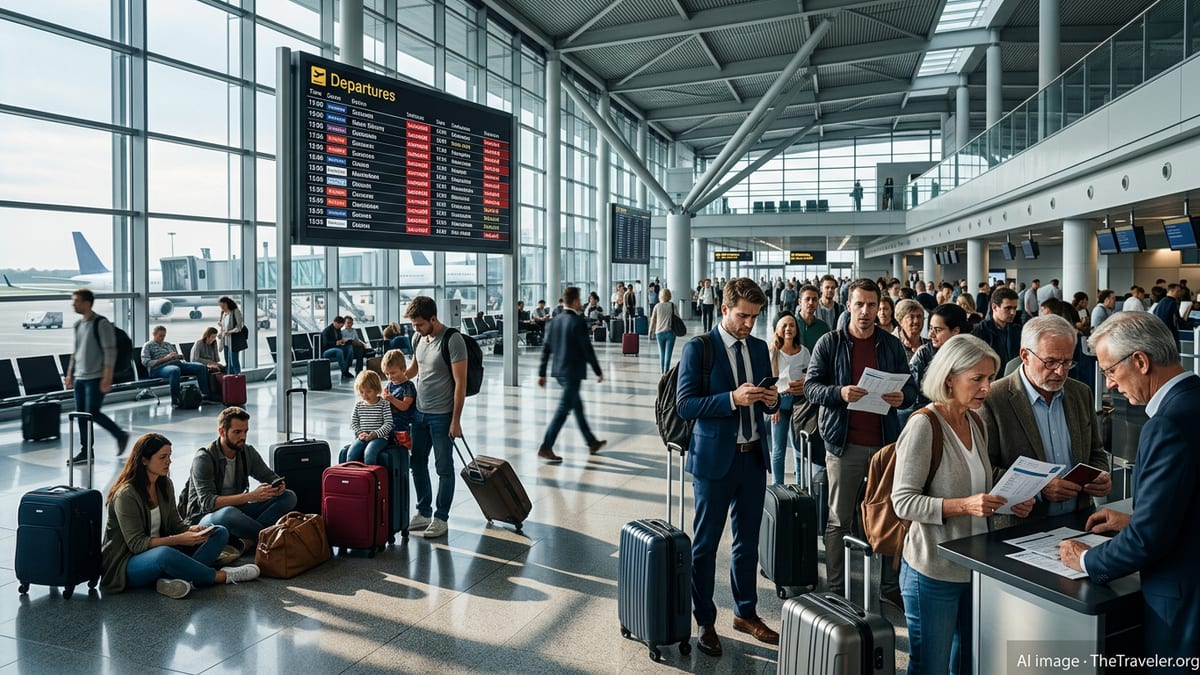
Nationwide Ripple Effect Across the Southwest Network
Publicly available flight-tracking data for Thursday, June 18, 2026, show Southwest Airlines logging 1,083 delayed flights and 5 cancellations, creating extensive knock-on effects across its point-to-point domestic network. The scale of the disruption places pressure on one of the country’s largest carriers on a peak summer travel day, with connections across the Southwest system slowing or bunching up as aircraft and crews run behind schedule.
The delays are being felt most acutely on some of Southwest’s busiest domestic corridors, including flights into and out of Dallas Love Field, Denver, Chicago Midway, Las Vegas, Phoenix, Orlando, Nashville, Houston Hobby, and Baltimore. These airports serve as key bases and focus cities for the airline, meaning even relatively small schedule disruptions can cascade through its timetable and affect travelers far beyond any single route.
While only a small share of flights appear to be outright canceled, the sheer volume of delays is resulting in missed connections, extended layovers, and tight turnaround times. For many travelers, the distinction between a delayed or canceled flight is becoming less relevant as an on-time itinerary becomes increasingly difficult to maintain.
The situation underscores the vulnerability of high-frequency domestic networks during busy travel periods, particularly when aircraft and crews are tightly scheduled across multiple city pairs throughout the day.
Major Domestic Hubs Under Strain
Dallas Love Field and Houston Hobby, two of Southwest’s most important bases, are seeing pressure on departures and arrivals as delays build across the network. These Texas airports anchor dense schedules that tie together short- and medium-haul routes linking the South, Midwest, and West, making them particularly sensitive to disruptions on inbound aircraft rotations.
Denver and Chicago Midway, both central to Southwest’s connectivity across the interior of the country, are also experiencing significant operational strain. Flights feeding these airports from smaller cities can arrive late, compressing turnaround windows and pushing subsequent departures behind schedule. This dynamic feeds a rolling pattern of delays that can last throughout the day, especially when schedules are already tight.
On leisure-heavy routes, Las Vegas, Phoenix, Orlando, and Nashville are among the most affected. These cities typically see a mix of vacationers, convention travelers, and weekend escape traffic, leaving limited flexibility when flights slip behind schedule. Once a bank of flights is delayed, gate availability, crew duty limits, and aircraft positioning can become increasingly challenging to manage.
Along the East Coast, Baltimore, another major Southwest base, is seeing its own share of late departures and arrivals, which can hinder onward connections to the Midwest and South. This creates additional uncertainty for travelers relying on Baltimore as a transfer point to reach cities that may not have nonstop service.
Operational Pressures and Seasonal Headwinds
Operational experts note that summer tends to be one of the most challenging times for U.S. airlines, with tight schedules, full aircraft, and a higher likelihood of weather-related disruptions. Thunderstorms, congestion in busy airspace, and temporary ground holds at major airports can all contribute to delays that ripple throughout the day.
Southwest’s point-to-point model, which typically allows more direct flying between cities compared to a traditional hub-and-spoke system, can also amplify the impact when something goes wrong. Because each aircraft is scheduled to fly multiple short segments in a day, a late departure early on can affect several subsequent flights, even if conditions improve later.
Publicly available transportation data show that airlines across the United States have been grappling with variable operational performance in 2026, as carriers balance strong travel demand with ongoing cost pressures and efforts to optimize route networks. Southwest’s extensive domestic footprint means that any day of elevated delays is likely to be felt by a large number of passengers in multiple regions.
Analysts also point to broader industry challenges, including occasional staffing mismatches, high utilization of aircraft, and weather variability as factors that, when combined, can turn a busy day into a difficult one for both airlines and travelers.
Impact on Travelers and Passenger Options
For passengers, the disruption is taking several forms: longer waits at departure gates, missed connections, and in some cases unplanned overnight stays when onward flights cannot be reaccommodated the same day. High summer load factors mean that spare seats on alternative flights are limited, reducing flexibility for rebooking and often lengthening recovery times after a misconnection.
Travelers connecting through key Southwest cities such as Dallas, Denver, Chicago Midway, Las Vegas, Phoenix, Orlando, Nashville, Houston Hobby, and Baltimore are particularly exposed to the cascading impact of delays. Even when their own flights depart, late-arriving inbound aircraft or crew repositioning can result in last-minute schedule changes.
Consumer advocates generally recommend that passengers monitor their flight status closely on days with elevated delays, arrive at the airport early, and be prepared with backup options for tight connections. Those holding tickets on multi-leg itineraries may face the added complication of coordinating ground transport or accommodations when delays extend into late-night hours.
As the day progresses, the full scope of the disruption will depend on how quickly the airline is able to reset its operation, reposition aircraft, and restore schedule integrity across its core domestic markets.
Key Routes Highlight Systemic Vulnerabilities
The routes most affected by the current disruption highlight how interconnected Southwest’s network has become. City pairs such as Dallas to Denver, Chicago to Las Vegas, Phoenix to Denver, Orlando to Houston, Nashville to Chicago, and Baltimore to Dallas represent heavily traveled corridors that carry a mix of business and leisure demand.
When delays mount on these routes, the consequences extend beyond the individual flights involved. Aircraft operating between Denver and Chicago, for example, may go on to serve later legs into cities like Nashville or Orlando, meaning a delay on the first segment can eventually ripple into multiple regions. Similarly, a late arrival into Las Vegas may affect evening departures to Phoenix or Houston, especially if the aircraft was scheduled to turn quickly.
Industry observers note that as airlines continue to optimize their schedules for efficiency and maximize aircraft utilization, they also reduce some of the slack that can absorb irregular operations. On peak travel days, this leaves carriers more exposed when weather, airspace congestion, or logistical issues arise, resulting in the kind of multi-city disruptions currently affecting Southwest customers.
With delays already numbering in the thousands of minutes across the network and only a small number of cancellations, the focus for many passengers is simply on getting to their destinations, even if it means a significantly longer travel day than originally planned.