


More news on this day
Hundreds of SpiceJet passengers were left waiting for hours at Delhi’s Indira Gandhi International Airport after a check-in disruption and related operational issues delayed multiple flights bound for Leh, Jammu and Dubai on September 19, 2026.
Get the latest news straight to your inbox!
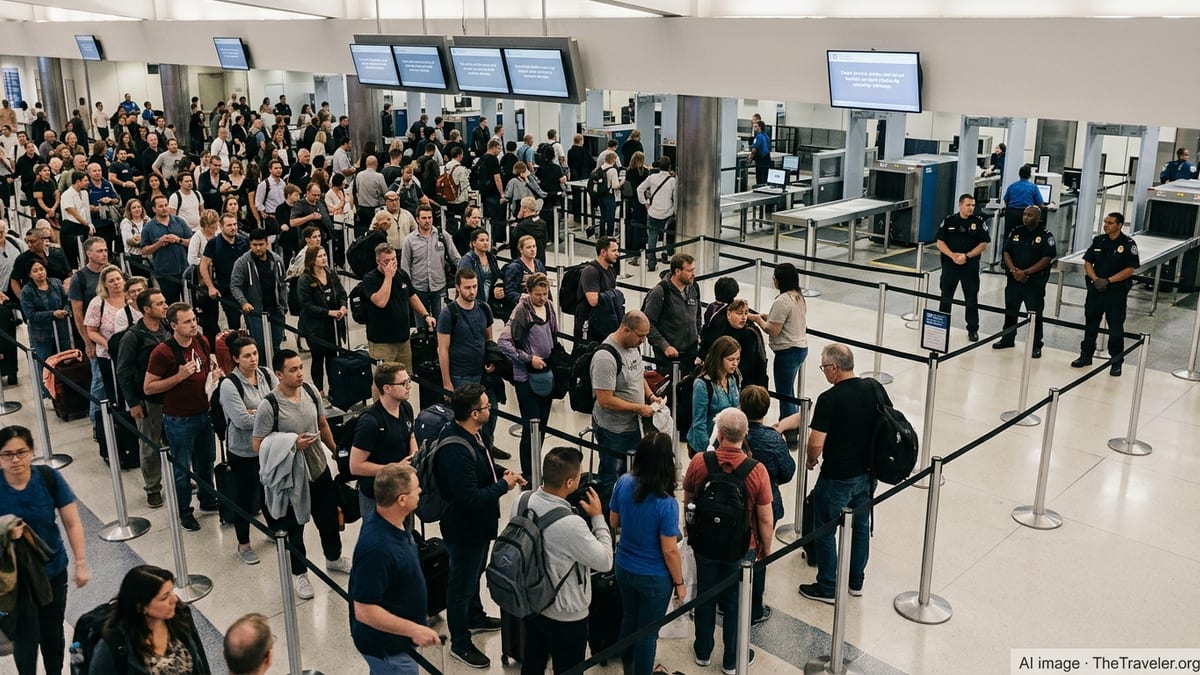
Multiple SpiceJet departures from Delhi hit by disruption
Publicly available information shows that several SpiceJet services from Delhi, including flights SG121 and SG127 to Leh and SG2160 to Jammu, experienced significant delays on September 19. Reports indicate that parts of the airline’s check-in operation at Terminal 1 were not functioning as scheduled in the early hours of the morning, leaving passengers unable to complete formalities for upcoming departures.
Coverage from Indian news outlets describes scenes of confusion as passengers queued at unattended counters or waited near closed check-in desks for guidance. At least one Leh departure, SG127, was scheduled to leave around 4:50 a.m. but eventually took off roughly four hours later, according to flight-tracking data and media summaries. Airport-focused reporting suggests that more than 500 travelers were affected across the morning wave of flights.
According to published coverage, a combination of absent check-in staff and wider operational challenges contributed to the disruption. While the airline later stated that the affected flights ultimately departed and reached their destinations, the delays left passengers at Delhi airport dealing with missed connections, reworked itineraries and long periods of uncertainty inside the terminal.
Delhi airport’s operator publicly acknowledged that its teams were coordinating with the airline and other stakeholders to assist passengers during the disruption, including efforts to manage queues and provide updated information on revised departure times where possible.
Leh and Jammu routes see hours-long delays
The impact of the check-in disruption was most visible on high-demand routes from Delhi to Leh and Jammu, which serve both leisure travelers heading to the Himalayas and residents returning to northern hill states. Reports compiled from national media indicate that SpiceJet flights SG121 and SG127 on the Delhi–Leh sector, along with SG2160 to Jammu, were delayed by several hours beyond their planned early-morning departures.
Passengers described in local coverage as waiting for check-in to open said they were left unsure whom to approach as departure times slipped. Only after a senior duty manager intervened, according to these accounts, did the check-in process resume and boarding preparations begin. The extended delay meant that many travelers remained inside the terminal through the early morning peak, with limited clarity on when boarding would actually commence.
Additional analysis of flight-status data from the same day shows that aircraft assigned to Leh and Jammu rotations eventually departed Delhi later in the morning and early afternoon, reflecting a cascading effect as one delay pushed subsequent sectors behind schedule. While all three highlighted flights were recorded as having landed at their destinations, the experience for passengers at Delhi involved long stretches of waiting, repeated schedule changes and crowded gate areas.
Travel-industry observers note that such delays on mountain routes can be particularly disruptive because Leh and some other high-altitude airports operate within tighter daylight and weather windows. Extended ground holds in Delhi increase the risk that subsequent sectors on the same aircraft may need rescheduling if they move beyond those operating limits.
Dubai service disruption adds to passenger frustration
The Delhi disruption on September 19 followed an earlier wave of issues on the airline’s Delhi–Dubai corridor, where passengers had already reported extensive delays and protests inside the terminal in mid-September. According to coverage in Indian newspapers and television reports, two SpiceJet flights from Delhi to Dubai, SG5111 and SG5105, were delayed for more than 24 hours in some cases, prompting groups of travelers to stage sit-ins and demand clarity on revised departure times.
In that earlier incident, publicly available information from the airline attributed the delays to operational reasons linked to the grounding of an aircraft. Video footage from domestic news channels showed passengers seated on the floor near departure gates at Delhi’s International Terminal, holding up boarding passes and speaking to camera crews about missed hotel bookings and connecting plans in the United Arab Emirates.
The latest check-in disruption affecting Leh and Jammu flights has therefore landed at a moment when the airline’s on-time performance is already under close scrutiny. Recent consumer reports and online discussions among Indian travelers highlight a pattern of short-notice schedule changes, day-long delays and last-minute cancellations, particularly on routes touching Delhi, Mumbai and several tier-two cities.
For travelers relying on Delhi as a hub for onward domestic or international connections, irregular operations on heavily used sectors such as Delhi–Dubai can quickly translate into knock-on accommodation, rebooking and visa costs. Published commentary from passenger-rights advocates has urged flyers to build longer connection buffers and to track flight histories for individual routes in the days leading up to travel.
Passenger rights and refund rules under the spotlight
The disruption at Delhi has renewed attention on the airline’s own commitment to passenger care, as set out in its terms and conditions and citizen charter. According to information on the carrier’s official website, if a domestic flight is expected to be delayed by more than six hours, the airline states that passengers will either be informed at least 24 hours in advance or offered the option of an alternate flight within a six-hour window or a full refund.
The same policy information notes that when delays occur after passengers have already checked in, the airline describes “reasonable refreshments” and other airport facilities as part of its assistance framework. Separate policy pages also mention the possibility of alternate flight accommodation on the same sector within seven days before or after the original travel date, subject to seat availability and the airline’s discretion.
Travel forums and recent media reports suggest, however, that passengers do not always find it straightforward to secure these remedies, particularly when delays or cancellations are communicated close to departure time. Some travelers report needing to follow up multiple times with customer-service channels or intermediaries such as online travel agencies before refunds or rebookings are confirmed.
In the case of the September 19 disruption, published coverage has not yet provided complete detail on the proportion of affected passengers who opted for alternative arrangements versus those who waited for delayed flights to depart. What is clear from publicly available accounts is that many travelers remained in the terminal for several hours, relying on ad hoc updates from ground staff, public announcements and flight-information screens to make decisions about their next steps.
What the Delhi disruption means for future travelers
The check-in breakdown at Delhi’s Indira Gandhi International Airport underlines how a localized staffing or systems issue can quickly ripple across an airline’s broader schedule. With Delhi handling around 1,500 flight movements each day across carriers, even modest disruptions can generate long queues and gate congestion when multiple services are affected at once.
Aviation analysts quoted in recent coverage of India’s peak travel seasons have pointed to the thin operating margins at many low-cost carriers, where a limited pool of spare aircraft and tightly scheduled turns leave little room for recovery when an early-morning rotation is delayed. Subsequent flights that depend on the same aircraft can then fall behind, creating a visible pattern of late departures on flight-tracking platforms throughout the day.
For travelers planning to use SpiceJet or other carriers at Delhi, recent events highlight the value of monitoring flight histories before departure, allowing extra time for check-in and security during busy hours, and keeping digital copies of tickets and receipts that may be needed in the event of a refund or compensation claim. Publicly available guidance from consumer groups also encourages passengers to document delay timelines, including screenshots of status updates, to support any later complaints.
While the airline has stated in public comments that the affected flights from Delhi on September 19 have now operated and reached their destinations, the episode has added to a growing narrative of irregular operations surrounding the carrier in recent months. How the airline addresses these concerns in terms of communication, scheduling resilience and on-the-ground support will be closely watched by both frequent flyers and India’s wider travel industry.