


More news on this day
Last minute train cancellations with little or no notice are continuing to leave passengers stranded at stations across the UK, Europe and the United States, highlighting gaps between formal passenger rights and the on-the-ground support people receive when services suddenly disappear from the timetable.
Get the latest news straight to your inbox!
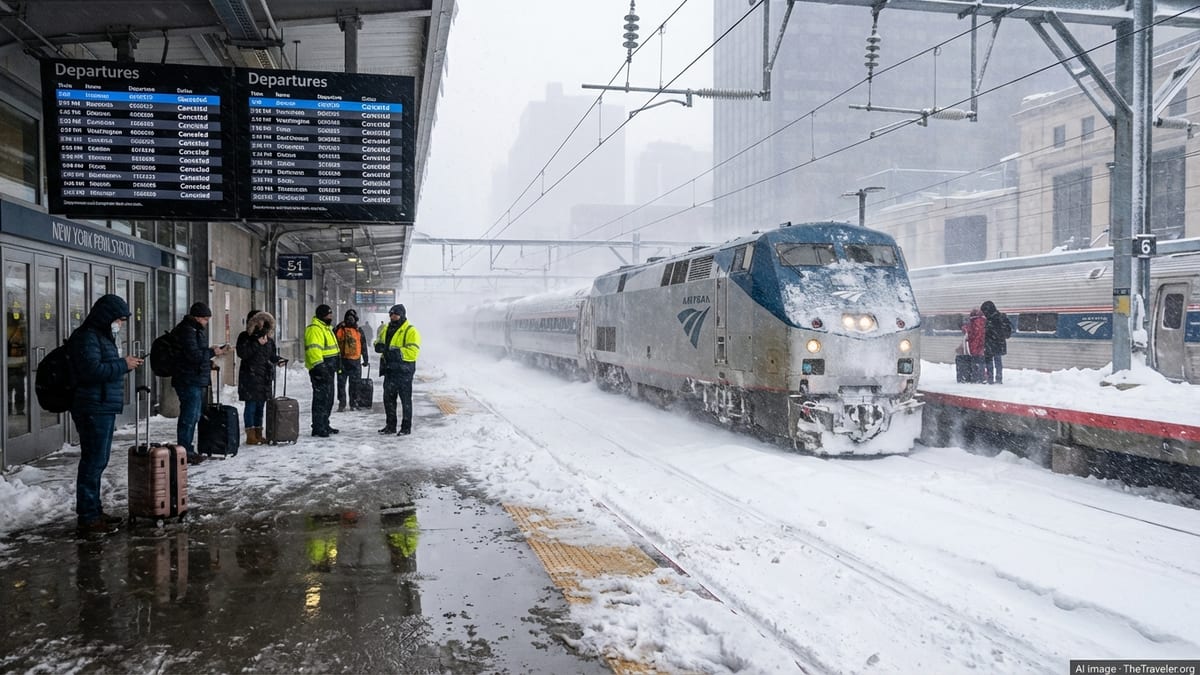
Rising Concern Over Sudden Cancellations
Published data and recent coverage show that rail passengers remain vulnerable when trains are cancelled at short notice, particularly when the last services of the day are affected. In Britain, government-commissioned research on rail delays and compensation for 2025 reported that just over one in five passengers experienced a desired train being cancelled, down slightly from 2023 but still a significant share of journeys. ([assets.publishing.service.gov.uk](https://assets.publishing.service.gov.uk/media/698df9dd492ea446ea7f4358/rail-delays-and-compensation-2025.pdf?utm_source=openai))
Reports from North American services reflect similar experiences. For example, coverage of Amtrak services in 2025 described passengers left in intermediate cities after trains were terminated and then cancelled following technical failures, with limited real-time information and uncertainty over how to continue their journeys. ([abcnews.com](https://abcnews.com/US/amtrak-passengers-evacuated-after-train-dark-baltimore-tunnel/story?id=123137233&utm_source=openai))
On busy cross-border corridors in continental Europe, online discussions and media reports in 2026 have highlighted overcrowding, knock-on delays and last minute cancellations linked to infrastructure problems, with travelers warned to avoid certain routes for several days because of repeated disruption. ([reddit.com](https://www.reddit.com/r/Eurostar/comments/1ulukp6/honestly_avoid_travelling_till_monday_607_if_you/?utm_source=openai))
Across these regions, the pattern described in published accounts is similar: services are removed or terminated at short notice, information channels struggle to keep up and passengers are left to piece together what support or compensation they are actually entitled to claim.
New UK Measures Aim to Help Stranded Passengers
In Britain, new measures came into effect on 20 September 2026 designed to reduce the risk of passengers being stranded when a train is cancelled. Government announcements describe a national cross-operator ticket acceptance scheme that allows passengers to board another operator’s service at no extra cost when their original train is cancelled. The expansion covers major long distance operators including CrossCountry, Great Western Railway, Avanti West Coast and Chiltern Railways, extending an approach that already applied on publicly owned routes. ([gov.uk](https://www.gov.uk/government/news/your-cancellations-covered-new-scheme-to-help-stranded-rail-passengers-arrives-this-weekend?trk=public_post_comment-text&utm_source=openai))
This sits alongside changes to the National Rail Conditions of Travel and refund rules introduced on 1 April 2026. National Rail’s published guidance states that passengers who do not travel or do not complete a journey because a train is cancelled, delayed or rescheduled are entitled to claim a refund from the ticket retailer, without paying an administration fee, as long as the ticket is unused. ([nationalrail.co.uk](https://www.nationalrail.co.uk/help-and-assistance/compensation-and-refunds/refunds-change/?utm_source=openai))
Regulators have also stressed the importance of timely information. The Office of Rail and Road’s public guidance notes that announcements and digital displays should be kept up to date from the start of a journey and throughout any disruption, and encourages operators to make it easy for passengers to sign up for automatic alerts about changes to their services. Previous regulatory commentary has called for all train companies to implement these systems in order to give people earlier warning when services are cancelled. ([orr.gov.uk](https://www.orr.gov.uk/monitoring-regulation/rail/passengers/know-your-rail-rights?utm_source=openai))
Despite these steps, passenger groups continue to argue in public forums that the real test will be how consistently these rights and schemes are applied when disruption happens late at night, on rural routes or during complex multi-operator journeys.
European Rules on Re-Routing and Stranded Travelers
Within the European Union, rail passenger rights are set out in Regulation 1371/2007, which has also been retained in UK law. Guidance summarised on official European consumer information portals explains that if a train is cancelled, passengers must be offered either a refund of the ticket or re-routing to their final destination under comparable conditions at the earliest opportunity. ([gov.uk](https://www.gov.uk/government/publications/guidance-on-rail-passengers-rights-and-obligations-regulation-no-13712007/guidance-on-regulation-no-13712007-on-rail-passengers-right-and-obligations?utm_source=openai))
One specific safeguard aims to prevent people being left without options when cancellations are announced at short notice. If passengers are not informed of available re-routing possibilities within 100 minutes of a scheduled departure being cancelled, they are entitled to make their own alternative travel arrangements using other public transport services, including rail, coach or bus, and then seek reimbursement from the original railway company. ([europa.eu](https://europa.eu/youreurope/citizens/travel/passenger-rights/rail/index_en.htm?utm_source=openai))
However, recent European Commission documents acknowledge that these protections are often weaker on journeys involving multiple tickets bought from different operators. The Commission’s 2026 proposals on multimodal digital mobility services note recurring frustration from passengers who find themselves stranded during multi-operator trips, with no single company clearly responsible for arranging onward travel or covering extra costs. ([europa.eu](https://europa.eu/newsroom/ecpc-failover/pdf/ip-26-1056_en.pdf?utm_source=openai))
This has led to calls from consumer groups and policymakers for clearer rules around through-ticketing, shared responsibility between operators and automatic assistance in situations where missed connections or cancellations leave travelers without an obvious way to continue their journeys.
Compensation, Refunds and the Cost of Being Stranded
When trains are cancelled without notice, the immediate concern for passengers is often practical: how to reach their destination or find accommodation if they are stuck overnight. Published consumer advice in Britain points out that, under the Consumer Rights Act, travelers can in some circumstances claim compensation for additional losses caused by service failures, on top of standard delay or cancellation refunds. That can include reasonable costs such as hotel rooms if someone is left stranded after the last train of the day is cancelled, provided the loss was foreseeable or the company had been alerted in advance to the passenger’s situation. ([which.co.uk](https://www.which.co.uk/consumer-rights/advice/can-i-claim-compensation-for-train-delays-and-cancellations-a0DcH4D97A2N?utm_source=openai))
Standard compensation schemes, such as Delay Repay in Great Britain, continue to apply alongside newer refund rules. Government updates in 2026 emphasise that making claims easier and faster is intended to encourage more passengers to seek redress when services are severely disrupted. At the same time, tighter controls on unused ticket refunds are intended to reduce fraud and protect revenue for investment in the network. ([gov.uk](https://www.gov.uk/government/news/delay-repay-changes-will-make-rail-travel-easier-under-great-british-railways?utm_source=openai))
Across the Atlantic, publicly available information shows that US rail operators, including Amtrak, typically offer refunds or travel credits when trains are cancelled, but the level of additional support such as hotel accommodation varies depending on whether the disruption is within the carrier’s control and whether alternative onward services are available. Incidents reported in 2025 illustrated that even when fares were refunded promptly, passengers could still be left out of pocket for incidental expenses incurred while finding their own way home. ([abcnews.com](https://abcnews.com/US/amtrak-passengers-evacuated-after-train-dark-baltimore-tunnel/story?id=123137233&utm_source=openai))
Advocacy organisations argue that clearer, more consistent commitments across operators and countries would reduce uncertainty for travelers, particularly in border regions and on popular international routes where a single cancellation can disrupt several interconnected legs of a journey.
Improving Information So Cancellations Are Not a Surprise
Many of the difficulties experienced by passengers during sudden cancellations stem from inadequate or delayed information, rather than from the disruption itself. Regulatory material in Britain highlights the expectation that train companies use multiple channels to inform passengers of changes, including live departure boards, station announcements, websites, apps and direct notifications for those who have shared contact details when booking. ([orr.gov.uk](https://www.orr.gov.uk/monitoring-regulation/rail/passengers/know-your-rail-rights?utm_source=openai))
In practice, case studies and media coverage indicate that information can still lag behind events, especially when disruption escalates quickly. Passengers have reported situations where online journey planners continued to show services as running while platform staff were already advising that trains would not depart, or where cancellation notices were only sent by text message after travelers had already boarded a train that later terminated short of its destination. ([abcnews.com](https://abcnews.com/US/amtrak-passengers-evacuated-after-train-dark-baltimore-tunnel/story?id=123137233&utm_source=openai))
Efforts to address these gaps range from investment in real-time data systems to proposals for automatic cross-operator rebooking tools on complex journeys. European policy work on seamless multimodal travel notes that many passengers currently bear the risk when connections fail, and argues that better digital integration between operators could allow for faster re-routing and clearer information when services are disrupted. ([europa.eu](https://europa.eu/newsroom/ecpc-failover/pdf/ip-26-1056_en.pdf?utm_source=openai))
As new schemes and regulations take effect in late 2026, the central test will be whether passengers still find themselves stranded without notice when trains are cancelled, or whether better coordination, cross-acceptance of tickets and stronger information systems can finally close the gap between rights on paper and the experience on the platform.