


More news on this day
The U.S. State Department has issued a fresh worldwide warning for American travelers, urging citizens abroad to exercise increased caution as global security risks and terrorism concerns continue to evolve.
Get the latest news straight to your inbox!
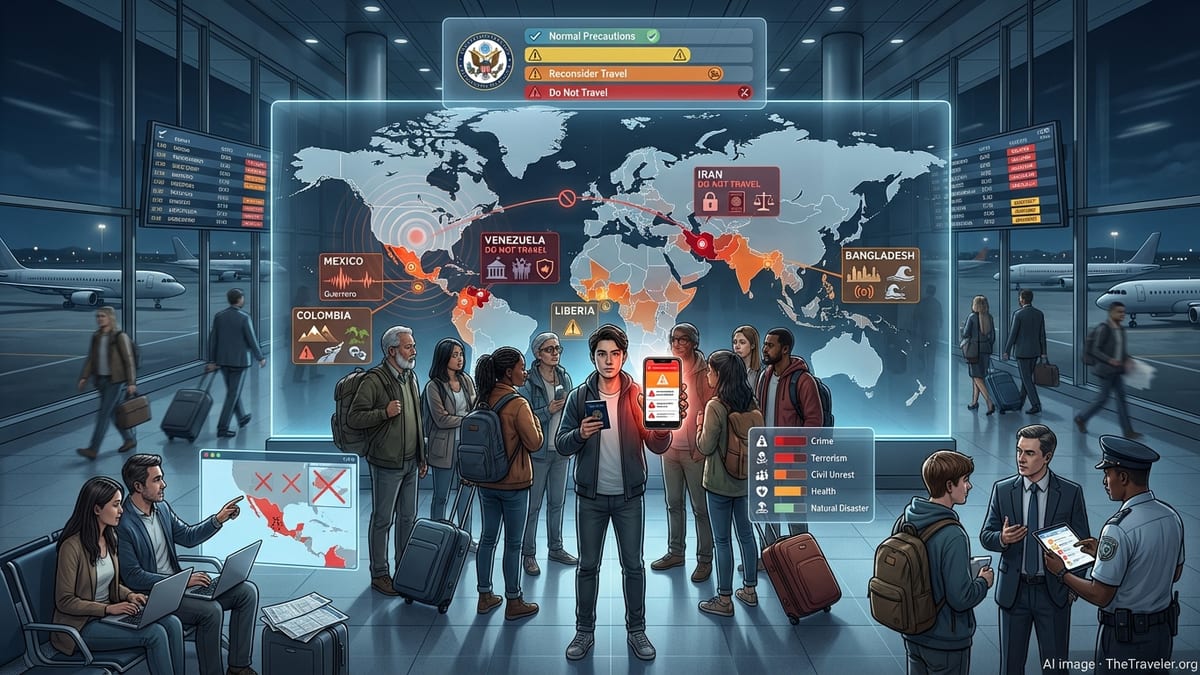
Latest Worldwide Caution Highlights Elevated Global Risks
The renewed alert, updated on July 20, 2026, reiterates that Americans overseas are being asked to stay vigilant in response to a dynamic security environment. Publicly available information from the State Department indicates that the worldwide caution is intended to address broad, ongoing threats rather than a single incident or country.
The advisory notes that terrorist attacks, unrest, and other security incidents can occur with little or no warning in a range of locations. Officials emphasize that potential targets may include public spaces such as transportation hubs, popular tourist sites, hotels, places of worship, and large public gatherings.
The worldwide warning follows a pattern of broad cautions issued at moments of heightened tension. Earlier iterations accompanied geopolitical crises and major conflicts, underscoring the government’s view that risks to Americans abroad can increase quickly in response to developments in regions far from their home destinations.
Although the caution is global in scope, it does not replace country specific advisories. Instead, it is layered on top of destination level guidance and is designed to remind travelers that overarching risks, particularly those related to terrorism and unrest, remain present in many parts of the world.
How the Worldwide Warning Fits into the Advisory System
The United States maintains a four tiered travel advisory system for every country, ranging from Level 1, which encourages normal precautions, to Level 4, which recommends that U.S. citizens do not travel. The worldwide caution functions differently from those country ratings, operating as a cross cutting alert about global trends and universal security concerns.
According to detailed State Department explainer documents, a worldwide caution is used to highlight non specific, transnational threats that could affect Americans in multiple regions. It often focuses on issues such as terrorism, political violence, and anti U.S. sentiment that may not be confined to a single country or territory.
The advisory framework has gradually evolved from earlier systems of “travel warnings” and “travel alerts.” In recent years, that structure has been consolidated into standardized country advisories and supplemental alerts and cautions that can be updated more flexibly as conditions change. The current worldwide notice reflects that more nimble model, allowing the department to adjust language and emphasis while keeping the core warning in place.
Travel analysts note that the presence of a worldwide caution does not automatically mean that every destination is unsafe. Instead, it signals that Americans should pay close attention to both general global risk factors and the specific advisory level for the countries they intend to visit.
Primary Concerns: Terrorism, Unrest and Unpredictable Incidents
The terrorism and security page on the State Department’s travel website underscores that attacks can occur in almost any region and often without warning. Recent guidance emphasizes that individuals and groups may target locations frequented by foreigners, including Americans, in order to gain international attention.
Reports indicate that the latest worldwide caution points in particular to the possibility of terrorist actions, demonstrations that turn violent, and other security incidents affecting transportation and public venues. The advisory also raises the prospect of sudden airport closures, flight cancellations, or border disruptions linked to evolving crises.
In addition to terrorism, the department’s messaging outlines other risks such as armed conflict, civil unrest, and criminal activity, which may be exacerbated by political instability or regional tensions. Travelers are advised to review not just terrorism related guidance but also information on crime, kidnappings, and other threats that can vary widely from one country or city to another.
Security specialists who track government advisories observe that worldwide cautions often coincide with periods of elevated tension in the Middle East, parts of Africa, and other volatile regions. However, they stress that threats can also arise in countries that are otherwise popular with tourists and that may hold lower level advisories, reinforcing the need for situational awareness everywhere.
What American Travelers Are Urged to Do Now
In practical terms, the worldwide warning calls on Americans abroad to take several concrete steps. Official guidance urges travelers to stay alert in crowded places, avoid demonstrations, and keep a low profile when possible. Travelers are also encouraged to follow local news, monitor relevant security developments, and be ready to adjust plans if conditions deteriorate.
The State Department recommends that U.S. citizens enroll in its Smart Traveler Enrollment Program, known as STEP, so that they can receive security updates and make it easier for consular staff to contact them in emergencies. The department’s travel pages also encourage travelers to save the contact information for the nearest U.S. embassy or consulate before departure.
Americans are reminded to review the specific travel advisory and country information page for each destination, paying close attention to regional variations within a country. Some nations carry a general advisory level but include stricter recommendations for certain provinces, border areas, or cities where risks are higher.
Travel advisers suggest that individuals revisit their itineraries in light of the new global caution, particularly if plans include destinations already rated at Level 3, “Reconsider Travel,” or Level 4, “Do Not Travel.” They also recommend that travelers review their travel insurance coverage, emergency evacuation options, and contingency plans for rapid departure.
Impact on Tourism, Airlines and Future Travel Plans
The reissued worldwide warning comes at a time when international travel has rebounded strongly, with airlines adding routes and many destinations reporting visitor numbers that meet or exceed pre pandemic levels. Industry observers note that broad State Department cautions tend to generate short term concern among American travelers, but the longer term impact often depends on how the security situation evolves.
Major U.S. and international carriers typically continue operating under a worldwide caution unless specific routes are affected by airspace closures or local restrictions. However, airlines may adjust schedules or add flexibility for itinerary changes when particular regions experience heightened instability, and travelers are often encouraged to monitor their flights closely.
Tourism boards and travel providers are watching the latest advisory closely, with some already stepping up communication around safety protocols and local conditions. Many destinations emphasize that they remain open to visitors but acknowledge that American travelers in particular may be weighing security concerns more heavily when choosing where to go.
For now, travel planners expect Americans to continue booking overseas trips, while taking more care to understand local advisories, domestic political climates, and the potential for disruption. The worldwide caution serves as a reminder that international travel in 2026 still carries complex and rapidly shifting risks, and that informed, flexible planning is increasingly essential for those heading abroad.