


More news on this day
The United States has issued a rare worldwide travel warning for Americans, urging citizens living or traveling abroad to exercise increased caution amid escalating geopolitical tensions, potential threats to U.S. interests, and the possibility of sudden disruptions to international travel.
Get the latest news straight to your inbox!
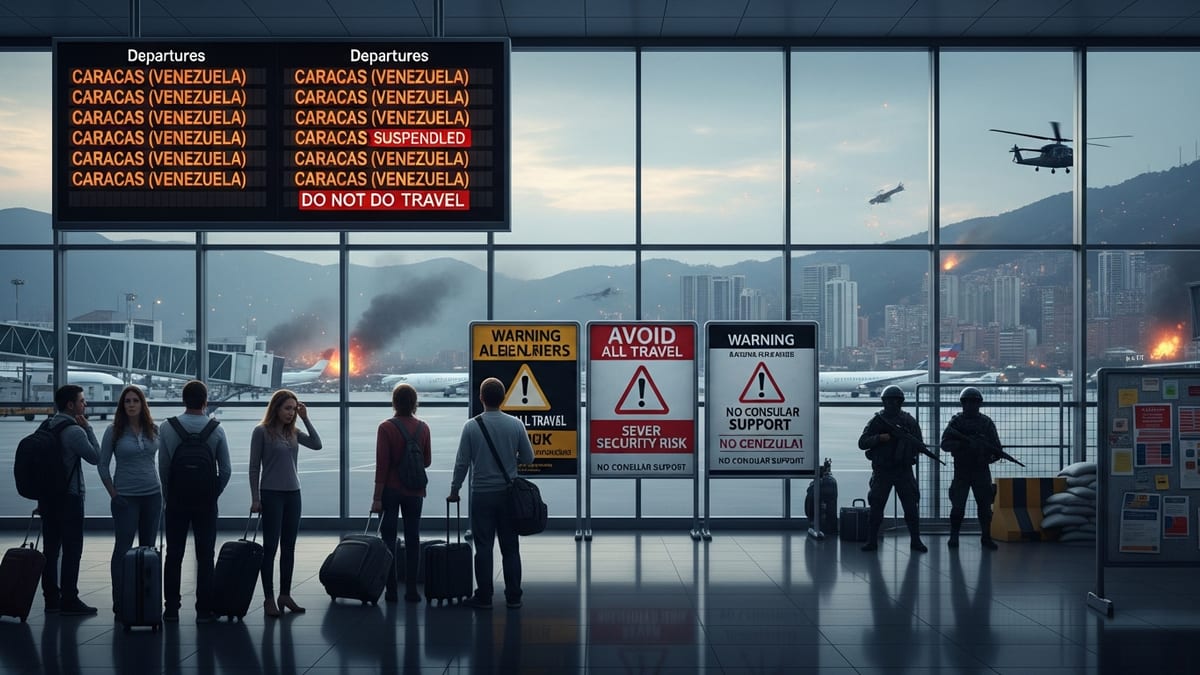
Heightened Worldwide Caution Amid Escalating Tensions
According to publicly available information from the U.S. Department of State, the Worldwide Caution alert, updated in late July 2026, advises Americans overseas to maintain a higher level of awareness of their surroundings and to be prepared for rapidly changing security conditions. The broad advisory reflects concerns about the global impact of ongoing conflicts, including the war involving Iran, and the risk of retaliatory or opportunistic attacks against U.S. interests.
Published coverage from outlets such as UPI, Travel + Leisure, and other U.S. media indicates that the latest message builds on earlier alerts tied to the Iran conflict and its regional spillover. Reports describe the advisory as “rare” in its scope, underscoring the State Department’s view that the current security climate poses a more generalized risk to Americans in multiple regions, rather than isolated trouble spots alone.
The advisory emphasizes that threats can be unpredictable and may arise in locations frequented by tourists, expatriate communities, or facilities associated with the United States. While no single destination is singled out in the Worldwide Caution itself, the message is framed as a global reminder that security conditions can deteriorate quickly, even in countries that are otherwise considered stable.
For travelers, the worldwide warning is intended to complement existing country-specific advisories, which continue to classify destinations into four risk tiers ranging from Level 1, urging normal precautions, to Level 4, advising against travel altogether. The global alert sits on top of this system, reinforcing that Americans should consider both local and broader geopolitical factors when planning trips.
Connection to the Iran Conflict and Regional Flashpoints
Recent media coverage links the timing of the worldwide warning to the ongoing war involving Iran and the United States, along with its regional allies. Reporting from U.S. news outlets highlights concerns that groups sympathetic to Iran or other non-state actors might seek to target U.S. citizens or locations perceived as connected to the United States in response to the conflict.
Background information available from international coverage on the 2026 Iran war notes that the hostilities have already triggered evacuations from several Middle Eastern countries earlier this year, as well as periodic airspace closures. Those measures disrupted flight routes, stranded travelers, and complicated logistics for airlines and passengers across Europe, the Gulf, and parts of Asia.
The new Worldwide Caution appears to reflect an assessment that the risk environment remains elevated well beyond the immediate battlefields. While the advisory does not predict specific attacks, it cites the potential for violence, demonstrations, and unrest that could affect public spaces, transport hubs, and diplomatic facilities abroad. Analysts quoted in travel and security reporting suggest that such concerns often arise when major powers are directly involved in open conflict.
In addition to the Middle East, public commentary points to other hotspots such as parts of North Africa, the Sahel, and unstable regions in the Caribbean and Latin America, where existing country-level advisories already warn of crime, civil unrest, or terrorism. The worldwide warning effectively ties these localized risks into a single, overarching message for Americans wherever they travel.
What the Advisory Recommends for U.S. Travelers
Publicly available guidance from the Department of State outlines a series of general precautions that Americans are encouraged to follow in light of the Worldwide Caution. These include regularly reviewing the travel advisory and security information for each destination, enrolling in the Smart Traveler Enrollment Program (STEP) to receive updates from nearby embassies and consulates, and having contingency plans for emergencies.
Travel coverage summarizing the advisory notes that Americans are urged to stay alert in locations that attract large crowds, such as tourist sites, hotels, transportation hubs, restaurants, and major events. Travelers are also encouraged to keep a low profile, monitor local news, and follow the instructions of local emergency services if a security incident occurs nearby.
Another key element of the guidance is the need to plan for potential travel disruptions. The worldwide warning references the possibility of flight cancellations, rerouted air corridors, or temporary border closures, especially in regions directly affected by the Iran conflict or nearby instability. Travel publications recommend that Americans maintain flexible itineraries, confirm bookings frequently, and consider travel insurance that covers political unrest or sudden changes in conditions.
The advisory further stresses the importance of maintaining up-to-date travel documents and contact information. Families of travelers are encouraged to know how to reach loved ones abroad, and Americans are advised to keep copies of passports, visas, and emergency contacts in secure but accessible locations, both physically and in digital form.
Interaction With Country-Level Advisories and Risk Tiers
The worldwide warning sits alongside the State Department’s country-by-country advisory system, which classifies destinations into four tiers of risk. Public information shows that these range from Level 1, where travelers are advised to exercise normal precautions, to Level 4, in which U.S. citizens are urged not to travel due to life-threatening dangers such as armed conflict, terrorism, or pervasive violent crime.
Government and consumer resources explain that the global alert does not replace these more detailed rankings, but instead acts as an overlay, signaling that even in lower-risk destinations, the broader security picture may be more volatile than usual. For example, some countries popular with U.S. visitors currently hold Level 1 or Level 2 advisories, yet the worldwide warning suggests that travelers should remain especially alert for protests, disinformation campaigns, or spillover effects from distant conflicts.
Travel industry analysis indicates that the advisory may prompt airlines, tour operators, and insurers to reassess their own risk models, particularly for countries already at Level 3 or Level 4. However, the worldwide caution itself does not impose any direct bans on travel, nor does it automatically change visa policies or airport screening procedures. Instead, it is framed as a strong recommendation for individual travelers to weigh security considerations more heavily when choosing destinations or itineraries.
For frequent travelers and expatriates, the advisory underlines that conditions can vary dramatically between cities and regions within the same country. Public guidance continues to encourage Americans to read not only the headline advisory level but also the detailed sections on crime, terrorism, civil unrest, and entry requirements before departure.
Impact on Travel Plans and Industry Response
Early reaction from the travel sector, as reflected in published coverage, suggests that the worldwide warning may have a mixed impact on demand. Some travelers may postpone or reroute international trips, particularly to regions closest to the Iran conflict or countries already under higher-level advisories. Others may continue with plans but build in additional precautions, such as booking flexible fares and sharing itineraries with family members.
Analysts tracking flight data and bookings point out that previous global advisories, including those issued during major security events and health crises, did not halt travel altogether but did contribute to shifts in where and how Americans moved around the world. A similar pattern may emerge in the months ahead, with some travelers favoring destinations perceived as less exposed to geopolitical tensions.
Industry reports also highlight that the advisory could increase demand for specialized security briefings and risk management services among corporate travelers, humanitarian organizations, and educational institutions operating abroad. Universities and study-abroad programs in particular may revisit their own safety protocols, reassess destination lists, or require additional waivers and orientation sessions for students traveling in the upcoming academic year.
For now, the worldwide travel warning serves primarily as a strong signal for vigilance rather than a directive to stay home. Americans considering trips abroad are being encouraged, through a range of official and media channels, to stay informed, think carefully about their risk tolerance, and prepare for an international travel environment that may remain unpredictable for some time.