


More news on this day
As a rare nationwide ground stop rippled across the United States aviation system, passengers moving through Las Vegas found themselves immobilized in terminals and on taxiways, with many reporting that “nobody has answers” about when or how they will get moving again.
Get the latest news straight to your inbox!
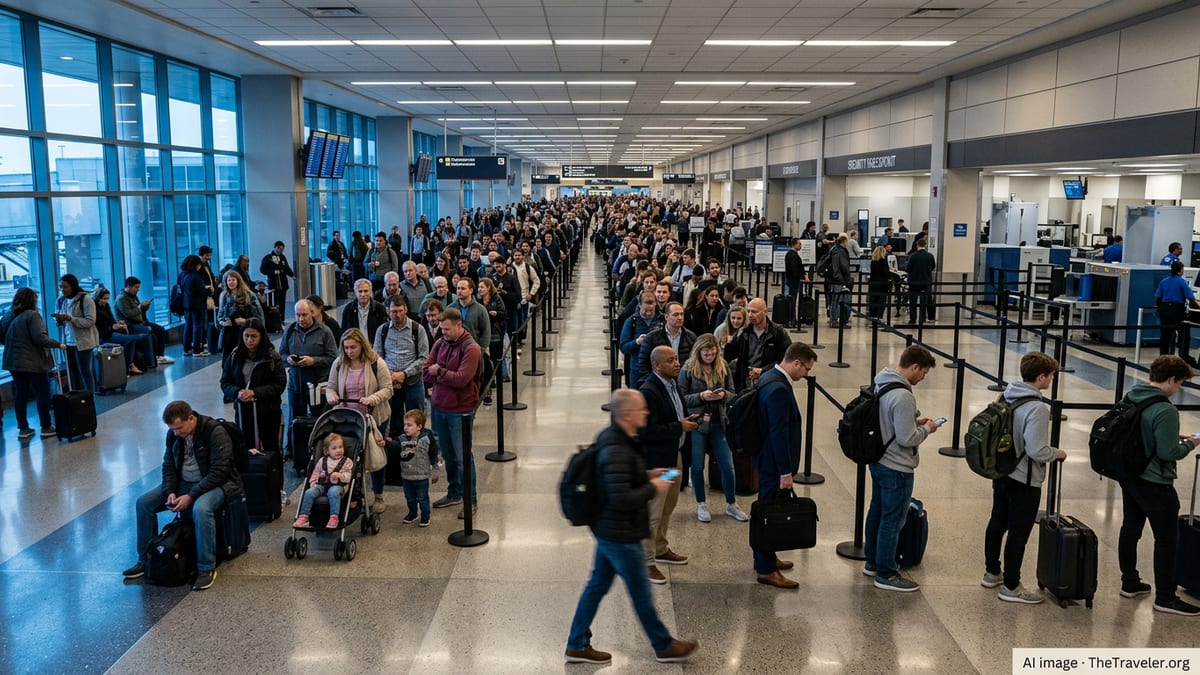
Extraordinary halt snarls traffic at Harry Reid International
Publicly available information from the Federal Aviation Administration indicates that flights across the United States were abruptly halted after a significant communications problem affected multiple air traffic control facilities. The agency described the situation as involving “extraordinary circumstances” and ordered a nationwide ground stop that halted departures at commercial airports.
Las Vegas, through Harry Reid International Airport, was among the airports feeling the immediate impact. Local discussions and eyewitness accounts posted on social platforms describe every gate filled with aircraft and long lines forming at check in, security and concessions as travelers realized that no departures were being cleared for takeoff.
Some travelers arriving in Las Vegas reported that their planes were able to land and taxi to gates, while onward connections were frozen. Others attempting to depart reported sitting on stationary aircraft or being held at gates as crews waited for clearance that did not arrive, contributing to a growing sense of uncertainty.
Independent delay tracking dashboards showed that Las Vegas did not initially appear with a formal airport wide closure notice, but individual flights were effectively paused under the broader national order. That created a gap between official coding in some systems and what passengers actually experienced on the concourses.
Passengers describe confusion and scarce information
As the ground stop took hold, travelers passing through Las Vegas described a scene of confusion, with information screens lagging behind events on the ground. Posts from passengers attempting to leave Harry Reid International mention flights that continued to display “on time” even as pilots and gate staff relayed word of a nationwide halt.
On airline specific discussion forums, at least one traveler trying to depart Las Vegas reported abandoning their flight plans to rent a car and drive to Denver instead, citing a lack of clear guidance on when departures might resume. Others shared that they were “at the airport, waiting on my flight back home,” asking fellow travelers what to expect and how long they might be stranded.
Reports from inside terminals around the country pointed to similar experiences: minimal announcements, limited detail from crew members who themselves were waiting for official updates, and heavy reliance on social media or news notifications for basic situational awareness. Las Vegas passengers tuned into these wider threads, echoing the sentiment that formal explanations were arriving more slowly than word of mouth updates.
Travelers with tight connections or time sensitive plans appeared to be the most anxious. Those already in the air en route to Las Vegas or other hubs sought reassurance that their flights would be allowed to land, while passengers still on the ground weighed whether to remain at the airport or attempt alternative arrangements.
What is known about the technical failure behind the stop
According to published coverage from national outlets, the ground stop followed a communications breakdown affecting the network of 22 Air Route Traffic Control Centers that manage en route traffic at higher altitudes between airports. These facilities handle aircraft once they are above roughly 18,000 feet and help maintain separation, reroute planes around weather and coordinate with local airport towers.
Transportation officials publicly referenced a systemic communications issue, with some reports citing problems on key radio frequencies and data lines. Other reporting noted that the FAA has been rolling out new technology to manage congestion, including AI supported tools, though it remains unclear from available information whether any new system played a direct role in the outage.
Outlets focusing on aviation policy emphasized the rarity of a nationwide ground stop. Publicly available historical summaries indicate that a coast to coast halt of this scale has been ordered only once since the aftermath of the September 11 attacks, underscoring how unusual the decision is and how disruptive it can be for passengers and airlines.
Statements summarized in news reports stressed that flights already in the air were allowed to continue under established flight plans, while new departures were held until communications stability could be confirmed. That distinction explains why some travelers landed in Las Vegas largely on schedule even as friends and family attempting to depart from the same airport were stopped in place.
Impact on Las Vegas connections, hotels and road travel
The shock of the ground stop was felt acutely in Las Vegas, where Harry Reid International operates as both a major origin and connection point for leisure and convention traffic. Airline and federal statistics show that the airport handles thousands of daily arrivals and departures, with tens of thousands of passengers connecting through during peak periods.
With outbound flights frozen, some passengers facing missed connections or long onward journeys began turning to rental cars and regional buses. Comments from travelers indicated spur of the moment plans to drive from Las Vegas to nearby states such as Colorado, rather than wait for seats on heavily backlogged flights once operations restarted.
Hoteliers on and off the Las Vegas Strip were likely to see a surge in same day bookings from travelers who discovered that they would not be leaving the city overnight. Recent transportation data shows that when operations at large hub airports are disrupted, hotel occupancy near those hubs can spike quickly as stranded passengers seek last minute rooms, even when conventions or major events are already filling much of the city.
For local service workers, rideshare drivers and airport concessionaires, the ground stop created a sudden influx of people with time to fill and uncertain plans. While some travelers chose to leave the airport altogether and return later, others remained airside, generating long lines at food outlets and lounges as the delay stretched from minutes into hours.
What stranded travelers in Las Vegas can do next
Travel industry guidance compiled from consumer advocates and airline advisories highlights several immediate steps for travelers stuck in a disruption like the one affecting Las Vegas. First, passengers are encouraged to confirm whether their flight is officially delayed, canceled or still pending departure by checking both their airline’s app and airport flight boards, and to seek same day rebooking through digital channels where possible to avoid queues at service desks.
Given the scale of a nationwide ground stop, rebooking options may be limited for the rest of the day, particularly on popular routes from Las Vegas to major hubs like Los Angeles, Denver, Dallas and Chicago. Some travelers may find more success breaking their journey into shorter segments or accepting alternate airports within driving distance of their original destination.
Consumer groups note that passenger rights in the United States remain relatively limited compared with some other regions, and compensation policies vary by airline and by cause of disruption. In previous large scale operational crises, many carriers have offered hotel vouchers or meal credits on a discretionary basis, but there is no binding requirement for such assistance when delays are linked to air traffic control or other government system failures.
For now, travelers in Las Vegas and across the country are largely in a holding pattern, waiting for clear word on the extent of the technical failure and the speed at which normal operations can resume. As more details emerge about what went wrong in the nation’s air traffic communications network, millions of passengers will be assessing not only how to get home from this disruption, but what it says about the resilience of the system they rely on.