


More news on this day
Passengers at Las Vegas’ Harry Reid International Airport found themselves suddenly stranded on November 13 after a rare nationwide ground stop halted departures across the United States, leaving many travelers reporting that “nobody has answers” as they searched for information on when flights might move again.
Get the latest news straight to your inbox!
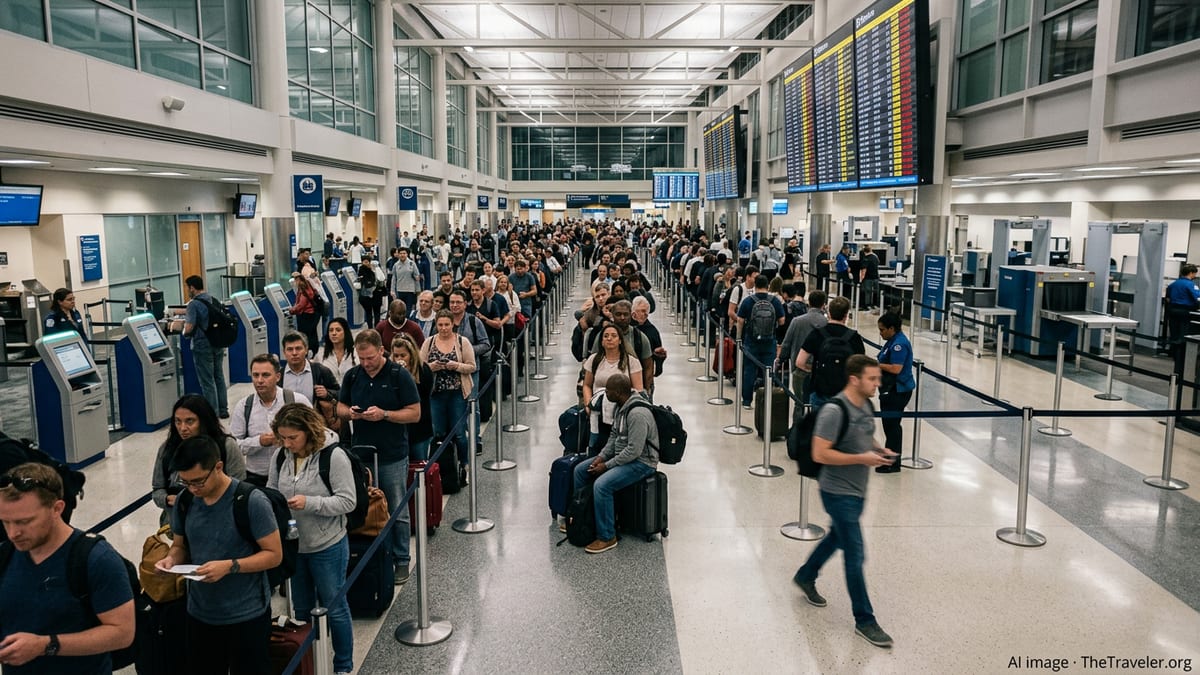
A Rare Nationwide Halt Reaches Harry Reid Airport
The Federal Aviation Administration issued the nationwide ground stop on Friday, November 13, citing “extraordinary circumstances” and “reasons of safety” tied to communication problems affecting multiple Air Route Traffic Control Centers. Publicly available information indicates that flights already in the air were allowed to continue to their destinations, while departures from U.S. airports were held on the ground.
According to published coverage, the ground stop was the first nationwide halt of U.S. flights since a major Federal Aviation Administration system outage in January 2023, and only the second since the immediate aftermath of the September 11, 2001 attacks. Aviation reference data notes that ground stops are the most restrictive traffic-management tool in the agency’s playbook because they keep aircraft at their departure airports until conditions improve.
Las Vegas, one of the busiest leisure gateways in the country, was swept up in the disruption. Flight status dashboards showed widespread delays and cancellations on Friday afternoon and evening as airlines held aircraft at gates, reassigned crews and, in some cases, scrubbed late-day departures entirely while the communication issues were investigated.
Real-time delay trackers monitoring Harry Reid International Airport reported no local weather-related ground stop in effect before the nationwide order. The disruption in Las Vegas therefore flowed from the systemwide halt rather than an airport-specific closure, compounding the impact for visitors who had expected a routine departure after conferences, weddings, and weekend getaways.
On the Ground in Las Vegas: Confusion and Crowded Gates
As the nationwide order took effect, social media posts from passengers at Harry Reid described departure boards filling with red “delayed” notices and lines quickly forming at airline service counters. Some travelers reported sitting on aircraft that had pushed back from the gate but returned when news of the halt filtered through cockpits and operations centers.
Discussion threads from Las Vegas locals monitoring the airport described people “sitting all over” terminal areas as the evening wore on, with some travelers unsure whether to remain at their gates or leave the airport to look for hotel rooms. Comments also highlighted visible frustration directed at front-line airline staff who were relaying limited and fast-changing updates from operations centers.
Reports from national aviation forums indicated that airline apps and websites often lagged the real-time situation at gates, adding to the sense of uncertainty for passengers trying to rebook or connect to onward flights. In a hub-and-spoke system where one delay can ripple across a network, the sudden pause in departures meant that aircraft and crews were quickly out of position for later segments, including overnight services to East Coast and international destinations.
By early evening in Nevada, some major U.S. airlines had begun canceling remaining departures for the night from affected airports, and posts from Las Vegas-based travelers indicated that certain carriers were advising customers not to expect to leave until the following day. For many, what began as an ordinary Friday departure turned into an unplanned extra night in the city.
Why the Ground Stop Hit So Hard
Ground stops are designed primarily as a safety and traffic management tool, but for passengers the experience is felt most immediately as uncertainty. Because a ground stop holds flights at their origin until conditions at the destination or within the broader airspace improve, information often arrives in short increments: revised departure times are pushed back in 30- or 60-minute blocks while technicians and controllers work to restore full capabilities.
Federal Aviation Administration documents describing traffic management initiatives emphasize that ground stops are used when other measures, such as ground delay programs and simple schedule spacing, are not sufficient. In the November 13 case, communication issues between key air traffic control facilities prompted a systemwide response rather than airport-by-airport restrictions, quickly overwhelming rebooking and customer service channels across multiple airlines.
Recent Federal Aviation Administration statistics show that only a small share of the agency’s daily traffic is typically affected by ground stops, which are most often limited to individual airports dealing with storms, runway congestion or staffing shortages. The rarity of a nationwide order meant that even seasoned travelers and frequent Las Vegas visitors were dealing with a scenario few had encountered before, with multiple carriers simultaneously halting departures.
Industry analyses of previous outages, including the 2023 system failure and large airline-specific information-technology disruptions in 2024, note that recovery often takes far longer than the initial stoppage. Once a ground stop lifts, airlines must work flight by flight to untangle missed connections, accommodate passengers whose trips are no longer viable the same day, and reposition crews that are now out of legal duty time limits.
Practical Advice for Travelers Stranded in Las Vegas
For travelers caught at Harry Reid International Airport during a systemwide event, publicly available guidance from aviation and consumer agencies underscores several immediate steps. The first is to confirm the status of an individual flight through the airline’s own app or text alerts, which typically update more quickly than general airport departure boards and can be used to accept rebooking options without standing in line.
When delays stretch into many hours or it becomes clear that departures will be pushed into the following day, traveler advocacy groups recommend securing accommodation quickly in a high-demand destination such as Las Vegas. Major conventions and weekend events can drive hotel occupancy well above average, and a nationwide disruption sends thousands of additional people into the same pool of available rooms. Some airlines may offer hotel or meal vouchers depending on the cause of the delay and internal policies, but those arrangements vary by carrier and are often constrained when disruptions are classified as air traffic control issues.
Passengers whose trips originate in Las Vegas can sometimes mitigate the impact by contacting airlines before heading to the airport, particularly when news of a nationwide halt breaks hours in advance. In cases where travel is flexible, voluntarily moving flights to a different day may preserve better departure times and connection options. Those already in the terminal, however, often have fewer choices and must rely on gate agents and call centers once the ground stop begins to unwind.
Travel experts observing the November 13 disruption pointed to the value of flexible tickets and travel insurance products that cover extended delays. While not every policy addresses air traffic control events in the same way, some plans reimburse for additional lodging and meals when travelers are stranded overnight due to circumstances beyond an airline’s direct control.
What Comes Next for the System and for Las Vegas Flyers
Federal agencies have indicated through prior reports on similar outages that detailed after-action reviews typically follow large-scale aviation disruptions. These assessments often examine how backup systems functioned, how quickly technicians diagnosed and resolved issues, and how information flowed between the Federal Aviation Administration, airlines, airports and the traveling public.
Policy documents released after the January 2023 outage, for example, described efforts to modernize key systems and reduce single points of failure within the national airspace infrastructure. The November 13 event is expected to prompt additional scrutiny of those modernization efforts, particularly any links between new technology deployments and unanticipated vulnerabilities in the communication chain.
For Las Vegas specifically, historical data on airport performance indicates that November is typically one of the more reliable months for on-time departures at Harry Reid International Airport compared with peak summer travel. The nationwide ground stop upended those expectations, turning what is usually a relatively smooth shoulder-season travel period into one of the most chaotic days of the year for some outbound passengers.
In the near term, travelers departing Las Vegas in the days after the ground stop can expect lingering effects in the form of scattered delays and aircraft substitutions as airlines reset their networks. While the nationwide halt has been lifted, displaced crews and aircraft continue to ripple through schedules, a reminder that even a few hours of extraordinary disruption at the system level can leave a mark on individual trips long after departure boards in Las Vegas return to normal.