


More news on this day
More than 100 passengers on a northbound Bundaberg Tilt Train were left stranded for about six hours north of Brisbane this week after severe storms brought down overhead power lines, cutting power to the long-distance service and halting it near the small Queensland community of Gundiah.
Get the latest news straight to your inbox!
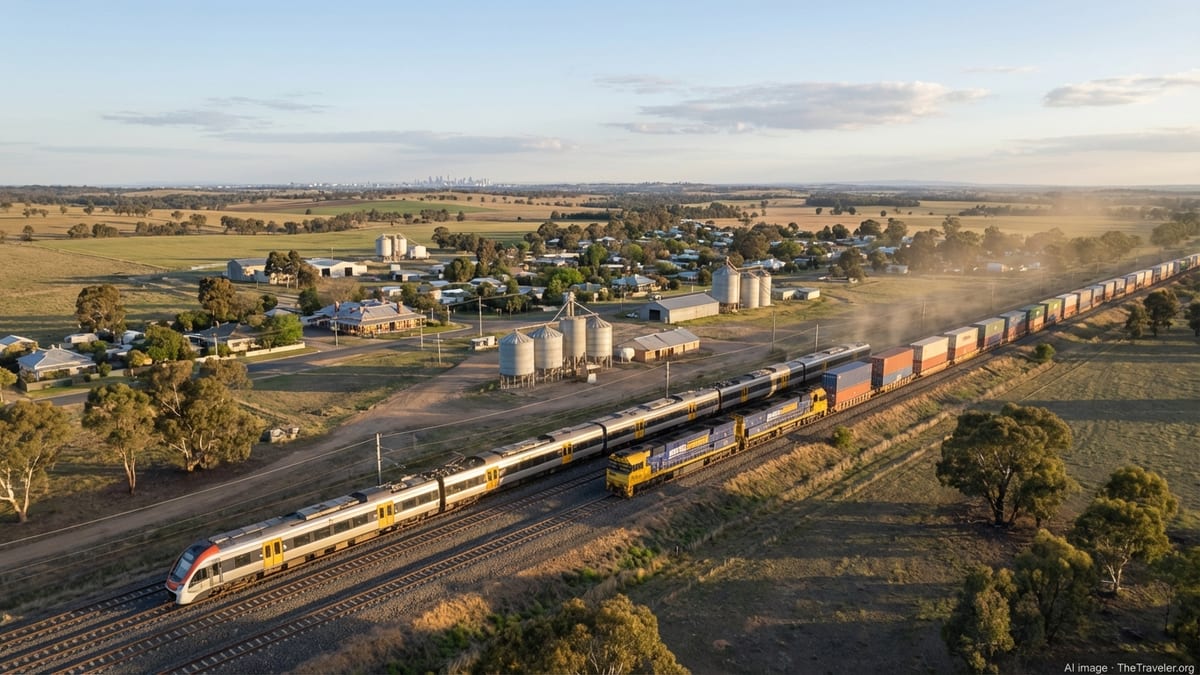
Overnight halt on the Fraser Coast
According to recent media coverage, the incident occurred around midnight near Gundiah, on Queensland’s Fraser Coast, as the electric Tilt Train travelled from Brisbane to Bundaberg. The loss of power stopped the train on the North Coast line, around three hours’ rail journey north of Brisbane, leaving passengers unable to disembark while crews assessed damage to the overhead network.
Reports describe the train remaining in place until after dawn while Queensland Rail arranged replacement road transport. Buses eventually reached the site early in the morning, with passengers arriving at their destinations several hours behind schedule. Coverage indicates that repair crews were tasked with fixing several hundred metres of damaged overhead line before services could resume through the affected section.
The Bundaberg service involved is part of Queensland Rail Travel’s long-distance network that connects Brisbane with regional centres along the Queensland coast. The route is frequently used by holidaymakers heading to the Fraser Coast and southern Great Barrier Reef, as well as by locals travelling between Brisbane, Gympie, Maryborough and Bundaberg.
Onboard conditions spark passenger frustration
Accounts published by Australian outlets indicate that conditions on board deteriorated through the night after the power failure. With the train disconnected from the electrical network, lighting, air conditioning and onboard catering were disrupted. Passengers reported spending hours in warm carriages without access to food, with toilets becoming increasingly unpleasant as the delay lengthened.
Social media posts and interviews quoted in news reports describe a cramped environment and rising anxiety, particularly among families and older travellers. Some passengers recounted difficulty sleeping in the stalled train, while others highlighted concerns for those with health issues who had planned around the predictable journey time normally associated with the Tilt Train service.
For travellers, the episode has drawn attention to how quickly comfort levels can change on long-distance services when support systems such as air conditioning and catering are interrupted. While no serious injuries were reported in connection with the incident, the experience has prompted debate about contingency planning for stranded trains on busy regional corridors.
Storm damage and network disruption
Publicly available information indicates that the halt followed a line of severe storms that moved across south-east and central Queensland this week. Lightning and strong winds were reported in multiple locations along the North Coast line, with fallen power lines near Gundiah identified as the direct cause of the Tilt Train’s loss of power.
In the hours after the incident, other long-distance services on the route, including additional Tilt Train and Spirit of Queensland services, experienced delays and partial cancellations while crews repaired the overhead infrastructure. Some trains terminated early at Maryborough West and alternative buses were arranged to move passengers onward to or from Brisbane.
The incident underscores the vulnerability of electrified regional routes to intense weather systems, which are common in Queensland in the warmer months. Recent planning documents and public briefings have highlighted the role of scheduled maintenance and planned line closures in keeping overhead systems resilient, but the Gundiah episode shows that unplanned weather events can still trigger sudden and wide-reaching disruption.
Queensland Rail response and passenger options
According to local media summaries, Queensland Rail indicated that technical teams were deployed overnight to assess damage to the overhead line and that work continued into the morning to restore normal operations. Reports also refer to a public apology from senior management for the disruption and discomfort experienced by passengers on board the stalled service.
Travel advisories issued through news outlets in the aftermath of the incident urged passengers booked on North Coast line services to check the latest service information before travelling. Some services were replaced by coaches, while others operated to altered timetables as repair and inspection work progressed along the affected stretch of track.
For visitors and residents planning rail journeys from Brisbane to destinations such as Gympie, Maryborough, Bundaberg or Rockhampton in the coming days, publicly available timetables may not immediately reflect short-notice adjustments. Rail users are being encouraged in published coverage to allow extra time, monitor operator announcements and consider flexibility in departure times where possible.
Implications for regional rail travellers
The Gundiah stoppage has renewed focus on the reliability of Queensland’s long-distance passenger network at a time when regional rail is promoted as a lower-emissions alternative to driving or short flights. Advocacy groups and commentators quoted in recent reporting have previously pointed to a backlog of maintenance and the age of some rolling stock as ongoing challenges for services linking Brisbane with coastal and inland communities.
For tourists, the Bundaberg Tilt Train is a key link to attractions such as Mon Repos, Bargara and the southern gateway to the Great Barrier Reef. Any prolonged disruption on the line can affect connecting accommodation bookings, tour departures and local transport arrangements. Travel operators on the Fraser Coast and in Bundaberg closely monitor the Tilt Train timetable, as same-day rail arrivals often feed directly into day trips and overnight stays.
While the Gundiah incident appears to be weather-related rather than the result of mechanical failure, it is likely to spur further discussion about emergency procedures on remote sections of track, including the availability of food, water and climate control if trains are immobilised for extended periods. For now, the ordeal serves as a reminder to long-distance passengers in Queensland to remain prepared for unexpected delays, particularly during storm-prone periods along the state’s busy coastal corridor.