


More news on this day
Passengers transiting through Doha faced renewed disruption this week after three key services operated by Air Arabia Abu Dhabi and Kuwait Airways were canceled at Hamad International Airport, severing links to Sharjah and Kuwait City and compounding wider regional travel chaos across the Gulf.
Get the latest news straight to your inbox!
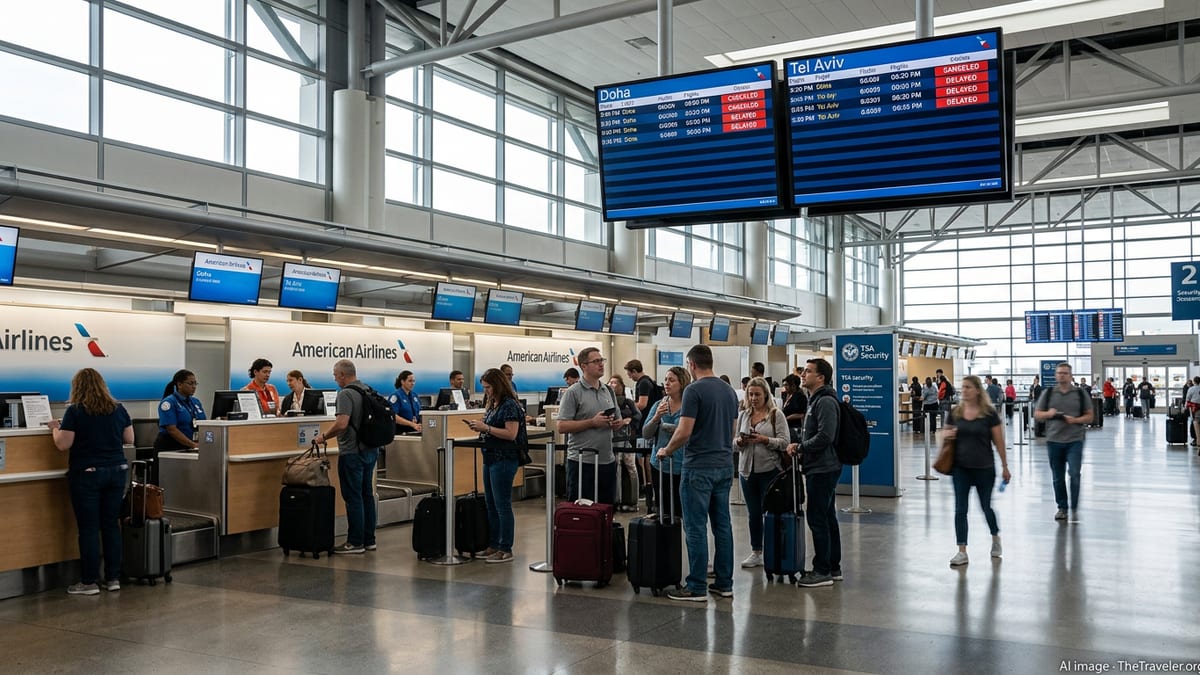
Key Cancellations Hit Sharjah and Kuwait City Links
Flight status boards for Hamad International Airport on Tuesday showed a cluster of cancellations affecting short-haul Gulf services, including three crucial links operated by Air Arabia Abu Dhabi and Kuwait Airways. Publicly available schedule data indicated that services connecting Doha with Sharjah and Kuwait City were among those withdrawn, interrupting two of the busiest regional corridors used by budget and full-service carriers alike.
Air Arabia’s Doha to Sharjah link is a core low-cost route feeding onward connections across the Air Arabia network via Sharjah, while Kuwait Airways’ Doha to Kuwait City flights serve both point-to-point demand and connecting traffic into the airline’s broader Middle East and South Asia schedule. The loss of these services has immediately reduced same-day options for passengers seeking to route through Qatar at short notice.
Although individual cancellations are not unusual in the current climate of volatile Middle East airspace, the simultaneous removal of multiple services to Sharjah and Kuwait City has had an outsized impact. Reports indicate that the affected flights were fully or near fully booked, with many travelers relying on tight connections onward to South Asia, North Africa, and Europe.
Operational data from regional airports in recent weeks has already shown elevated disruption levels on short-haul Gulf routes, with airlines trimming frequencies, consolidating departures, or pausing specific rotations as they adjust to ongoing airspace restrictions and crew availability challenges.
Transit Passengers in Doha Face Overnight Stranding
The latest cancellations have had immediate consequences for travelers already in transit at Hamad International Airport. According to published coverage and first-hand accounts circulating on public forums, passengers whose itineraries included onward flights to Sharjah or Kuwait City have been left in Doha’s transit zone awaiting rebooking, in some cases for many hours beyond their original departure times.
Hamad International Airport normally functions as one of the region’s most efficient connection hubs, with tightly timed transfers and a high proportion of through passengers. With several services grounded and overall capacity curtailed, airlines have struggled to accommodate displaced travelers on the remaining departures, especially during peak evening and overnight waves when most long-haul connections arrive and depart.
Some travelers report being shifted to later flights via alternate Gulf gateways such as Abu Dhabi, Riyadh, or Istanbul, while others have been asked to return to ticketing counters periodically as carriers attempt to reconstruct complex multi-leg itineraries. Publicly available guidance from regional airlines in recent months has repeatedly urged passengers not to travel to airports until they have received confirmed rebooking details, reflecting the strain on airport facilities when large numbers of disrupted passengers congregate at once.
For those unable to clear immigration due to visa restrictions, extended waits inside the terminal have remained a particular challenge. Seating bottlenecks around busy transfer gates and customer service desks have been a recurring feature of the current disruption cycle across the Gulf’s major hubs.
Regional Airspace Constraints Continue to Ripple Through Schedules
The impact of the three Doha cancellations is magnified by the broader operational environment in the Gulf, where regional airspace closures and restrictions linked to ongoing geopolitical tensions have repeatedly upended flight plans since late winter. Aviation analytics reports describe thousands of flights canceled or rerouted across key hubs including Doha, Dubai, Abu Dhabi, Kuwait City, Sharjah, and Bahrain over recent weeks.
For Qatar-based operations, these constraints have translated into longer routings, compressed flight banks, and, at times, temporary suspensions of specific corridors. Published advisories from logistics and aviation firms show that Hamad International Airport has periodically faced outright halts in passenger operations, with carriers focusing on clearing backlogs when conditions allow limited resumptions.
Air Arabia Abu Dhabi and Kuwait Airways have both had to adjust their networks under these conditions. Kuwait’s flag carrier has openly acknowledged extensive disruption to its schedules this year, highlighting higher fuel burn on detoured routes and the challenge of repositioning aircraft and crew once airspace reopens in phases. Low-cost operators, which typically rely on rapid aircraft turnarounds and dense utilization, have had to accept reduced efficiency as holding patterns, diversions, and last-minute schedule changes become more frequent.
Industry observers note that even when only a handful of flights are canceled at a major hub such as Doha, the knock-on effects can be felt across multiple continents, especially for passengers on complex itineraries that depend on narrow connection windows. A missed short regional leg can mean rebooking an entire long-haul journey, often at a time when available seats are already constrained.
Knock-on Delays Across the Gulf’s Short-Haul Network
Beyond Doha, the cancellation of flights linking Qatar with Sharjah and Kuwait City has contributed to a fresh wave of schedule adjustments across the wider Gulf network. Published timetables for Sharjah and Kuwait International Airport in recent days show a patchwork of delays, retimed flights, and isolated suspensions on services operated by multiple carriers.
Travel advisories produced by regional news outlets and specialist travel publications indicate that Gulf airports have been operating under fluctuating conditions, with some hubs experiencing near-normal throughput while others contend with extensive day-to-day variation. Kuwait International, in particular, has been the focus of repeated alerts this spring as its national carrier and partner airlines manage rolling cancellations and route suspensions.
Sharjah, a key base for Air Arabia, has also faced operational strain as the airline juggles its core low-cost network with continuing constraints on airspace and aircraft positioning. Even when airports remain physically open, the need to avoid certain flight paths or operate longer detours has reduced the margin for recovery when disruptions occur, leaving little slack to absorb additional cancellations from regional partners.
For travelers, this has meant that disruptions in Doha can quickly translate into missed flights or extended layovers in other Gulf cities, especially for those traveling on separate tickets or using low-cost carriers that do not provide protected connections across different reservations.
Advice for Affected Travelers Using Doha as a Transit Hub
With the latest wave of cancellations reinforcing the fragility of regional schedules, publicly available guidance from airlines, airports, and consumer advocates continues to emphasize preparation and flexibility for anyone planning to transit through Doha and neighboring hubs in the coming days.
Passengers are being encouraged to monitor airline apps and official communication channels closely up to the time of departure, as same-day schedule changes remain common on certain Gulf routes. Travel experts routinely highlight the importance of allowing longer connection windows, especially when itineraries involve separate tickets or cross-carrier combinations linking low-cost and full-service airlines.
Those already stranded at Hamad International Airport are generally advised, according to published guidance, to remain in regular contact with their operating carrier and to make use of staffed transfer desks rather than relying solely on third-party booking platforms for rebooking. Where possible, passengers with flexible travel plans may find it easier to accept rerouting via alternate Gulf or regional hubs, even when this adds extra stops or travel time, in exchange for a confirmed seat out of Doha.
While operational conditions across the Gulf can change quickly as airspace restrictions evolve, the disruption triggered by the latest set of cancellations at Hamad International Airport underlines how vulnerable dense short-haul networks remain. For now, travelers using Doha as a transit point to Sharjah, Kuwait City, and beyond are likely to face a period of continued uncertainty and should plan accordingly.