


More news on this day
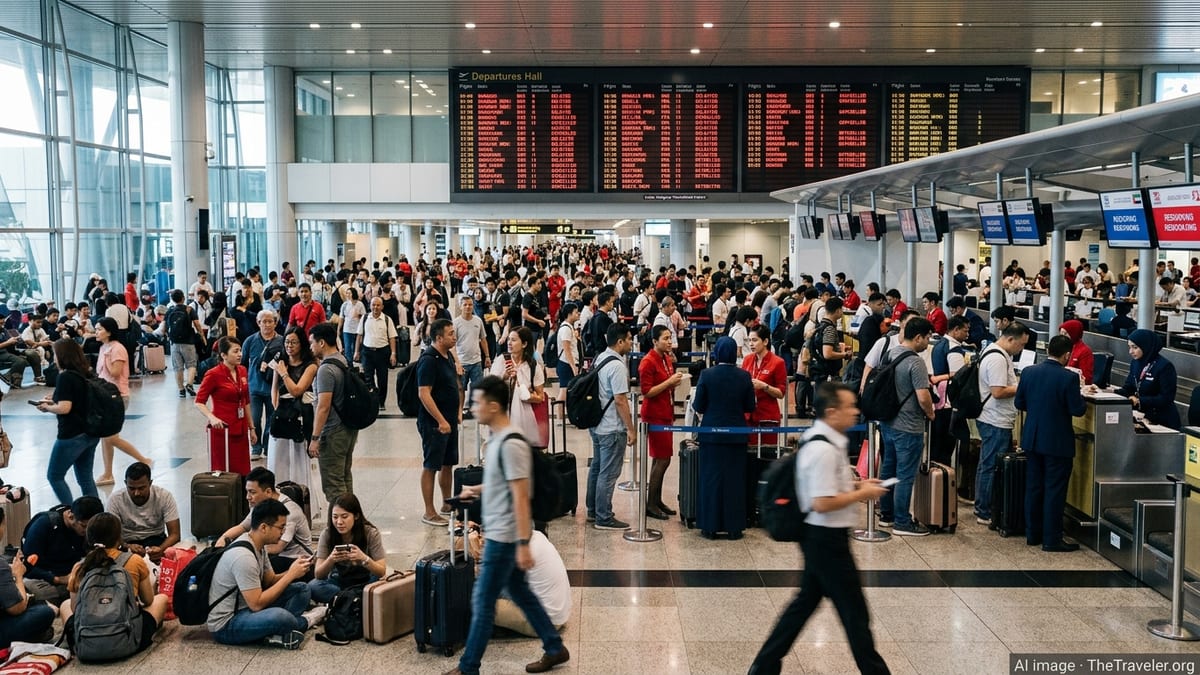
Air travelers across Asia are facing a fresh bout of disruption as publicly available tracking data and operational tallies point to at least 75 flight cancellations and 432 delays in a single day, disrupting services on China Eastern, Shenzhen Airlines, Batik Air, Garuda Indonesia and other carriers across China, Indonesia, Singapore and neighboring markets.
Get the latest news straight to your inbox!
Disruptions Concentrated at Major Hubs in China and Southeast Asia
The latest wave of disruption is centered on some of the region’s busiest airports, including Beijing Capital, Shanghai Pudong, Guangzhou Baiyun and Shenzhen Bao’an in mainland China, along with Jakarta Soekarno Hatta and Singapore Changi. Coverage from aviation-focused outlets and live tracker snapshots indicate that China Eastern and Shenzhen Airlines have borne the brunt of schedule changes at Chinese hubs, while Batik Air and Garuda Indonesia have seen knock-on effects on routes into and out of Indonesia and Singapore.
Recent incident reports describe dense clusters of delays on trunk routes linking Shanghai, Beijing and Guangzhou with second tier cities, where tight turnarounds leave little room to absorb disruption. When a departure from one hub runs late, the same aircraft and crew are often rostered to operate onward sectors, meaning a single late pushback can ripple through multiple flights over the course of the day.
In Southeast Asia, Jakarta and Singapore have emerged as focal points for delays affecting Batik Air and Garuda Indonesia. Previous tallies compiled in April and May already highlighted these carriers among those most exposed to weather and air traffic control bottlenecks on regional corridors, and the latest figures suggest those pressure points have persisted into late May.
The combined effect is a patchwork of rolling delays and cancellations that vary by airport and time of day, but add up to a consistent pattern of strain across the broader Asia flight network.
Weather, Congested Skies and Tight Schedules Drive the Latest Wave
A review of recent disruption summaries across the region points to a familiar trio of triggers: convective weather over key hubs, airspace management constraints and tightly wound schedules that leave airlines with minimal operational slack. Earlier in the month, published coverage documented severe storms and heavy rain sweeping across parts of China and Indonesia, forcing reroutes, holding patterns and temporary ground stops that quickly translated into spikes in delays and same day cancellations.
Even when skies clear, air traffic control capacity often lags behind demand. Asia’s aviation recovery has pushed flight volumes at or above pre pandemic levels on some domestic and regional routes, but infrastructure and staffing have struggled to keep pace. When control centers impose flow restrictions or reduced arrival rates, carriers such as China Eastern, Shenzhen Airlines, Batik Air and Garuda Indonesia must either stretch block times and accept delays or pare back schedules, resulting in cancellation clusters like those recorded in the latest tally.
Operational data discussed in recent analyses of Asia Pacific disruption also highlight how dense, banked schedules at hub airports can amplify minor issues. A short weather closure or runway inspection in the middle of a peak bank can push multiple departures into conflict, leading airlines to prioritize certain long haul or high yield services while canceling or consolidating others, including short haul links that feed traffic into regional centers in China and Southeast Asia.
As summer approaches in the northern hemisphere, analysts note that the seasonal uptick in thunderstorms, coupled with already busy timetables, increases the likelihood that similar surges of cancellations and delays will recur unless capacity and contingency planning improve.
Passengers Face Missed Connections, Overnight Stays and Limited Rebooking Options
For passengers caught up in the disruption, the immediate impact has been missed connections, extended waits at transfer hubs and, in some cases, enforced overnight stays. Reports from recent Asia wide disruption events show that when flights on carriers such as China Eastern, Batik Air and Garuda Indonesia are delayed by several hours, onward departures to long haul destinations can quickly fall out of reach, particularly at heavily banked hubs.
Travel forums and consumer updates from recent weeks describe travelers in Shanghai, Beijing, Jakarta and Singapore scrambling to secure alternative routings after same day cancellations, often finding that remaining seats on competing airlines are scarce or priced far above their original itineraries. In several documented cases, passengers who accepted refunds after cancellations then discovered that comparable replacement tickets cost significantly more, effectively pricing some travelers out of their planned trips.
Rebooking policies vary by airline and jurisdiction, but publicly available guidance generally encourages affected passengers to act quickly, document communications and use digital tools where possible. During earlier April and May disruption spikes, observers noted that airline apps and websites were sometimes updated more rapidly than airport departure boards, giving proactive travelers a better chance of securing alternative flights or standby options before they sold out.
The latest figures underline how vulnerable tightly timed trips are to even modest schedule shocks. Travelers connecting across multiple Asian hubs, or relying on separate tickets stitched together between low cost and full service carriers, appear especially exposed when cancellation waves strike.
Operational Strain Highlights Structural Vulnerabilities in Asia’s Air Networks
The concentration of 75 cancellations and 432 delays across a handful of brands and hubs does not mean only those carriers are struggling. Rather, analysts reviewing broader disruption statistics argue that China Eastern, Shenzhen Airlines, Batik Air and Garuda Indonesia function as visible indicators of wider structural stress across Asia’s aviation system.
China’s large domestic market, dominated by homegrown airlines such as China Eastern and its peers, has been operating close to capacity on many routes, leaving little margin for error when weather or airspace constraints arise. Prior reports of “gridlock” days at major Chinese hubs, with dozens of cancellations and hundreds of delays, suggest that the underlying challenge is not a single event but a recurring mismatch between planned schedules and real world conditions.
In Indonesia and surrounding Southeast Asian markets, rapid growth in demand has often outpaced investment in airport infrastructure and air traffic management. Carriers like Batik Air and Garuda Indonesia operate a web of domestic and regional services that depend on quick turnarounds at congested terminals. When one node in that network slows, the resulting backlog can radiate across multiple routes, reaching as far as Singapore and secondary cities in Malaysia and China.
Industry commentary following earlier disruption spikes has called for more conservative scheduling, greater use of spare aircraft and crew reserves, and enhanced coordination between airlines and air navigation service providers. The current tally of cancellations and delays, affecting multiple carriers across several countries in a single day, is likely to reinforce arguments that Asia’s air networks need more resilience built into their timetables and contingency plans.
What Travelers Can Do as Disruptions Continue
For passengers with upcoming flights on China Eastern, Shenzhen Airlines, Batik Air, Garuda Indonesia or other Asia based carriers, recent disruption patterns offer some practical lessons. Monitoring flight status frequently in the 24 to 48 hours before departure, using both airline apps and airport information channels, can provide early warning of schedule changes and improve the chances of securing prompt rebooking when problems arise.
Travel advisories and consumer guidance issued in connection with previous waves of cancellations across Asia emphasize the value of keeping itineraries as simple and flexible as possible. Single ticket bookings on one or two partner airlines, rather than separate tickets on unrelated carriers, can make it easier to obtain through rebooking when a flight is delayed or canceled. Allowing longer connection windows at busy hubs like Shanghai, Beijing, Jakarta or Singapore can also create a buffer against rolling delays.
Passengers are further advised in publicly available materials to retain all documentation related to disruptions, including boarding passes, delay notifications and receipts for meals or accommodation, in case they need to seek refunds, travel insurance claims or discretionary gestures of goodwill from airlines. While compensation rules differ across jurisdictions and do not always apply to weather related events, a clear paper trail can be helpful when policies do offer some relief.
With the northern summer high season approaching and recent history pointing to recurrent disruption spikes, travelers heading through China, Indonesia, Singapore and neighboring markets may need to plan for extra time, backup options and patience as Asia’s aviation system works through another period of heavy strain.