


More news on this day
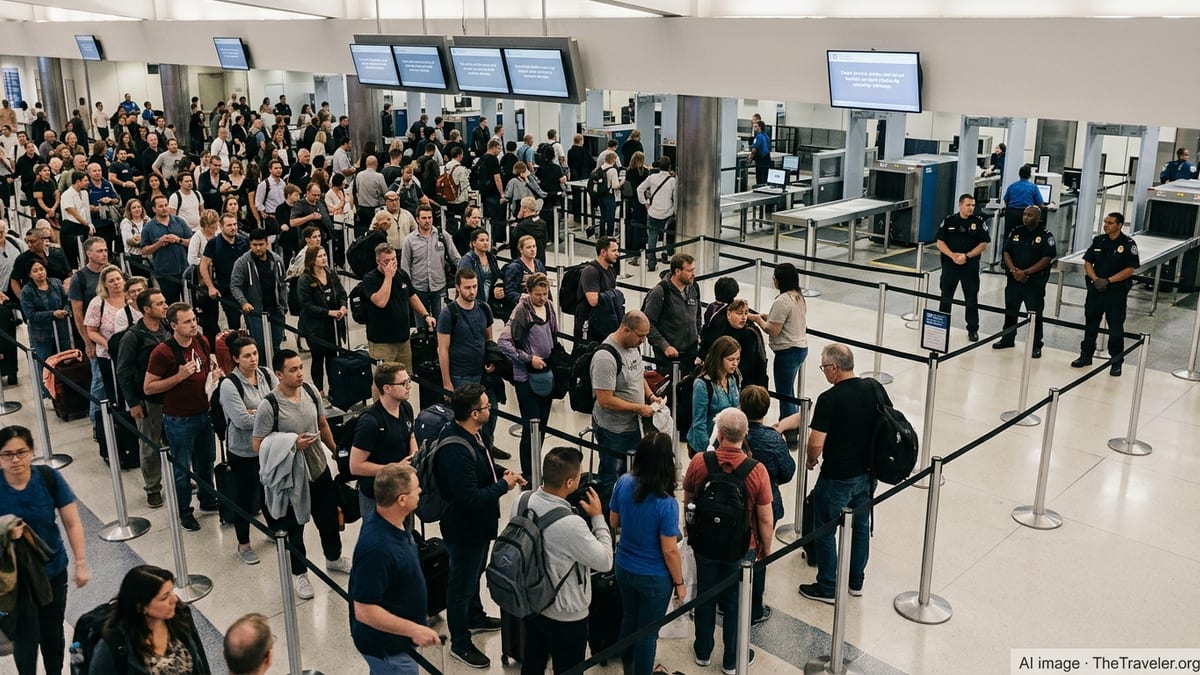
Travelers heading to Sweden and other popular European destinations are being urged to brace for longer airport queues, more intrusive identity checks and extensive biometric screening as the European Union’s new Entry/Exit System becomes fully embedded across the Schengen area and Canada updates its travel advice to reflect the shift.
Get the latest news straight to your inbox!
Schengen’s Digital Border Regime Enters a New Phase
The European Union’s Entry/Exit System, a continent-wide database that records the movements of non EU nationals at external borders, has moved from phased rollout to full operation across the Schengen area in 2026, fundamentally changing the way many international travelers enter and leave Europe. Official documentation describes the system as a cornerstone of a modernized border regime that replaces manual passport stamps with automated electronic records of each crossing.
Under the new rules, most visitors from visa exempt countries, including Canada, the United States and the United Kingdom, are now subject to mandatory registration the first time they cross an external Schengen border by air, land or sea. Border authorities capture biographical data from the travel document alongside biometric identifiers such as a facial image and fingerprints, which are stored in a central database for subsequent verification on future trips.
European institutions present the move as a security upgrade intended to identify overstayers more accurately, combat identity fraud and speed up processing in the long term through automation at eGates and self service kiosks. However, the transition period has been marked by patchy implementation, technical issues and uneven staffing at border checkpoints, leading to reports of sporadic congestion at airports that receive high volumes of non EU visitors.
The Schengen area, which now spans nearly 30 European countries, has historically been associated with passport free travel for those moving within its internal borders. The Entry/Exit System does not change that principle for EU citizens, but it does create a far more data intensive perimeter for third country nationals at external frontier points, which in practice means many travelers experience their first contact with the system at major hubs such as Paris, Helsinki, Stockholm or Madrid.
Sweden Aligns With Nordic and Southern EU Neighbors
Sweden has now joined Finland, Spain, Croatia and other Schengen states in operating the Entry/Exit System at its external border crossings, including Stockholm Arlanda Airport and key seaports. Public information from Swedish police and border agencies indicates that the country activated EES checks in line with a common European timetable, after running trials and infrastructure upgrades throughout 2025.
At Stockholm’s main international gateway, travelers arriving from non Schengen destinations are increasingly funneled through biometric capture points before reaching the passport control booths. First time registrants may be asked to scan their passports, provide fingerprints and stand for a live photo, adding several minutes to each transaction. Swedish authorities have emphasized that the process is mandatory for most non EU citizens who are not residents, with only limited exemptions for specific categories such as diplomats or very young children.
Finland has followed a similar trajectory, with Helsinki Airport among the earliest Nordic hubs to introduce the system at scale and regional airports in Lapland preparing for wider deployment. In southern Europe, Spain and Croatia have integrated EES technology at key tourist entry points, from Madrid and Barcelona to coastal and island airports that serve large volumes of seasonal traffic. The shared result is a more uniform set of checks at the external edge of Schengen, even if the visitor experience still varies by location and time of day.
Airport and airline industry groups have repeatedly urged European and national authorities to synchronize staffing, equipment and passenger communication to limit disruption as more states, including Sweden, move from pilot operations to routine use. Trade associations representing airports have reported prolonged queues at some border control lines during peak periods, particularly where space constraints limit the number of kiosks or enrollment stations that can be installed.
Canadian Travel Advisory Flags Queues, Identity Risks and Surveillance
As European countries tighten their digital borders, Canadian officials have updated travel advice for citizens heading to Schengen destinations such as Sweden, France and Finland, drawing attention to longer processing times, new identity requirements and expanded biometric surveillance. Recent advisories and guidance highlight the potential for significant lineups at passport control while visitors complete first time enrollment under the Entry/Exit System.
The Canadian government’s public information points to a growing use of biometrics, including facial recognition and fingerprint scans, at airports and other border crossing points worldwide. In the European context, the concern is not only the added time but also the increased collection and sharing of personal data across multiple states and agencies through interconnected databases. Travelers are encouraged to understand how long their data may be retained, where it is stored and who may have access for law enforcement or migration control purposes.
Guidance aimed at Canadian travelers also flags the heightened risk of identity fraud in crowded, high stress airport environments where passengers may be distracted by unfamiliar procedures and long waits. Advice commonly stresses the importance of safeguarding passports, boarding passes and mobile devices, avoiding public Wi Fi for sensitive transactions and treating unsolicited offers of assistance at kiosks or machines with caution.
Beyond Europe, Canadian border and security agencies have been expanding their own use of biometric tools at home, reinforcing a broader global shift toward technology driven identity management at international frontiers. The interplay between domestic and foreign systems means that Canadians passing through hubs such as Stockholm Arlanda or Paris Charles de Gaulle may encounter multiple layers of biometric checks on a single trip, from airline check in to exit controls and arrival back in Canada.
What Travelers Can Expect at Stockholm, Paris and Helsinki
For travelers planning itineraries through Stockholm, Paris, Helsinki and other major Schengen gateways, the most immediate impact of the new regime is likely to be at border control on arrival and, in some cases, departure. Those who have not previously been enrolled in the Entry/Exit System should be prepared for a one time registration that involves both document scanning and biometric capture before a border guard completes the admissibility check.
At large hubs such as Paris Charles de Gaulle and Helsinki Airport, the process may be partially automated using self service kiosks or pre registration devices that gather data before travelers reach the staffed booths. While these systems are designed to speed things up once initial technical and staffing issues are resolved, early experience has shown that unfamiliarity, machine errors and surges of long haul arrivals can still produce substantial bottlenecks.
In Stockholm, where the Entry/Exit System has been layered onto an already busy terminal layout, non EU passengers report that queues can build quickly at peak times when several flights from North America, the Middle East and Asia arrive close together. Similar feedback has emerged from other Nordic and Baltic gateways that serve as transfer points into the wider Schengen zone, suggesting that the learning curve for both travelers and staff will persist through at least one more summer season.
Passengers transiting through multiple Schengen borders on a single journey, for example flying from Canada to Helsinki and then onward to Spain or Croatia, will typically complete the biometric registration at their first point of entry. Subsequent movements within the Schengen area usually involve only boarding pass checks, although carriers may conduct additional identity verification at the gate. On exit, the system records the departure, allowing authorities to track compliance with short stay limits.
Balancing Security, Privacy and Convenience
The expansion of the Entry/Exit System across Sweden, Finland, Spain, Croatia and other Schengen states reflects a wider policy drive in Europe to harness biometrics and large scale databases to manage migration and enhance security. Supporters argue that the approach should, over time, reduce document fraud, make it harder for travelers to overstay and open the way for more seamless automated border crossing for low risk visitors once the initial registration phase is complete.
Privacy advocates and some travel industry observers, however, warn that the concentration of sensitive personal and biometric data in interconnected systems creates new vulnerabilities, particularly if cybersecurity measures are not consistently robust across all participating states. Questions have also been raised about transparency, redress mechanisms for those incorrectly flagged and the proportionality of retaining detailed travel histories for millions of short term visitors.
For now, international travelers face a trade off between increased scrutiny at the border and the promise of faster processing in the future. Publicly available information indicates that European institutions are working on complementary initiatives, such as the forthcoming European Travel Information and Authorisation System, which will require many visa exempt travelers to obtain electronic pre clearance before departure. Combined with the Entry/Exit System, this will further embed data driven risk assessment into Europe’s approach to border management.
In the short term, the Canadian government’s latest advisory encourages travelers to build extra time into their itineraries, pay close attention to airline and airport guidance and stay informed about evolving entry requirements and privacy implications. As Sweden and its European partners continue to refine the new system, the coming peak travel seasons will test whether the balance between control and convenience can be sustained without undermining the appeal of Schengen’s traditionally hassle free travel experience.