


Planning a first trip to Scandinavia often comes down to a single, surprisingly tricky question: should you go to Sweden or Norway? Both promise clean design hotels, efficient trains, and postcard-ready landscapes, yet the on-the-ground experience can feel very different. This guide compares the two countries through a traveler’s lens so you can confidently decide which one fits your budget, travel style, and dream itinerary right now.
Get the latest updates straight to your inbox!
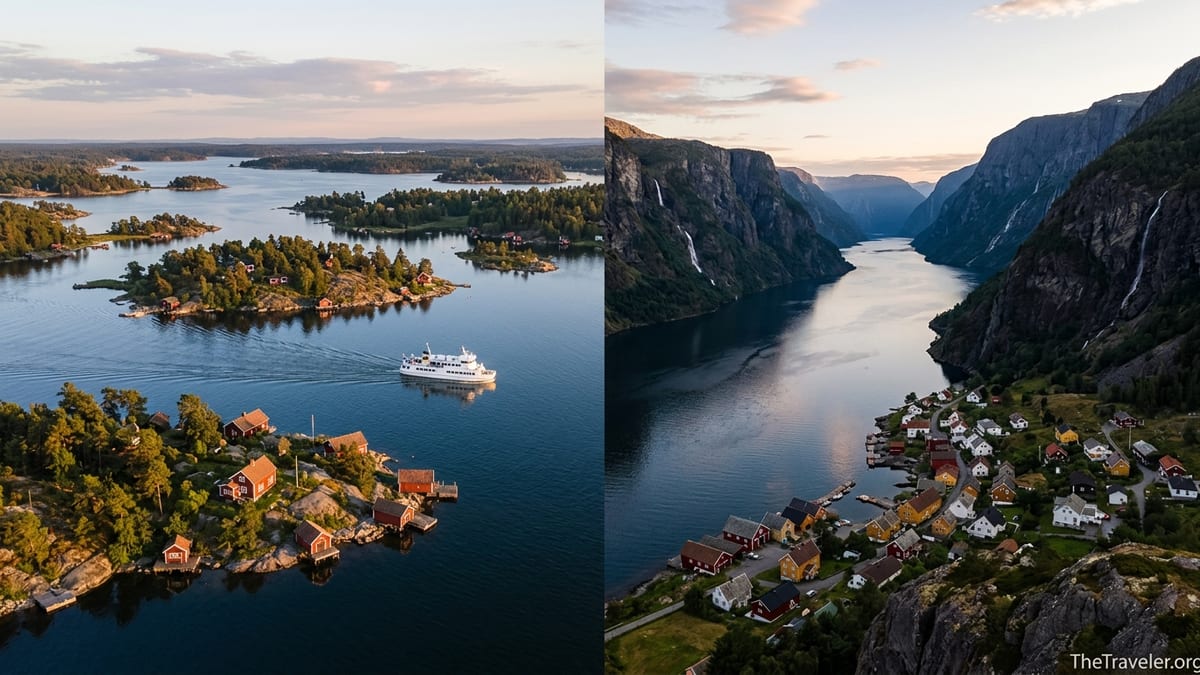
Overall Vibe: Urban Cool vs Wild Drama
If you imagine your trip as a balance of city culture and nature, Sweden and Norway sit at different points on the spectrum. Sweden typically feels more about everyday livability and subtle beauty, while Norway leans into big landscapes and bold, cinematic scenery.
In Sweden, many visitors start in Stockholm and are surprised by how relaxed the capital feels for a city of nearly a million people. Neighborhoods like Södermalm reward slow wandering with independent coffee bars, vintage shops, and pocket parks facing the water. A three-day stay might be heavy on museum visits, design shopping, and late dinners in bistros in Vasastan, with a half-day boat ride to the Stockholm Archipelago for a taste of nature.
Norway, by contrast, tends to front-load its drama. Even before you leave Oslo, you can step onto the roof of the Opera House and look across the fjord at forested islands, or ride the tram up to Holmenkollen for views that stretch all the way to the Oslofjord. Within a day’s travel, you are on the Bergen Railway or Flåm Railway, threading between snow-capped mountains and deep valleys on your way to the fjords.
If your dream trip is café-hopping, nightlife, and understated historic quarters with nature as an easy side-trip, Sweden is often the better fit. If you want scenery that dominates the trip diary and cities that act more like gateways to that landscape, Norway usually comes out ahead.
Costs and Practicalities: Which Is Easier on Your Wallet?
Both Sweden and Norway are expensive by global standards, but Norway is generally the pricier option for everyday travel expenses. Travelers often report that midrange restaurants in central Oslo or Bergen are noticeably more expensive than comparable spots in Stockholm or Gothenburg, especially for alcohol and fresh seafood. A standard main course of fish in a midrange Oslo bistro can easily climb beyond what you would pay in a similar Stockholm restaurant.
Accommodation tells a similar story. In high season, a central, modern 3-star or simple 4-star hotel in Stockholm often prices a bit lower than a comparable hotel in Oslo. Budget-conscious travelers in Sweden can also lean on well-run hostels or chains like Comfort and Scandic found in multiple cities, and it is common to find weekend deals outside peak summer or major events. In Norway, demand around fjord gateways like Bergen and Ålesund is high in June, July, and August, and that pushes nightly rates up quickly.
Transport is where your itinerary really matters. In both countries, trains are efficient and comfortable, but long-distance scenic journeys in Norway, such as Oslo to Bergen or the legs that form part of the classic fjord tours, can be relatively costly per ride. Combined packages like the famous “Norway in a Nutshell” route, which links the Bergen Railway, Flåm Railway, a fjord cruise on the Nærøyfjord, and buses, typically start in the range of roughly 2,500 Norwegian kroner per adult in 2025–2026 for a standard one-day loop from Bergen, and more for multi-day or premium versions. That is a substantial single-day cost once you convert it to US dollars.
By comparison, Sweden often offers slightly better value over a full week if you base in one or two cities and use advance-purchase train fares with the national operator. A traveler who books a Stockholm–Gothenburg high-speed train a few weeks out will often pay less than someone buying a flexible ticket on a similarly long Norwegian route at short notice. Overall, if you are watching your budget but still want a Scandinavian experience, Sweden usually lets your money stretch a bit further, especially if you avoid peak summer or Christmas.
Landscape and Outdoor Experiences
When people choose Norway, it is often for the landscapes. The country’s west coast is carved into a maze of fjords, and routes like Oslo–Bergen via the mountain plateau or the journeys around the Nærøyfjord and Aurlandsfjord are frequently cited as some of the most beautiful in Europe. Fjord cruises, whether short two-hour trips out of Bergen or full “Norway in a Nutshell” packages, place you between sheer rock walls with waterfalls dropping into dark water, tiny farms clinging to the slopes, and small villages like Flåm acting as staging points for hikes or RIB-boat excursions.
Sweden’s nature tends to be quieter but no less rewarding for travelers who like space and solitude. In summer, the big draw is the archipelagos: near Stockholm, ferries fan out to islands with red-painted cottages, sauna piers, and rocky beaches. You can stay overnight on islands like Sandhamn or Vaxholm, or take a day trip and be back in the city for dinner. Inland, Sweden’s lake districts and pine forests around Dalarna and Värmland are ideal for canoeing, cycling, and cabin stays, with fewer dramatic cliffs but a strong sense of Scandinavian summer life.
Farther north, both countries give access to Arctic landscapes. In Norway, places like the Lofoten Islands and the coastal city of Tromsø are favorites for winter northern lights trips and summer hiking among jagged peaks rising straight out of the sea. In Sweden, the Abisko area in Lapland is renowned for clear skies and relatively consistent aurora viewing, while the Kungsleden (King’s Trail) offers long-distance hiking through tundra and mountains with simple huts along the way. The decision comes down to whether you prefer coastal, fjord-focused landscapes (Norway) or a mix of lakes, forests, and wide-open northern plateaus (Sweden).
Cities, Culture, and Food
Sweden’s cities tend to feel larger and more varied. Stockholm is built on islands that combine royal palaces and museums with contemporary culture, from the Fotografiska photography museum to music venues in Södermalm. Second city Gothenburg has a strong reputation for excellent seafood restaurants and a more down-to-earth, student and port-city feel, while Malmö in the south adds a more continental flavor, easily combined with Copenhagen via the Öresund Bridge.
Norway’s cities are smaller but have sharpened their cultural appeal. Oslo, once dismissed as expensive and dull, has transformed in the last decade, with striking new architecture on its waterfront, including the glass-and-marble opera house and modern art museum spaces. Bergen, framed by seven hills and fronted by the historic Bryggen wharf, feels almost like a compact open-air museum but still offers music festivals, lively bars, and good restaurants. For many travelers, these cities are one- or two-night stays bookending longer journeys out into fjord country.
On the culinary front, both countries share a Nordic pantry of seafood, game, berries, and rye or crispbread, but daily eating can feel slightly more varied in Sweden’s larger cities. In Stockholm or Gothenburg, it is easy to alternate between traditional husmanskost like meatballs with lingonberries and mashed potatoes, and contemporary bistros that reinterpret classics alongside international cuisine. Norway shines when it leans into fresh local seafood: cod, salmon, and shellfish feature heavily on menus in Bergen and along the coast, and in season you can seek out dishes like skrei (migratory cod) or king crab in the north.
For nightlife and live music, Sweden tends to have the edge simply because it has more sizable urban centers. Travelers interested in design and fashion will also find more to browse in Stockholm’s boutiques and concept stores. If your main reason to go to Scandinavia is its contemporary culture and creative scenes, Sweden is often the more rewarding choice, with Norway better suited to those who want a lighter dose of city life wrapped around a nature-focused itinerary.
Seasonality and Weather: When Each Shines
Choosing between Sweden and Norway is easier if you fix your travel month first. In summer, roughly June to August, both countries are at their liveliest and most expensive, with long days, outdoor dining, and festivals. Norway’s fjord region is at its most accessible, with frequent boat departures and rail services, but this also means crowds and early sell-outs on popular tours and hotels along major routes. Sweden’s archipelagos and lake districts fill with locals fleeing the cities for their summer houses, yet you can still find quiet islands or inland cabins if you book ahead.
In shoulder seasons like May and September, Sweden often feels like the more comfortable all-rounder. Stockholm and Gothenburg usually retain enough warmth for pleasant city exploring, many museums and restaurants are fully open, and prices begin to soften compared to peak August. In Norway, some seasonal fjord cruises and mountain routes start to scale back by late September, and weather at higher elevations can turn wintry with little warning.
For winter trips focused on snow, northern lights, and Arctic activities, both countries work, but they offer different flavors. Norway’s Tromsø and Lofoten combine aurora tours with dramatic coastal scenery, dog sledding, and boat trips among snow-dusted peaks. Meanwhile, Swedish Lapland spots such as Abisko, Kiruna, and Jokkmokk are known for drier, clearer conditions and organized aurora holidays that may be slightly easier on the budget. Travelers who want to combine winter city breaks with northern adventures might find Stockholm plus Abisko or Kiruna a straightforward pairing using domestic flights or overnight trains.
Spring, especially late April into May, can be an underrated time for Sweden’s southern cities and countryside, with blooming parks and lighter crowds. Norway in April can still feel very much like winter in the mountains and along some coastal stretches. If your priority is mild temperatures, outdoor café culture, and walking-friendly streets rather than heavy snow, Sweden has the advantage over Norway except in the height of summer.
Getting Around: Trains, Ferries, and Scenic Routes
Both Sweden and Norway are well served by national rail networks that make independent travel relatively simple. In Sweden, trains link major cities like Stockholm, Gothenburg, and Malmö in a few comfortable hours, with additional lines running north toward places such as Umeå and Kiruna. Advance-purchase tickets on popular routes can offer significant savings compared with last-minute flexible fares, rewarding travelers who plan key long-distance journeys a few weeks ahead.
Norway’s rail network is smaller but punches above its weight in scenic value. The Bergen Railway, which links Oslo and Bergen across the Hardangervidda plateau, and the Flåm Railway, which zigzags between high alpine landscape and fjord level, are attractions in their own right. Many visitors choose curated itineraries that bundle these lines with fjord cruises. Typical day tours from Bergen that mirror the core Norway in a Nutshell concept are widely sold from around the mid-2,000s in Norwegian kroner per adult for 2025–2026, excluding accommodation, reflecting the fact that you are stringing together several premium scenic segments rather than simply moving from A to B.
For broader itineraries that cover both countries, non-European visitors often consider regional rail passes that are valid across Norway, Sweden, Denmark, and Finland. These passes typically allow a set number of travel days within a one- or two-month window and can be good value if you are planning multiple long-distance rail legs, such as Copenhagen–Stockholm, Stockholm–Oslo, and Oslo–Bergen, within a short period. However, they do not remove the need for seat reservations on some high-speed and night trains, and seat quotas can sell out during peak summer, so a pass works best for travelers with some flexibility instead of a rigid, packed schedule.
Ferries add another layer to both countries. Around Stockholm, public ferries function almost like commuter buses through the archipelago, making it easy to create your own low-key island-hopping day for just the cost of individual tickets. In Norway, fjord cruises are more specialized tourist services that run on fixed schedules, often with commentary and indoor seating, priced accordingly. This difference again reflects the core distinction: in Sweden, water transport often feels embedded in everyday life, while in Norway it is part of a curated scenic experience.
Who Should Choose Sweden, and Who Should Choose Norway?
Think about what you want to remember most vividly a year after your trip. If you picture your camera roll packed with sweeping mountain vistas, deep blue fjords, and coastal fishing villages framed by towering peaks, Norway is probably the better match. A classic first-time itinerary might include a couple of nights in Oslo, a rail-and-fjord loop between Oslo and Bergen, and then extra days in Bergen, Ålesund, or the Lofoten Islands for hiking, kayaking, and scenic drives.
On the other hand, if your ideal memories are of long, golden evenings in a waterfront city, café tables lit by candles, and side-trips to islands or lakes where locals swim, grill, and relax at summer houses, Sweden is likely to suit you better. A typical first trip might combine several nights in Stockholm with a night or two on a nearby archipelago island, plus a few days in Gothenburg to sample its restaurant scene and explore the Bohuslän coast.
Travelers with tight budgets, a strong interest in design, pop music, or contemporary culture, and those who enjoy walkable cities with good public transport, often lean toward Sweden. Norway tends to attract visitors willing to spend more for signature experiences: the famous fjord cruises, scenic trains, and remote northern lights adventures that can quickly become the emotional high points of a European journey.
If you truly cannot decide and have at least 10 to 14 days, one smart compromise is to start in Stockholm, travel overland or by air to Oslo, then continue on to Bergen and the fjords. This route gives you a city-and-culture-heavy first half in Sweden and a scenery-focused finale in Norway, at the cost of a few longer transfers and a somewhat higher overall budget.
The Takeaway
There is no wrong choice between Sweden and Norway, only a better match for how you like to travel and what you are willing to spend. Norway delivers high-impact landscapes and big-ticket scenic experiences that justify their price for many visitors, particularly those focused on fjords, mountain railways, and Arctic light. Sweden offers a slightly softer, more affordable entry into Scandinavian life, with rich urban culture, easy access to islands and forests, and northern adventures that may be a touch gentler on the wallet.
To decide, list your top three priorities. If “dramatic fjords,” “iconic train rides,” or “coastal northern lights” dominate that list, Norway probably deserves your airfare. If you write down “vibrant cities,” “design and food,” “archipelago life,” or “budget-conscious but still Nordic,” Sweden is the more logical first stop. With a clear sense of your goals and a realistic look at current prices for hotels, trains, and tours, you can pick the country that will feel not only beautiful but also right for you in this particular season of your travels.
FAQ
Q1. Is Sweden or Norway cheaper for a one-week trip?
For most travelers, Sweden works out slightly cheaper, especially if you base yourself in one or two cities and use advance-purchase train tickets instead of premium scenic routes.
Q2. Which country is better if I mainly want to see fjords?
Norway is the clear winner for fjords, with famous areas near Bergen, the Nærøyfjord and Aurlandsfjord routes, and extended trips north to dramatic coastal regions.
Q3. Where is it easier to see the northern lights, Sweden or Norway?
Both offer good chances in winter, but Norway’s Tromsø and Lofoten and Sweden’s Abisko and Kiruna are standout bases, with Sweden often a bit more budget-friendly.
Q4. Which country is better for a first solo trip to Scandinavia?
Both are safe and organized, but Sweden’s larger cities, dense public transport, and many hostels and midrange hotels make it especially convenient for solo travelers.
Q5. Can I combine Sweden and Norway in one trip without flying?
Yes. Trains run between Stockholm and Oslo, and you can continue by rail from Oslo toward Bergen and the fjords, though this requires more time than flying.
Q6. Which is better for families with children?
Sweden is often easier for families thanks to many kid-friendly museums, parks, and island day trips from Stockholm or Gothenburg, though Norway’s fjords also appeal to active older kids.
Q7. Do I need to rent a car in either Sweden or Norway?
You do not need a car for major city-to-city routes or classic fjord itineraries, but renting one in rural Norway or along Sweden’s coasts can add flexibility for small villages and viewpoints.
Q8. Which country has better food for vegetarians and vegans?
Both cater increasingly well to plant-based diets, but Sweden’s larger cities typically offer more dedicated vegetarian and vegan restaurants and supermarket options.
Q9. Is English widely spoken in both Sweden and Norway?
Yes. In both countries, English is widely spoken in cities, tourist areas, and on public transport, so language barriers are minimal for most visitors.
Q10. If I only have four or five days, which country should I choose?
With such a short trip, Sweden is often more efficient, allowing a deep dive into Stockholm and a nearby archipelago or city, while Norway’s fjord highlights usually require more travel time.