


Sweden often appears in glossy travel features as a seamless Nordic dream of red cottages, crisp air and perfectly timed public transport. In reality, some very specific local quirks catch visitors off guard, from the way you pay for a bus in Stockholm to how you buy a beer in Kiruna. If you are planning a Swedish itinerary, understanding these common mistakes in advance can save you money, stress and awkward encounters.
Get the latest updates straight to your inbox!
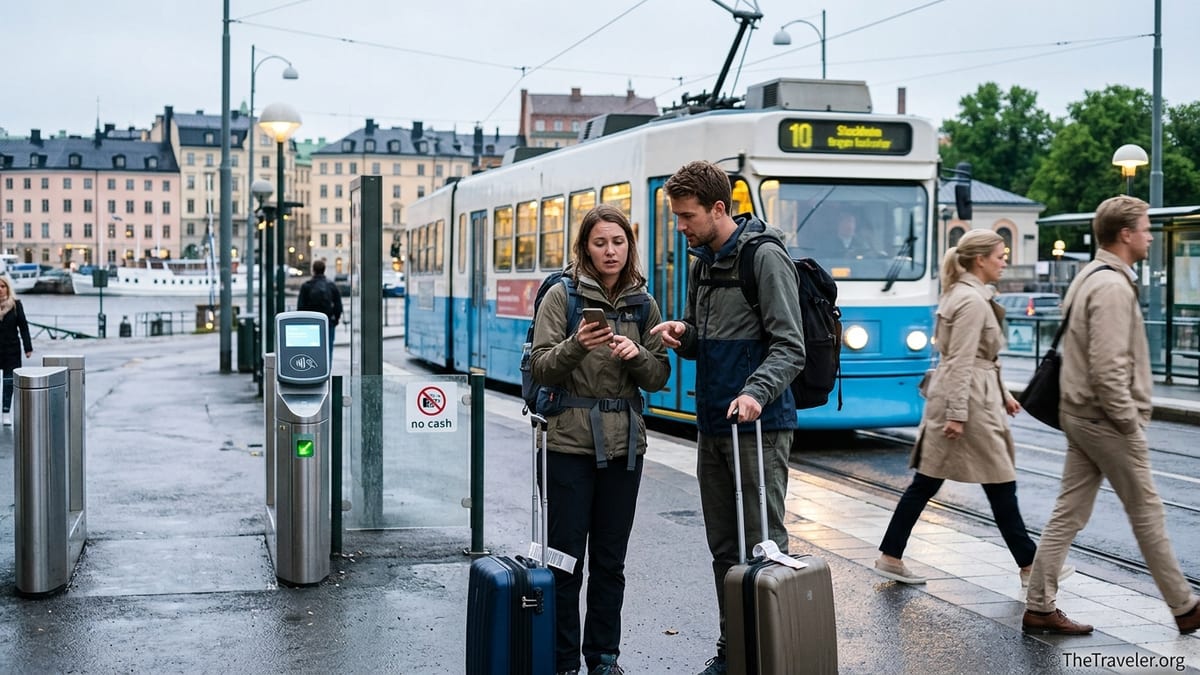
Ignoring How Cashless Sweden Really Is
Many first-time visitors still arrive in Stockholm or Gothenburg with a pocket full of euros or freshly withdrawn Swedish kronor, only to discover that much of the country has quietly stopped using cash. Cafes, bars, museums and even some public toilets operate on cards or mobile payments only. In practice this means that if your debit or credit card does not work on Swedish terminals, you may struggle to buy something as basic as a coffee at Stockholm Central Station or a ticket on a regional bus in Skåne. Sweden’s central bank has pushed for robust card infrastructure, to the point that regulators are now working on requirements for offline card payments so that shops can still accept cards during outages. Cash is still legal tender, but outside supermarkets, fuel stations and the state alcohol shops, notes and coins are increasingly treated as an exception, not the rule.
A classic scenario plays out when visitors land at Stockholm Arlanda Airport, skip the ATM because they "do not want foreign cash," and then discover that the airport buses, Arlanda Express train and convenience stores all expect card or mobile. If their bank has frozen the card or blocked foreign transactions, they can be literally stuck in the terminal. Before you book, check with your bank that your primary card will work in Scandinavia, notify them of your travel dates, and carry at least one backup card from a different issuer. If you rely on a mobile wallet such as Apple Pay or Google Pay, remember that you still need a physical card as a safety net in case your phone battery dies on a long train ride to Lapland.
This does not mean that cash is useless. A small amount of kronor can still be handy for rural campsites with coin-operated showers or for making change in very small village shops. But the bigger mistake is overestimating cash and underestimating the importance of cards and mobile payments. In most Swedish cities, the sign you will see at the door is not "cash only" but "no cash accepted." Visitors who plan ahead with working cards, enabled contactless payments and perhaps the local Swish app if they have a Swedish account, find Sweden refreshingly simple to navigate.
Misunderstanding Public Transport Tickets and Validation
Sweden’s larger cities are proud of their efficient public transport, yet the ticket systems can confuse foreign visitors. In Stockholm, the SL network of metro, buses, trams and commuter trains has in recent years phased out its older blue cards in favor of a green smartcard and broad contactless acceptance. Today you can usually tap a Visa, Mastercard, American Express or compatible phone wallet directly at the blue card readers on gates and bus doors to buy a single trip. There is no need to queue at a counter, but there is a vital catch: if you ride without a valid ticket or without tapping in, you can be fined on the spot, with recent guides quoting penalties of around 1,500 Swedish kronor for fare dodging.
One frequent mistake is mixing payment methods in a way that wastes money. For example, a traveler buys a 24-hour ticket inside the official SL app on their phone but forgets that their phone’s NFC is set to default to a bank card. At the bus door, they present the QR ticket on screen but the driver’s reader detects the NFC card instead and silently charges a second single fare to the card. Confused visitors then realize that, across a week, they have double-paid multiple journeys. To avoid this, either temporarily disable tap-to-pay while using app tickets, or commit to one method: use only the SL app and QR codes, or only contactless card payments.
In Gothenburg and Malmö, local transit authorities also lean toward mobile tickets and contactless options, often integrated into regional apps. A traveler staying in Malmö but doing day trips across the Öresund Bridge to Copenhagen, for instance, needs to distinguish between Swedish regional tickets and Danish systems on the other side of the strait. Trying to "wing it" by hopping on trains without checking zone rules can mean hefty on-the-spot fines. Before you book your hotel, look up the specific transport authority for that city, download their app, and price out whether day passes, 72-hour tickets or simple pay-as-you-go taps are most economical for your itinerary.
In northern Sweden, the traps are different. Long-distance trains to destinations like Abisko or Kiruna may be run by national operator SJ or by regional contractors, and disruptions on the Iron Ore Line in recent seasons have caused cancellations and delays that seriously disrupted winter tourism. If you are planning to hike around Abisko National Park or see the northern lights, build buffer days into your schedule and check your train’s operator and refund rules before committing to fixed hotel or tour dates. Booking the cheapest non-changeable fare without considering the region’s fragile rail infrastructure is a mistake many outdoorsy travelers regret.
Underestimating Weather and Distances, Especially in the North
Looking at a map, Sweden’s slim outline can deceive you into thinking domestic distances are small. In reality, travelling by train from Stockholm to Abisko at the edge of Swedish Lapland can take around 17 hours, crossing multiple climate zones. The weather differences are just as dramatic. A sunny May afternoon in Stockholm might reach 18 degrees Celsius, while the same day in the mountains behind Kiruna could bring freezing temperatures, lingering snow and strong winds. Visitors who pack for "summer in Europe" and assume Stockholm weather extends northwards risk being cold, wet and unprepared.
Consider the experience of hikers arriving in late June to walk part of the Kungsleden, the 400-kilometre trail that runs through Sweden’s mountain range from Abisko in the north to Hemavan in the south. Guidebooks show people in light fleece jackets and trail runners, but recent seasons have seen sections with deep snow patches well into early summer, swollen rivers and rapidly changing winds. Those with only fashion sneakers, jeans and a thin rain jacket often end up turning back after the first day, while well-prepared trekkers with layers, proper boots and a backup day in their schedule continue comfortably. Before booking non-refundable cabins or huts along the route, read the latest conditions shared by the Swedish Tourist Association and consider booking guided trips for your first visit.
Even in cities, the seasons can surprise. Winter in Stockholm, Gothenburg and Uppsala can bring ice-glazed pavements where residents wear studded shoe grips. Tourists in smooth-soled boots shuffle nervously along Södermalm’s slopes or slip on side streets in the Old Town. In summer, the midnight sun in Abisko can mean it never gets dark enough to sleep easily if you are sensitive to light, while in the deep winter "noctourism" visitors deliberately travel north to experience extended darkness, often under aurora-lit skies. Booking a Lapland trip without thinking through how you handle continuous daylight or extended night can impact your enjoyment more than you expect.
Swedish domestic flights can make long distances manageable, such as flying from Stockholm to Kiruna in around 90 minutes, then connecting by bus or train to Abisko. The mistake is leaving no leeway between an international arrival and a same-day domestic connection during winter, when de-icing, snowstorms and tight turnarounds can cascade into missed transfers. If you are heading far north for a bucket-list experience like the ice hotel near Jukkasjärvi, plan at least one overnight in Stockholm or Kiruna as a buffer rather than scheduling everything back-to-back.
Getting Caught Out by Alcohol, Tipping and Social Norms
Swedish rules around alcohol surprise many visitors who are used to picking up wine in supermarkets or grabbing late-night beers from convenience stores. In Sweden, drinks stronger than about 3.5 percent alcohol for home consumption are sold primarily through Systembolaget, the state-run monopoly shops. These have limited opening hours, often closing by early evening on weekdays and early on Saturdays, and remaining closed entirely on Sundays and public holidays. Tourists who plan a cabin weekend in the archipelago or a self-catering stay in Åre but forget to visit Systembolaget beforehand can find themselves with only low-alcohol beer from regular supermarkets, or paying high bar prices.
Price expectations cause their own shocks. A pint of craft beer in central Stockholm can easily cost the equivalent of 9 to 10 US dollars at popular bars around Södermalm or the Old Town. Cocktails in a rooftop bar with views over Djurgården might run significantly higher. Visitors from North America sometimes double their bar budget out of habit, assuming they should tip 15 to 20 percent on top. In Sweden, tipping is not required. Service staff are paid salaries that do not depend on tips, and while rounding up or leaving around 5 to 10 percent for especially good service is appreciated, no one expects American-style tipping. Some tourists report feeling pressured by card terminals that prompt for a tip line in English, but it is always acceptable to leave it at zero.
Social interactions add an extra layer of nuance. Many Swedes speak excellent English yet are modest about their skills, which can make them appear reserved. Tourists sometimes misread this as coldness or rudeness, then overcompensate by trying to force small talk. In reality, politeness in Sweden leans toward respecting personal space and avoiding loudness rather than constant chatter. On trains, buses and in cafes, talking quietly and refraining from speakerphone calls will mark you as considerate. Simple phrases such as "hej" (hello), "tack" (thank you) and "ursäkta" (excuse me) go a long way; Swedes tend to appreciate visitors who attempt even minimal Swedish rather than assuming everyone is a tour guide.
Alcohol rules intersect with transport in ways that can catch visitors unawares. For example, you cannot drink your own alcohol on most intercity trains or on public buses, and intoxicated behavior can lead to being removed. Getting openly drunk in public squares or parks is generally frowned upon even if it is not always strictly policed. Planning your evenings with these norms in mind, rather than expecting a "party until dawn on the street" scene, will help you match local expectations and avoid uncomfortable run-ins with security staff.
Treating Swedish Nature Like a Theme Park
Sweden’s "right of public access" is one of its great draws. This principle, known locally as allemansrätten, allows people to hike, ski, cycle and camp on much of the countryside regardless of land ownership, provided they respect nature and private homes. Misunderstood, however, it can lure visitors into thinking that anything goes. Each summer, Swedish media carry stories of tourists pitching tents right next to farmhouses or leaving litter and campfire scars on sensitive islands. In response, some municipalities have tightened local regulations, and landowners have become more vocal about abusive use of their property.
A common mistake is assuming you can camp anywhere, for as long as you like. In fact, the right of public access generally allows for short stays, a night or two, in small groups, away from houses and farmland. Setting up a large group camp on the same lakeside spot for a week, or driving a campervan onto fragile meadows, breaches the spirit and sometimes the letter of the rules. Around heavily visited sites like the Stockholm archipelago or popular lakes in Dalarna, local signs may explicitly prohibit tent camping on certain beaches or islands. Visitors who ignore these in favor of social media–inspired "secret spots" risk fines or being moved on by police.
Fire safety is another critical area. During dry summers, Swedish counties may impose temporary bans on open fires even at established fire pits. International visitors driving rental cars into forested regions for barbecues sometimes miss these warnings, which are typically posted in Swedish first. Lighting a disposable grill on dry rock ledges beside Lake Vättern or in pine forests near Uppsala may feel harmless, but it can spark wildfires. Before heading out, check local county administrative board announcements or ask at a tourist office whether fire bans are in place, and be prepared to shift to cold picnics or using designated gas stoves where allowed.
In the high mountains, safety mistakes become more serious. Areas dubbed "Europe’s last wilderness," including Sarek National Park and other roadless zones, attract hikers seeking solitude. Mobile coverage is often patchy or nonexistent, distances between huts huge, and weather capable of turning treacherous in hours. Yet every year, rescue services respond to callouts from visitors who underestimated this, hiking in trainers with a single phone as their only navigation tool. Booking an ambitious multi-day trek without proper gear, maps and realistic assessment of your fitness can turn a dream trip into an emergency. First-time visitors are wise to start with well-marked sections of the Kungsleden or guided tours run by experienced Swedish operators before venturing into more remote national parks.
Misjudging Costs, Seasonal Crowds and Booking Windows
While Sweden is rarely as expensive as its reputation suggests if you plan carefully, treating it like a budget destination usually ends badly. A central en suite room in Stockholm in high summer can easily cost the equivalent of 180 to 250 US dollars per night, particularly around events or school holidays. Popular Arctic destinations such as Kiruna and Abisko see sharp price spikes during peak northern lights and midnight sun seasons, when demand outstrips the limited number of hotel beds and mountain huts. Travelers who expect to arrive and "find something cheap" often end up paying premium last-minute rates or staying far from the sights they hoped to see.
Overtourism is more subtle than in some other European cities, but certain areas in Sweden still experience pressure. The narrow lanes of Stockholm’s Gamla Stan can feel uncomfortably crowded when cruise ships are in port, with souvenir prices soaring accordingly. The trailheads around Abisko Turiststation may see surges of visitors when international travel shows feature the aurora over Lapland. Travelers who only schedule one night near these headline attractions to "tick the box" can come away disappointed by queues or cloudy skies. Booking slightly off-peak weeks in September for autumn colors instead of the absolute peak in late August, or choosing shoulder seasons for major cities, often delivers better value and more comfortable experiences.
Another avoidable mistake is not understanding Swedish holiday rhythms. During the industrial summer vacation period, especially from late June through early August, many Swedes head to the coast or countryside. Some urban restaurants, independent shops and smaller galleries close entirely for weeks, particularly in smaller cities. A visitor who imagines a bustling restaurant scene in a mid-sized town in mid-July may instead find half the doors shuttered while locals enjoy their own holidays. Conversely, long weekends around Walpurgis Night at the end of April, Midsummer in late June and major public holidays can mean heavily booked trains, ferries and accommodation. Checking Swedish public holiday calendars and avoiding these pinch points when reserving can save you frustration and money.
Finally, be realistic about how far your budget will stretch and prioritize accordingly. Instead of staying in a pricey Old Town hotel and then feeling guilt over every cafe stop, consider booking a slightly more modest hotel or apartment a couple of metro stops away and freeing up money for museum entries, boat trips and fika breaks. In Lapland, it may be smarter to book a shorter stay in a high-quality lodge or guided tour rather than stretching a week in the cheapest available cabin with no funds left for activities. Swedish tourism infrastructure honours quality and safety; visitors who recognise this and budget for it tend to have richer experiences than those who chase the lowest possible prices.
Overlooking Local Rules for Micromobility and Urban Etiquette
In Swedish cities, electric scooters and bikes have become a common way to get around, but the rules are stricter than some visitors assume. Since 2022, Sweden has introduced national regulations that forbid riding e-scooters on pavements and pedestrian walkways, limiting them instead to cycle paths and certain roads. Parking randomly on sidewalks is also banned, prompting cities like Stockholm to designate hundreds of specific parking bays and dramatically cut the number of permitted rental operators after chaotic early years. Recent official updates and local media reports highlight ongoing enforcement, with fines and impoundment for badly parked or illegally ridden scooters.
Tourists unfamiliar with local law often repeat mistakes they have seen in other destinations. They rent scooters near Stockholm Central Station, weave through pedestrians around Sergels torg, then leave the scooter leaning against a shopfront in Gamla Stan. This not only risks fines but also fuels local frustration and adds to the sense that visitors ignore basic urban etiquette. If you intend to use shared e-scooters from brands you recognize from elsewhere in Europe, take a moment to read the rules in the rental app, and look out for clearly marked parking zones on the map. In many central Stockholm districts, you will be unable to end the ride unless you park within one of these bays.
The same respect for space applies to walking and cycling. In cities with extensive cycle lanes, such as Malmö and Gothenburg, many visitors accidentally stroll down bike paths while admiring canals or harbor views. Cyclists then swerve or ring bells, which can feel abrupt if you misread the lane markings. On Stockholm’s bridges and waterfront promenades, watch for cyclists traveling faster than you might expect and keep to the pedestrian side. On outdoor escalators and in metro stations, stand to the right to let people walk past on the left during busy periods, a norm many Swedes still observe even if it is not formally enforced.
Understanding these micro-rules before you book accommodation or plan daily routes can shape your choice of neighborhood. If you are uncomfortable cycling in traffic or managing rental scooters within tight regulations, staying in central districts within easy walking distance of major sights may be more relaxing than relying on micromobility. On the other hand, if you are an experienced city cyclist, knowing that Swedish drivers are generally used to bikes and that dedicated lanes are common can open up areas beyond the typical tourist core, from leafy residential parts of Södermalm to parks in Malmö and Uppsala.
The Takeaway
Sweden rewards travelers who prepare for its specifics. The country’s cashless habits, structured alcohol sales, detailed public transport rules and deep respect for nature can seem fussy at first, but they also create a society that usually runs smoothly. The biggest mistakes visitors make are not about choosing the "wrong" destination, but about assuming that what works elsewhere in Europe will automatically work here. They bring only cash to a card-centric country, underestimate Arctic distances, ignore seasonal rhythms or overstep the generous right of public access.
Before booking, step back and map your plans onto Swedish reality. Check that your cards and phones will function in a largely cashless environment, explore local transit apps, read up on allemansrätten and fire rules, and price out accommodation with eyes open to peak and shoulder seasons. Decide why you are coming, whether for northern lights, minimalist design, summer lakes or city culture, and time your trip accordingly. With that groundwork laid, Sweden’s understated charms reveal themselves readily, from quiet forest trails to light-filled cafes, and you are far more likely to return home with good stories rather than regrets.
FAQ
Q1. Do I really need a credit or debit card in Sweden, or can I use cash?
Cards are essential. Many urban businesses, from cafes to museums and buses, do not accept cash at all, so you should bring at least one working card and ideally a backup.
Q2. How should I pay for public transport in Stockholm as a visitor?
You can either tap a contactless bank card or phone at the blue readers for single journeys, or buy time-based tickets in the official SL app or on a green SL card, making sure you consistently use one method to avoid double-charging.
Q3. Is it safe and legal to wild camp anywhere in Sweden?
Short-term wild camping is widely allowed under the right of public access, but you must stay away from homes and farmland, keep groups small, respect local no-camping signs and follow fire restrictions, which may ban open flames during dry periods.
Q4. When is the best time to visit Sweden for the northern lights?
In northern Sweden, the main aurora season typically runs from about September to March, with the darkest midwinter months offering the longest nights, though clear skies and solar activity are never guaranteed.
Q5. How expensive is eating out in Swedish cities?
Eating out is relatively costly compared with many countries. A simple lunch menu in Stockholm might be moderately priced, but dinner with drinks at a central restaurant can quickly become a major part of your daily budget.
Q6. Do I need to tip in Swedish restaurants and bars?
No. Service is included in menu prices and staff are not dependent on tips. Rounding up small amounts or adding around 5 to 10 percent for exceptional service is appreciated but not expected.
Q7. Can I buy wine and spirits in supermarkets?
Supermarkets mostly sell low-alcohol beer. For regular-strength wine and spirits to take home, you need to visit Systembolaget, the state-run liquor stores, which have limited opening hours and are closed on Sundays and public holidays.
Q8. What should I pack for a summer trip that includes both Stockholm and the far north?
Pack layers: a light down or synthetic jacket, waterproof shell, warm hat and gloves, along with lighter clothing for warmer days. Weather in Lapland can be much colder and windier than in southern cities even in summer.
Q9. Are e-scooters a good way to get around Swedish cities?
They can be convenient, but you must follow local rules, which generally ban riding on pavements and require parking in designated bays in cities like Stockholm. Always check the rental app’s guidance before riding.
Q10. How far in advance should I book accommodation and trains in Sweden?
For popular summer periods, long weekends and peak northern lights or ski seasons, booking trains and accommodation several months ahead is wise, especially for destinations with limited beds such as Abisko or smaller archipelago islands.