


Rovaniemi and Levi are two of Finnish Lapland’s biggest names, and they offer very different Arctic experiences. One is the official hometown of Santa Claus and the region’s busy capital, the other a purpose-built ski resort wrapped around a fell. Both promise snow, reindeer, huskies and a good chance of northern lights between roughly late November and early April, but the feel on the ground, the typical prices and the daily rhythm differ enough that choosing the right base can make or break your Lapland trip. Here is how to decide whether Rovaniemi or Levi fits your travel style better.
Get the latest updates straight to your inbox!
Getting There and Getting Around
For most international visitors, Rovaniemi is the easier first step into Lapland. Rovaniemi Airport is Finland’s second-busiest after Helsinki and has frequent daily connections to the capital, plus seasonal winter flights from major European hubs. From the terminal, it is a 10 to 15 minute transfer into the compact city center or about 10 minutes in the other direction to Santa Claus Village. Taxis queue outside, and fixed-price airport shuttles typically cost the equivalent of a modest city taxi ride rather than a long-distance transfer.
Reaching Levi usually means one more stage. The most common route is to fly into Kittilä Airport, about 15 kilometers from Levi village, on a domestic connection from Helsinki or a seasonal charter from elsewhere in Europe. From Kittilä, transfers and taxis reach Levi in around 15 to 20 minutes. Some budget-conscious travelers instead land in Rovaniemi and take a roughly three-hour coach or rental car drive north to Levi. In winter, this road is straightforward but can be dark and icy, so the bus is often the less stressful choice if you are not used to Arctic driving.
Once you arrive, moving around Rovaniemi feels like being in a small Nordic city. There are local buses between the center and Santa Claus Village, taxis on call, and walkable streets lined with supermarkets, outdoor stores and cafes. Many excursions include hotel pick-up, so you can base yourself either in town or near the Arctic Circle and still join husky safaris and northern lights tours. In Levi, almost everything clusters around the base of the Levi fell. You can walk from most hotels and apartments to the ski lifts, restaurants and activity offices in five to ten minutes, and ski buses circulate between slopeside areas and the village. A car is useful if you want to explore beyond the resort, but not essential if your focus is skiing, snowboarding and guided excursions.
In practical terms, Rovaniemi tends to work better if you want urban conveniences, a choice of accommodation styles and simple public transport links. Levi is more of a self-contained resort bubble: extremely convenient for an active holiday, but with fewer options once you step outside the village core.
Ambience: Christmas Capital vs Mountain Resort
The atmosphere in Rovaniemi and Levi is perhaps the clearest divider between the two. Rovaniemi is the official hometown of Santa Claus and the administrative capital of Lapland. In winter, the city center mixes locals running daily errands with tourists toting souvenir bags and snow gear. Santa Claus Village and the Arctic Circle line, about eight kilometers north of town, are an attraction in themselves, with Christmas music, illuminated log cabins, post office and queues to meet Santa. Families often spend a full day here riding short reindeer circuits through the trees and sending postcards stamped from the Arctic Circle.
Beyond the festive trimmings, Rovaniemi feels like a real place. You can step into a supermarket to buy snacks at local prices, join office workers for lunch in a canteen-style restaurant, or end your day at a neighborhood bar where the TV shows ice hockey rather than a themed dinner show. Architecture is a mix of modern glass and concrete, a few striking buildings, and riverside views where the frozen Kemijoki and Ounasjoki meet. For some visitors, this blend of working town and Arctic tourism is a plus; for others seeking only storybook snow, the presence of shopping centers and traffic lights is less appealing.
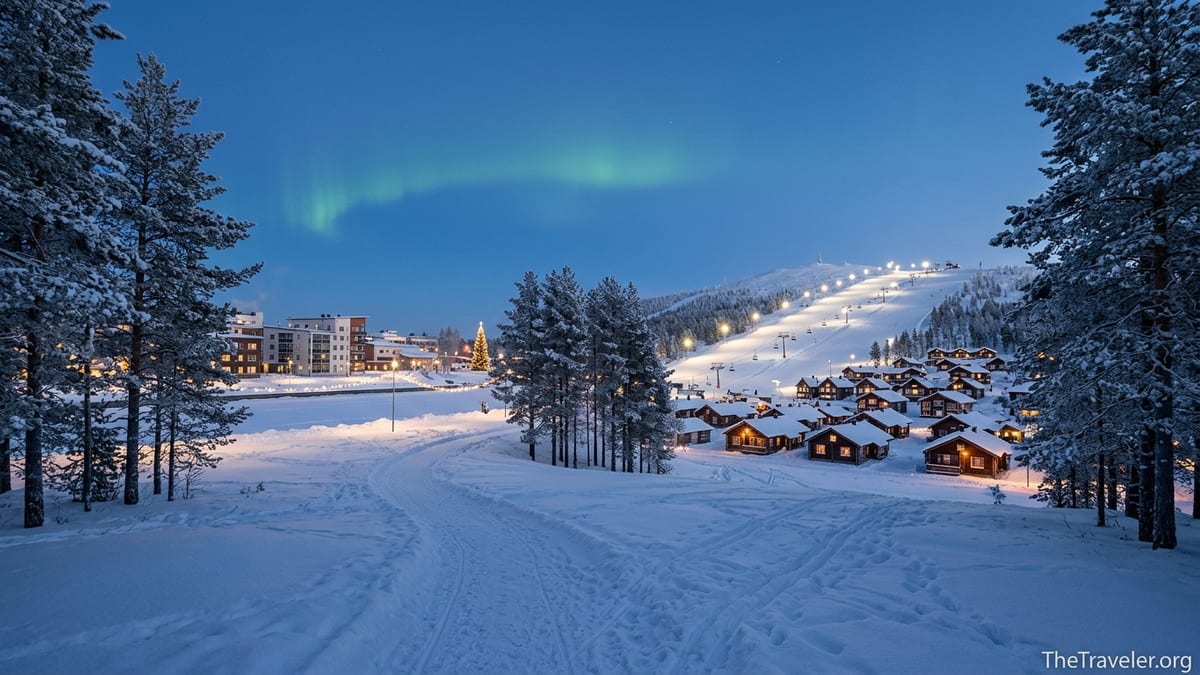
Levi, by contrast, is unapologetically a resort. The compact village wraps around the base of the Levi fell, and almost every business caters to visitors. In winter, you see people clomping around in ski boots, children dragging sleds, and snowmobiles parked near the main street. After dark, bars and restaurants fill with skiers still in mid-layer fleeces, and the atmosphere becomes closer to an Alpine ski town than a Lapland city. There is some year-round community, but the feel is consistently holiday-focused.
If your dream Lapland trip is wrapped in a Christmas narrative, with elves, fairy lights and a chance to cross the Arctic Circle line, Rovaniemi delivers that better than anywhere else. If you picture your days structured around slopes and saunas, with nightlife that runs later and a crowd of fellow skiers, Levi’s resort ambience will likely feel more natural.
Winter Activities and Northern Lights Potential
Both destinations offer the classic Lapland experiences: husky sledding, reindeer safaris, snowmobile tours, snowshoeing and northern lights excursions. In Rovaniemi, many of these are packaged with Santa-themed programs. A typical commercial operator’s price list for winter 2025 to 2026 shows short daytime husky or reindeer rides of around 1 to 2 hours sitting roughly in the low to mid hundreds of euros per adult, with longer safaris and small-group experiences costing more. Many tours include warm overalls, hotel transfers and hot drinks, which helps justify the high base price in a region where tourism is generally expensive.
Levi’s activity menu looks similar on paper but is tightly integrated with the ski resort. You can spend a morning on downhill slopes, then join a two-hour snowmobile tour in the afternoon or a northern lights chase at night, all starting from the village center. Cross-country skiers have access to extensive tracked trails radiating from Levi into surrounding forests, often lit in the early evening. In recent winter brochures, Levi is consistently marketed as Finland’s largest and most popular ski resort, with slopes for beginners and experts, terrain parks and children’s areas.
When it comes to the aurora, you do not pick between Rovaniemi and Levi for a dramatic difference in probability. Both sit within Finnish Lapland’s main aurora belt, and regional tourism boards describe the northern lights season as running roughly from late August to April, with the darkest, most reliable viewing between about September and March. In practice, your chances on any given week depend much more on cloud cover and solar activity than on whether you sleep in Rovaniemi or Levi. Many visitors book guided aurora tours that drive 30 to 60 minutes out of town to darker skies, often combining the chase with a campfire, photography tips or a short reindeer ride.
The real activity distinction is that Rovaniemi feels like a sampler platter of Lapland: a bit of everything, often at entry-level intensity, ideal for first-timers and families. Levi is where you go if skiing or snowboarding is central to your plan and you want to fill almost every day with physically active pursuits, with huskies and auroras slotted around your time on the slopes.
Family Friendliness and First-Timer Appeal
For families with young children or travelers making their first Arctic trip, both destinations work, but Rovaniemi has a head start. Santa Claus Village is designed for easy logistics: pushchair-friendly paths, indoor attractions to escape the cold, and a cluster of cafes serving familiar kid-friendly food alongside Finnish dishes. Many major tour operators from the United Kingdom and other European countries sell short, tightly organized “meet Santa” breaks where all transfers, meals and activities are bundled, and guests rarely need to think about logistics beyond dressing warmly and making their pick-up time.
Rovaniemi’s city infrastructure can also lower the stress of traveling with children. If everyone is tired, you can abandon activities for an afternoon and simply relax in your hotel pool or wander to a nearby bakery. Supermarkets stock affordable snacks and basic winter gear in case you miscalculated gloves or wool socks. If someone falls sick, there are pharmacies and medical services in town. The trade-off is that at peak Christmas and New Year, Rovaniemi can feel very busy, with coach groups at Santa attractions and families competing for space at popular restaurants during early evening dinner slots.
Levi is also family-friendly but in a different way. Children who already ski or snowboard, or who want to learn, often thrive here. Ski schools cater to complete beginners, and there are gentle slopes and magic carpets for very young learners. Family apartments with kitchenettes are common, so you can cook simple meals and save on restaurant costs. The environment is compact, and older kids can sometimes walk to the rental shop or practice slope on their own, as long as they understand basic safety and stick to well-lit areas.
If this is your first time in deep winter and you are nervous about temperatures, snow and Arctic darkness, Rovaniemi provides a broader support network and more indoor choices. If your children are active, confident outside and excited about skiing, Levi may give them more freedom and more variety day to day, with the added bonus that you can all step straight onto the slopes without long transfers.
Costs, Accommodation and Dining
Lapland is not a budget destination, and neither Rovaniemi nor Levi is cheap, especially during the peak season from early December through early January and the winter school holidays in February and March. That said, the way you spend money differs. In Rovaniemi, you can choose between standard city hotels, Santa-themed cabins out by the Arctic Circle, riverside boutique stays, and basic guesthouses. Prices fluctuate widely by date, but in midwinter it is normal to see central hotels and Arctic Circle cabins at rates that would be considered premium city pricing elsewhere in Europe, especially for family-sized units.
In Levi, the core accommodation stock is ski-focused: slopeside hotels, chalet-style apartments, and holiday homes just outside the village connected by ski bus. Many units are self-catering and include private saunas. This setup can help control costs if you stock up at the local supermarket and cook most dinners rather than eating out. On the other hand, you may pay a premium for properties with direct ski-in/ski-out access during high season, similar to pricing in popular Alpine resorts. Travelers more sensitive to price can look for apartments a short walk or bus ride from the lifts, which often undercut slopeside hotels while still offering easy access.
Dining also reflects the character of each destination. Rovaniemi’s city center offers everything from burger chains and pizzerias to Lappish bistros serving reindeer, Arctic char and local mushrooms. You can grab a takeaway pizza for a relatively modest cost one night and splurge on a tasting menu another, balancing the overall budget. Near Santa Claus Village, prices are generally higher and offerings more tourist-focused, so many visitors choose to eat their main meals in town and treat the village cafes as coffee-and-snack stops.
In Levi, the restaurant scene is smaller but concentrated, with après-ski spots serving hearty pub food, hotel restaurants offering buffet dinners, and a handful of higher-end venues. Eating out every night can add up quickly, especially when you factor in drinks and desserts. If watching your budget matters, choosing accommodation with a kitchen and planning simple home-cooked breakfasts and dinners can make Levi more affordable than it first appears. Rovaniemi can be slightly easier for spontaneous, lower-cost eats simply because it is a larger city with more competition and more local clientele.
Best Seasons and Trip Styles
While most visitors come between late November and March for snow, both Rovaniemi and Levi have distinct personalities across the seasons. In deep winter, roughly December to February, expect cold temperatures, short days and a strong chance of snow-based activities being fully operational. Around Christmas and New Year, Rovaniemi’s Santa focus is at its peak, with village decorations and holiday events, while Levi’s slopes are busy with holiday skiers. This is the most expensive and crowded period for both destinations, so early booking is essential if you want specific hotels or cabins.
Late winter, from around late February into March, is often considered the sweet spot for many travelers. Days are noticeably longer, the sun has some warmth, but snow conditions are typically still good. Families with school-age children often target this time for ski trips to Levi, while Rovaniemi sees a mix of families, couples and small groups taking advantage of clearer light for photography and outdoor adventures. Many activity operators highlight these weeks as a comfortable compromise between winter atmosphere and manageable cold.
If you are not tied to school holidays and want quieter slopes or attractions, consider visiting in early or mid-December before the main Christmas rush, or in early January after New Year when crowds thin but winter remains in full swing. Shoulder seasons like late autumn and early spring can offer a mix of bare ground and early or late snow, plus a chance of northern lights without the full winter infrastructure. However, some tours and services reduce their schedules outside the peak months, so you need to check what is running on your exact dates.
In terms of trip style, Rovaniemi suits shorter, intensive stays very well: three to four nights of Santa, one or two headline activities like husky safaris, a night chasing auroras and a bit of souvenir shopping. Levi, by contrast, absorbs week-long or even longer trips more easily because skiing and snowboarding give you a built-in daily rhythm. Many travelers combine both, flying into Rovaniemi for one or two nights to visit Santa and then transferring to Levi for a longer ski-focused stay, or vice versa.
Who Should Choose Rovaniemi vs Levi?
Choosing between Rovaniemi and Levi comes down less to which is “better” and more to which matches your priorities. If meeting Santa Claus, crossing the Arctic Circle and sampling a wide variety of winter activities without focusing heavily on skiing are your main goals, Rovaniemi is the natural choice. It is especially strong for first-time visitors to Lapland, families with younger children, and travelers who like the security of being in a real city with services close at hand. You will spend more time moving between different zones, such as the city center, Santa Claus Village and activity starting points, but you also have more options if the weather turns or someone in your group needs a rest day.
Levi is ideal if skiing or snowboarding is central to your holiday and you want an all-in-one mountain resort feel with the bonus of Lapland’s Arctic character. Active couples, groups of friends and families with older children often favor Levi because they can step straight from their accommodation to the lifts, then plug in extra experiences like husky tours and aurora safaris around their time on the slopes. The village is compact and social, and evenings tend to revolve around après-ski and sauna rather than city sightseeing.
If you are primarily an aurora hunter and flexible on activities, either location can work. What will matter more is choosing dates when nights are long and booking tours that drive you to darker skies outside town or resort lights. In that case, you might decide based on flight availability, accommodation quality and overall trip cost rather than on a theoretical difference in northern lights chances.
Some travelers also factor in how “remote” they want to feel. Rovaniemi, despite its Arctic latitude, can feel surprisingly urban once you step away from the riverbanks and forests. Levi, though still developed, keeps you closer to fell landscapes and ski slopes, and you are more likely to feel that you are living inside a winter resort bubble. If your ideal trip is sipping hot chocolate next to a slopeside firepit after your last run of the day, Levi has the edge. If it is standing on a snowy line marked “Arctic Circle” with Christmas songs in the background, Rovaniemi wins.
The Takeaway
If you are trying to choose just one Lapland base, start by asking what you absolutely do not want to leave out. Santa and the Arctic Circle, or daily skiing on a proper fell? City comforts and a sample of everything, or a tight-knit resort where skiing and snow-based activities shape your entire day? Your honest answers to those questions will point you toward either Rovaniemi or Levi more clearly than any general ranking ever could.
For many travelers, the best solution is not to choose at all but to combine both. A classic itinerary is to fly into Rovaniemi, spend two or three nights meeting Santa, visiting museums and trying a headline activity like a husky safari, then transfer north to Levi for several days of skiing, aurora hunting and sauna sessions. With careful planning of dates, transfers and accommodation, you can build a trip that captures both the Christmas magic of Rovaniemi and the mountain energy of Levi in a single journey.
Whichever you pick, preparation matters more than perfection. Book your key activities early for peak dates, budget realistically for higher-than-average prices, and pack proper winter layers rather than relying on fashion coats. Do that, and both Rovaniemi and Levi can deliver exactly what so many travelers seek in Lapland: crisp Arctic air, deep snow underfoot, the jingle of reindeer harnesses and, with a little luck from the weather and the sun, green light rippling across the polar sky.
FAQ
Q1. Is Rovaniemi or Levi better for seeing the northern lights?
The northern lights can be seen regularly from both Rovaniemi and Levi during the main aurora season, roughly from late autumn to early spring, and your chances depend more on cloud cover and solar activity than on the exact town you choose. In either place, booking a guided tour that drives you to darker skies outside local lights will matter more than the small geographic difference between the two.
Q2. Which destination is easier to reach from abroad?
Rovaniemi is usually easier because it has frequent flights from Helsinki and seasonal direct services from several European cities, plus short transfers to the city center and Santa Claus Village. Levi relies on Kittilä Airport, which has fewer flights overall, or on a longer coach or car transfer from Rovaniemi for those arriving there first.
Q3. Where should I go if I am traveling with small children?
Rovaniemi is often the better choice for families with very young children because of Santa Claus Village, short travel times between attractions, and city services like supermarkets and indoor play options. Levi also works for families, but it is more appealing once children are old enough to ski or snowboard and enjoy longer days outside in the cold.
Q4. Which place is better for skiing and snowboarding?
Levi is Finland’s largest and one of its most popular ski resorts, with a wide range of slopes, ski schools and cross-country trails, so it is the stronger option for downhill-focused trips. Rovaniemi has some local slopes and cross-country tracks but cannot match Levi’s dedicated ski infrastructure or variety.
Q5. Is one destination noticeably cheaper than the other?
Both Rovaniemi and Levi are expensive by many travelers’ standards, especially in peak winter, and headline activity prices are broadly similar. Rovaniemi offers more city-style budget options like standard hotels and casual eateries, while Levi can be more economical if you book a self-catering apartment and cook most meals, though slopeside accommodation in Levi can be particularly pricey in high season.
Q6. Can I visit both Rovaniemi and Levi on the same trip?
Yes, many travelers do both by splitting a week between them, often starting in Rovaniemi for Santa and sightseeing before continuing to Levi for skiing and aurora hunting. The road journey between the two is typically a few hours by coach or car, so you should factor in one half-day of travel when planning your schedule.
Q7. When is the best time of year to visit Lapland for snow activities?
The most reliable period for snow-based activities in both Rovaniemi and Levi is usually from early December through March, with the heart of winter in January and February offering deep snow but very short days. Late February and March often provide a comfortable balance of good snow, more daylight and slightly milder temperatures, though exact conditions vary year by year.
Q8. Do I need a car in Rovaniemi or Levi?
You do not need a car in either destination if your plans focus on organized tours and activities, as most operators include hotel pick-ups and local transport. In Rovaniemi, local buses and taxis cover the city and Santa Claus Village, while Levi is compact enough to walk between most accommodations, lifts and restaurants, with ski buses filling the gaps.
Q9. Which destination feels more “authentically local”?
Rovaniemi has a stronger sense of everyday Lapland life because it is a working regional capital with residents, schools and offices alongside tourism. Levi feels more like a dedicated holiday village where almost everything exists for visitors, which gives it an energetic resort atmosphere but fewer glimpses of ordinary local routines.
Q10. How far in advance should I book accommodation and activities?
For peak periods such as Christmas, New Year and winter school holidays, it is wise to book both accommodation and key activities several months in advance in Rovaniemi and Levi. Outside those windows you might find more flexibility, but winter remains popular, so securing your preferred dates and tours early helps avoid disappointment and occasionally locks in better rates.