


Tampa has quietly become one of Florida’s most kid-friendly cities, with roller coasters, aquariums, hands-on museums and Gulf of Mexico beaches all within easy reach. Whether you are planning a long weekend or a full week with kids of different ages, you can mix big-ticket thrills at Busch Gardens with free waterfront parks, stroller-friendly promenades and low-key beach days in nearby Pinellas County. This guide focuses on what families actually do on the ground in Tampa: how to structure your time, what to expect at the major attractions, and how to keep everyone happy when the heat or a sudden rain shower rolls in.
Get the latest updates straight to your inbox!
Planning Your Tampa Family Itinerary
Most families find that three to five days is a comfortable amount of time in Tampa with kids. With that window, you can devote a full day to Busch Gardens, another warm-weather day to Adventure Island or the beach, and then mix indoor favorites like the Florida Aquarium and Glazer Children’s Museum with downtown parks and the Riverwalk. If you have a week, consider two theme-park days, one or two beach days across the bay, and slower mornings exploring neighborhood playgrounds or enjoying hotel pool time.
When budgeting, expect major attractions such as Busch Gardens and the Florida Aquarium to feel comparable in price to other large Florida theme parks and aquariums, with frequent online discounts and seasonal offers. Many families reduce costs by choosing one “big” paid attraction every day or two, then building the rest of the day around free or low-cost stops like Curtis Hixon Waterfront Park, Water Works Park or a sunset stroll along the Tampa Riverwalk. Multi-attraction passes and combination tickets are sometimes available and can lower the per-attraction cost if you plan to see several headline sights.
Getting around with kids is straightforward if you have a rental car, especially for day trips to Clearwater Beach, St. Pete Beach or Fort De Soto Park. Within downtown Tampa, it is realistic to park once and explore the Riverwalk area on foot or by stroller, stringing together the Florida Aquarium, Sparkman Wharf, the Riverwalk, Glazer Children’s Museum and nearby parks in one loop. The free TECO Line Streetcar between downtown and Ybor City can add a bit of transport fun for train-loving youngsters without adding to your transportation budget.
Weather should shape your daily plans. Summer afternoons are hot and humid, with a high chance of sudden thunderstorms, so early starts for outdoor attractions, midday breaks at indoor museums or the hotel pool, and flexible backup plans are essential. From roughly November through April, temperatures are usually milder and more comfortable for long zoo and park days, though brief showers can still pop up. Keeping one “rainy day” list in your back pocket will help you pivot quickly if the forecast changes.
Busch Gardens Tampa Bay: Big Thrills and Animal Encounters
Busch Gardens Tampa Bay is the single largest draw for many families, thanks to its mix of serious roller coasters and walk-through animal habitats. Older kids and teens gravitate to coasters like Iron Gwazi and SheiKra, while younger visitors are often happiest in kid-focused areas with smaller rides, climbing structures and splash elements. The park publishes height requirements and uses a return-time system on many rides, which helps families with mixed ages plan who can ride what and when.
To keep the day manageable with kids, aim to arrive at opening, when temperatures and lines are both lower. Many families start by heading straight to the most popular coasters before crowds build, then shifting toward animal areas and shows during the hotter hours. A typical loop might include time in the kids’ zone, a ride on the Serengeti Express train to spot giraffes and zebras, and at least one indoor show or air-conditioned restaurant in the early afternoon to cool off. Stroller rentals are available, but bringing your own if you are driving can save money and guarantee a comfortable fit for younger children.
Food and drink inside the park are similar in price to other major theme parks, so it can be worth budgeting for at least one full meal onsite plus snacks and cold drinks throughout the day. All-day dining and drink-refill programs are regularly offered and can be good value for families who plan to stay open to close. Lockers near major attractions make it easier to bring swim gear or a change of clothes for kids who want to enjoy water play areas without carrying everything around.
Because Busch Gardens combines animals and rides, fatigue can build faster than in a smaller park. Build in short breaks in shaded areas, and do not be afraid to split up if you have older kids who want back-to-back coasters and younger ones who need slower-paced animal viewing. Many parents report that focusing on quality time in a few favorite areas, rather than trying to “do it all,” leads to a far more pleasant day.
Adventure Island & Water Play: Beating the Tampa Heat
On warm days, Adventure Island, the seasonal water park located across the street from Busch Gardens, becomes one of Tampa’s most appealing family options. The park includes large tube slides, raft rides suitable for older children, a wave pool, a lazy river and dedicated shallow areas for small kids. Lifeguards are visible throughout, and many families appreciate that they can let older children float the lazy river while younger siblings play in splash zones, as long as adults keep a close eye on everyone.
Adventure Island operates seasonally and adjusts hours throughout the year, typically extending opening hours during peak summer months and school holidays. Checking the calendar before you travel is important, since families visiting in cooler months may find only limited dates available. Because Florida afternoons can bring thunderstorms, a common strategy is to arrive at opening, secure a set of loungers or a shaded cabana if you have booked one, and tackle the most popular slides in the morning before heat and crowds build.
Families looking to save on both time and money often pair a visit to Busch Gardens and Adventure Island with a combined ticket or annual pass, especially if they expect to spend more than one day between the two parks. Bringing your own towels and water shoes can help avoid extra rental fees and protect small feet on hot surfaces. Many parents also recommend a lightweight rash guard or swim shirt for kids, since the Gulf Coast sun can feel intense even on partly cloudy days.
If a full day at a water park is not in your plans, Tampa still offers plenty of ways for kids to cool off. Free splash pads at places like Curtis Hixon Waterfront Park and the interactive fountains at Water Works Park along the Riverwalk are popular with local families. These make convenient “reward” stops after a museum visit or a walk, allowing kids to burn off energy and cool down without the commitment of a full park day or another high ticket price.
Florida Aquarium, Glazer Children’s Museum & ZooTampa: Animal and Hands-On Fun
The Florida Aquarium, located at the southern end of the Tampa Riverwalk, is one of the city’s most reliable family attractions in any weather. Inside, kids can follow a themed journey from Florida wetlands through coral reefs and open ocean environments, spotting sea turtles, rays and reef fish along the way. Touch experiences, such as stingray or anemone touch tanks, often rank among children’s favorite moments, and an outdoor splash pad area gives younger kids a chance to cool off after exploring the galleries.
About a mile upriver, Glazer Children’s Museum provides a different kind of immersive experience, with multi-level exhibits built for play-based learning. Young children can role-play in a kid-sized grocery store, veterinary clinic or firehouse, build in engineering zones or experiment with water flows and currents at interactive stations. The museum is compact enough for a half-day visit and lends itself well to combining with a picnic or playground time at Curtis Hixon Waterfront Park directly outside, which overlooks the Hillsborough River and downtown skyline.
ZooTampa at Lowry Park, a short drive north of downtown, focuses heavily on animal encounters and conservation. The zoo is known for its shaded pathways and manageable footprint, which is ideal for families pushing strollers or visiting with grandparents. Kids can see manatees, Florida panthers, giraffes and other species, and there are a handful of small rides and splash opportunities that break up the walking. Many visitors appreciate that ZooTampa feels like a full day out without the overwhelming scale of a massive theme park.
Combining these attractions over two days is a common strategy. One day could link the Florida Aquarium with time along the Riverwalk and Glazer Children’s Museum, while another day focuses on ZooTampa in the morning and a quieter hotel or neighborhood park afternoon. Purchasing tickets online in advance often provides modest savings and allows you to skip ticket lines, which can be a noticeable benefit with impatient younger travelers.
Tampa Riverwalk & Downtown Parks: Easy Half-Day Adventures
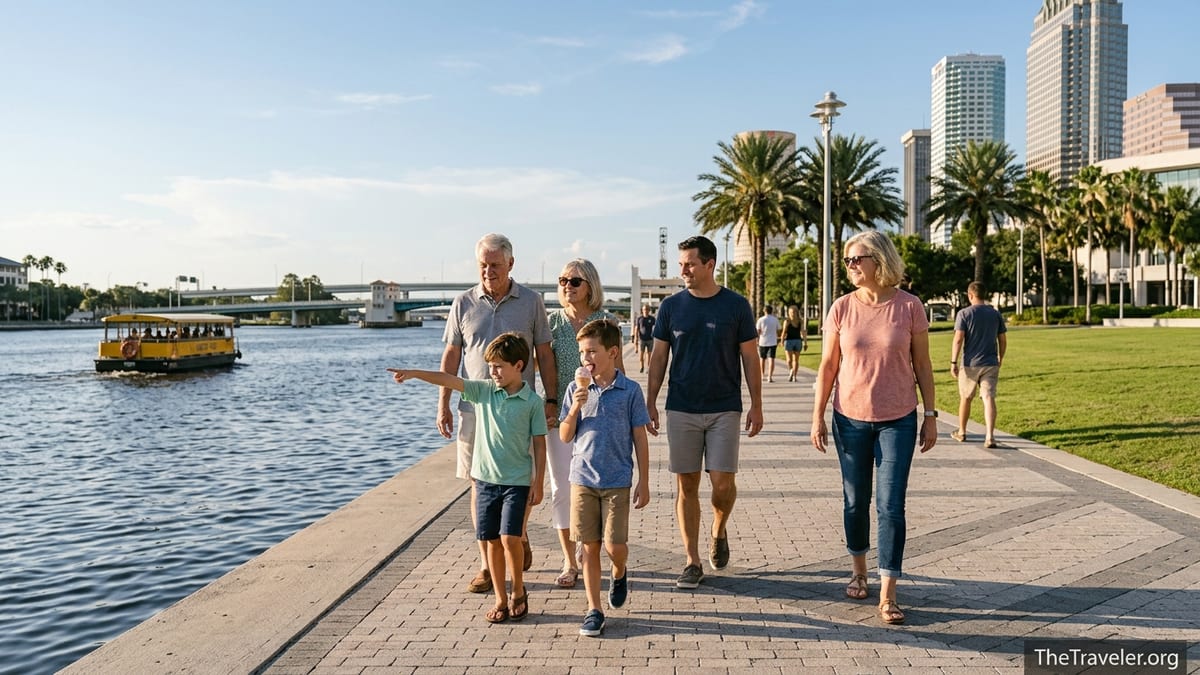
The Tampa Riverwalk has transformed downtown into one of the easiest places in the city to explore with kids. This 2.6 mile paved pathway runs along the Hillsborough River, connecting attractions that include the Florida Aquarium, the Tampa Museum of Art, Glazer Children’s Museum and several city parks. For families, the biggest advantage is the ability to move safely on foot or by stroller without frequently crossing busy streets or loading kids in and out of the car.
Starting at the southern end near the aquarium, families often pair their visit with time at Sparkman Wharf, where casual outdoor dining and lawn games give kids space to run while adults grab a meal from walk-up vendors. From there, it is an easy walk along the river to Cotanchobee Fort Brooke Park, which has open lawn and playground equipment, and onward toward Curtis Hixon Waterfront Park. The latter is a downtown favorite, with terraced lawns, a playground, splash fountains and wide river views where children can watch boats and water taxis glide by.
Because the Riverwalk is open and free at all hours, it also works well for short, unstructured breaks. Families staying at downtown hotels often take an early-morning stroller walk before breakfast or a sunset stroll after dinner to let kids get their wiggles out. Seasonal events, from holiday light displays to boat parades, frequently use the Riverwalk as a focal point, creating extra energy and people-watching opportunities in the evenings.
Practical considerations include sun protection and hydration, since sections of the Riverwalk can be exposed in the midday sun. Benches and shaded pockets appear periodically, and restroom access is available inside adjacent attractions and parks. If you are traveling with toddlers who tire easily, consider bringing a lightweight stroller even if you think they can handle the distance; the full end-to-end walk can feel long for small legs, especially in summer.
Beaches & Day Trips from Tampa
Although Tampa itself faces a bay rather than the open Gulf of Mexico, many of Florida’s most famous Gulf Coast beaches are within an hour’s drive. Clearwater Beach, St. Pete Beach and Fort De Soto Park are recurring favorites among families who want soft sand and shallow, generally calm water. Clearwater Beach tends to feel busier and more built up, with high-rise hotels, beach rentals and a lively promenade, while St. Pete Beach and nearby stretches like Treasure Island offer a slightly more laid-back strip of resorts and beach access points.
For a more natural experience, Fort De Soto Park at the southern end of Pinellas County combines long, undeveloped beaches with picnic areas, playgrounds and a historic fort to explore. Many local families appreciate the calmer atmosphere and park-style amenities, which make it easy to spend a full day swimming, shell-hunting and biking without feeling crowded. Parking fees at these beaches are modest compared with big-city rates, but they can fill early on spring weekends and holidays, so arriving in the morning is wise.
Because these beaches sit on the Gulf, the water often feels like a warm bath in late spring and summer, and the shallow nearshore gradient can be reassuring for parents with younger swimmers. That said, currents, waves and weather conditions still vary, so it is important to watch posted flags and listen to lifeguards when they are present. Bringing your own beach umbrella or pop-up shade, along with a cooler of drinks and snacks, can keep costs down and make a day at Clearwater or Fort De Soto far cheaper than another theme-park visit.
Driving times vary with traffic, but many visitors report about 45 minutes to Clearwater Beach or St. Pete Beach from central Tampa in normal conditions, with longer times likely on peak weekend afternoons. Building one or two full beach days into a week-long Tampa stay balances the stimulation of Busch Gardens and the zoo with slower, sand-and-sea downtime that many kids remember most.
Rainy-Day & Heat-Safe Ideas with Kids
Summer in Tampa almost always brings a short afternoon downpour, and even in drier seasons there will be days when lightning or high heat make outdoor plans less appealing. Having a short list of indoor and heat-safe options can keep your trip on track. The Florida Aquarium and Glazer Children’s Museum are obvious go-tos, but Tampa also offers smaller indoor attractions such as bowling alleys, family entertainment centers with arcade games and climbing walls, and suburban trampoline parks that are easy to slot into a half-day.
Shopping centers like International Plaza and WestShore Plaza sometimes host small play areas and family-friendly restaurants that work well on stormy afternoons. These are not destinations in themselves in the way a theme park is, but they provide air-conditioned space to walk, snack and let kids decompress when everyone needs a break from the elements. Many hotels in the region also lean into pool time, with some offering partially covered pools or shaded lounge areas that remain usable in light rain, though everyone will need to exit if lightning is in the area.
For families who prefer to stay closer to downtown, simply adjusting the timing of your day can turn a risky weather forecast into a success. An early-morning zoo visit followed by a long lunch and nap at the hotel during the storm window, then a late-afternoon trip to Glazer Children’s Museum or an indoor movie, is often more realistic than trying to power through an entire day outdoors. Packing lightweight rain jackets, quick-dry shoes and a small towel in your day bag helps you roll with the kind of sudden shower that Florida is known for.
If you are staying in a vacation rental with a kitchen, rainy times can also be a chance to reset with a home-cooked meal and board games, reducing both costs and sensory overload. Many local supermarkets stock beach toys, coloring books and basic craft supplies, so you can assemble a simple “rainy-day box” on your first day in town and pull it out whenever the weather turns.
The Takeaway
Tampa works well for families because it offers a little of everything in a compact radius: major theme-park thrills at Busch Gardens, cooling water play at Adventure Island, a serious aquarium and zoo, and a walkable downtown waterfront that connects parks and museums without much logistical stress. Add in some of Florida’s most popular Gulf beaches less than an hour away, and you have a destination that can fill an entire week without repeating the same type of day twice.
The key is balance. Rather than stacking every day with high-intensity attractions, alternate between big-ticket outings and slower, often free experiences like Riverwalk strolls, playground time and beach afternoons. Keep a close eye on the forecast, build flexible backup plans for heat and rain, and choose a home base that makes it easy to reach the experiences that matter most to your family. With a bit of planning, Tampa becomes less a checklist of sights and more a relaxed, kid-centered base for discovering Florida’s Gulf Coast.
FAQ
Q1. How many days do we need in Tampa with kids?
Most families are comfortable with three to five days, which allows one full day at Busch Gardens, one warm-weather water or beach day, and time for the aquarium, zoo and Riverwalk. A full week gives you room for two theme-park days plus multiple Gulf beach trips.
Q2. Is Busch Gardens Tampa suitable for toddlers and young children?
Yes, but it helps to plan carefully. There are dedicated kids’ areas with smaller rides, animal habitats, play zones and shows that do not require height minimums. Families with toddlers often focus on the train, animals and kid-sized attractions rather than the big coasters, and many leave by late afternoon before everyone is overtired.
Q3. Should we choose Adventure Island or a Gulf beach day?
Adventure Island is ideal if your kids love slides, wave pools and structured water play, and it works well when you want a controlled environment with lifeguards and amenities close at hand. A Gulf beach day at Clearwater, St. Pete Beach or Fort De Soto feels more relaxed and often costs less, but involves driving, parking and bringing more of your own gear.
Q4. Can we visit the Florida Aquarium and Glazer Children’s Museum in one day?
Yes. Many families spend the morning at the Florida Aquarium, take a lunch break at Sparkman Wharf or along the Riverwalk, then walk or drive to Glazer Children’s Museum for an afternoon of hands-on play. Young kids may get tired if you try to see every exhibit in both places, so it helps to focus on a few favorite areas.
Q5. Is ZooTampa at Lowry Park worth a separate day?
For animal-loving kids, ZooTampa is often a highlight and can easily fill most of a day, especially in cooler months. In summer, many families visit in the morning, then retreat to the hotel pool, a mall or an indoor attraction in the afternoon. The zoo’s manageable size and shaded paths make it appealing even with strollers or grandparents.
Q6. Do we need a car to enjoy Tampa with kids?
A car is highly helpful, especially for beach day trips and visits to ZooTampa and Busch Gardens. Downtown attractions along the Riverwalk can be explored on foot or with rideshare, and the free TECO Line Streetcar connects downtown to Ybor City, but reaching Gulf beaches and suburban parks is much easier with your own vehicle.
Q7. What is the best time of year to visit Tampa with children?
Late fall, winter and early spring generally offer milder temperatures and lower humidity, which are ideal for zoo and park days. Summer brings longer hours at water parks and warm Gulf water, but also high heat and frequent afternoon storms, so early starts, midday breaks and backup indoor plans become more important.
Q8. Are there good free or low-cost things to do with kids in Tampa?
Yes. Walking the Tampa Riverwalk, playing at Curtis Hixon Waterfront Park or Water Works Park, enjoying splash pads, and exploring neighborhood playgrounds are all free. Window-shopping and people-watching at Sparkman Wharf or in Ybor City, plus hotel pool time, can also fill relaxed half-days without adding ticket costs.
Q9. How should we handle Florida’s heat and sudden storms with kids?
Plan outdoor activities early in the day, build in shaded or indoor breaks, and always carry sunscreen, hats and refillable water bottles. Expect brief afternoon showers or storms, especially in summer, and keep a short list of indoor alternatives such as the aquarium, children’s museum, a movie or a mall play area so you can pivot quickly.
Q10. Is Tampa a good base for exploring the wider Gulf Coast?
Yes. From a hotel or vacation rental in Tampa, you can reach Clearwater Beach, St. Pete Beach and Fort De Soto Park in about an hour or less in typical traffic, while still having quick access to Busch Gardens, Adventure Island, ZooTampa and downtown museums. Many families pair a Tampa stay with a night or two at a beachfront hotel for a change of pace.