


Ybor City is Tampa’s historic Latin quarter, a compact neighborhood where 19th century cigar factories, Cuban cafes, and late-night clubs sit side by side. It is one of Florida’s few National Historic Landmark Districts, and today it blends immigrant history with an energetic nightlife scene just a short ride from downtown Tampa. This guide walks you through Ybor’s Cuban roots, where to eat and smoke a hand-rolled cigar, how to use the streetcar, what to know about safety after dark, and how to combine Ybor with a day or evening in downtown.
Get the latest updates straight to your inbox!
Cuban Roots and Cigar Heritage in Ybor City
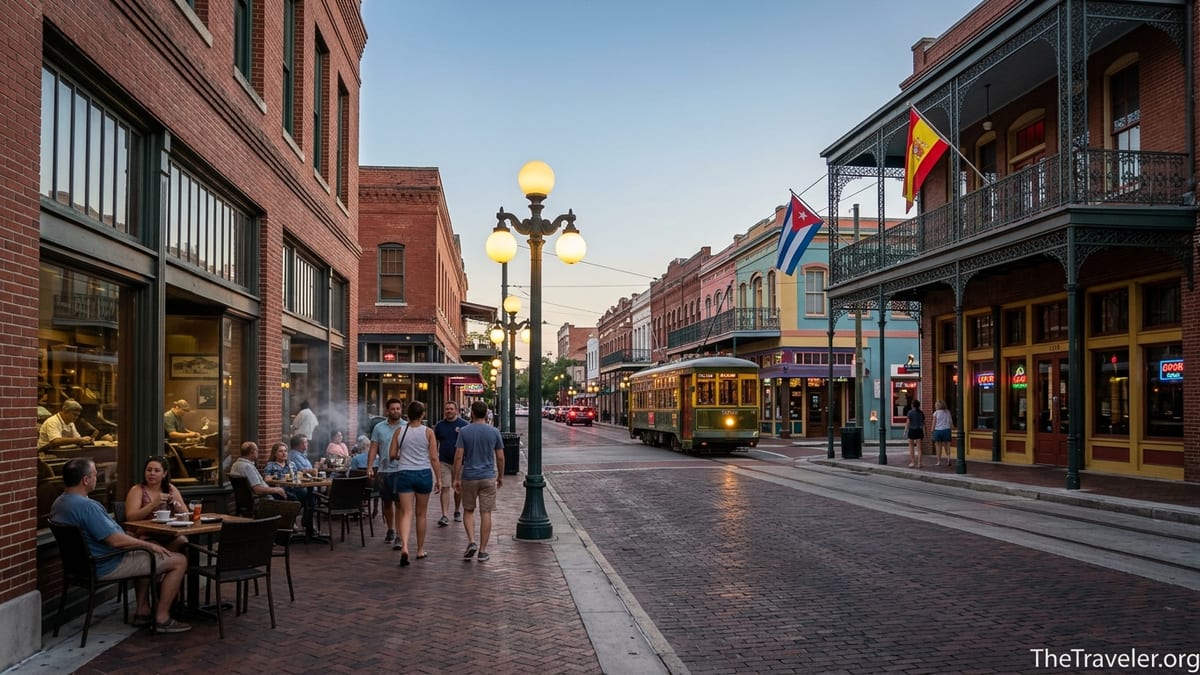
Ybor City was founded in the 1880s by Cuban cigar magnate Vicente Martínez-Ybor, who moved his operations from Key West to the Tampa area to escape labor unrest and take advantage of new railroad connections. Within a few years, the district became a major cigar-production hub, drawing thousands of Cuban, Spanish, and Italian immigrants to work in bustling factories. Many of those redbrick factories, especially along the 7th Avenue commercial strip, still define the streetscape today and help explain why Ybor is nationally recognized as a preserved historic district.
At its height in the early 20th century, Ybor’s factories rolled millions of cigars annually, using tobacco imported from Cuba and skilled Cuban torcedores to produce premium hand-rolled cigars. Walking around today, you can still see former factory buildings adapted into lofts, offices, and event spaces, with tall windows and ornate brickwork that hint at the neighborhood’s industrial past. The area’s heritage is not just architectural; it also lives on in social clubs and cafes founded by immigrant communities who organized mutual-aid societies, theaters, and schools.
For visitors, the easiest way to connect with this history is to stroll 7th Avenue and step into one of the remaining cigar shops that still roll on site. Places like Tabanero Cigars and Long Ash Cigars typically have rollers working behind glass counters, turning out cigars by hand in full view of customers. A house cigar might cost around 10 to 18 dollars, which is not cheap, but you are paying for both the product and the experience of watching a craft that helped build the city.
To go deeper, consider a guided walking tour that focuses on Ybor’s Cuban and labor history, or visit one of the surviving mutual-aid clubs that occasionally open their doors for cultural events. Many tours also discuss the role of Cuban independence hero José Martí, who visited Ybor to rally support and funding for the Cuban independence movement. This context helps explain why Cuban identity still feels central here, even as Ybor has evolved into a broader entertainment district.
Streetcar Access and Getting Around
One of the biggest advantages for visitors is how easy it is to reach Ybor City from downtown Tampa without driving. The TECO Line heritage streetcar runs between Ybor City, the Channel District, and downtown, offering a free ride on vintage-style cars with wooden benches and open vestibules. The trip from the downtown terminus near the Tampa Convention Center or the waterfront dining area at Sparkman Wharf to central Ybor typically takes about 15 to 20 minutes, depending on where you board and how many intermediate stops you make.
Streetcars run frequently during the day and into the evening, with extended hours on weekends and during special events. Service patterns can change, but visitors can usually expect cars to run every 15 to 20 minutes during busier periods. The Ybor stops drop you directly into the heart of the neighborhood along 8th Avenue and near the Centro Ybor complex, meaning you can step off the car and be on 7th Avenue in a couple of minutes.
The streetcar is particularly useful if you are staying in a downtown hotel along the Tampa Riverwalk or near the convention center. Many visitors spend the daytime walking the Riverwalk, visiting the Tampa Bay History Center, or dining at waterfront venues, then hop the streetcar in late afternoon or early evening for dinner, cigars, and nightlife in Ybor. Because the streetcar is free, you do not have to worry about fares or passes, which makes it easy to spontaneously decide on an evening in Ybor after a day of meetings or sightseeing.
Within Ybor itself, the district is very walkable. The main strip on 7th Avenue runs only a few blocks, and side streets hold additional restaurants, bars, and small parks. Sidewalks are generally in good shape, but the brick streets and occasional uneven pavers warrant comfortable shoes. Ride-hail pickups are common on side streets if you are leaving late at night or prefer not to wait for the streetcar back downtown.
Where to Eat: Cuban Classics and Late-Night Bites
Food is one of the highlights of any visit to Ybor City, and Cuban and Spanish flavors are at the center of the scene. The most famous restaurant is Columbia Restaurant, which opened in 1905 and is often described as Florida’s oldest continuously operating restaurant. Inside, the tile-lined dining rooms and stained glass feel like a turn-of-the-century Spanish cafe scaled up, and the menu leans into Cuban and Spanish dishes. A classic order is the Cuban sandwich with Spanish bean soup and a 1905 Salad. Expect to pay around 15 to 20 dollars for a sandwich plate and more for seafood or paella.
For a more casual Cuban lunch, several small cafes and bakeries in and around 7th Avenue serve pressed Cuban sandwiches and café con leche. Prices for a pressed sandwich usually sit around 10 to 14 dollars, while a strong Cuban coffee might be 3 to 5 dollars. These spots are good for a quick bite before an afternoon of exploring, and they tend to be less formal and faster than the big historic dining rooms.
Ybor also reflects its Italian and broader Latin heritage. You may find Italian bakeries selling cannoli and sfogliatelle alongside Cuban pastries, as well as modern Latin fusion spots where mofongo, empanadas, and creative tapas appear on the same menu. Many of these newer restaurants pitch themselves to the evening crowd, so kitchens stay open later than in some other Tampa neighborhoods, a plus if you are coming out of a concert or club after 10 p.m.
Late at night, street food and window-service spots become more prominent. You can grab a slice of pizza, a plate of wings, or a paper boat of Cuban-style croquettes between bars. Prices are typical of entertainment districts: a large slice of pizza might cost 4 to 6 dollars, and late-night tacos or empanadas can run 3 to 5 dollars each. If you plan to stay out late, it is smart to have cash or a card ready for these quick stops, since lines can form at closing time when multiple clubs empty onto 7th Avenue at once.
Cigar Culture and Where to Smoke
Ybor City’s cigar culture is both a nod to the past and a living scene. While large cigar factories no longer dominate employment, several reputable cigar makers still roll by hand in storefronts and small workshops. Visitors can walk into lounges such as Tabanero, Long Ash, La Faraona, or Nicahabana and watch a roller assemble a cigar from imported leaf, then retire to a leather armchair or patio chair to smoke it with a coffee, beer, or rum cocktail.
Prices vary by brand and blend, but a hand-rolled cigar in Ybor typically costs in the 10 to 20 dollar range, with higher-end limited editions going for more. Many shops offer sampler packs, which can be a good way to bring home a taste of Ybor without committing to a full box. If you are new to cigars, staff are usually patient and willing to recommend a mild, approachable cigar and explain etiquette like not inhaling and letting the ash build naturally.
Most cigar lounges in Ybor allow smoking both inside and on outdoor patios, though indoor smoking rules can shift as regulations change. Even if you are not a smoker, it is worth stepping inside one of the older lounges just to smell the cured tobacco and see the traditional wooden mold presses, guillotines, and rolling tables that echo the factory floors of a century ago. Non-smokers who are sensitive to smoke may prefer to sit outside, where cigar aroma dissipates into the open air.
For those interested in deeper education, some shops and factories offer scheduled tours that walk you through the cigar-making process from leaf selection to rolling and aging. These may include a small-group tasting or pairing experience where you learn how cigars interact with coffee, rum, or whiskey. Because times and prices change, it is best to check ahead the week of your visit, but you can expect entry-level factory tours to cost in the ballpark of 15 to 30 dollars per person.
Nightlife: From Laid-Back Bars to Late Clubs
Ybor City at night is a different neighborhood than during the day. As the sun sets, neon signs flick on along 7th Avenue, patio music gets louder, and the sidewalks fill with people moving between bars, dance clubs, and live music venues. The scene ranges from low-key bars where locals watch sports and play pool to multi-level clubs with DJs, light shows, and packed dance floors on weekends. Dress codes are generally relaxed, but some nightclubs enforce rules like no athletic shorts or flip-flops after 10 p.m.
Crowds tend to build on Thursday, Friday, and Saturday nights, especially after 10 or 11 p.m. when cover charges of 10 to 20 dollars are common at the more popular clubs. Many venues cluster in and around the central blocks of 7th Avenue, which makes it easy to sample different places without long walks. On a typical weekend, you might start with a craft cocktail or local beer at a quieter bar, move to a live-music venue with a small cover to catch a band, then finish the night at a high-energy club.
For travelers who prefer something calmer, there are speakeasy-style cocktail spots and wine bars sprinkled among the louder venues. These are good choices for couples or small groups who want to soak up the atmosphere without shouting over music for hours. Weeknights, especially Monday through Wednesday, skew quieter overall, which can be ideal if you want to see Ybor lit up but not completely packed.
Special events, from themed bar crawls to holiday celebrations, can dramatically increase foot traffic and change the tone of the streets. On those nights, expect longer lines at venue doors and heavier police presence. It is wise to factor this into your plans: if you dislike crowds, you might aim for a weekday evening or plan an early dinner and cigar before the late-night scene hits its peak.
Parking and Practical Logistics
If you are driving, Ybor City offers a mix of city-owned garages, surface lots, and metered street parking. Two of the key public garages are the Centro Ybor Garage on East 5th Avenue and the Palm Avenue Garage on North 13th Street, both close to streetcar stops and within easy walking distance of 7th Avenue. City parking documents indicate that these garages typically charge around 1 to 2 dollars per hour, with daily maximums that are often under 15 dollars, though flat event rates can apply during big concerts, parades, or sports weekends.
On-street metered parking in Ybor is generally enforced from morning until late at night, often until around 3 a.m., unlike some downtown zones that relax enforcement earlier in the evening. That means you should not assume meters become free after dark. Pay-by-plate machines and mobile payment apps are common, and posted signs detail current hours and rates. Because blocks close to 7th Avenue fill quickly on busy nights, consider parking a few blocks north or using the Palm Avenue Garage and walking 5 to 10 minutes to the heart of the action.
For visitors who plan to stay late and perhaps drink, combining parking with the streetcar can be a smart strategy. Some people park in a downtown or Channel District garage, spend the day at museums or along the Riverwalk, then ride the streetcar to Ybor for the evening and back again at night. Others park directly in Ybor, enjoy dinner and nightlife, and then take a ride-hail or taxi back to a hotel elsewhere in the city, leaving the car in the garage until morning if rules allow. Before doing this, check posted signs for any maximum stay or overnight restrictions, which can differ between garages.
During major events such as Gasparilla festivities or large downtown conventions, parking conditions shift quickly. Garages that usually charge hourly rates may switch to a flat special-event fee, and some surface lots raise prices in response to demand. It is wise to arrive earlier than you think you need to, travel in one vehicle if you are in a group, and keep some flexibility in your plan if your preferred garage is full and you need to circle to an alternative.
Staying Safe in Ybor City at Night
Like many entertainment districts that stay busy into the early morning hours, Ybor City offers an energetic atmosphere that also calls for basic urban safety awareness. The area sees regular police and security presence, particularly on weekend nights along 7th Avenue and around key intersections, and the city has been working on physical improvements such as narrowing some streets and installing protective bollards after serious vehicle incidents near popular bars. These changes are intended to slow vehicle traffic and provide better separation between pedestrians and cars in crowded zones.
For individual travelers, most safety advice is common sense. Stick to the main, well-lit streets, especially 7th Avenue and the blocks immediately around it, where foot traffic and security are heaviest. Avoid isolated alleys and poorly lit side streets late at night, and keep your phone and wallet secured. If a bar or club feels uncomfortably crowded or tense, move on to another spot; there are plenty of options, and you do not need to stay where you feel uneasy.
Groups are generally safer and more comfortable than solo bar-hopping, particularly after midnight. If you are alone, consider setting a personal cutoff time and heading back to your hotel or the streetcar before the latest crowds emerge. For transportation, pre-arranged ride-hail pickups on designated corners or near the main garages can reduce the time you spend standing on the curb. When using the streetcar late in the evening, wait near other riders rather than in an empty shelter, and sit closer to the operator or other passengers once onboard.
If you are visiting with children, you may find Ybor best experienced in the daytime and early evening, when families stroll 7th Avenue, duck into bakeries, and pose under the iron balconies and vintage streetlights. After about 10 or 11 p.m., the tone shifts more decisively to adults-only nightlife. Parents may want to plan an early dinner in Ybor, perhaps with a quick visit to a cigar lounge patio or a dessert stop, and then transition back to downtown or to their accommodations before the late-night rush.
Combining Ybor City with Downtown and the Riverwalk
Because Ybor City sits just a short streetcar ride from downtown, it pairs naturally with a day spent along the Tampa Riverwalk or in the Channel District. One popular approach is to start your morning downtown with a walk along the Riverwalk, visiting the Tampa Bay History Center or stopping for coffee at a waterfront cafe. As the day warms up, you can duck into air-conditioned museums or attractions downtown, then board the streetcar in late afternoon for a ride into Ybor as the lights begin to come on.
Once in Ybor, you might spend an hour or two exploring the historic streets and shops, then settle into an early dinner at a Cuban or Spanish restaurant. Afterward, you can enjoy a cigar at a lounge terrace or sample a cocktail bar, then head back to downtown on the streetcar before midnight. This kind of schedule lets you experience Ybor’s atmosphere without necessarily staying out deep into the bar-closing hours and keeps your transportation straightforward.
Another strategy is to reverse the order: begin with lunch and an afternoon history or cigar tour in Ybor, then ride the streetcar back downtown for sunset along the Riverwalk and dinner near the water. This can be especially appealing in warmer months, when Ybor’s brick streets and limited shade can feel hot in mid-afternoon. By shifting your outdoor walking to later in the day along the breezier riverfront, you can enjoy both neighborhoods in more comfortable conditions.
Travelers in town for conferences at the convention center or events at nearby arenas often choose to stay in downtown hotels and treat Ybor as an add-on neighborhood. In practice, this may mean grabbing the streetcar with colleagues after sessions wrap up, sharing a table at a historic restaurant, then returning as a group. The key is to think of downtown, the Channel District, and Ybor City as a single, connected urban corridor linked by free streetcar and walkable promenades, rather than as separate destinations that require complex logistics.
The Takeaway
Ybor City is one of Tampa’s most distinctive neighborhoods, where Cuban history, cigar culture, and modern nightlife come together in a compact, walkable district. Visitors can trace the legacy of immigrant cigar workers, sip café con leche in century-old buildings, and then step next door into a contemporary bar or music venue. The free TECO Line streetcar and a network of public garages make access relatively simple, while downtown’s Riverwalk and museums sit just a short ride away.
By planning ahead for parking, using the streetcar where possible, and applying the same sensible precautions you would in any busy nightlife area, you can enjoy Ybor’s energy while staying safe and comfortable. Whether you come mainly for a historic Cuban lunch, a hand-rolled cigar, or a late night of clubs and live music, the neighborhood rewards those who slow down, look up at the old brick facades and wrought-iron balconies, and remember that this was once the cigar capital of the world.
FAQ
Q1. Is Ybor City safe to visit at night?
Ybor City sees a steady police and security presence, especially on weekends along 7th Avenue. It is generally safe for visitors who stay on well-lit main streets, travel in groups when possible, watch their alcohol intake, and use common sense about avoiding isolated alleys or confrontations.
Q2. How do I get from downtown Tampa to Ybor City without a car?
The easiest option is the free TECO Line streetcar, which runs between downtown, the Channel District, and Ybor City. Many downtown hotels are within walking distance of streetcar stops, and the ride to Ybor typically takes about 15 to 20 minutes.
Q3. Where is the best place to park in Ybor City?
Visitors often use the Centro Ybor Garage near 5th Avenue or the Palm Avenue Garage a few blocks north of 7th Avenue. Both are city-operated, usually charge affordable hourly rates, and sit close to the streetcar and main nightlife area.
Q4. What is Ybor City known for?
Ybor City is best known for its Cuban and Latin immigrant history, its role as a major cigar-manufacturing center in the late 19th and early 20th centuries, and its current mix of historic architecture, cigar lounges, Cuban and Spanish restaurants, and late-night bars and clubs.
Q5. Can I visit cigar factories or lounges even if I do not smoke?
Yes. Many visitors step into cigar lounges simply to watch rollers at work and learn about the craft. Non-smokers often sit on outdoor patios or limit their time inside, but the experience of seeing hand-rolled cigars in a historic setting is worthwhile even if you do not light up.
Q6. Is Ybor City appropriate for families with children?
During the day and early evening, Ybor can be family-friendly, with historic streets, public art, and casual restaurants. After about 10 or 11 p.m., the area shifts toward an adult nightlife scene, so families often plan daytime visits or early dinners and leave before the late-night crowds build.
Q7. Do I need a reservation at Columbia Restaurant in Ybor?
Reservations are strongly recommended, especially for weekend evenings, holidays, and peak tourist seasons. Walk-ins are sometimes accommodated at off-peak times, but planning ahead increases your chances of getting a preferred time and dining room.
Q8. How much should I budget for a night out in Ybor City?
Costs vary, but a typical evening might include 15 to 25 dollars per person for a casual meal, 10 to 20 dollars for a hand-rolled cigar, and 8 to 15 dollars per drink at bars or clubs, plus any club cover charges, which can be around 10 to 20 dollars on busy nights.
Q9. What should I wear for a night out in Ybor?
Dress codes depend on the venues. Casual clothes like jeans and nice tops are widely accepted, but some clubs may restrict athletic wear, sleeveless shirts for men, or flip-flops late at night. Comfortable shoes are recommended because you will likely walk between multiple spots on brick streets.
Q10. How can I combine Ybor City with a visit to the Tampa Riverwalk?
A common plan is to spend the day strolling the Riverwalk and visiting downtown attractions, then ride the streetcar to Ybor in late afternoon or early evening for dinner, cigars, and nightlife. You can then return by streetcar or ride-hail later at night, treating downtown and Ybor as parts of one connected urban experience.