


More news on this day
Shipping data from the Gulf indicates a growing number of oil tankers are reversing course at the mouth of the Strait of Hormuz, underscoring how a US naval blockade and a breakdown in US Iran talks have pushed one of the world’s most critical energy corridors into renewed deadlock.
Get the latest news straight to your inbox!
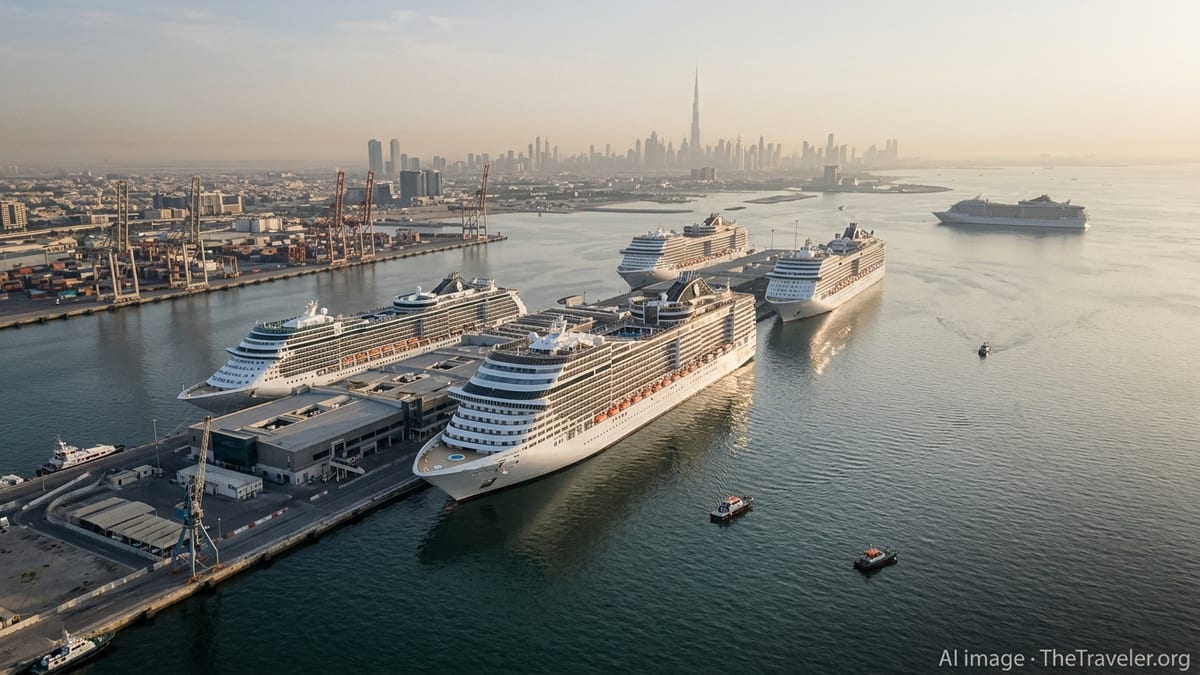
Tankers U-Turn at the Gateway to the Gulf
Vessel-tracking information compiled over recent days shows multiple large crude carriers approaching the Strait of Hormuz only to execute sudden U-turns, abandoning scheduled calls at ports in Iraq, Kuwait and other Gulf producers. Industry-focused outlets report that at least three very large crude carriers altered course over the weekend rather than proceed into the narrow waterway, while additional product tankers have shifted to loitering patterns off Oman and the United Arab Emirates.
The aborted transits come just days after a fragile two-week ceasefire between the United States and Iran failed to produce a broader settlement in talks held in Pakistan. Publicly available coverage of those negotiations indicates that the sides were unable to agree on conditions for fully reopening the strait, leaving shipping companies with little clarity over security guarantees or insurance coverage for voyages in and out of the Gulf.
Marine analytics platforms show a distinct tightening of the shipping lanes on both sides of Hormuz, with clusters of anchored vessels building up in the Gulf of Oman to the east and in the Persian Gulf to the west. The pattern suggests that operators are waiting offshore to see how the blockade unfolds, rather than risk being caught inside the chokepoint if tensions escalate further.
For charterers and traders, the sudden reversals are a stark indicator that even temporarily reopened lanes can close again with little notice, turning multi-million-barrel cargoes into high-risk bets on both security and geopolitics.
US Blockade Collides With Iran’s ‘Toll’ Strategy
The tanker pullback is unfolding against the backdrop of a US decision to impose a naval blockade on Iranian ports and coastal waters after the latest US Iran talks ended without agreement. According to published statements from US defense officials and coverage by major wire services, the blockade is intended to halt maritime traffic entering and leaving Iranian ports, including routes that converge at the Strait of Hormuz.
Iran, meanwhile, has advanced a strategy that international trade experts describe as unprecedented for such a vital shipping lane. Reports from European financial media and regional outlets explain that Tehran is seeking to formalize the collection of per-vessel tolls in the strait as part of any peace arrangement, with fees reportedly reaching into the low millions of dollars per transit, sometimes denominated in non-dollar currencies or even digital assets.
This combination of a hard security cordon from the US side and a monetized access model from Iran has left the waterway in what analysts characterize as a legally and commercially ambiguous state. While the ceasefire technically provides a window for limited traffic, the threat of drone strikes, missile launches and interdictions has kept effective volumes far below pre-conflict levels.
Energy and shipping consultancies note that before the conflict, approximately a fifth of globally traded crude and significant volumes of liquefied natural gas typically passed through Hormuz. Current estimates based on satellite and AIS data suggest that traffic has at times fallen to below ten percent of that norm, with many of the ships that do transit linked to sanctioned or state-backed fleets willing to accept higher risk.
Energy Markets React to a Prolonged Chokepoint
Oil prices have swung sharply as traders digest the implications of tankers turning back from Hormuz and the prospect of a prolonged blockade. After an initial drop when a ceasefire was first announced, benchmark crude prices climbed again on news that talks had failed and that US forces would enforce a sweeping maritime cordon around Iran’s coastline.
Market updates from financial news outlets indicate that participants are reassessing how much supply can realistically move out of the Gulf if commercial operators continue to avoid the strait. With some Gulf producers relying almost entirely on Hormuz for exports, any sustained disruption can quickly translate into higher forward prices, greater volatility and shifts in global trade flows as buyers seek alternative sources.
Refiners in Asia and Europe appear particularly exposed. Brokerage notes and research from commodity houses suggest that longer voyage distances, higher freight rates and risk premiums for vessels willing to approach the region are already feeding into product cracks and retail price expectations. Shipping insurers have reportedly raised war-risk premiums, adding another layer of cost for any company still prepared to load in the northern Gulf.
At the same time, a small number of tankers have reportedly managed to complete transits under the ceasefire, illustrating that Hormuz is not mathematically closed but functionally constrained. Those passages, however, have not been sufficient to reassure the broader market that normal trade can resume while the blockade and Iran’s toll demands remain unresolved.
Gulf States and Shippers Scramble for Alternatives
The standoff at Hormuz is forcing Gulf producers, international trading houses and shipowners to revisit contingency plans long discussed but rarely tested at scale. Publicly available analyses from regional think tanks describe renewed interest in bypass routes such as pipelines running from Saudi Arabia and the United Arab Emirates to Red Sea ports, as well as increased use of terminals in Oman that sit outside the immediate Hormuz risk zone.
However, infrastructure constraints and limited spare capacity mean these alternatives can only offset a portion of the lost volumes. Industry reports point out that even fully utilized pipelines and non-Hormuz terminals cannot fully substitute for the massive throughput that typically passes the strait in peacetime. This structural bottleneck reinforces Hormuz’s status as a single point of failure for global energy markets.
For shipping companies, risk management has moved to the forefront. Operators are weighing contract obligations against crew safety, hull and cargo insurance constraints and the possibility of vessels becoming stranded if the corridor tightens further. Some tracking data suggests that certain ships are adopting more circuitous routes around the Arabian Peninsula or delaying loading until there is greater clarity on the security environment.
Regional observers also note the potential for a longer-term reshaping of fleet deployment. If the perception takes hold that Hormuz will remain periodically volatile, owners could factor an enduring Gulf risk premium into newbuilding decisions, charter rates and fleet positioning, reshaping tanker economics well beyond the current crisis.
Global Travel and Trade Feel the Ripple Effects
While oil markets have drawn most of the attention, the disruption in Hormuz is beginning to spill over into broader travel and trade patterns across the Gulf. Cruise operators and passenger ferries that once skirted the edges of the strait are reassessing itineraries, according to tourism and maritime bulletins, with some routings shifted westward toward the Red Sea or eastward into the Arabian Sea to avoid any perception of proximity to potential flashpoints.
Commercial aviation has already adapted to earlier phases of the conflict by rerouting flights away from sensitive airspace, increasing flight times and fuel burn on certain long-haul routes that traverse the wider Middle East. Travel industry analysts suggest that the renewed naval tensions and tanker reversals could further discourage leisure traffic to some Gulf destinations if travelers perceive heightened instability in regional headlines.
Logistics providers are also bracing for knock-on effects inland, as higher marine insurance costs and elongated supply chains filter through to pricing for containerized goods, specialty cargo and even humanitarian shipments that rely on Gulf hubs as transshipment points. Freight forwarders quoted in trade publications indicate that some clients are now asking for contingency routings that avoid key Gulf ports entirely when feasible, even if that adds time and expense.
For now, the image of massive tankers swinging away from the Strait of Hormuz has become a potent symbol of how the failed US Iran talks and ensuing blockade have transformed a familiar maritime thoroughfare into a high-stakes geopolitical fault line, reshaping not only energy flows but the wider map of global travel and trade.