


More news on this day
Air travelers in North America and Europe are facing widespread delays and cancellations this week as a string of technology failures hits air traffic control networks, check in systems and border kiosks, highlighting the growing vulnerability of aviation to digital glitches.
Get the latest news straight to your inbox!
East Coast airspace disruption ripples across U.S. network
Flight operations across the busy U.S. Northeast corridor were severely disrupted on Monday, September 21, after an equipment failure at an air traffic control facility triggered ground stops at multiple major airports. Publicly available data from flight tracking services showed more than 600 flights canceled into and out of Newark Liberty International Airport in New Jersey, with additional delays and cancellations at New York’s LaGuardia and John F. Kennedy airports, as well as Philadelphia and Teterboro.
According to published coverage, the disruption began with a damaged telecommunications line linked to the Federal Aviation Administration’s regional operations, affecting the Terminal Radar Approach Control center that manages large volumes of arrivals and departures. The outage forced controllers to slow the flow of traffic through one of the country’s most congested air corridors while backup procedures were activated.
By Tuesday morning, September 22, operations at New York area airports were gradually resuming, but data from aviation analytics firms indicated that Newark was still reporting dozens of delays and nearly 60 cancellations, underscoring how long it can take to clear stranded aircraft and crews once a major bottleneck forms.
The timing of the failure added to its impact. The ground stops coincided with heightened traffic into New York for the United Nations General Assembly, compounding congestion as diplomats, business travelers and leisure passengers competed for limited rebooked seats.
San Diego outage exposes fragility at the terminal level
On the opposite side of the United States, travelers at San Diego International Airport experienced their own technology breakdown on Tuesday, September 22. Local media reports indicated that an IT outage knocked out primary airline computer networks used for check in and boarding, forcing staff to rely on backup processes and manual checks.
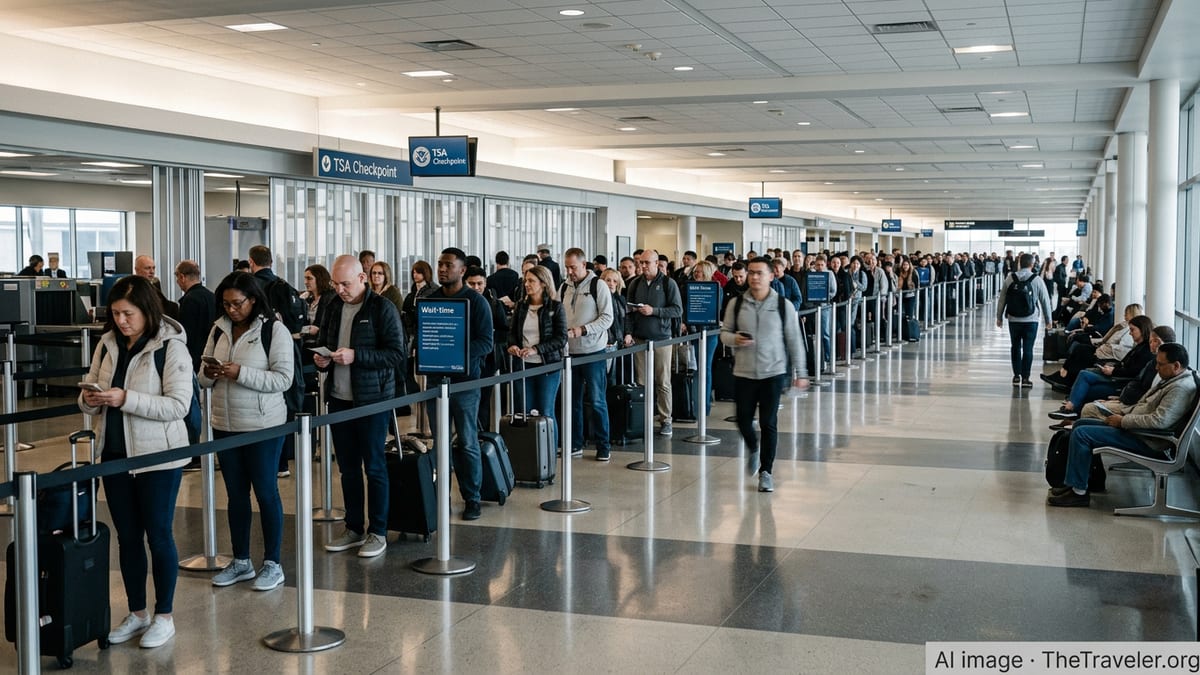
Images and descriptions shared in local coverage showed long lines snaking through terminal lobbies as passengers waited for staff to process documents by hand. Airport communications pointed customers to a low power AM radio station broadcasting security and check in updates in an effort to manage congestion on approach roads while systems were restored.
The San Diego incident was shorter lived than the East Coast air traffic disruption, but the combination within the same week illustrated how failures in different layers of aviation technology can produce similar outcomes for passengers. Whether the problem lies in a regional radar and communications hub or in the local departure control system, the result is often the same for travelers: extended queues, missed connections and uncertain departure times.
Travel industry analysts note that such events are particularly disruptive when they strike early in the day, as they did in San Diego. Aircraft and crews knocked off schedule in the morning can remain out of position well into the evening, even after the technical fault has been corrected.
UK air traffic software defect triggers mass delays
The recent U.S. problems follow closely on the heels of a significant air traffic control failure in the United Kingdom. On Tuesday, September 8, a software defect in part of the National Air Traffic Services National Airspace System corrupted flight data and forced a six hour shutdown of automated processing, according to preliminary reports released by the operator and summarized in British and international media.
The interruption led to widespread delays and cancellations across the U.K. and on connecting routes in Europe, affecting hundreds of thousands of passengers. Flight tracking summaries cited in coverage indicated that more than 2,000 flights were delayed, canceled or diverted as controllers reverted to manual methods and capacity at key hubs, including London Heathrow and Gatwick, was sharply reduced.
National Air Traffic Services stated in its public updates that the incident was not linked to a cyberattack and that it had been traced to a specific software issue in a subsection of the flight data system. Regulators in the United Kingdom have requested further analysis of the fault and of planned investments intended to bolster resilience.
The September outage was the second technical issue reported by the U.K. operator this month, following a separate problem at its Prestwick center in Scotland that also led to delays and cancellations for flights serving Scotland, Northern Ireland and northern England. The clustering of incidents has prompted renewed scrutiny of how rapidly aging systems are being replaced and how robust fallback procedures are in practice.
Border kiosks and passenger systems create new chokepoints
Technology problems are not limited to air traffic control. Earlier in September, a widespread outage affecting passport inspection kiosks at major Canadian airports, including Toronto Pearson and Montreal Trudeau, produced lengthy queues for arriving passengers, according to industry news reports drawing on statements from the Canada Border Services Agency.
When automated border kiosks fail, arriving passengers must be processed manually, dramatically increasing the time needed for each inspection. Reports from the Canadian disruption described travelers waiting several hours to clear the arrivals hall while technicians worked to restore connectivity. The border agency publicly indicated that the incident was unrelated to a cyberattack and resulted from a technical issue during routine maintenance.
Airline departure systems have also proved to be a weak link. Trade publications and aviation forums have documented several cases this year in which outages at airline check in and reservations platforms forced carriers to halt boarding or issue handwritten documents at multiple airports simultaneously. While many of these problems were resolved within hours, they highlighted the degree to which a single vendor, software update or network failure can reverberate across continents.
Industry assessments point out that these systems have gradually become more complex as airlines add new self service options, biometrics and data sharing with partners and regulators. That complexity can bring efficiency when everything functions correctly, but it also means that faults can be harder to diagnose and isolate under time pressure.
Rising concern over resilience in an increasingly digital sky
Recent incidents are unfolding against a wider backdrop of growing global network instability. A 2026 network outage review by a major internet monitoring firm reported hundreds of significant disruptions across service providers in just one late summer week, with transportation and communications among the sectors most affected. For aviation, which relies on tightly synchronized data flows between airlines, airports, air navigation providers and government agencies, such instability poses particular challenges.
Aviation safety regulators and technology experts generally emphasize that air traffic management and airline systems are designed with layers of redundancy. When a component fails, airspace can be restricted and flight volumes reduced to preserve safety margins. The trade off is that protective measures that keep aircraft safe in the sky can quickly translate into crowded terminals and missed departures on the ground.
Publicly available reporting on the U.S. Northeast disruption indicates that the immediate cause was relatively low tech: an aging circuit and a cut fiber optic line at a construction site. In the U.K., the trigger was a subtle software coding defect. In Canada, it was a maintenance related glitch. To travelers, these varied root causes may be less important than the pattern they reveal of interconnected systems under strain.
For now, there is no single fix that can eliminate technology related delays. Infrastructure operators are outlining multi year investment plans to replace legacy hardware, modernize software and strengthen backup paths, while airlines and airports continue to refine manual workarounds. For passengers preparing to fly during this unsettled period, publicly available guidance from aviation agencies continues to stress the basics: monitor flight status closely, allow extra time at the airport and be prepared for itineraries to change at short notice when the digital backbone of air travel falters.