


More news on this day
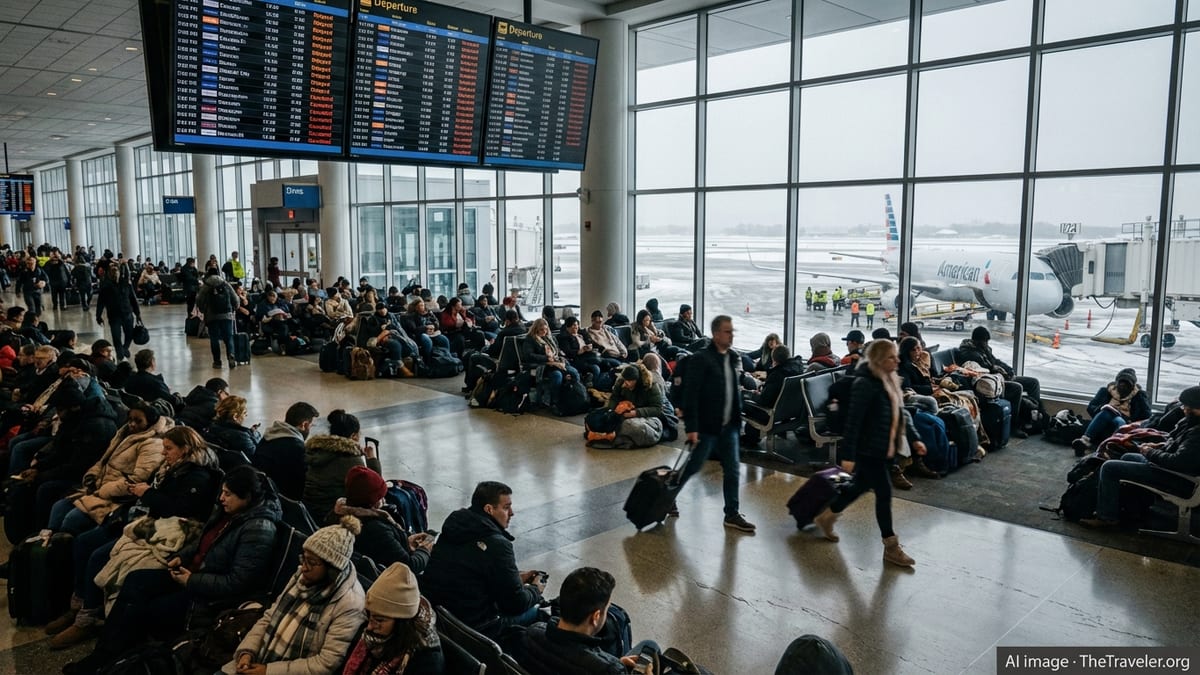
South Florida’s busy air travel corridor faced major disruption on Tuesday evening, as a technology outage at American Airlines triggered a brief nationwide ground stop that rippled into significant delays and cancellations at Miami International and Fort Lauderdale-Hollywood International airports.
Get the latest news straight to your inbox!
Ground stop quickly lifted but disruption lingers
Publicly available flight tracking data and airline status pages indicate that the Federal Aviation Administration briefly halted American Airlines departures on July 28 after the carrier reported an information technology issue affecting multiple systems. The ground stop was lifted within a relatively short period, but the pause in operations left a backlog of aircraft and crews across the network.
American Airlines issued a statement, cited in national coverage, describing the incident as a technology problem that disrupted connectivity for some internal systems on Tuesday evening and confirmed that operations were resuming. The carrier emphasized that safety of flight was not affected, but acknowledged that customers would continue to see delays while schedules were reset.
Industry observers note that even a short, systemwide interruption can take hours to unwind, particularly during the busy summer travel season. With aircraft and crews temporarily out of position, later departures often face rolling delays or cancellations as operations teams work to re-sequence flights.
According to airline and aviation data services, the outage coincided with existing weather-related disruptions across parts of the United States, compounding delays for travelers whose flights were already operating near capacity or through congested hubs.
Miami and Fort Lauderdale see mounting delays
At Miami International Airport, one of American’s largest hubs and a key gateway to Latin America and the Caribbean, departure boards on Tuesday evening showed a growing number of delayed flights. Real-time status pages for routes from Miami to major domestic and international destinations recorded pushed-back departure times, with some services leaving later than scheduled and others remaining in extended delay windows.
Fort Lauderdale-Hollywood International Airport, a critical secondary gateway for South Florida travelers, also reported elevated disruption levels. Historical data from previous technology outages show that Fort Lauderdale can experience hundreds of delays and dozens of cancellations in a single day when airline systems go down, and early tallies on Tuesday suggested a similar pattern of schedule strain, with American-operated services among those affected.
Terminal operations in South Florida were further complicated by the region’s role as a connection point for cruise passengers, international visitors and domestic vacationers. When flights are held on the ground across the country, even briefly, South Florida’s inbound and outbound banks of flights quickly fall out of sync, leading to congested gate areas and longer lines at customer service desks.
Travelers connecting through Miami and Fort Lauderdale reported missed onward flights and tighter-than-normal connection windows as aircraft arrived late from other American hubs. Some evening departures were forced into overnight or next-morning rebookings as crew duty-time limits approached.
Passengers confront missed connections and overnight stays
Reports from social media platforms and passenger forums on Tuesday evening described travelers sitting on parked aircraft, holding at gates or waiting in crowded terminal areas as ground staff worked through rebooking options. Several posts referenced long waits for updated departure times and confusion about whether delays were related to the technology issue, thunderstorms or a combination of both.
In South Florida, where many itineraries involve tight connections between domestic and international legs, the timing of the outage placed particular pressure on late-afternoon and evening flights. Travelers scheduled to depart Miami for transatlantic or long-haul Latin American destinations faced the risk of missing those departures if their inbound American flights from other U.S. cities arrived significantly behind schedule.
Standard airline policies indicate that passengers whose flights are significantly delayed or cancelled for reasons considered within the carrier’s control may be eligible for certain accommodations, including rebooking assistance and, in some cases, meal or hotel support. However, the mix of weather and technology factors around Tuesday’s events may complicate how disruptions are categorized and what amenities are offered on a case-by-case basis.
Several consumer-advocacy resources have urged affected passengers to keep documentation of their delays, including boarding passes, time-stamped messages and receipts, in case they seek reimbursement or file complaints under existing U.S. transportation regulations.
South Florida’s role magnifies operational strain
Miami International Airport serves as American Airlines’ principal hub for Florida and a leading gateway to Latin America, the Caribbean and Europe. This role means that any disruption to American’s operations can quickly propagate through South Florida, affecting not only point-to-point travelers but also those making complex international connections.
Fort Lauderdale-Hollywood International, which handles millions of passengers annually and is in the midst of expansion projects to accommodate continued growth, has become an increasingly important reliever for the region’s air traffic. When a major carrier experiences a systemwide issue, the combined volume across Miami and Fort Lauderdale can tax ramp operations, baggage handling and security checkpoints as flights bunch together once the ground stop lifts.
Analysts point out that South Florida’s travel demand remains especially strong in mid-2026, driven by cruise traffic, summer holidays and preparations for upcoming major sporting events. Against that backdrop, even a single-evening technology failure can have outsize impact, as most flights are heavily booked and re-accommodation options are limited.
Airport status dashboards and aviation data tools showed that, while American began moving aircraft again after the ground stop lifted, residual delays continued into the late evening and were expected to spill into Wednesday’s schedule as aircraft and crews repositioned into their planned rotations.
Recurring tech vulnerabilities raise broader questions
Tuesday’s disruption comes amid a broader industry conversation about the resilience of airline and aviation IT infrastructure. Recent years have seen several high-profile technology incidents, including software-related outages that forced major U.S. carriers to ground flights and global events in which third-party system failures cascaded across airlines and airports worldwide.
Publicly available historical records show that American Airlines has experienced prior technology-related disruptions, including a localized outage in the early 2010s and a nationwide ground stop in the late 2010s, each of which triggered waves of delays and cancellations. Aviation analysts argue that such incidents highlight the complexity of legacy reservation, crew scheduling and operational control systems that must interact seamlessly to keep flights moving.
Comparisons are already being drawn between the current American Airlines issue and previous large-scale IT failures that disrupted air travel, such as the 2024 global tech outage that led to ground stops and extensive cancellations at multiple U.S. carriers. While Tuesday’s event appears to have been shorter in duration, observers note that it underscores how tightly coupled airline operations are to the performance of a relatively small number of critical systems.
For South Florida travelers, the latest outage provides another reminder to build in extra time for connections, monitor flight status closely and consider contingency plans when traveling during peak seasons. As American and other airlines continue to modernize their digital infrastructure, passenger advocates contend that transparency around the causes of disruptions and the remedies available to affected customers will remain a central concern.