

More news on this day
Thunderstorms moving across the Denver metropolitan area on Tuesday prompted a temporary ground stop at Denver International Airport, causing cascading delays for arriving and departing flights at one of the nation’s busiest hubs.
Get the latest news straight to your inbox!
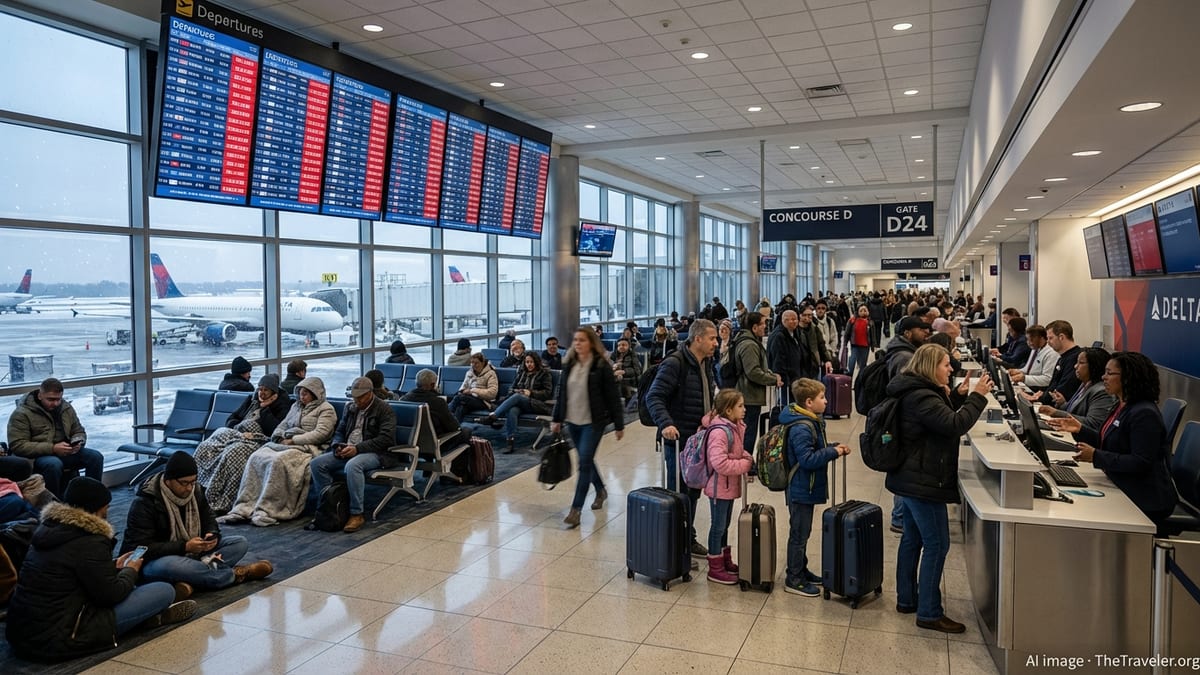
Storms Force Temporary Halt to Arrivals and Departures
According to publicly available Federal Aviation Administration advisories and local broadcast coverage, the ground stop was issued on Tuesday afternoon as strong thunderstorms developed in and around the Denver area. The precaution paused many incoming flights bound for Denver International Airport and limited departures, with air traffic controllers spacing aircraft more widely while lightning and heavy rain affected airfield operations.
Local meteorological reports indicated that storms produced strong outflow winds, intense rain, and lightning in parts of the metro area and eastern Colorado. These conditions can quickly reduce visibility, create wind shear, and force aircraft to maneuver around dangerous storm cells, prompting short-notice traffic management programs such as ground stops and ground delay programs.
Flight-tracking data and airline status boards showed that the disruption rippled across the national network, with delays reported on routes connecting Denver to major hubs in the Midwest, East Coast, and West Coast. Some aircraft already en route to Denver were placed into holding patterns or slowed en route, while others were temporarily kept at their origin airports until the stop began to ease.
The thunderstorms arrived during the height of the summer travel period, leaving passengers facing crowded terminals, long lines at customer service counters, and rebooked itineraries. Social media posts from travelers described extended gate holds in Denver and other cities as crews waited for clearance to depart toward the storm-affected airport.
Why Thunderstorms Prompt Ground Stops at Major Hubs
Thunderstorms are among the most disruptive weather events for aviation because they can affect both the airspace around an airport and the airfield itself. Research by aviation meteorology specialists indicates that convective storms near Denver International Airport frequently produce rapidly shifting winds and localized downbursts that can make approaches and departures unsafe.
When storms threaten key arrival and departure corridors, traffic managers may halt or sharply curtail flights to prevent aircraft from being funneled toward an airport that cannot safely accept them. A ground stop, which keeps flights on the ground at their point of origin, is often used when conditions are expected to improve within a relatively short time but are too hazardous for normal operations.
Denver’s location on the High Plains near the foothills of the Rockies contributes to fast-developing afternoon thunderstorms in the warmer months. Weather records for July show a pattern of scattered to numerous thunderstorms in the region, with some days producing damaging winds, hail, or very heavy rain. Even when storms are relatively isolated, their position along key air routes can force controllers to reduce the flow of traffic into a major hub like Denver.
Operationally, a ground stop also allows the airport and airlines to better manage ramp safety. Lightning within a certain radius often triggers temporary suspensions of fueling, baggage loading, and other outdoor ground operations, further constraining the ability to turn aircraft quickly and keep schedules on time.
Impact on Passengers and Airlines
The latest thunderstorm-related ground stop added another layer of disruption to a summer already marked by busy schedules and tight aircraft utilization. Publicly available airline status pages showed dozens of delayed flights into and out of Denver during the storm window, with some cancellations occurring when aircraft and crews could not be repositioned in time.
For passengers, the most immediate effect was extended waiting time on concourses and in aircraft cabins. Reports from travelers described flights that boarded on time but were held at the gate or on taxiways while airlines awaited updated departure slots from air traffic control. Others experienced missed connections in Denver as incoming flights arrived well past their scheduled times.
Airlines often respond to thunderstorm-related disruptions by waiving certain change fees, offering rebooking on later flights, or rerouting customers through alternate hubs when space is available. However, when storms are widespread across a region, options can be limited and recovery may take several hours even after the weather improves.
The knock-on effects of a ground stop at a large connecting hub can persist into the late evening, with aircraft and crews out of position and overnight maintenance windows compressed. Some carriers may preemptively trim late-night departures or first-wave flights the next morning to allow schedules to reset.
Denver’s Weather Patterns and Operational Resilience
Denver International Airport is no stranger to weather-driven disruptions. Historical data show that the airport experiences a mix of severe thunderstorms in the warm season and snow, wind, and low visibility events in the cold season, all of which can influence arrival and departure rates. Previous notable weather episodes have produced hundreds of delays and cancellations in a single day, underscoring the vulnerability of even modern, well-equipped hubs to rapidly changing conditions.
Airport planners and air traffic specialists have invested in infrastructure and procedures intended to improve resilience, including multiple long runways, advanced radar systems, and defined protocols for lightning, wind shear, and low-visibility events. Nonetheless, convective storms remain difficult to manage because of their speed of development and the need to maintain wide safety margins around hazardous cells.
Studies of extreme weather impacts on air transportation suggest that even short-duration storms can significantly increase passenger delays when they strike at peak travel times or affect multiple key hubs simultaneously. Denver’s role as a central connecting point for several major airlines means that an interruption there can have disproportionate effects across the national network.
Recent construction and airfield improvements at Denver International are focused in part on enhancing capacity and flexibility, which can help the airport recover more quickly once weather constraints ease. Efficient use of multiple runways, rapid ground handling when lightning restrictions lift, and coordinated traffic management with surrounding airspace sectors all contribute to shortening the tail of delays after a ground stop ends.
What Travelers Can Do During Weather Ground Stops
Travel experts frequently advise passengers flying through storm-prone hubs like Denver in summer to monitor both their airline’s alerts and basic weather information along their route. While ground stops are typically announced with limited lead time, knowing that thunderstorms are in the forecast can help travelers anticipate potential disruptions and build extra time into connections.
During a ground stop, publicly available guidance from airlines and aviation agencies suggests that travelers stay in close contact with their carrier’s mobile app or text alerts, which often update rebookings faster than airport service counters. In many cases, same-day changes to alternative routings can be processed digitally, reducing the need to wait in long lines.
Passengers with flexible plans may also benefit from considering earlier flights during stormy periods, since afternoon and evening departures are more likely to coincide with peak thunderstorm activity. When disruptions are extensive, some travelers opt to shift to the following day, particularly on journeys requiring tight or multiple connections.
As Tuesday’s thunderstorms demonstrated, even a brief period of severe weather can significantly alter plans for thousands of travelers. For those passing through Denver International Airport during the heart of thunderstorm season, awareness of the local weather pattern and proactive use of airline tools remain key to navigating sudden ground stops and delays.