


More news on this day
Germany’s rail network was temporarily brought to a standstill late Tuesday after a failure in the digital radio system used to control train movements forced operators to halt services across the country, causing widespread disruption for passengers and freight traffic.
Get the latest news straight to your inbox!
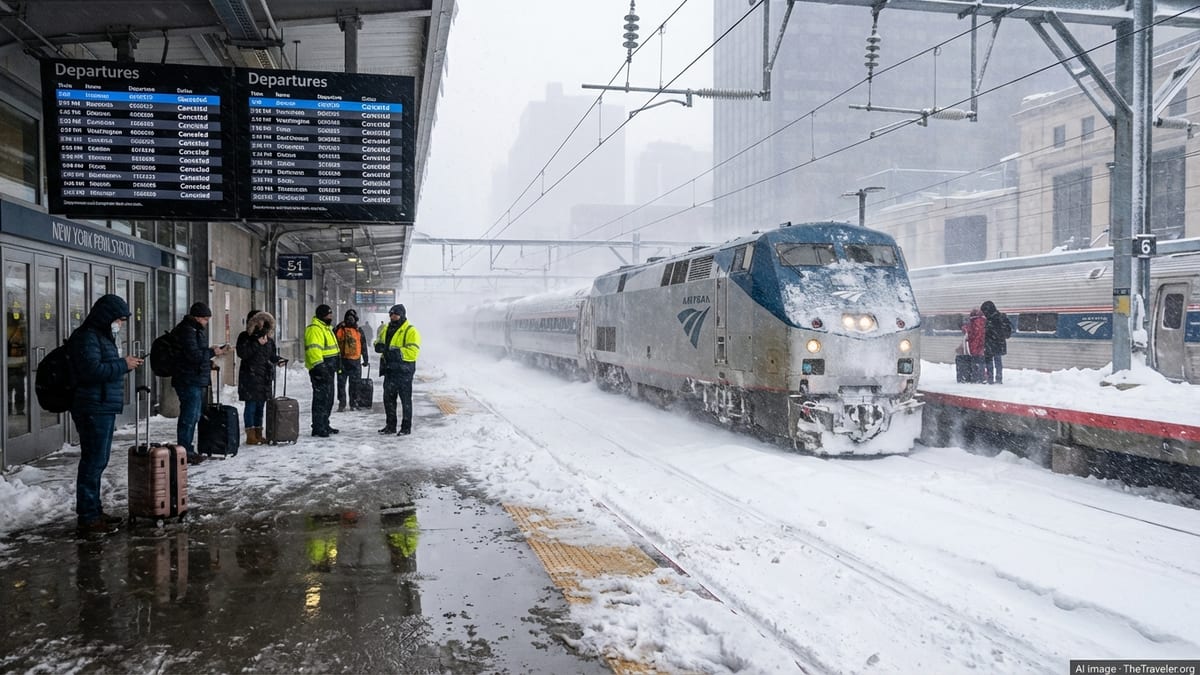
Nationwide standstill after GSM-R communications failure
Reports indicate that the disruption began on the evening of June 23, when Germany’s national rail operator identified a widespread malfunction in the GSM-R digital communication system, a specialized radio network that links train drivers with dispatch and control centers. As a precaution, trains were held at stations across the country while operators assessed the problem.
Published coverage from German and international outlets describes a rare, countrywide halt affecting both long distance and regional services. In major hubs such as Berlin, Munich and Frankfurt, passengers were left waiting on platforms or queuing at information desks as departures boards filled with cancellations and delays. Some services already en route were brought to the nearest stations and terminated there.
The outage lasted for roughly ninety minutes to two and a half hours before the system was stabilized using backup procedures, according to publicly available information. Train movements then resumed gradually after midnight, with rail operators cautioning that knock-on delays and isolated cancellations would likely continue into Wednesday morning.
Early Wednesday, rail traffic was largely back to normal, but with residual disruptions as timetables were re-synchronized and rolling stock repositioned. Initial statements from the company and government representatives indicated that the exact cause of the GSM-R failure had been identified internally, but no detailed explanation was immediately made public.
Passenger chaos and disrupted travel plans
The timing of the failure during the evening period meant that thousands of passengers were stranded at stations or aboard stationary trains. Media reports described long lines at ticket counters and information points, with travelers seeking alternative routes, overnight accommodation, or refunds. In some cities, local public transport and long distance coach operators saw a surge in demand as people tried to salvage their journeys.
Travelers heading to and from airports, cross border services and late night connections were particularly affected. Social media posts compiled by news outlets showed crowded concourses, full hotel lobbies near major stations, and electronic displays warning of a nationwide disruption to rail communications.
According to published coverage, the disruption also had implications for international services crossing into neighboring countries, with some trains held at border stations or temporarily suspended. While rail operators in adjoining networks reported normal operations on their side, the halt on German tracks effectively severed several key north south and east west corridors for the duration of the outage.
For many domestic passengers, the incident reinforced concerns about the reliability of long distance and regional services in recent years. Publicly available punctuality statistics for German rail have drawn criticism within the country, and reports indicate that this latest disruption quickly became part of a broader national conversation about infrastructure performance.
Freight operations and wider economic impact
Beyond passenger travel, the halt in services also hit freight operations, which rely heavily on nighttime slots to move goods across Europe’s largest economy. Industry focused reporting notes that freight trains were stopped alongside passenger services, freezing the movement of containers, raw materials and manufactured goods for several hours.
Logistics analysts cited in coverage pointed to Germany’s central position in the European rail network and warned that even a short, nationwide stoppage can create bottlenecks that ripple through supply chains for days. Terminals, ports and industrial customers dependent on just in time deliveries may face delays as operators work through the backlog created during the outage.
Some commentary has linked the event to wider debates over the resilience of critical infrastructure, including transport, energy and telecommunications. Publicly available assessments of the German rail system have long underlined its importance for meeting climate and mobility goals, with policymakers encouraging a shift from road and air travel to rail. Incidents of this scale risk undermining public confidence in that transition if they become more frequent.
At the same time, rail experts noted in various reports that safety protocols functioned as designed. When communications between dispatch and trains cannot be guaranteed, established rules require services to be stopped until secure contact is restored. While disruptive, the rapid halt in operations was presented as a necessary measure to maintain safety on a dense, mixed traffic network.
Spotlight on digital rail infrastructure and resilience
The outage has drawn renewed attention to GSM-R, the dedicated mobile communications standard used by many European railways. Information made public by rail technology specialists describes GSM-R as a variant of the older GSM standard, customized for secure, low latency communication between trains and control centers. It carries voice and some data traffic that underpin signaling and safety related procedures.
Germany has invested heavily in digital signaling, traffic management and communications as part of a broader modernization push, but the incident highlights the vulnerability that can arise when large networks depend on a single, nationwide system. Commentators in the rail sector are calling for more robust redundancy, segmented architectures and clear contingency plans that allow at least limited operations to continue during partial failures.
Public debate is also likely to focus on whether cyber security played any role in the event. As of early Wednesday, publicly available reporting emphasized that there was no confirmed evidence of an attack, and coverage framed the situation primarily as a technical malfunction. Nevertheless, earlier outages in other sectors have led to heightened scrutiny of digital infrastructure and could influence any forthcoming investigations or policy responses.
Plans for introducing the next generation Future Railway Mobile Communication System in Europe have already been under discussion, and this incident may add urgency to those efforts. Analysts suggest that future systems will need to combine higher capacity and flexibility with more granular fail safe mechanisms so that local faults do not trigger nationwide shutdowns.
Traveler guidance and what to expect next
In the immediate aftermath, publicly accessible advisories from rail operators urged travelers in Germany to check their connections, allow extra time and expect residual delays, particularly on long distance routes. Passengers whose journeys were cancelled or heavily delayed overnight were directed to seek compensation or rebooking under existing passenger rights frameworks.
Travel industry observers recommend that visitors with near term itineraries in Germany monitor rail apps and station displays closely, especially when making critical connections to flights, cruises or time sensitive events. While services have resumed, network wide incidents of this nature can cause rolling disruption for several timetable cycles as equipment and crew are repositioned.
For tourists planning multi city trips by train, experts advising through publicly available channels suggest building in additional buffer time between major legs and considering flexible ticket options where possible. Those traveling overnight or late in the day may wish to have contingency plans, such as knowledge of nearby hotels or alternative ground transport, in case of further unexpected interruptions.
Longer term, the episode is expected to feature prominently in national discussions on rail investment and modernization. As Germany continues to promote rail as a backbone of climate friendly mobility, the reliability of its digital infrastructure and the strength of its backup systems are likely to be central themes for both policymakers and travelers watching developments from abroad.