


GlobeAir has built a strong reputation in Europe with its fleet of Cessna Citation Mustang very light jets, serving business and leisure travelers who value point-to-point flexibility on short hops such as Milan to Nice or London to Zurich. But it is not the only way to fly privately across the continent. Depending on your routes, group size and budget, several operators and brokers may offer better value, more cabin space or wider geographic coverage. This guide looks at the most compelling GlobeAir alternatives, how they differ in practice, and which type of traveler each one best serves.
Get the latest updates straight to your inbox!
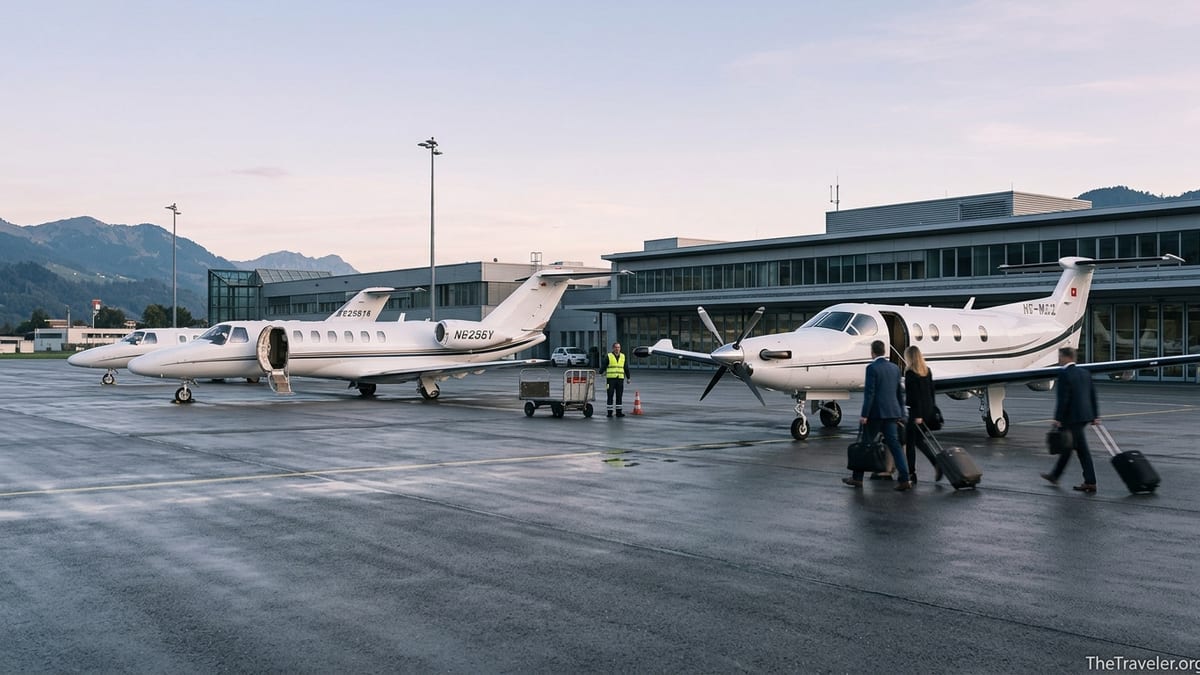
How GlobeAir Fits Into the European Private Jet Landscape
To understand which alternatives make sense, it helps to be clear about what GlobeAir actually offers. The Austrian operator focuses on very light jets, operating one of the largest Citation Mustang fleets in Europe. These four-passenger jets are optimized for short flights of roughly one to two hours, such as Vienna to Munich or Geneva to Paris, using smaller airports close to city centers. Typical advertised charter rates start around the low to mid four figures in euros per flight hour, depending on route length, airport fees and demand, while last-minute “empty leg” deals can drop to a few hundred euros per seat on repositioning flights.
In practice, GlobeAir is most competitive when you are moving up to four people between Western and Central European business hubs or popular leisure spots like Nice, Ibiza, Olbia or Palma de Mallorca. The service is relatively standardized: the aircraft type is almost always the Mustang, with a compact cabin suited to short trips rather than stand-up luxury. That focus has made GlobeAir efficient and recognizable, but it also limits range, cabin size and aircraft choice, which is where its competitors come in.
Travelers who routinely fly longer sectors, such as London to Athens or Stockholm to the Canary Islands, or who need six to ten seats, quickly run into the limits of a very light jet platform. For those missions, stepping up to a light, midsize or super-midsize jet can add a fuel stop-free itinerary, more luggage capacity and a more spacious cabin. Likewise, price-sensitive travelers hopping between secondary cities may find that high-performance turboprops beat a jet on cost without sacrificing much in comfort.
GlobeAir also leans on on-demand charter and jet cards, which suit frequent users who value predictable hourly rates. Other providers use different models: pure brokerage, subscription-based memberships or fractional ownership. Each approach affects how you pay, what you fly and how much flexibility you enjoy, so comparing GlobeAir with alternatives is not just about aircraft, but also about business model.
LunaJets and the Power of Independent Brokerage
One of the most prominent GlobeAir alternatives in Europe is LunaJets, a Geneva-based independent broker that does not operate its own aircraft. Instead of offering a single fleet like GlobeAir, it taps into a network of several thousand vetted jets and turboprops worldwide. For a traveler, this means that for a route such as Paris to Olbia in August, LunaJets can quote a light jet, a midsize jet or even a turboprop, depending on your budget and timing, rather than steering you toward a single solution.
LunaJets positions itself on competitive pricing by shopping the market in real time. For a two-hour light jet charter within Europe, typical market pricing often runs roughly in the upper two to mid three thousand dollars or euros per flight hour, while midsize jets cost more. A broker like LunaJets can sometimes undercut fixed-rate programs by finding an aircraft already positioned near your departure point or by securing an empty leg. For example, a family flying from Geneva to Ibiza at the start of school holidays might be offered a six-seat light jet at a price closer to what a four-seat very light jet would cost on a fixed-card program, simply because of smart aircraft matching.
The flip side of brokerage is that service consistency depends on the underlying operator. While reputable brokers work only with audited, safety-rated partners and have teams to handle disruptions, you will not see the same interior layout and crew uniform every time you fly. For some travelers, that is a small trade-off for savings of 20 to 40 percent compared with fixed-rate cards, especially when they only fly a handful of times per year.
LunaJets is particularly attractive for travelers whose itineraries vary: one month it might be a quick Zurich to Milan business hop, the next a longer London to Mykonos vacation flight. In those cases, being able to choose between a cost-effective Pilatus PC-12 turboprop, a Phenom light jet or a larger cabin jet rather than being locked into a single type offers both flexibility and transparency.
VistaJet, XO and the Move Up to Program Flying
At the other end of the market from GlobeAir’s four-seat Mustangs sits VistaJet, which focuses on larger, longer-range aircraft and a more club-like membership model. Instead of on-demand one-off charters, many VistaJet customers commit to fixed-hour “Program” agreements, paying an initiation fee and then a set hourly rate to access a uniform fleet of super-midsize and large cabin jets. Typical published starting prices for private jet charter with Vista-affiliated companies are in the five-figure US dollar range per flight hour, reflecting the size and luxury of aircraft like Bombardier Challenger and Global series jets.
For intra-European trips such as London to Rome or Paris to Larnaca, that level of aircraft is more than most travelers strictly need. But for executives who also fly transatlantic or from Europe to the Gulf on a regular basis, combining continental and intercontinental flights within one program can be attractive. The cabin experience is entirely different from a very light jet: stand-up height, a fully enclosed lavatory, space to work and dine, and crew trained more along the lines of long-haul business class hospitality.
XO, which is part of the same aviation group, offers a bridge between GlobeAir-style on-demand charter and VistaJet’s high-commitment programs. Through an app and membership tiers, XO lets travelers book individual charters or seats on shared flights. For example, a couple traveling from London to Nice at the start of a major event might find a scheduled shared XO flight and purchase two seats, paying less than they would for a full aircraft charter while still avoiding the main terminals. For business groups, XO can arrange a dedicated jet while offering loyalty benefits without the multi-year commitment of a fractional or full VistaJet program.
These Vista-backed solutions make sense primarily for high-frequency flyers, larger parties or those combining European hops with long-range missions. For a small team that only occasionally flies from Zurich to Frankfurt or Milan, the hourly cost of a large-cabin jet will far exceed the value of the extra space, making GlobeAir or lighter-jet brokers more rational choices.
NetJets, Flexjet and Fractional Ownership in Europe
For travelers who know they will consistently fly dozens of hours per year within and beyond Europe, fractional ownership providers such as NetJets and Flexjet offer a fundamentally different alternative to GlobeAir. Rather than paying trip by trip, you purchase a share or buy into a card-like program that gives you guaranteed access to a specific category of aircraft with published lead times for booking and fixed hourly rates.
In practical terms, a frequent flyer might purchase a 50-hour or 100-hour share on a light or midsize jet. They might then use those hours for regular flights such as London to Zurich every other week, plus a few longer leisure trips like Paris to the Greek islands during summer. The hourly rates for these programs tend to be significantly higher than the raw operating cost of the aircraft itself, because they bundle in guaranteed availability, fleet repositioning, crew, catering and rigorous maintenance. All-in annual commitments can run into the hundreds of thousands of euros for higher share sizes.
Compared with an operator like GlobeAir, fractional providers usually offer a broader choice of aircraft types and the ability to upsize or downsize within a fleet for specific trips. If you hold a share in a midsize jet but on one occasion need a larger aircraft for a team offsite from Munich to Lisbon, you may be able to request a super-midsize jet and pay a supplement. Conversely, you can sometimes downsize to a smaller aircraft when only two people are flying, optimizing cost within the same ecosystem.
Fractional ownership suits corporations and private individuals with predictable, high utilization: think pan-European executives, investment funds shuttling between London, Luxembourg and Zurich, or families maintaining homes in multiple countries. For occasional leisure flyers or those whose travel patterns change unpredictably, the long-term financial and contractual commitment can outweigh the benefits, in which case on-demand charter via brokers or operators remains more flexible.
Turboprop Specialists and Regional Operators
Not every alternative to GlobeAir involves a jet. For many European routes under about 500 to 700 kilometers, high-performance turboprops such as the Pilatus PC-12 or Beechcraft King Air offer a compelling mix of comfort and cost. Market data for European charter suggests that a turboprop can be priced noticeably lower per flight hour than a comparable light jet, making them particularly attractive for frequent short hops or for travelers who are more budget-conscious but still want to avoid commercial schedules.
In real-world terms, consider a company that needs to shuttle three staff members from Geneva to Lyon and back in one day for client meetings. On a map, these cities are close, and the actual airborne time can be under an hour each way. Booking a very light jet might feel excessive, both in performance and in price. A turboprop operator can offer a cabin with comparable seat comfort, access to the same smaller airports and often better performance on short runways or mountain strips, all while keeping the total invoice for the day notably lower than a jet.
Regional European operators that focus on turboprops also tend to have deep experience with secondary airports. For example, when flying to Alpine destinations near ski resorts, they may suggest small airfields close to your chalet or hotel rather than the larger international hubs. That can save hours of ground transfer time in peak season. A family traveling from London to a small airfield in the Alps might fly a jet to Geneva or Zurich, then connect with a turboprop for the short hop to a local strip, or take a turboprop for the whole journey, depending on weather and runway conditions.
Jet brokers like LunaJets or larger groups such as Luxaviation can arrange these turboprop flights alongside jets, which means you can mix and match depending on the occasion. In summer, when you are flying a full group of friends to Ibiza, you may choose a light jet for speed. In autumn, when you are traveling alone for a quick site visit to a regional town, a cost-effective turboprop might be the smarter option.
Digital Marketplaces and On-Demand Apps
Another class of GlobeAir alternatives comes from digital marketplaces that aggregate capacity from multiple operators. Platforms associated with brands such as XO, and various European-focused brokers, allow users to see estimated charter prices for routes before speaking with a human advisor. On these apps, you can type in, for example, “London Luton to Palma de Mallorca” for a specific date, and see live or near-live quotes for different aircraft classes, ranging from very light jets to super-midsize aircraft.
In practice, these prices are typically indicative until an operator confirms aircraft availability, owner approval, crew duty limits and airport slots. Still, they provide a quick way for travelers to benchmark whether a given quote from a traditional operator, including GlobeAir, is in line with the broader market. If you see a large spread between quotes for the same trip, you can ask detailed questions about aircraft age, included services, de-icing policies and cancellation terms.
The strength of marketplaces lies in transparency and speed. A traveler organizing a last-minute team retreat from Berlin to Mallorca might not have time to call three different operators and negotiate. Using an app, they can request quotes from several operators within minutes, then select the one that best balances price, aircraft type and departure time. Many marketplaces now also surface empty-leg flights more visibly, which is helpful for flexible leisure travelers happy to adapt their departure by a few hours to secure a substantial discount.
However, marketplaces are not a cure-all. New users sometimes assume that booking a private jet is as straightforward as buying an airline ticket online, when in reality there are more moving parts. Airport curfews, crew duty limits, last-minute slot restrictions and weather diversions can all affect a quote or schedule. Working with a marketplace that has experienced human support, not just an app interface, remains crucial, especially during peak seasons such as late July in the Mediterranean.
Pricing, Routes and When Each Alternative Makes Sense
When comparing GlobeAir with its alternatives, it is useful to think in terms of “mission profiles” rather than generic price tags. A solo traveler or a couple making short, infrequent hops between major Western European cities will have different priorities than a family of six planning multiple long summer weekends in the Balearics, or a company moving executives weekly between London, Frankfurt and Zurich.
For short hops under two hours with up to four passengers, GlobeAir’s Mustang fleet and similar very light jet operators can be cost-effective, especially when schedules are flexible enough to use empty legs. A typical example might be an entrepreneur flying from Vienna to Milan for a morning meeting and back the same evening, valuing minimal airport dwell time over cabin size. For that mission, a four-seat jet is often sufficient, and the simplicity of a single-operator relationship is appealing.
Once you need more than four seats or more range, independent brokers and marketplaces become stronger choices. A group of six heading from London to Ibiza at the beginning of school holidays might find that a six-seat light jet sourced by a broker costs only modestly more than a four-seat very light jet, particularly if the aircraft is already based near their departure airport. Similarly, a corporate team traveling from Paris to Warsaw may require the additional range and luggage capacity of a midsize jet. In such cases, GlobeAir’s narrow fleet focus can become a limitation rather than a benefit.
For travelers flying at least several dozen hours per year, especially on longer routes or with mixed European and intercontinental travel, VistaJet-style programs or fractional schemes through NetJets or Flexjet can make sense despite their higher headline costs. An executive who flies London to Zurich twice a month, London to New York quarterly, and additional leisure trips to Mediterranean islands might value the guaranteed availability and consistent cabin experience of a program more than the lower per-trip costs of on-demand charters.
The Takeaway
GlobeAir has carved out a clear niche in European private aviation with its very light jet fleet and focus on short, point-to-point routes. For many travelers, especially those flying small groups on one- to two-hour missions between major business and leisure centers, it remains a practical and familiar option. But as soon as your needs shift toward more seats, longer legs or more variable itineraries, a wider landscape of alternatives opens up.
Independent brokers like LunaJets excel at matching each trip to the optimal aircraft and operator, often unlocking better value or more comfort for a similar spend. Program-based operators such as VistaJet and fractional providers like NetJets and Flexjet appeal to high-utilization flyers who prioritize guaranteed access and a consistent product over raw price. Turboprop specialists and regional operators offer cost-effective solutions for short routes and secondary airports, while digital marketplaces and apps bring transparency and speed to the quoting process.
The right GlobeAir alternative for you depends on how often you fly, who you fly with and the types of routes you typically need. Before committing to any one provider or model, map out a year’s worth of likely trips, including group sizes and peak dates, and ask several operators and brokers to quote against the same itinerary. That exercise will reveal whether a focused operator like GlobeAir, a flexible broker, a membership program or a mix of solutions best fits your style of private travel across Europe.
FAQ
Q1. Is GlobeAir usually cheaper than its European competitors for short flights?
For very short hops with up to four passengers, GlobeAir can be competitive, especially if you can use an empty-leg deal, but brokers sometimes find similar or lower prices by sourcing alternative aircraft.
Q2. When does it make sense to choose a broker like LunaJets instead of GlobeAir?
A broker is often better when you need more than four seats, want a choice of aircraft types, fly routes beyond GlobeAir’s core network or want to compare several operators on price and cabin comfort.
Q3. Are VistaJet and XO realistic GlobeAir alternatives for typical intra-European trips?
They can be, but they generally operate larger and more expensive aircraft, so they make the most sense if you fly frequently, need more cabin space or combine European travel with long-haul flights.
Q4. How do private jet membership or fractional ownership programs compare on cost?
Membership and fractional schemes usually require significant upfront or annual commitments, but they provide fixed hourly rates and guaranteed availability, which can be cost-effective for very frequent flyers.
Q5. Are turboprops really a comfortable alternative to jets in Europe?
Modern turboprops such as the Pilatus PC-12 or King Air offer business jet-style interiors and are very comfortable for flights under roughly 500 to 700 kilometers, often at a noticeably lower cost than jets.
Q6. How can I find empty-leg flights as an alternative to a full charter?
Many operators and brokers publish empty-leg lists and app notifications; if your dates and direction are flexible, these repositioning flights can offer substantial discounts on typical charter pricing.
Q7. What factors have the biggest impact on private jet pricing in Europe?
Key drivers include aircraft type and size, route length, airport and handling fees, peak-season demand, positioning requirements, and how far in advance you book.
Q8. Do digital marketplaces really save money compared with calling an operator directly?
Marketplaces can make it easier to compare multiple offers quickly, which can highlight better-value options, but the final price still depends on the underlying operators and current market conditions.
Q9. How should I decide between a light jet and a midsize jet for a European trip?
Consider flight length, passenger count, luggage volume and desired cabin space; for up to six people on routes of two to three hours, a light or midsize jet is usually sufficient, with midsize offering more comfort and range.
Q10. What is the best way to start evaluating GlobeAir alternatives for my specific needs?
List your likely routes, dates, passenger numbers and budget for the next 12 months, then request comparable quotes from GlobeAir, at least one broker, and one membership or program provider to see which model fits best.