


Millions of drivers use New Jersey’s Garden State Parkway every year, and for many of them, tolls are just the price of getting to the Shore or commuting into North Jersey. Yet a growing number of travelers are paying significantly more than they have to, often without realizing it. The most expensive mistake is not a wrong exit or a speeding ticket. It is using the wrong way to pay tolls, which quietly turns routine drives into needlessly costly trips.
Get the latest updates straight to your inbox!
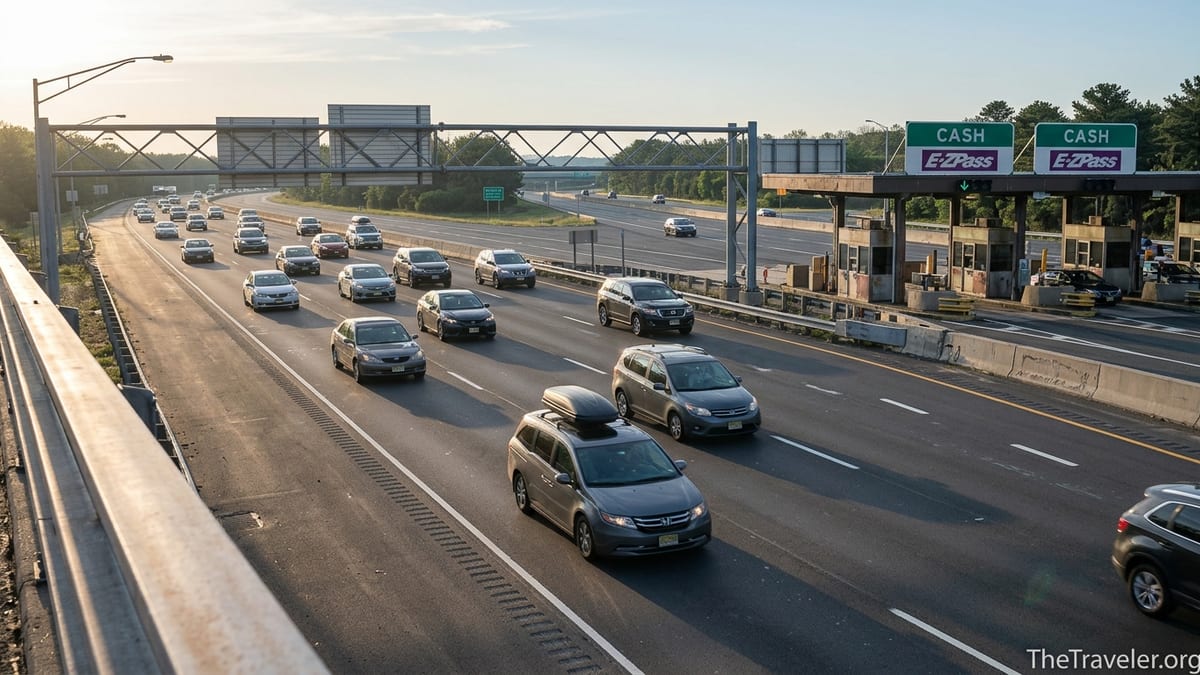
The Quiet Upcharge: Choosing the Wrong Way to Pay
The single biggest mistake that makes many drivers pay more on the Garden State Parkway is traveling without a New Jersey E-ZPass and relying instead on cash where available or toll-by-mail “toll by plate” billing. On the Parkway, as on many toll roads in the Northeast, the lowest rates are reserved for drivers using E-ZPass transponders issued by the local authority. Everyone else pays a higher tier before late fees or violations even come into play.
For a typical passenger car, Parkway mainline tolls often fall somewhere around the 1 to 2 dollar range per plaza, depending on the distance and entry or exit points. A driver running from the New York State line down toward the Shore can easily pass half a dozen toll points in a single journey. Paying the slightly higher cash or toll-by-mail rate at each of those adds up quickly. Over the course of a summer of weekend Shore trips, a family could end up spending tens of dollars more than neighbors who use a properly set up New Jersey E-ZPass.
The difference becomes even more pronounced for frequent commuters. Someone traveling daily between, say, Brick Township and Newark on the Parkway might see twenty or more toll transactions per workweek. If each of those tolls is even a few dozen cents more because they are paying the non-discounted rate, the extra cost can reach well over one hundred dollars a year. That is money many drivers do not realize they are leaving on the table simply because they never switched to the lower-priced payment method.
Complicating matters, some travelers assume that any E-ZPass tag from any state guarantees the best deal. In reality, discounts on the Garden State Parkway are typically structured for New Jersey-issued E-ZPass accounts. Out-of-state tags usually work seamlessly at the toll points, but they can be charged a standard or even slightly higher rate than a local account, which means a New York or Pennsylvania commuter may be paying more on every trip than someone with a New Jersey E-ZPass making the exact same journey.
How Toll-by-Mail and Missed Payments Inflate the Bill
Another version of the same mistake shows up when drivers rely on toll-by-mail. If a driver enters an E-ZPass-only lane without a valid transponder, cameras capture the license plate and a bill is mailed to the registered owner. On the Garden State Parkway and other regional toll roads, those by-mail bills are usually set at a higher base rate than what an E-ZPass customer would have paid for the same trip. That price difference is before any additional administrative or late fees.
Consider a driver heading south from the Driscoll Bridge toward the Shore without cash and without a working E-ZPass. Every time they slip through an E-ZPass lane assuming they will “just get a bill,” they accept the higher toll-by-mail rate. If the regular E-ZPass rate for a segment is roughly 1.50 dollars, the by-mail rate might be closer to what cash customers pay, or more, and that small gap is multiplied every time they pass a toll plaza. Over the course of a weekend trip with multiple entries and exits, the difference can easily reach 5 to 10 dollars more than a properly set up transponder user.
The situation becomes more expensive if those mailed bills are overlooked. A toll-by-mail invoice usually comes with a specific payment deadline. Miss that date and an extra administrative fee is often added to the balance. Drivers who move without updating their vehicle registration address are particularly vulnerable. Bills and reminders may be sent to an old address, and the first time they realize there is a problem is when a notice arrives announcing a much larger sum due, with individual missed tolls now carrying hefty added fees.
Lawyers who handle New Jersey toll matters frequently report cases where a few missed tolls on the Parkway balloon into a three-figure bill once repeated late fees are applied. For example, a driver might have inadvertently passed through three E-ZPass lanes without paying a total of under 10 dollars in tolls, but after several billing cycles and penalties, they are suddenly facing well over 100 dollars due. This is not because the underlying tolls were high, but because the choice to travel without a valid local E-ZPass and then ignore or miss the mailed bills turned a small cost into a big financial headache.
Coin Baskets, Cash Lanes, and the Risk of Overpaying
On the Garden State Parkway, traditional exact change coin baskets have been disappearing from the big mainline plazas for years, replaced with staffed cash lanes and E-ZPass-only lanes. However, many entrance and exit ramps, especially at smaller interchanges, still use automatic coin machines. Here, a different but related mistake can cause travelers to pay more than they need to: using coin baskets without exact change and simply dropping in whatever bills or coins they have on hand.
The rules for these ramp plazas are strict. Each basket is clearly marked with the specific toll amount for that location and vehicle class, often something like 0.75 or 1.10 dollars for a passenger car. There is no mechanism to return change. If a driver only has a one-dollar bill or a handful of mixed coins adding up to more than the toll, they will overpay. Some drivers do this intentionally to avoid a violation, tossing in a full dollar or even more for a smaller toll. Over a road trip that involves multiple such ramps, a traveler might end up donating several extra dollars to the toll system simply because they did not plan for exact change or a better payment method.
Real-world examples are common. A Shore-bound visitor leaving the Parkway at a small ramp near a coastal town might face a 0.75 dollar toll but only have a dollar coin or a mix of quarters and dimes that totals 1.25 dollars. With no attendant present and no way to receive change, they accept a 50-cent overpayment rather than risk having the machine fail to register the toll as paid. Another driver entering the Parkway at night in Central Jersey might throw in a whole handful of coins because they are unsure of the exact amount. The light flicks to “paid,” but they have no idea whether they just spent 1 dollar or 3 dollars for a toll that might have been under one.
It may sound minor, but for commuters or regular Parkway users who habitually rely on these coin lanes without carefully counting change, that kind of casual overpayment adds up. The alternative is not to take a risk on underpaying and a violation, but rather to avoid depending on coin baskets in the first place. An E-ZPass transponder eliminates the uncertainty and ensures the correct amount is deducted every time, without the need to hoard quarters and dollar coins in the cup holder.
Out-of-State E-ZPass Tags and Discount Confusion
Another subtle way drivers end up paying more involves using an out-of-state E-ZPass account on the Garden State Parkway. E-ZPass is an interoperable system across much of the Northeast and Mid-Atlantic, so a tag from New York, Pennsylvania, or another participating state will typically function at Parkway toll plazas. However, the fine print matters. Discount programs and off-peak pricing on the Parkway are usually designed for New Jersey E-ZPass customers, not for every possible out-of-state account.
Imagine a commuter who lives in North Jersey but still uses a New York E-ZPass tag obtained years ago when they commuted into Manhattan daily. They eventually change jobs and begin driving the Garden State Parkway from Clifton to Toms River several times a week. Their out-of-state tag works perfectly, and tolls show up on their statement. Yet they may be missing out on New Jersey-specific discounts or favorable off-peak rates available only to accounts issued through the New Jersey E-ZPass system. Over hundreds of trips per year, this discrepancy can quietly cost them a meaningful sum.
Some drivers also add rental cars, work vehicles, or new family cars to their E-ZPass account but forget to update the plate information. If a plate is not correctly associated with the account, a trip through an E-ZPass lane can register as a toll-by-mail event rather than an in-account E-ZPass transaction. The driver sees that the tag beeped and assumes the discounted rate applied, but instead a higher plate-based charge is being sent to the vehicle’s registered owner. That can create confusion and, in some cases, tense conversations between employers and employees or between family members who share a car.
The solution is straightforward but often overlooked: Parkway users should periodically review their E-ZPass account details to confirm that their primary vehicle plates are listed correctly and that they are using a New Jersey-issued account if they regularly travel the state’s toll roads. Taking the time to align the account with actual driving patterns can prevent a slow leak of money from unnecessary higher-rate charges.
When Small Mistakes Turn Into Toll Violations
Beyond higher base rates, small mistakes in how drivers use Parkway toll facilities can lead to formal violations that increase the total cost of travel dramatically. Entering an E-ZPass-only lane at a staffed mainline plaza without a working transponder, throwing too few coins into a ramp basket, or failing to stop at a cash lane can all trigger a violation notice. These notices typically bundle the unpaid toll with an additional administrative fee, which can be many times higher than the toll itself.
Consider a traveler unfamiliar with the Parkway who follows traffic into an E-ZPass-only express lane at highway speed near a major bridge, not realizing that no cash option exists in that set of lanes. The cameras capture their license plate and a bill is issued. If they promptly pay after the first notice, they might only face the higher toll-by-mail amount plus a modest fee. But if that notice sits in a pile of mail or is sent to an outdated address, subsequent rounds of billing can add late charges until a single unplanned lane change has spawned a surprising bill.
Similar problems arise at ramp coin plazas. Drivers sometimes report that they did throw coins into the basket, but the “toll paid” indicator failed to light up, whether due to miscounted change, coins lodging incorrectly in the mechanism, or simple mechanical glitches. If the system records the event as an unpaid toll, a violation notice can follow. For a toll that might have been less than a dollar, the driver then has to choose between taking the time to dispute the charge or paying an outsize administrative fee.
Travelers who rent cars face a special version of this risk. If a rental vehicle passes through a toll point without a properly registered E-ZPass transponder, the by-mail bill typically goes to the rental company first. Many rental contracts allow the company to pass along not only the toll and any administrative fee, but also an additional service charge of its own. A visitor using a Parkway exit ramp coin lane who miscalculates or skips payment may never see the original toll amount, only a line on their credit card statement explaining a combined toll and processing fee that far exceeds what a local driver with a transponder would have paid.
Strategies to Pay Less on the Garden State Parkway
The good news is that avoiding the most common overpayment mistakes on the Garden State Parkway is straightforward once travelers understand how the system is structured. The first step for anyone who drives the Parkway regularly is to obtain a New Jersey E-ZPass transponder and link it to a valid payment method. For many drivers, the monthly account fee is small compared to the cumulative savings from discounted tolls and the ability to bypass higher toll-by-mail rates and coin lane overpayments.
Once a New Jersey E-ZPass is in place, diligent account maintenance matters. Drivers should confirm that every license plate they use on the Parkway, including family vehicles and frequently rented or leased cars, is correctly listed on the account. Periodically reviewing statements helps catch unusual charges, such as unexpected toll-by-mail transactions that might indicate a tag did not register or a plate was not recognized. Resolving those issues quickly can prevent higher-rate billing from becoming a routine part of Parkway travel.
For travelers who only use the Parkway occasionally and may not want an E-ZPass, planning ahead still helps. Keeping a small stash of quarters and dollar coins in the car can reduce overpayment in exact change baskets. When approaching ramp plazas, drivers should slow down enough to read posted toll amounts and confirm they are using a lane that matches their payment method. If a driver finds themselves in a situation where they genuinely cannot pay at a particular toll point, they should look for instructions posted at the booth or on signage for how to settle the toll after the fact rather than simply driving through and hoping for the best.
Visitors from out of state can also benefit from research before a trip. A traveler from New England planning to drive the Parkway to Cape May, for instance, might compare the rates and fees associated with their home-state E-ZPass account to those of a New Jersey-issued account. If they anticipate frequent trips through New Jersey’s toll roads, switching to or adding a New Jersey account could provide better long-term value. Even for a single vacation, understanding that toll-by-mail will cost more and budgeting accordingly can help avoid unpleasant surprises when bills arrive weeks later.
The Takeaway
On the Garden State Parkway, the most expensive mistake most drivers make is not a dramatic traffic violation but a quiet financial one: using the wrong payment method or failing to keep toll accounts in order. Choosing cash or toll-by-mail instead of a properly configured New Jersey E-ZPass means paying higher base rates. Relying on coin baskets without exact change leads to routine small overpayments. Ignoring toll-by-mail notices or allowing rental car companies to intermediate unpaid tolls transforms modest charges into substantial bills.
For Parkway travelers, the solution begins with awareness. Understanding that toll systems are increasingly structured to reward local E-ZPass users with the best rates changes how a trip is planned. A small investment of time to open and maintain a New Jersey E-ZPass account, verify license plates, and keep contact information current can easily pay for itself within a few months of regular Parkway use. Even occasional visitors can save money by planning their payment strategy in advance rather than treating tolls as an afterthought.
In a region where driving remains essential for commuting, visiting family, or heading to the Shore, those incremental savings matter. Over years of travel, the difference between higher toll-by-mail rates and discounted E-ZPass charges can add up to hundreds of dollars. By avoiding the simple mistake of traveling the Garden State Parkway without the right payment setup, drivers can keep more of their money for what they really want to spend it on, whether that is a better hotel, an extra dinner out, or simply a little more room in the monthly budget.
FAQ
Q1. What is the main mistake that makes drivers pay more on the Garden State Parkway?
Many drivers pay more because they travel without a New Jersey E-ZPass and instead rely on cash or toll-by-mail, both of which typically carry higher base toll rates than local E-ZPass discounts.
Q2. Is paying cash at toll booths always more expensive than using E-ZPass?
Cash rates on the Garden State Parkway are often higher than discounted New Jersey E-ZPass rates for the same trip. While the difference at a single plaza may be small, it adds up over multiple tolls and repeated journeys.
Q3. Do out-of-state E-ZPass tags get the same discounts as New Jersey E-ZPass on the Parkway?
Out-of-state E-ZPass tags generally work on the Parkway, but they may not qualify for New Jersey-specific discounts or off-peak pricing. Drivers who mostly use New Jersey toll roads often save more with a New Jersey-issued E-ZPass account.
Q4. How does toll-by-mail make travel more expensive?
With toll-by-mail, the toll is usually billed at a higher rate than the discounted E-ZPass amount, and administrative fees can be added. If bills are paid late or missed entirely, additional charges can significantly increase the total cost.
Q5. Can small mistakes at coin baskets lead to bigger costs?
Yes. At exact change coin baskets on Parkway ramps, there is no way to receive change. Drivers who do not have the precise amount often overpay, and those who accidentally underpay may later receive violation notices with added fees.
Q6. What should I do if I accidentally drive through an E-ZPass-only lane without a transponder?
If you pass through an E-ZPass-only lane without a valid transponder, a toll-by-mail bill is usually sent to the vehicle’s registered owner. Paying it promptly helps avoid additional administrative or late fees, and contacting the toll authority can sometimes resolve first-time mistakes.
Q7. How can I make sure my E-ZPass always gives me the lowest available rate?
Use a New Jersey-issued E-ZPass if you regularly drive the Garden State Parkway, keep your license plate and vehicle information up to date on your account, and review statements periodically to confirm that transactions are being charged at the expected discounted rates.
Q8. Are rental cars at higher risk for costly toll mistakes on the Parkway?
Yes. If a rental car passes through toll points without a properly registered E-ZPass, bills typically go to the rental company, which may add its own service fees on top of toll and administrative charges. Understanding the rental company’s toll policy and using a compatible transponder can reduce these costs.
Q9. Is it worth getting a New Jersey E-ZPass if I only use the Parkway a few times a year?
For occasional users, the savings depend on how many toll roads they use and how often. Even a few weekend trips to the Shore can involve multiple tolls each way, so over a season, the lower E-ZPass rates can outweigh the modest account fees for many travelers.
Q10. What is the simplest way to avoid overpaying on the Garden State Parkway?
The simplest way is to set up and maintain a New Jersey E-ZPass account, attach it to all vehicles you use on the Parkway, keep your contact details and plates current, and avoid relying on toll-by-mail or coin baskets except when absolutely necessary.