


For many trips in New Jersey, the Garden State Parkway is unavoidable. It can be fast and convenient, but it can also mean baffling toll booths, summer traffic jams, and last minute lane changes. With a little planning though, you can drive the Parkway from the New York State line to Cape May with minimal stress, predictable tolls, and far fewer surprises.
Get the latest updates straight to your inbox!
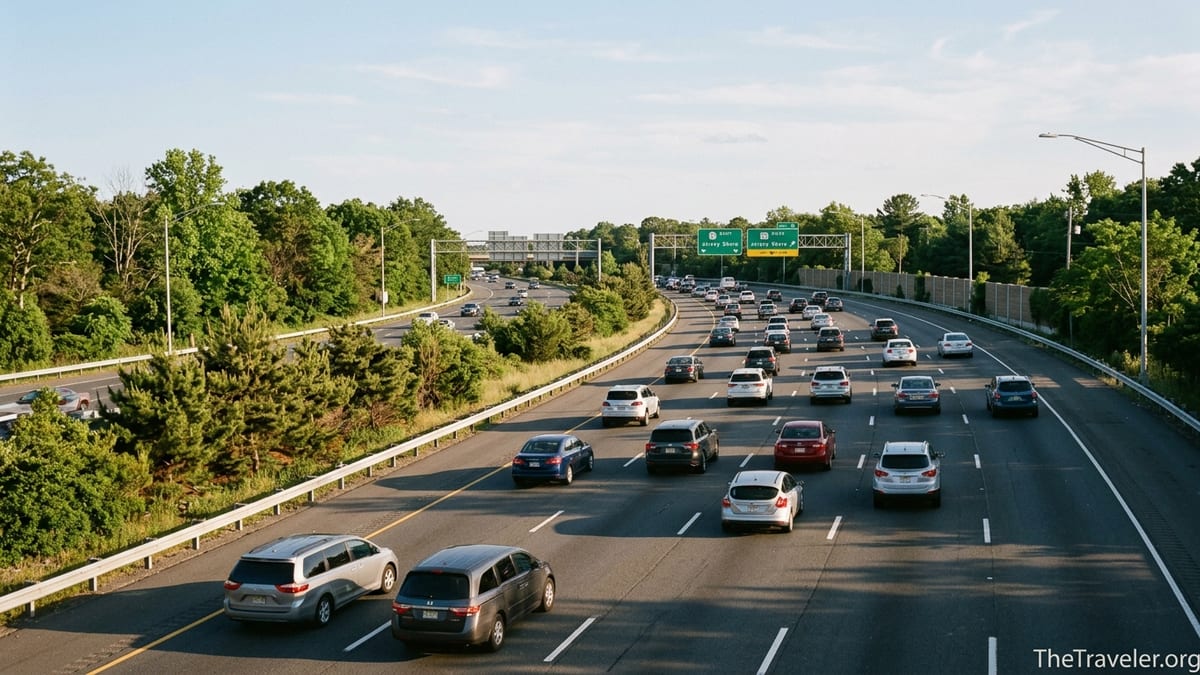
Know the Road You Are Getting Onto
The Garden State Parkway runs for roughly 173 miles from the New York State line at Montvale all the way down to Cape May, linking North Jersey, the Jersey Shore, Atlantic City, and the southern tip of the state. It is a limited access toll highway, which means fewer traffic lights and cross streets and more consistent speeds than local routes. For many travelers headed to places like Asbury Park, Ocean City, or Wildwood, the Parkway is the most direct route.
Traffic volumes are high year round and especially heavy between about Exit 80 and Exit 105, the section feeding popular Jersey Shore towns around Seaside Heights, Point Pleasant, Belmar, and Asbury Park. Local radio, regional newspapers, and navigation apps routinely highlight this stretch on summer Fridays because backups can stretch for miles in the late afternoon and evening as drivers head south. Understanding where congestion is most likely helps you decide when to leave and whether to detour.
The Parkway is mostly three lanes in each direction in North Jersey, narrowing to two in many places further south. There are frequent entrance and exit ramps, some of which require you to keep right well in advance. If you are not used to New Jersey’s style of highway driving, spend a few minutes looking at a Parkway map before you go, especially around complicated interchanges like Exit 129 for the New Jersey Turnpike and Exit 142 for Interstate 78.
Because the Parkway parallels the New Jersey Turnpike for part of its length, you also have options. Drivers going from, say, Philadelphia to New York with no plans to visit the Shore may find the Turnpike’s straight alignments and full interchange access easier. Travelers headed to coastal towns, however, usually save time by staying on or switching to the Parkway south of the Raritan River.
Mastering Tolls, E ZPass, and Costs
The Parkway uses an open system of tolling, which means you pay flat fees at main barrier plazas and some entrance and exit ramps instead of getting a ticket at the start and paying by distance at the end. For Class 1 passenger vehicles in 2026, a typical mainline barrier plaza toll such as the ones at Essex, Union, or Raritan is around the low to mid two dollar range when paying cash, with many ramp tolls under one dollar. If you drive from Montvale down to Cape May, you will encounter multiple barriers and ramps, so the total cost of a full length trip can easily add up to several dollars each way.
Most Parkway drivers now use E ZPass, and the New Jersey Turnpike Authority reports that more than nine out of ten passenger car transactions on its roads are electronic. With E ZPass, you simply keep your transponder mounted to your windshield and drive through the E ZPass or Express lanes at posted speeds. In many cases the E ZPass rate is lower than the cash rate, and you avoid fumbling for quarters while traffic stacks up behind you.
If you do not have E ZPass, you can still pay cash at staffed toll booths on the mainline plazas and many ramps. Exact change baskets, once common, have been gradually phased out or reduced as the Parkway moves toward more cashless operations. Plan on using staffed lanes where an attendant can accept your bills and coins. For example, driving south from Newark to the Asbury Park barrier plaza near Exit 104, you should be prepared to stop at the Union and Raritan barriers and possibly a ramp toll, each costing roughly the price of a cup of coffee.
For occasional visitors who do not want an E ZPass account, one strategy is to estimate your round trip tolls before you leave and put that approximate amount in small bills and coins in a dedicated envelope within reach of the driver. If you know you will be passing the Cape May northbound plaza and the Great Egg southbound plaza on a weekend trip to Ocean City, you might set aside around ten dollars in singles and quarters so you are not digging in your wallet on approach.
Planning Your Timing to Avoid Traffic Headaches
Traffic patterns on the Parkway are predictable once you think in terms of commuters and beach goers. On weekdays, the heaviest congestion usually appears in North Jersey during rush hours: roughly 6:30 to 9:30 in the morning and 3:30 to 7:00 in the evening, especially near major interchanges like 145, 150, 153, and 163. South of the Driscoll Bridge area near Exit 127, commuter peaks still matter, but volumes are more tied to seasonal and tourist travel.
In summer, especially from late June through Labor Day, Fridays heading south and Sundays heading north can be notoriously slow between about Exit 80 and Exit 105. Drivers bound for Seaside Heights, Island Beach State Park, Long Beach Island, and the Monmouth County beaches pour onto the roadway mid afternoon. If you plan a Friday trip from North Jersey to Wildwood, leaving at 2 p.m. may mean crawling past the Asbury Park, Belmar, and Toms River exits, while leaving at 7 a.m. could allow you to cruise past at the speed limit and be on the beach by mid morning.
Weather and incidents matter too. Heavy rain, fog over the marshes near Barnegat, or a crash approaching a toll plaza can quickly turn a normal drive into a long delay. Before you get on the road, check a real time traffic map on a navigation app and local traffic reports from regional stations or news apps. These sources will flag accidents, construction lane closures, and special event traffic for things like concerts at PNC Bank Arts Center near Exit 116 or big summer festivals in Asbury Park that can create localized backups.
Overnight driving is often calmer. Many regular Parkway users report that leaving for Cape May at 9 or 10 p.m. on a Friday night lets them avoid almost all congestion at the Great Egg and Cape May toll plazas. If you choose to drive late, be extra alert for lane shifts, reduced speeds in construction zones, and wildlife near the edge of the roadway, especially in the more rural southern sections around New Gretna and Cape May County.
Choosing Lanes, Exits, and Service Areas Calmly
One of the most stressful parts of Parkway driving for visitors is the combination of left and right exits, local and express lanes, and last minute lane changes. In some northern stretches there are separate local and express roadways. For example, near Woodbridge and Sayreville, the northbound Parkway splits, with local lanes serving more frequent exits and express lanes skipping some interchanges. If your destination is a local exit like 131 for Wood Avenue, you should remain in the local roadway, while someone heading directly to the New Jersey Turnpike at Exit 129 might prefer the express lanes.
The key is to think one or two exits ahead instead of reacting at the last second. If you are driving north from the Shore to Newark Airport, for instance, you know you will eventually want the Turnpike or Interstate 78. Stay in the center lane until two to three miles before your interchange, then gradually work right or left as needed based on the overhead signage. Avoid weaving across multiple lanes near toll plazas or major exits, since those areas are already busy with merging and exiting traffic.
Service areas provide natural pauses where you can reset and plan your next segment. The existing Parkway service plazas have been renamed for New Jersey notables, so you will see signs for locations like the James Gandolfini Service Area at Montvale or the Frank Sinatra Service Area at Galloway Township. These plazas offer fuel, restrooms, national fast food brands, coffee chains, and convenience stores. For instance, a driver leaving New York in the late afternoon might stop at Montvale around milepost 171 to top off the tank and grab a quick dinner before tackling the evening rush through North Jersey.
If you are traveling with kids, treat service areas as scheduled breaks. On a southbound trip from Paramus to Wildwood, you could plan a snack and restroom stop at the Monmouth County plaza near milepost 100, then a fuel and stretch stop at the Frank Sinatra Service Area near Atlantic City Expressway. Breaking the trip into these segments keeps everyone more relaxed and reduces the temptation to make risky moves just to reach an exit sooner.
Using Technology and Local Knowledge to Your Advantage
Modern navigation apps are incredibly useful on the Parkway, but they are not perfect. Apps like Google Maps, Apple Maps, and Waze can reroute you around crashes or heavy congestion, but sometimes they recommend tiny local roads that may save only a minute or two while adding stress. When an app suggests exiting at, say, Exit 98 to cut across to Route 34 and back to 195, consider whether you are comfortable leaving the predictable flow of the Parkway for a maze of traffic lights and local turns.
A balanced approach is to let the app guide you but use common sense. If you see that a delay is limited to, for example, seven minutes of slow traffic near the Toms River toll barrier, it may be better to stay on the Parkway than to follow a complicated detour. On the other hand, if a major crash has closed multiple lanes near Raritan and the app suggests taking Route 9 for a longer stretch, that might be worth it. Regional radio and television traffic updates can confirm whether slowdowns are minor or severe.
Locals often develop their own routines. Someone who lives in Brick and commutes to Newark might know that staying right approaching the Driscoll Bridge gives them a more comfortable merge into post bridge traffic, or that stopping at the Cheesequake service area near Exit 123 is the best time to refuel before North Jersey prices jump. Pay attention to these small patterns if you drive the Parkway regularly, because over time they reduce uncertainty and help you feel in control.
Your smartphone can help with tolls as well. The New Jersey E ZPass website and app allow you to check your account balance, view recent tolls, and update your vehicle plate before a trip. If you are borrowing a car or renting one for a weekend at the Shore, you can add that plate temporarily so your transponder charges correctly and you avoid mailed bills or administrative fees.
Driving Style, Safety, and Stress Management
Even with perfect timing and planning, the Parkway can be intense. Speeds often run slightly above the limit, especially in light traffic, and you will encounter everything from slow moving RVs headed to campgrounds near Cape May to aggressive drivers weaving across lanes near urban interchanges. To keep stress down, adopt a steady, predictable driving style and avoid the temptation to match the fastest drivers.
Maintain a comfortable following distance, especially approaching toll plazas and areas where traffic frequently slows, such as near Exit 98 for the Shore routes. Many rear end collisions occur when one driver is distracted while another brakes sharply for a toll lane or a merging vehicle. If you choose an E ZPass Express lane, commit to it early and ensure you are at the correct speed and in the correct lane a half mile before the plaza instead of swerving at the last second.
Rest and hydration matter as well. A common real world scenario is a family leaving North Jersey late on a Sunday evening after a full day on the beach in Ocean City or Long Beach Island. The driver is sun tired, the car is full, and traffic northbound toward Toms River and Asbury Park is heavy as people head home. Planning a short stop for coffee and a restroom break at a nearby service area can reset your focus and mood. Ten extra minutes at a plaza is far preferable to white knuckle driving in heavy traffic while fatigued.
Mental preparation helps too. Accept that on peak weekends you may not beat every delay. If you plan your departure so you arrive a bit early for hotel check in, or build a buffer before a dinner reservation in Cape May, you are less likely to feel panicked when you see brake lights. Think of the Parkway as one part of the trip experience rather than an obstacle to fight.
The Takeaway
Driving the Garden State Parkway does not have to mean white knuckles and toll booth surprises. Once you understand that it is a busy, open toll system connecting dense urban areas to some of the most popular beaches on the East Coast, the patterns start to make sense. Tolls come at predictable plazas and ramps, traffic spikes follow the rhythms of commuters and Shore weekends, and service areas give you structured opportunities to pause.
With E ZPass or a small stash of planned toll cash, a rough timetable that avoids peak Friday and Sunday surges, and a willingness to stop at a James Gandolfini or Frank Sinatra service area when you need a break, the Parkway becomes less of a mystery. It turns into what it was designed to be: a direct, scenic link between the New York State line, North Jersey, and Cape May.
Whether you are a first time visitor driving a rental car from Newark Airport or a long time local heading back to your favorite stretch of sand in Wildwood, adopting these strategies will let you focus less on toll booths and lane changes and more on the trip itself. You may still encounter a backup or two, but they will feel like manageable bumps rather than major disruptions.
FAQ
Q1. Do I need E ZPass to drive the Garden State Parkway?
E ZPass is not strictly required, but it makes Parkway travel easier and often slightly cheaper. You can still pay cash at staffed booths at mainline plazas and many ramps, yet electronic payment lets you use express lanes and avoid handling money in traffic.
Q2. How much will it cost to drive a typical stretch of the Parkway?
Costs vary by distance and which toll plazas you pass, but a common example like driving between North Jersey and the central Shore usually adds up to only a few dollars in each direction for a passenger car, with individual tolls generally in the low dollar range.
Q3. What are the worst times for traffic on the Parkway?
On weekdays, morning and evening rush hours in North Jersey are busiest. In summer, Friday afternoons and evenings heading south and Sunday afternoons and evenings heading north, especially between Toms River and the Monmouth County Shore exits, are often the most congested.
Q4. Are there service areas with gas and food along the route?
Yes, the Parkway has multiple service areas spaced along the road, many renamed for New Jersey notables. They typically offer fuel, restrooms, fast food chains, coffee, and convenience stores, making them convenient places to refuel and rest.
Q5. Are any vehicles restricted on the Parkway?
Heavy trucks over certain weight and axle limits are restricted on parts of the Parkway, particularly north of some interchanges. Most passenger cars, SUVs, and light pickups can use the entire route without restrictions.
Q6. How can I avoid surprise last minute exits and lane changes?
Review your route before driving, watch advance signs, and think at least one or two exits ahead. In areas with local and express lanes, pick the roadway that best matches your planned exit well in advance so you are not forced into sudden weaves.
Q7. What should I do if I miss a toll or do not have enough cash?
If you accidentally pass through a plaza without paying, monitor your mail and plate, as a bill may be issued. The safest approach is to contact the New Jersey Turnpike Authority promptly, explain the situation, and follow their instructions for paying the missed toll.
Q8. Are navigation apps reliable for Parkway driving?
Navigation apps are generally accurate and very useful for spotting real time congestion and incidents, but occasionally suggest minor local detours that may not save much time. Use them as a guide while also considering your own comfort with leaving the Parkway.
Q9. How early should I leave for a summer weekend at the Jersey Shore?
Leaving early in the morning, often before 8 a.m., usually avoids the worst Friday southbound traffic and lets you reach Shore towns before midday congestion builds around major exits and toll barriers.
Q10. Is the Parkway safe to drive at night?
Yes, the Parkway is generally safe at night and often less congested, but you should stay alert for construction zones, lane shifts, and reduced visibility in rural stretches. Well lit service areas provide good options for rest stops if you feel tired.