


Arriving at Venice Marco Polo Airport and stepping straight onto a boat is one of Europe’s most memorable travel experiences. Alilaguna’s water buses link the airport with central Venice, Murano, the Lido and the Santa Lucia railway station, offering a slower but highly scenic alternative to buses and taxis. This guide explains exactly how the Alilaguna system works, focusing on the Blue, Orange and seasonal Red lines, the main stops such as Murano, F.te Nove, Rialto, San Marco, Lido and Santa Lucia, and how to choose the right route and ticket for your trip.
Get the latest updates straight to your inbox!
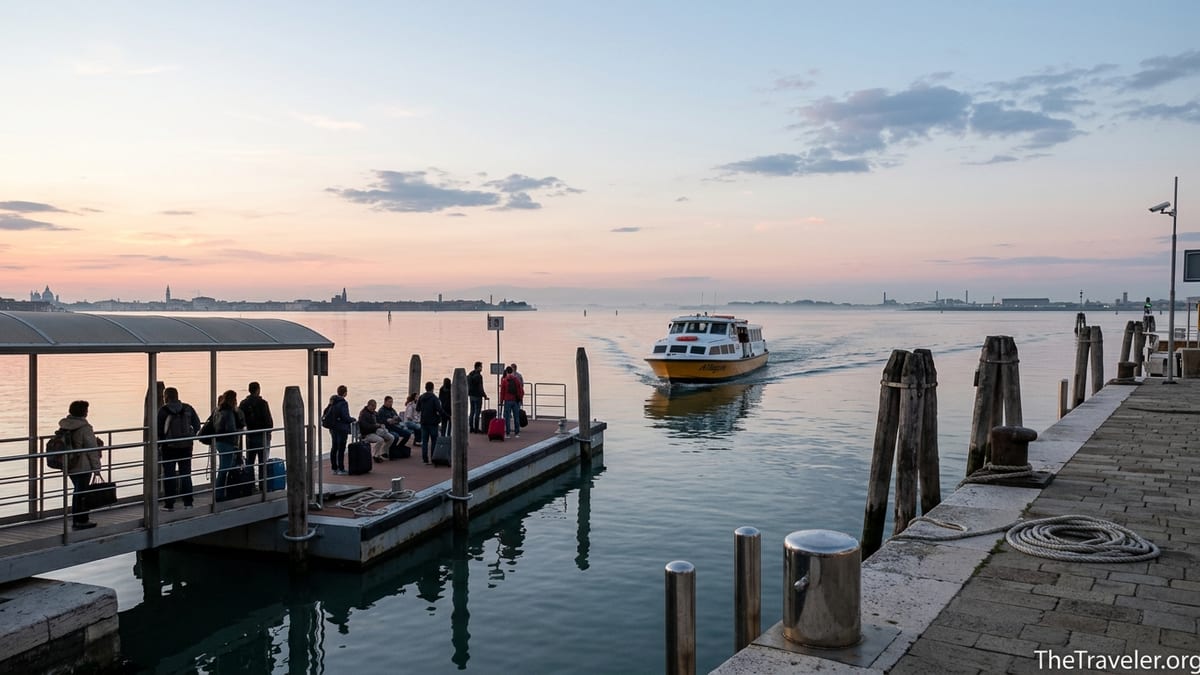
What Alilaguna Is and When It Makes Sense
Alilaguna is a private water bus company that operates fixed routes between Venice Marco Polo Airport and key points around the lagoon, including Venice’s historic center, Murano, the Lido and the cruise and rail terminals. Boats run on three main routes from the airport: the Blue Line, Orange Line and seasonal Red Line. They are different from the city’s ACTV vaporetti, and ACTV passes are not valid on Alilaguna services, which require their own tickets.
Practically, Alilaguna makes sense if your hotel is near one of its stops, if you want a direct connection to Murano or Lido, or if you simply prefer to arrive in Venice by water without paying for a private taxi. For example, a couple staying near San Marco may choose the Blue or Orange Line to step off within a short walk of their hotel, rather than taking a land bus to Piazzale Roma and then changing to a vaporetto.
Travel time from the airport into the city is usually around 60 to 75 minutes, depending on the line and your stop. This is longer than the 20-minute land bus to Piazzale Roma, but many travelers consider the extra time worthwhile for the views of the lagoon, the approach to San Marco and the chance to settle into Venice’s pace before reaching their accommodation.
Alilaguna boats can be busy in the peak season months from roughly May to October and during major events such as the Venice Film Festival on Lido. At these times, it is common for early morning and late afternoon boats on the airport routes to fill, especially between San Marco, Rialto and Santa Lucia, so planning a small buffer in your schedule is sensible.
Blue Line: Airport to Murano, F.te Nove, San Marco, Lido and Santa Lucia
The Blue Line is Alilaguna’s flagship route and the most versatile choice for many visitors. From Marco Polo Airport, it typically sails via Murano Colonna and F.te Nove before looping around the north and east of the city toward Lido S.M.E., San Marco, Zattere, Giudecca Stucky, Tronchetto and finally the railway station at Venezia Santa Lucia. This makes it the only Alilaguna line that directly connects the airport with Santa Lucia by water.
For example, if you land at 10:30 in the morning and have a train to Florence at 14:00, you could board a late-morning Blue Line boat from the airport pier and ride all the way to the “Ferrovia” stop opposite the Santa Lucia station. The ride typically takes around 75 minutes, so even with a small delay you would arrive with time to cross the forecourt and find your platform without needing any additional transport.
Travelers heading to Murano often use the Blue Line as a direct airport connection. After leaving the airport, you will pass across open water and then arrive at Murano Colonna, a convenient stop for reaching glass factories and hotels on the island. If your accommodation is near F.te Nove in Cannaregio, staying on for one more stop places you at a quieter, more residential entry point into Venice that also connects well with ACTV boats to Burano and the northern lagoon.
At the San Marco end of the route, the Blue Line is useful for hotels around San Zaccaria, the Arsenale, Riva degli Schiavoni and along the Zattere waterfront. Travelers headed to the Lido for beach stays or festivals can remain aboard until Lido S.M.E., arriving a short walk from the island’s main hotels and bus routes. This flexibility is a key reason many visitors default to the Blue Line when they are unsure which service will best match their plans.
Orange Line: Airport to Rialto and Along the Grand Canal
The Orange Line follows a very different path from the airport, threading its way into Venice via the Grand Canal. While precise stopping patterns can change slightly with timetable updates, the core purpose of the Orange Line is to serve central areas along the Grand Canal and around Dorsoduro that are not directly reached by the Blue or Red lines.
This line is especially attractive if you are staying near Rialto or in neighborhoods like San Polo, Santa Croce and Dorsoduro. For instance, a family with an apartment near Campo San Polo or San Tomà might opt for the Orange Line, which can stop at or near Rialto and Ca’ Rezzonico. From these jetties, many streets in central Venice are within a 10 to 15 minute walk, avoiding the need for transfers from Piazzale Roma.
Because the Orange Line uses the Grand Canal, journey times can be similar to the Blue Line despite taking a more central path. The upside is that you glide past some of Venice’s most famous landmarks, including stretches near the Rialto Bridge and palaces facing the water. The downside is that boats can feel busier and slower through the narrow canal, especially in the evening rush when both locals and visitors are moving about.
Some travelers find the Orange Line particularly appealing for late arrivals, as it can bring you fairly close to central apartments near the Grand Canal with only one journey. An example would be an evening flight landing after 20:00, where you follow the walkway from the terminal to the docks, board the Orange Line and disembark at Ca’ Rezzonico to reach accommodation near Campo Santa Margherita on foot, rather than combining a bus, walk and vaporetto with luggage.
Seasonal Red Line: Airport to Murano, F.te Nove, San Marco and Lido
The Red Line is a seasonal service that typically operates in the warmer months, often from spring into early autumn, though exact dates are published each year and can vary. The route links Marco Polo Airport with Murano, F.te Nove, Lido and San Marco areas, partly overlapping with the Blue Line but with a pattern designed for peak-season demand and key event traffic.
For many travelers, the Red Line is most relevant if they are visiting during high season or attending events on Lido, such as the Venice Film Festival or major conferences. During these periods, the Red Line offers an additional direct connection from the airport to Lido S.M.E. and San Marco, helping relieve crowding on the Blue Line boats. It can also provide more frequent options at certain times of day, giving you flexibility if one boat is full or running a few minutes late.
The Red Line also serves Murano Colonna and F.te Nove, which means visitors staying in northern Cannaregio or on Murano itself may find they can choose between Blue and Red services depending on which is scheduled next. In practice, a traveler arriving in mid-afternoon in July might check the departure boards at the airport pier and simply board whichever of the Blue or Red boats departs sooner for Murano or F.te Nove, as both lines reach those stops.
Because the Red Line is seasonal, you should always confirm whether it is running during your travel dates and note any special timetables associated with local events. Schedules can start earlier and finish later on peak days, and there may be minor variations in intermediate stops. Treat the Red Line as a flexible bonus in summer rather than a service to rely on at all times of year.
Key Stops Explained: Murano, F.te Nove, Rialto, San Marco, Lido and Santa Lucia
Understanding what you will find at the main Alilaguna stops helps you choose the right line. Murano Colonna, on the island of Murano, is the primary gateway to the glass-making district. From the pier, you can walk directly into streets lined with glass studios, shops and canalside cafes. Because Alilaguna provides a direct link from the airport, many visitors book their first night on Murano for a quieter arrival before moving into the busier center of Venice.
F.te Nove (often shown as “F.te Nove A”) is an important hub on the northern edge of Venice’s historic center. The immediate area is more local in feel than San Marco or Rialto, and the stop connects with ACTV routes to Burano, Torcello and other northern islands. A traveler staying in Cannaregio near Campo dei Gesuiti or along Fondamente Nove can walk to their hotel in just a few minutes, while still enjoying easy onward boat connections for island excursions.
Rialto is useful for those staying near the famous bridge and surrounding market streets. When the Orange Line calls here from the airport, it places you within a short walk of both San Polo and San Marco. For instance, visitors renting an apartment near Campo San Bartolomeo might take the Orange Line to Rialto and then walk five minutes across a couple of small bridges, avoiding the crowds and transfers near Piazzale Roma.
San Marco and Lido S.M.E. sit at the heart of many itineraries. Alilaguna’s Blue and Red lines stop near San Marco via jetties like San Zaccaria and nearby Riva degli Schiavoni, ideal for hotels around the square and the Doge’s Palace. Lido S.M.E. is the transport hub of the Lido island, where you can connect with ACTV buses to beaches and outlying neighborhoods. Finally, the Blue Line extension to “Ferrovia” serves Venice Santa Lucia station, which is crucial if you plan to continue by train to destinations such as Verona, Milan or Rome, or if you are leaving Venice by rail after your stay.
Tickets, Prices and How to Buy
Alilaguna tickets are separate from ACTV vaporetto tickets and passes. You can buy them directly at Marco Polo Airport in the arrivals hall, at self-service machines near the moving walkways to the docks, at ticket desks on the pier itself, or at sales points in Venice such as San Marco, Rialto, Lido, Tronchetto and Santa Lucia. Children up to a certain age, usually around 6 years old, travel free when accompanied by an adult with a valid ticket, but you should always check the latest age rules and identification requirements before travel.
Standard one-way tickets between the airport and central Venice generally cost in the high teens of euros per adult, while return tickets valid for a set number of days offer a modest saving. For example, many recent travelers report paying around 18 euro one way or just over 30 euro for a return between the airport and city stops on lines such as the Blue and Orange. Exact prices can change with annual fare revisions, so think of these figures as a guideline rather than a guarantee.
If you plan to use Alilaguna more than once within a short stay, consider whether a return ticket or combined product that includes city boats and airport transfer would be worthwhile. It is important, however, not to assume that general Venice transport passes cover Alilaguna services. Unless a pass specifically states that Alilaguna is included, you should expect to buy a separate ticket for the airport boats.
When buying at the airport, budget a few extra minutes before you walk out to the docks, especially if several flights have arrived close together. Travelers landing in late afternoon in high season sometimes find a short queue at the main ticket counter, but there are usually machines and secondary desks to keep lines moving. Having cash and a card available provides flexibility if one payment method is temporarily offline.
How to Ride: Step-by-Step From Airport to Boat
Once you have collected your luggage at Venice Marco Polo Airport, follow the signs in the arrivals area indicating “Water Transport” or “Alilaguna.” These will lead you to a corridor with moving walkways that runs from the terminal to the waterfront. The walk usually takes around 7 to 10 minutes. Along the way, you will pass ticket machines where you can purchase or collect Alilaguna tickets if you have pre-booked.
At the dock area, screens display upcoming departures by line and destination. Check carefully whether you need the Blue, Orange or (in season) Red line based on your hotel location. If, for instance, you are heading to Santa Lucia station, ensure you board a Blue Line boat that continues to “Ferrovia,” as not every boat on every line goes all the way to the railway stop. Staff on the pier can confirm that you are joining the correct departure.
Boarding is straightforward: show or scan your ticket, then step carefully aboard. Luggage is typically stored near your seat or in areas designated by the crew. Seating is first-come, first-served, and windows on both sides offer views of the lagoon, industrial areas, and eventually Venice’s skyline. Boats are covered, providing shelter from rain and sun, but can feel warm in the height of summer; having water and light clothing handy is wise.
As the boat approaches your stop, listen for announcements or watch for the name painted on the floating platform. It is good practice to move toward the exit a minute or two before arrival, especially if you have larger bags. Disembark promptly but calmly, and remember that many jetties involve a short step between boat and platform that may move slightly with wake from passing traffic.
Choosing Alilaguna vs Bus, Vaporetto or Water Taxi
Deciding whether Alilaguna is right for you depends on your budget, schedule and where you are staying. Compared with the express buses running from Marco Polo to Piazzale Roma, Alilaguna is slower and more expensive per person, but it can eliminate the need for an additional vaporetto ride and offers a scenic entrance to the city. For a solo traveler on a tight timetable catching an early train from Santa Lucia, a land bus plus a short vaporetto ride might be faster and cheaper.
Against a private water taxi, Alilaguna is far more affordable but less direct. Taxis can often reach a hotel’s private dock or a nearby side canal in around 20 to 30 minutes from the airport, which is useful with heavy luggage or mobility concerns. However, that convenience comes at a premium, with typical fares well into three figures for a single journey from Marco Polo to central Venice. For many couples and small groups, Alilaguna offers a good compromise between price and experience, especially when their accommodation sits close to a stop like San Marco, Rialto, F.te Nove or Lido.
If you are staying in parts of Venice not served directly by Alilaguna, such as deeper into Dorsoduro or the far reaches of Cannaregio, combining the airport bus with ACTV vaporetti can be more logical. For example, a guest with a room near the Giardini area in Castello might take the airport bus to Piazzale Roma, then board ACTV Line 1 or 6 toward Lido, disembarking at Giardini. This avoids a longer, more circuitous boat journey on Alilaguna, even though the lagoon route would be more picturesque.
Think about your arrival time, how much luggage you have and how confident you feel walking with bags over bridges. Alilaguna reduces walking if your stop is nearby, but some routes, particularly from Rialto or F.te Nove, still involve several bridges and narrow lanes. Checking a map from your chosen stop to your hotel before travel helps you decide whether the boat’s convenience outweighs the slower journey and potential crowds at peak hours.
The Takeaway
Alilaguna’s water buses turn arrival and departure at Venice Marco Polo Airport into part of the journey rather than merely a transfer. With three main lines connecting the airport to Murano, F.te Nove, Rialto, San Marco, Lido and Santa Lucia, they provide practical options for many itineraries, from a glass-focused stay on Murano to a beach week on the Lido or a rail-based Italian tour starting at Santa Lucia.
The Blue Line is the workhorse, offering a broad loop between the airport, Murano, northern Venice, Lido and the train station. The Orange Line is ideal if your base sits along or near the Grand Canal, particularly around Rialto and Dorsoduro. The seasonal Red Line adds capacity and convenience in the busiest months, especially for Lido and San Marco. Understanding these patterns, knowing roughly how long each journey takes and buying the right ticket at the right place will make your movements smoother.
For travelers who value views and a memorable first impression of Venice, the extra time on the water is often a highlight rather than a cost. With realistic expectations about speed and crowding, and a clear sense of which stop best matches your accommodation, Alilaguna can be an efficient, atmospheric and quintessentially Venetian way to start or finish your stay.
FAQ
Q1. Can I use my ACTV vaporetto pass on Alilaguna boats from Marco Polo Airport?
No. ACTV vaporetto passes and tickets do not normally cover Alilaguna services. You must buy a separate Alilaguna ticket for the airport water buses unless a combined product explicitly states that Alilaguna is included.
Q2. How long does the Alilaguna Blue Line take from Marco Polo Airport to Venice Santa Lucia station?
Typical journey time on the Blue Line from the airport to the “Ferrovia” stop beside Santa Lucia station is around 70 to 75 minutes, depending on intermediate stops and traffic on the lagoon.
Q3. Which line should I take from the airport if my hotel is near Rialto?
The Orange Line is often the most convenient for Rialto, as it follows a route along or near the Grand Canal and usually calls at Rialto or nearby stops. Check the current timetable, as precise stops and timings can vary.
Q4. Does Alilaguna run late at night or very early in the morning?
Alilaguna timetables typically include early morning and late evening departures on routes such as the Blue Line, timed for common flight schedules. However, first and last boat times change seasonally, so you should always confirm the schedule for your specific date and flight.
Q5. Is the seasonal Red Line always operating in summer?
The Red Line usually operates only during defined seasonal periods, often spanning the main tourist months. Exact start and end dates, as well as any special schedules during major events, are published each year, so do not assume it runs every day of summer without checking.
Q6. Where should I get off if I am staying on Murano?
You will normally disembark at Murano Colonna, the main Alilaguna stop on the island. Both the Blue Line and, in season, the Red Line serve this pier, giving you a direct connection between Murano and Marco Polo Airport.
Q7. Are Alilaguna boats accessible for travelers with limited mobility?
Alilaguna boats typically have a single level with step access from the floating platform, and crew can often assist with boarding. However, movement between boat and pier can involve a small gap and height difference that changes with the tide. Travelers using wheelchairs or with very limited mobility should check current accessibility details in advance and consider whether a private water taxi or land transfer may be easier.
Q8. What happens if the Alilaguna boat is full when it reaches my stop?
During busy times, boats can reach capacity before they call at all stops, in which case they may skip boarding at some jetties or fill only a few remaining seats. In practice, another boat is usually scheduled not long afterward on the main airport routes, but it is wise to allow extra time, especially when you are heading to the airport.
Q9. Is it better to buy Alilaguna tickets in advance or on arrival?
Both options are common. Buying in advance can save time and provide peace of mind, particularly in high season, while buying on arrival gives you flexibility if flight times change. As long as you allow a little extra time at the airport, most travelers manage easily with same-day purchases.
Q10. If my flight is very early, should I still rely on Alilaguna from Venice to the airport?
For early morning flights, check the first departure times from your nearest Alilaguna stop and leave a generous buffer, factoring in both the boat journey and airport check-in. If the earliest boat would get you to Marco Polo only shortly before check-in closes, consider a land transfer by bus or taxi instead for added security.