


If you have only one day in Athens, the walk between the Theatre of Dionysus, the Acropolis Museum, the Acropolis itself and Plaka can become the backbone of a perfectly balanced itinerary. This compact loop lets you move almost entirely on pedestrian streets, weaving together world class ruins, a modern museum, leafy viewpoints and café stops without ever needing a taxi or bus.
Get the latest updates straight to your inbox!
How This One Day Walking Route Fits Together
The good news for time pressed visitors is that the Theatre of Dionysus, the Acropolis Museum, the South Slope ruins, the Acropolis summit and Plaka all sit within roughly a 1.5 kilometre radius. That means you can comfortably link them in a single walking loop, even at a relaxed pace, in one day.
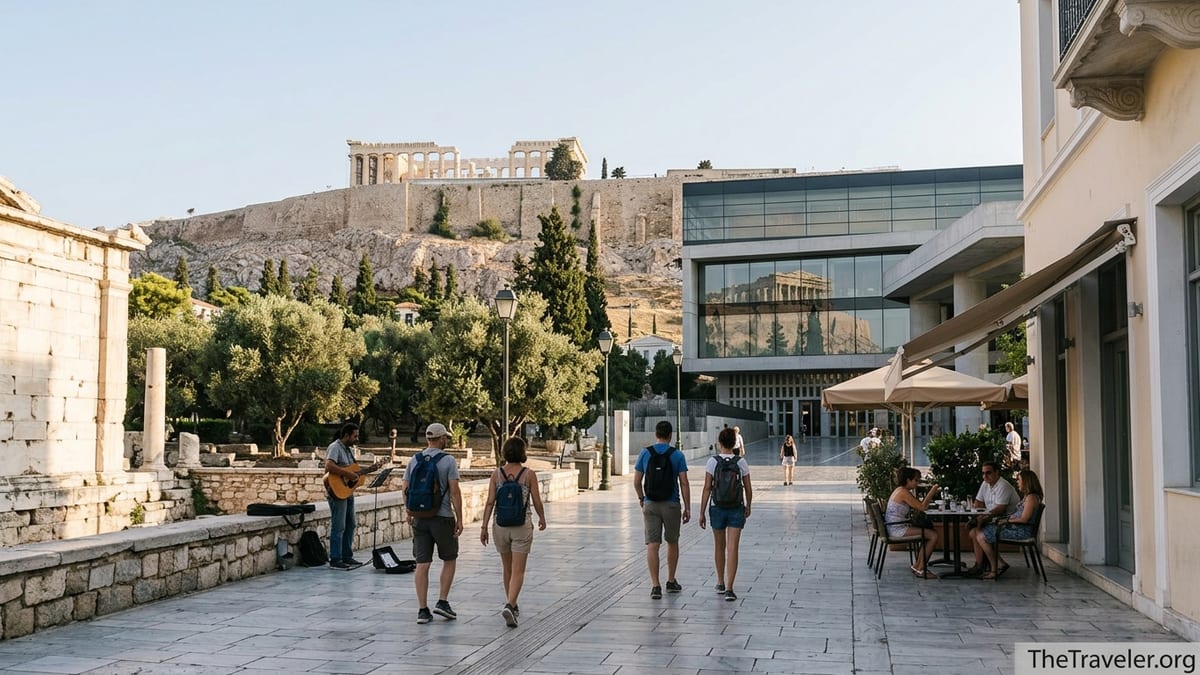
All of these sights are organised around Dionysiou Areopagitou, the broad pedestrian promenade that hugs the south side of the Acropolis hill. The Acropolis Museum sits near its eastern end at number 15, the South Slope and Theatre of Dionysus entrances open directly off it, and Plaka begins just a few minutes north, up gentle side streets. This geography is what makes it realistic to see so much on foot without feeling rushed.
A practical order for many travellers is to start at the Theatre of Dionysus and South Slope, continue up to the Acropolis summit, descend, take a substantial break at the Acropolis Museum and its café, then finish with an early evening wander and dinner in Plaka. With early opening times at the Acropolis and a museum that stays open into the evening on many days, this sequence keeps you in the shade and indoors during the hottest hours and on the rock itself in the cooler morning or late afternoon light.
In real terms, walking segments between these key points are short. From the Theatre of Dionysus entrance to the South Slope Acropolis gate is only a few minutes uphill, while the Acropolis Museum entrance is less than a five minute stroll along Dionysiou Areopagitou. From the museum to the heart of Plaka, expect around ten minutes on foot, depending on where you choose to enter the neighbourhood.
Starting Point: Theatre of Dionysus and the South Slope
The Theatre of Dionysus lies on the south slope of the Acropolis, a stone built fan of seating that once hosted the premieres of ancient Greek tragedies. You reach it via a clearly signed entrance from Dionysiou Areopagitou, close to where the pedestrian street meets Makrygianni Street and the Akropoli metro station. Arriving around opening time helps you enjoy the theatre’s worn marble seats and views up to the Parthenon before tour groups arrive.
Once inside, allow at least 30 to 45 minutes to explore the theatre and the associated South Slope ruins. The walking surfaces are uneven stone and compacted earth, so trainers or walking sandals with grip are preferable to thin soled shoes. Many travellers combine this visit on the same ticket as the Acropolis itself, purchasing either a single site ticket or, in busier months, a combined ticket that also covers other archaeological sites in Athens. Prices and combinations tend to change from season to season, so it is worth checking current options when you buy.
From the theatre, paths lead gently uphill past surviving seating tiers and the foundations of stage buildings. As you continue, you pass other South Slope highlights, such as the remains of the Stoa of Eumenes and, further west, the lofty stone shell of the Odeon of Herodes Atticus. These structures are included within the general South Slope and Acropolis archaeological area, so you simply keep walking on the internal path network without exiting and re-entering through different gates.
Because the South Slope is often quieter than the Acropolis plateau, it offers a good opportunity to absorb the setting. Archaeologists consider this the original theatrical and religious district of classical Athens, and visiting it first gives context to the sculptures and architectural fragments you will see later in the Acropolis Museum’s glass cases and on its top floor Parthenon Gallery.
Climbing to the Acropolis Summit from the South Side
The most convenient entrance to the Acropolis from this walking route is the South Slope or side entrance, situated a short walk uphill from the Theatre of Dionysus along marked internal paths. This gate connects directly to the pedestrianised Dionysiou Areopagitou below and is typically less congested than the main west entrance when it opens, which can save you queuing time.
The climb from the South Slope to the Propylaea, the monumental gateway to the Acropolis plateau, is steady rather than steep, but the combination of smooth marble and summer heat can make it feel more demanding. Many visitors take about 20 to 30 minutes to walk from the South Slope entrance area to the Parthenon itself, including pauses for photos of the city unfolding below. If you start this ascent before mid-morning, you will appreciate slightly cooler temperatures and softer light on the ruins.
At the top, the classic circuit around the Parthenon, Erechtheion and other temples typically takes at least an hour, often longer for those who enjoy reading interpretive panels and taking photographs. From various points on the plateau you can look back down to the Theatre of Dionysus and across to the modern glass and concrete volumes of the Acropolis Museum, which sits about a few hundred metres away on the south side. This visual link between the open air ruins and the museum you will visit later underscores how closely the two experiences are connected.
After exploring the summit, many travellers prefer to descend again by the South Slope path rather than exiting via the main western gate. This brings you back down towards Dionysiou Areopagitou and positions you ideally for a break either in the shade of the promenade’s trees or inside the climate controlled Acropolis Museum just along the street. It also avoids the sometimes dense crowds and coach traffic that gather around the main exit.
From Acropolis Gates to the Acropolis Museum Entrance
Once you exit the archaeological zone through the South Slope gate near the Theatre of Dionysus, the Acropolis Museum is almost directly ahead of you, across Dionysiou Areopagitou. The museum’s main entrance sits on a paved forecourt at number 15, with shallow steps and ramps leading up from the promenade and from the Akropoli metro exit on Makrygianni Street just beside it.
This short stretch of Dionysiou Areopagitou is one of the most pleasant urban walks in Athens. Street musicians often play near the museum forecourt, while local vendors sell bottled water, sun hats and postcards. Despite the tourist presence, the street feels more like a pedestrian park than a commercial strip, with pale stone paving, benches under trees and unobstructed views back to the Acropolis rock above.
Before entering the museum, consider a brief pause on the forecourt where glass panels in the paving reveal excavated remains of an ancient neighbourhood directly beneath the building. These foundations, preserved in situ, connect the exhibits you are about to see with the everyday houses and streets of classical Athens. If you need a quick refreshment before your museum visit, the ground floor café inside offers takeaway coffees and bottled water at prices similar to mid range Athenian cafés, which is often a better value and quality than kiosk drinks along busier tourist streets.
The museum requires a separate ticket from the Acropolis archaeological site. While standard adult prices can vary slightly by season, they are typically comparable to entry fees at other major European archaeology museums. Morning and late afternoon tend to be the quieter times, though visiting in the early afternoon can also work well if you are primarily seeking an air conditioned refuge after a hot morning on the rock above.
Making the Most of the Acropolis Museum and Its Cafés
Designed specifically to display finds from the Acropolis and its slopes, the Acropolis Museum occupies several levels with large glass walls that frame the monuments outside. Visitors usually begin on the ground floor with artefacts from the slopes and sanctuaries, including pieces excavated from the very Theatre of Dionysus and South Slope you have just walked through. This continuity helps make sense of the scattered blocks and column drums you saw earlier in the day.
Most travellers spend at least one and a half to two hours inside the museum, though enthusiasts can easily fill half a day. The first floor Archaic Gallery, with its free standing statues lit by natural light, and the top floor Parthenon Gallery, laid out in the same footprint as the temple itself, are particular highlights. From this upper level, floor to ceiling windows provide some of the best modern framed views of the Parthenon and the city below, especially in late afternoon light when the marble glows softly.
The museum also functions as one of the city’s most reliable café and restaurant stops. A ground floor café serves coffee, light snacks and desserts, while an upper floor restaurant offers sit down meals with indoor and terrace seating and direct views of the Acropolis. While prices are higher than in backstreet neighbourhood cafés, many visitors find the combination of view, air conditioning and quality worth the premium compared to some Plaka eateries that cater purely to passing trade.
If you are planning this walking route in summer, consider timing your main meal for the museum restaurant rather than in the middle of the afternoon heat in Plaka. A leisurely lunch in the cool interior, followed by a final pass through any museum sections you missed, sets you up well for an early evening wander when the streets around the Acropolis calm slightly and temperatures drop.
Continuing on Foot into Plaka
From the Acropolis Museum, reaching Plaka on foot is straightforward. Exit the museum onto Dionysiou Areopagitou, turn left and walk a short distance before taking one of the narrow streets that angle gently uphill towards the north side of the Acropolis rock. Within about ten minutes you transition from the broad pedestrian promenade into a maze of lanes lined with neoclassical houses, small churches and café terraces.
Plaka is sometimes described as a village inside the city, and on this walking route it serves as a relaxed finale after the more structured visits to ruins and museum galleries. You will find an abundance of tavernas offering familiar dishes such as souvlaki and moussaka, but for a more local feel look for smaller places on side streets rather than the large terrace restaurants on the main squares. Quiet corners near the edge of Plaka, where the houses climb towards the Anafiotika area, can offer a more atmospheric setting for a coffee or early dinner.
Café culture is strong here, and many visitors choose a spot based on a combination of shade, view and menu. Prices for a Greek coffee or iced espresso in Plaka are usually a little higher than in residential districts of Athens, but still reasonable by major European capital standards. Choosing a café slightly away from the busiest thoroughfares can mean more relaxed service and better chances of sharing the space with Athenians as well as fellow visitors.
If you have energy left, wandering the upper fringes of Plaka near the Anafiotika district rewards you with glimpses back towards the Acropolis and down over the city. These lanes can be steep and paved with smooth stone, so tread carefully, especially after a full day on your feet. From almost anywhere in Plaka, you can eventually work your way back down towards Syntagma or Monastiraki on foot, or return to the Akropoli metro via signed streets if your accommodation lies elsewhere.
Choosing and Timing Your Café and Meal Stops
One of the strengths of this walking itinerary is that it builds in natural pauses at cafés and restaurants so you are not simply marching from sight to sight. A common pattern is to grab a quick breakfast or coffee near the Theatre of Dionysus entrance, break for a more substantial snack or lunch at the Acropolis Museum café or restaurant, and then settle into a longer café or taverna stop in Plaka as the day cools.
Near the starting point, streets around the Akropoli metro station and Makrygianni area host several small bakeries and cafés where locals pick up koulouri rings, cheese pies and takeaway coffees on their way to work. Stopping at one of these before you begin your ascent to the South Slope and Acropolis gives you sustenance without taking too much time from your sightseeing schedule. Expect to pay only a few euros for a pastry and coffee at these more everyday venues.
Inside the Acropolis Museum, the ground floor café is well suited to shorter stops, such as a mid morning iced coffee and slice of cake between the South Slope and your deeper exploration of the galleries. The upstairs restaurant, with its terrace facing the Parthenon, lends itself to slower meals. Reservations can be useful in peak season, especially if you want an outdoor table, but walk ins often find space at off peak hours.
In Plaka, prices and quality vary widely from one establishment to the next, even along the same street. Many travellers find that smaller tavernas tucked along quieter alleys or in small squares feel more personal than the rows of restaurants along the main pedestrian arteries. Looking for places with a mix of Greek and foreign voices at the tables, rather than exclusively tour groups, is a simple way to increase your chances of a satisfying meal.
The Takeaway
Linking the Theatre of Dionysus, the South Slope ruins, the Acropolis summit, the Acropolis Museum and Plaka into a single walking route is not only feasible but rewarding. By following Dionysiou Areopagitou as your spine and planning your day around the natural rhythm of sightseeing and café breaks, you can experience a cross section of ancient and modern Athens without relying on any transport other than your own feet.
Starting at the Theatre of Dionysus grounds your visit in the dramatic and religious life of ancient Athens before you climb to the iconic temples above. Descending to the Acropolis Museum then adds context and detail in a cool, carefully curated environment, while the final hours in Plaka invite you to slow down, wander and taste contemporary city life. Along the way, thoughtful choices about when and where to pause for coffee and meals help turn a busy day of sightseeing into a more balanced and memorable experience.
For travellers with only one full day in the city, this itinerary offers a structured yet flexible framework. You can shorten or extend museum time, adjust café stops based on weather and energy levels, and adapt your Plaka wanderings to your interests, whether that is quiet side streets, rooftop views or simply people watching in a shady square. However you customise it, this south side to Plaka loop is one of the most efficient ways to immerse yourself in Athens on foot.
FAQ
Q1. Can I realistically visit the Theatre of Dionysus, Acropolis, Acropolis Museum and Plaka in one day?
Yes, most visitors who start early and keep a steady but unhurried pace can comfortably visit all four in one day, especially since the walks between them are short.
Q2. Where should I start this walking route?
A practical starting point is the Theatre of Dionysus entrance on Dionysiou Areopagitou, close to the Akropoli metro station, so you visit the South Slope first and then continue upward.
Q3. Is the South Slope entrance to the Acropolis less crowded than the main gate?
Often it is, particularly first thing in the morning, which is why many travellers prefer to begin their climb from the South Slope gate after seeing the Theatre of Dionysus.
Q4. How long should I allow for the Acropolis Museum?
Plan for at least one and a half to two hours for a meaningful visit, longer if you enjoy reading detailed labels or taking a break in the museum café or restaurant.
Q5. Do I need separate tickets for the Acropolis and the Acropolis Museum?
Yes, the Acropolis archaeological site and the Acropolis Museum are managed separately, so you need a ticket for each, though combined or seasonal options may sometimes be available.
Q6. What footwear is best for this walking route?
Closed shoes or sturdy walking sandals with good grip are recommended because the paths on the Acropolis and South Slope include worn marble, loose gravel and sloping stone steps.
Q7. Are there good café options along the way, or only at the end in Plaka?
You will find cafés near the Akropoli metro at the start, inside the Acropolis Museum for mid route breaks, and many additional choices throughout Plaka at the end of the walk.
Q8. Is this route suitable for travellers who prefer to avoid steep climbs?
The climb to the Acropolis summit is gradual but involves uneven surfaces and some steps, so travellers who strongly wish to avoid climbs might prefer to focus on the South Slope, museum and Plaka only.
Q9. Can I do this walk in the afternoon instead of the morning?
Yes, but in warmer months it is more comfortable to visit the Acropolis itself in the morning or late afternoon, using the hottest hours for the air conditioned Acropolis Museum.
Q10. How do I return to my hotel from Plaka at the end of the route?
From Plaka you can either walk to central squares like Syntagma or Monastiraki for metro connections, or loop back towards the Akropoli station near where the walk began.