


For many first-time visitors to Greece, the trip begins and ends in Athens or on the islands. Yet Thessaloniki, Greece’s relaxed northern port on the Thermaic Gulf, offers an easy, walkable introduction to the country with deep history, famous food and a waterfront that quickly wins over jet-lagged travelers. This guide focuses on practical details and real examples to help you make the most of a first stay in Thessaloniki and in Greece overall.
Get the latest updates straight to your inbox!
What and Where Is Thessaloniki?
Thessaloniki is Greece’s second-largest city and the capital of the northern region of Central Macedonia. It sits on the Thermaic Gulf of the Aegean Sea, roughly 500 kilometers north of Athens. For first-time visitors, that means cooler summers than southern Greece, a strong local character, and fewer package-tour crowds than in the islands. The city combines seaside promenades with Roman ruins, Byzantine churches and Ottoman-era walls in a compact urban core.
Most international travelers arrive at Thessaloniki Airport “Makedonia,” about 15 kilometers southeast of the center. A dedicated airport bus line, usually numbered 01X by day and 01N at night, connects the terminal with downtown in around 40–50 minutes depending on traffic. Tickets typically cost about 2 euros per person, purchased from a kiosk or on board. Taxis line up outside arrivals and usually charge a fixed or meter-based fare; expect something in the region of 20–30 euros to central neighborhoods, more late at night or on holidays.
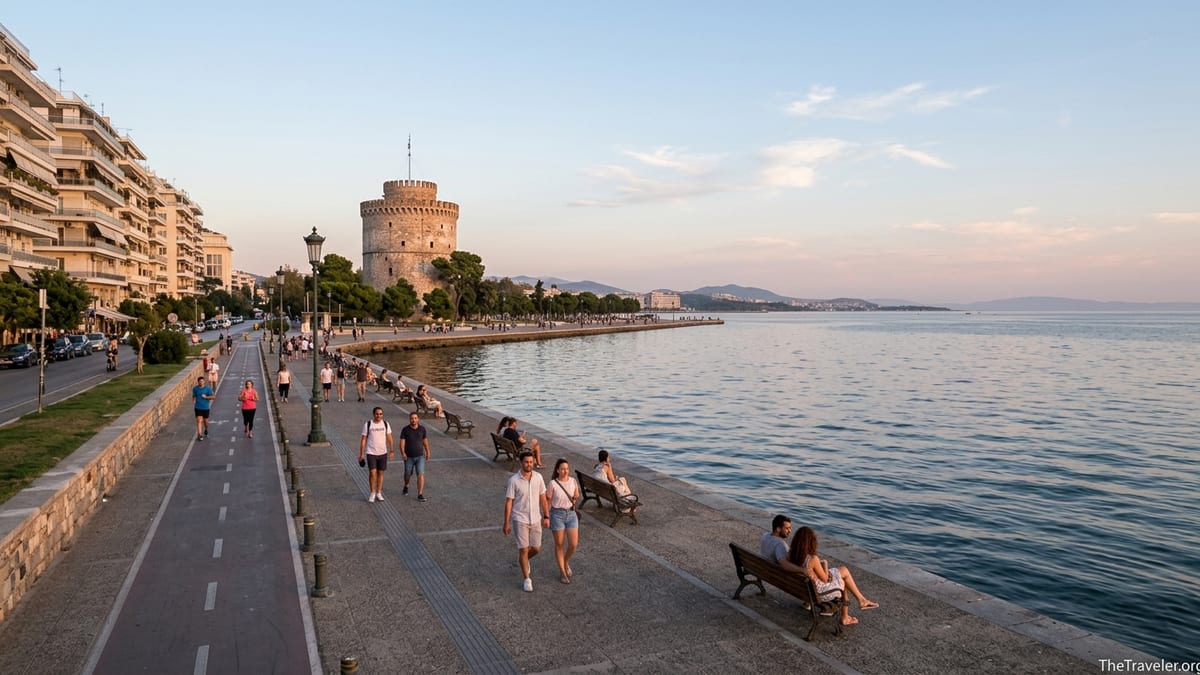
Geographically, the city is easy to picture in layers. At sea level is the long waterfront, with its bike path and modern apartment blocks. Just behind it lie the main commercial streets and key squares, such as Aristotelous Square and Plateia Navarinou. Climbing uphill to the north you reach Ano Poli, the “Upper Town,” with cobblestone alleys and views. Most first-time visitors spend their days somewhere within this vertical slice, rarely needing a car.
Thessaloniki’s position also makes it a good base for exploring northern Greece. The beach towns of the Thermaic Gulf lie to the south and southeast, while the three peninsulas of Halkidiki, the royal tombs of Vergina and the wine country near Naoussa can all be reached on organized day trips or by rental car. If you are planning a longer Greece itinerary, Thessaloniki works well as a first or last stop blending city comfort with an introduction to the region.
Essential Sights and Neighborhoods
Thessaloniki does not have one single “must-see” monument that dominates the skyline in the way the Acropolis does in Athens. Instead, the appeal lies in a chain of walkable sights layered through the center. A logical starting point is the White Tower, the round 15th-century fortification that has become the symbol of the city. It stands directly on the waterfront and houses a small museum. Climbing the spiral stairs to the top gives you a panoramic view of the sea, the promenade and the red-tiled roofs stretching inland.
From there, many visitors follow the waterfront or nearby streets toward Aristotelous Square, the main open plaza framed by curved neoclassical buildings. Cafes here charge a little more than side streets but remain popular with locals, especially for a late-morning coffee. A standard Greek coffee or cappuccino freddo might cost around 3–4 euros when seated. From the square you can walk a few minutes inland to find the Roman Forum, also called the Ancient Agora, where excavated ruins sit below street level, and further east to the Arch of Galerius and the Rotunda, impressive remains from the late Roman period.
One of the most atmospheric neighborhoods for a first stroll is Ano Poli, the Upper Town that survived the devastating 1917 fire and kept much of its older street pattern. You can reach it on foot if you are comfortable with steep hills, or catch a taxi from the center for about 6–8 euros depending on distance. Once there, you can wander between small houses with overhanging upper floors, see sections of the Byzantine walls and visit points such as Trigonion Tower for wide views over the bay. Many travelers pair a visit with sunset drinks or dinner at a taverna with a terrace.
Ladadika, near the old port, is the other essential district for visitors. Once a warehouse and oil-trading area, its low pastel buildings have been restored and now house tavernas, meze restaurants, tsipouradiko bars and small clubs. In the early evening, families eat grilled octopus and fried calamari at outdoor tables; later on, students and visitors fill the bars. This is an ideal place to sample local dishes on a first night, since menus are usually available in English and staff are used to explaining the options to newcomers.
Waterfront Strolls, Food and Nightlife
Thessaloniki’s waterfront is where many travelers fall for the city. Starting near the old harbor, a paved promenade runs along Nikis Avenue past the White Tower toward the “New Waterfront,” a string of modern themed parks. Walking this entire length from the docks to the Thessaloniki Concert Hall can take 45–60 minutes at an easy pace. Along the way you pass benches, runners, street performers and the famous sculpture of umbrellas on the seafront. Even in winter locals come here for a daily “volta,” or stroll, usually with a takeaway coffee in hand.
Food is a highlight and an important part of understanding local life. Thessaloniki has been recognized nationally for its gastronomy, and you feel it in the variety of bakeries, tsipouradika and modern bistros. A typical first morning might begin with bougatsa, a flaky pastry filled with cream or cheese, from a neighborhood bakery on Egnatia Street. Expect to pay roughly 2–3 euros for a generous slice. For lunch, you might try a gyros pita from a grill house near Navarinou Square, where a well-filled wrap with pork or chicken, fries and sauce often costs around 3–4 euros. At dinner, tavernas in Ladadika or around Athonos Square offer shared meze dishes: grilled sardines, fava puree, fried zucchini and local sausages. A table of two might pay 30–45 euros for several plates, a salad, dessert and a carafe of house wine.
Nightlife in Thessaloniki tends to start late. Many bars in Ladadika, Valaoritou Street and the side streets off Tsimiski begin to fill after 10 or 11 at night, especially Thursday to Saturday. A basic beer at a bar might range from 4–6 euros, while cocktails usually fall between 8 and 12 euros depending on the venue. Rooftop terraces and bars on Valaoritou attract a younger crowd, while wine bars near Aristotelous Square and along the seafront cater to those who prefer a quieter drink. In summer, some of the nightlife shifts to beach clubs on the outskirts and along the coast, where DJs play until sunrise.
First-time visitors who prefer a calmer evening can experience the nightlife simply by joining the promenade. Buying a gelato or a paper cone of lukumades, small fried dough balls with honey, from a stand and sitting by the water is as local as any bar. During big football matches, especially when local club PAOK plays, you may feel the city’s energy raise a notch, with fans gathering in cafes to watch the game. If you are sensitive to noise, check match schedules when choosing a hotel near major squares.
Where to Stay and How to Get Around
For a first visit, most travelers choose to stay within or just around the historic center. The rectangle formed roughly by the port, the White Tower, and two or three blocks north of Egnatia Street keeps you within easy walking distance of major sights. In this area you will find everything from simple guesthouses above shops to international chains and well-known local hotels. Seafront properties along Nikis Avenue and near the White Tower often charge higher rates per night but give you balcony views over the bay and immediate access to the promenade.
As an example, a mid-range hotel one or two blocks from Aristotelous Square might offer double rooms in the range of 90–140 euros per night in high season, including breakfast. Simpler pensions or apartments in streets behind Egnatia could fall closer to 60–90 euros depending on the time of year. In contrast, larger full-service hotels on the western edge of the center or closer to the train station sometimes offer competitive rates for bigger rooms, but you will walk a bit more to reach the waterfront. Travelers with early flights may choose to stay one night near the airport, where several business-style hotels and international chains cluster within a 10–15 minute taxi ride of the terminal.
Within the city, public transport is primarily by bus while the new metro lines gradually open and expand. For most visitors staying centrally, buses are mainly useful for reaching the upper parts of the city, the train and intercity bus stations, or nearby seaside suburbs. Single tickets for regular urban buses generally cost a bit over 1 euro when bought from kiosks, slightly more if purchased on board. The airport line, at around 2 euros, is a separate category. Taxis are plentiful and relatively affordable compared with many Western European cities. Short rides within the center often cost 4–7 euros. It is customary to round up to the nearest euro or add a small tip if the driver helps with luggage.
Thessaloniki’s core, though, rewards walking. The distance from the train station in the west to the White Tower in the east is roughly 3 kilometers, and many of the most atmospheric streets between Tsimiski, Egnatia and the waterfront are pedestrian-friendly. Good walking shoes are important because sidewalks can be uneven and some curbs are high. In recent years, bicycle and e-scooter rentals have appeared along the seafront, which can be a pleasant way to cover longer stretches of the waterfront path. Helmets are not always provided, so more cautious travelers may prefer to stick to walking or taxis at night.
Safety, Practicalities and First-Time Greece Tips
Thessaloniki is generally considered a safe city for visitors, and recent assessments from both local and foreign sources describe crime levels against tourists as relatively low compared with many big European cities. The most common issues are petty theft, such as pickpocketing on crowded buses or in busy pedestrian areas, and the occasional late-night scuffle near busy nightlife zones. Keeping your phone secure, not leaving bags unattended on chair backs, and using a money belt or cross-body bag with zippers reduce most risks.
Solo travelers, including women, often report feeling comfortable walking in central areas until late, especially on main avenues and the waterfront where there are always people around. As a rule of thumb, if a street looks very dark, empty and residential, consider choosing a better-lit parallel route at night. Taxis hailed from official ranks or booked by phone or app are generally considered the safest late-night option after bars close. When using buses, staying alert near doors and keeping bags in front of you is wise, particularly on the airport line and other busy routes.
For first-time visitors to Greece, a few practical habits make the trip smoother. Cash is less critical than in the past, as contactless cards and mobile payments are widely accepted in supermarkets, chain cafes and many restaurants. However, you should still carry some euros in small denominations for kiosks, small bakeries, buses and beach umbrellas. Tipping is appreciated but not mandatory: leaving 5–10 percent at a taverna, rounding up taxi fares or adding a euro for good service is common practice. In casual spots where you order at the counter, you might simply leave coins in the tip jar.
Daily rhythms can feel different to visitors from northern Europe or North America. Many smaller shops close in the afternoon for a break and reopen later, especially outside major malls or tourist zones. Dinner rarely starts before 8 or 9 p.m. in local restaurants, and in summer it is normal to sit down even at 10 p.m. without rushing. Learning a few basic Greek words, such as “kalimera” for good morning and “efharisto” for thank you, is appreciated, though staff in central hotels, larger restaurants and tourist-frequented cafes usually speak at least some English. Finally, remember that smoking is still common, particularly on outdoor terraces; if you are sensitive, ask for non-smoking areas when available.
Beaches and Easy Day Trips Near Thessaloniki
Although Thessaloniki itself does not have a central city beach suitable for swimming, several seaside suburbs and nearby coastal towns make for relaxing half-day or full-day escapes. South of the city, across the bay, lie beaches such as Peraia, Neoi Epivates and Agia Triada. These spots are popular with locals for a quick dip and a seafood lunch. In summer, buses run from the city or you can take a taxi or rental car. The drive from the center to Peraia, for example, is roughly 30–40 minutes depending on traffic. Once there, you will find long sandy stretches with sunbeds and umbrellas managed by beach bars, where you typically pay either a small fee or simply order drinks and snacks in exchange for using the facilities.
Further along the coast, places like Epanomi and Nea Michaniona offer a more low-key atmosphere. Epanomi in particular is known among local residents for clear waters and a slightly wilder setting, with sand dunes and views back toward the city. These areas are easier to reach with your own car, and visitors often combine a beach day with a seafood meal at a taverna on the waterfront. Prices for sunbed sets can vary; as a rough guide, two loungers and an umbrella might cost anywhere from 5 to 15 euros for the day, or be free with a minimum spend at some beach bars. Always check the arrangement when you arrive, since it can change year by year.
For many first-time visitors, the three peninsulas of Halkidiki, about one to two hours’ drive south of Thessaloniki, are the ultimate beach goal. Numerous agencies in the city center advertise day trips to well-known resorts and beach bars on the first peninsula, Kassandra, or to quieter coves on Sithonia, the second. These tours typically include coach transport, several hours of free time on a beach and sometimes a stop in a traditional village. Prices vary widely depending on group size and inclusions but often fall somewhere in the range of 40–80 euros per person. If you are comfortable driving abroad, renting a car for a day or two in Thessaloniki can work out economical for couples or groups and gives you the flexibility to explore multiple beaches.
Beyond beaches, there are cultural day trips worth considering. Organized excursions to Vergina, the archaeological site associated with the royal tombs of ancient Macedon, depart regularly from Thessaloniki and help first-time visitors connect the city’s museums with the wider history of northern Greece. Wine tours to the Naoussa or Halkidiki regions introduce local varieties such as Xinomavro and Malagousia. These trips typically include transport, tastings and sometimes lunch, and are easily arranged through hotel desks or agencies near Aristotelous Square. If you have three or more days in Thessaloniki, adding at least one such excursion can deepen your sense of place.
First-Time Itineraries and Greece-Wide Planning
Many first-time visitors wonder how long to stay in Thessaloniki. Two full days is enough to see the major sights at a relaxed pace: one day for the waterfront, White Tower, Roman and Byzantine sites and city museums, and another for Ano Poli, Ladadika and an evening along the promenade. With three or four days, you can add a beach outing or a nearby cultural excursion without feeling rushed. Some travelers pair Thessaloniki with a week in Halkidiki or on an island, while others connect by train or domestic flight to Athens and the rest of Greece.
When planning your Greece itinerary, consider logistics and season. Thessaloniki can be an excellent entry point in spring and autumn, when temperatures are milder and crowds are thinner than in the Aegean islands. A sample 10-day trip for a first-time visitor might look like this: arrive in Thessaloniki, spend three nights exploring the city and a nearby beach, then travel south for four nights in Halkidiki or another coastal region, and finish with three nights in Athens before flying home. Low-cost carriers often connect Thessaloniki with other European cities directly, which can simplify open-jaw tickets where you arrive in one city and depart from another.
If you are not used to Mediterranean travel, budget planning for Greece might involve more meals out than at home, since self-catering and takeout are less common for short stays. As a very rough reference, a frugal traveler staying in a simple guesthouse, taking buses and eating at casual tavernas might aim for a daily budget from 60–90 euros excluding flights, while those choosing comfortable hotels, taxis and a mix of tavernas and trendier restaurants could easily spend 120–200 euros per day. Island-hopping often increases costs due to ferries and higher accommodation prices, which is one reason Thessaloniki and northern Greece appeal to budget-conscious first-timers.
Finally, think about travel documents and connectivity. Greece is part of the Schengen Area, so visitors from many countries receive a 90-day stay limit within a 180-day period across participating states; check current entry rules for your passport well before travel. For mobile data, most European Union sim cards work at domestic rates, while visitors from elsewhere can buy prepaid local sim cards at airport kiosks or in the city. Many cafes and hotels in Thessaloniki offer free Wi-Fi, which makes it easy to navigate on foot using map apps, check bus directions and translate Greek-language signs or menus as you explore.
FAQ
Q1. Is Thessaloniki a good choice for my first trip to Greece?
Yes. Thessaloniki is compact, walkable and less overwhelming than Athens, yet it offers rich history, excellent food, a lively seafront and easy day trips to beaches and nearby sights.
Q2. How many days should I spend in Thessaloniki on a first visit?
Plan on at least two full days to see the main sights and enjoy the waterfront. Three or four days allow time for a beach outing or a cultural day trip without rushing.
Q3. How do I get from Thessaloniki Airport to the city center?
The airport is linked to downtown by a direct bus line that runs day and night and costs around 2 euros per person. Taxis and pre-booked transfers are faster and cost more but are convenient if you arrive late or carry heavy luggage.
Q4. Which neighborhood is best to stay in for first-time visitors?
Staying near Aristotelous Square, the waterfront or between Tsimiski and Egnatia Streets keeps you close to major sights, restaurants and bus routes. These areas are lively, central and well suited to short stays.
Q5. Do I need a car in Thessaloniki?
No car is necessary for exploring the city itself, which is largely walkable and supported by buses and taxis. Renting a car is useful only if you plan independent day trips to beaches or countryside outside the standard tour routes.
Q6. Is Thessaloniki safe at night?
Central Thessaloniki is generally safe, with many people out late on the waterfront and in nightlife districts. As in any city, keep valuables close, avoid poorly lit backstreets and use taxis for late-night journeys if you feel unsure.
Q7. What should I budget for meals in Thessaloniki?
A simple breakfast pastry and coffee may cost 5–7 euros, a gyros lunch 3–6 euros, and a sit-down taverna dinner with shared dishes and wine about 15–25 euros per person, depending on what you order.
Q8. Are there good beaches near Thessaloniki?
Yes. Seaside suburbs like Peraia, Agia Triada and Epanomi are reachable by bus, taxi or car and offer sandy beaches, beach bars with sunbeds and relaxed seafood tavernas.
Q9. Can I use credit cards everywhere?
Credit and debit cards are widely accepted in hotels, many restaurants and larger shops. Still, carry some cash for small bakeries, kiosks, buses and simple beach bars that may prefer or only take cash.
Q10. How does Thessaloniki fit into a wider Greece itinerary?
Many travelers start or end their trip in Thessaloniki, spending two to four nights there before heading to Halkidiki, the islands or Athens. Its airport and train links make it a practical and rewarding northern anchor for a first visit.