


More news on this day
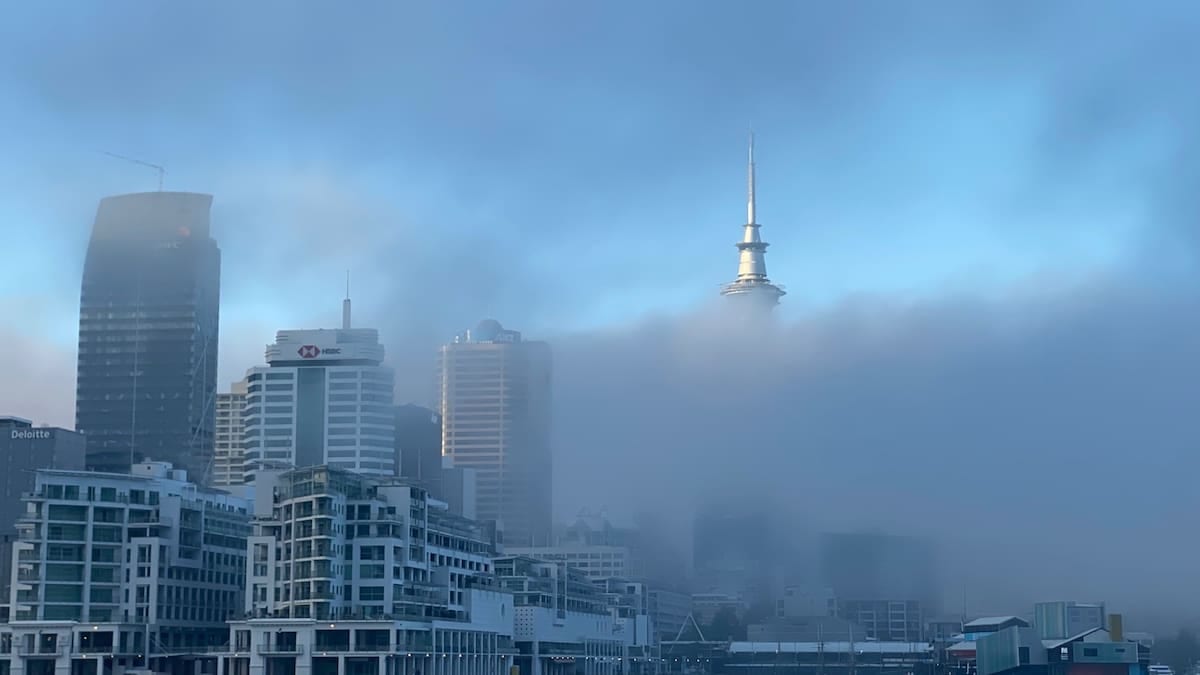
Thick sea fog known locally as taró blanketed Málaga Costa del Sol Airport on Friday, sharply reducing visibility and triggering widespread delays and cancellations for passengers heading to and from Spain’s busy Costa del Sol gateway.
Get the latest news straight to your inbox!
Visibility collapse slows operations at peak travel time
Flight tracking platforms and local media report that a dense bank of maritime fog settled over Málaga Airport early on 4 September, coinciding with the morning wave of departures and arrivals. The sudden drop in visibility forced the introduction of low-visibility procedures, significantly reducing the pace at which aircraft could land and take off.
Data compiled by specialist delay trackers indicates that average hold-ups climbed to around 50 minutes during the busiest hours, placing Málaga among the most heavily disrupted airports worldwide for part of the morning period. Reports indicate more than one hundred flights affected by delays, with a smaller number cancelled or diverted as schedules began to back up.
Local coverage notes that at least two Madrid services, one arrival and one departure, were cancelled as a direct result of the poor visibility over the runway complex. Additional services experienced extended taxi times and longer gaps between take-offs and landings while air traffic control worked within the stricter spacing required in fog conditions.
Spain’s state meteorological agency observation table for Málaga Aeropuerto showed relative humidity holding at or near 100 percent from the early hours through mid-morning, a pattern consistent with dense fog and mist directly over the airfield. Light winds and stable temperatures helped keep the taró in place over the coastal strip as the travel day began.
What is taró and why it hits Málaga in late summer
The fog affecting Málaga on Friday is part of a recurring coastal phenomenon in the region, widely known as taró. Local explainers describe taró as an advection sea fog that forms when very warm air passes over cooler surface waters in the Alboran Sea. The contrast encourages condensation close to the surface, building a low, dense cloud that can move quickly inland.
Meteorological commentators around Málaga note that the phenomenon is most common in the warm months, when high late-summer temperatures over land collide with comparatively cool sea temperatures just offshore. As light easterly or onshore breezes pick up, the fog bank drifts across the coastline, often engulfing beaches, port areas and, on days like this, the airport itself.
Local weather coverage highlights that taró episodes can refresh vegetation and temporarily lower coastal temperatures by several degrees, providing some respite during hot spells. At the same time, the same process creates serious visibility issues for drivers, mariners and aviation operations, particularly during the morning when the fog layer can be at its thickest.
Historical weather summaries for Málaga Aeropuerto indicate that fog and mist are regularly observed around the start of September, as the region transitions out of peak summer. The current event follows a pattern in which relatively rare but intense fog banks materialise a handful of days each month, with Friday’s episode among the more disruptive seen at the airport this season.
Passengers face rolling delays and potential knock-on disruption
For travellers, the taró translated into a morning of rolling, and often compounding, disruption. Once low-visibility rules were introduced, turnarounds slowed and aircraft arriving late were less able to depart again on time. That created a ripple effect across the schedule, as later flights inherited delays from earlier rotations.
Passengers on early departures from Málaga reported extended waits at gates while arriving aircraft circled or held on the ground before securing a stand. Others saw boarding paused as airlines awaited updated slot times. With some flights cancelled entirely, travellers on affected services were rebooked onto later departures or alternative routes where seats were available.
Although conditions remained calm at the airfield itself, the combination of longer queues and shifting departure boards meant a more stressful start to the final holiday weekend for many visitors. With Málaga serving more than 300 daily movements in the high season under normal conditions, any significant reduction in capacity can quickly translate into crowded terminals and limited options for same-day rerouting.
Travel data for the airport in recent weeks shows that typical delays at Málaga are usually measured in minutes rather than close to an hour, underscoring how sensitive the operation is to abrupt changes in weather. Friday’s taró pushed performance outside that usual range, highlighting the role of coastal fog as one of the few local weather hazards capable of materially slowing traffic at the Costa del Sol hub.
Fog expected to ease later but may linger along the coast
Regional weather blogs tracking the evolution of the fog report that the taró began forming offshore in the early hours of Friday, thickening rapidly before dawn. Observers in city neighbourhoods close to the shoreline described visibility dropping to the point where nearby buildings and landmarks were barely discernible.
Forecast discussions suggest that, as on previous occasions, the fog layer should gradually thin as the sun gains strength through the afternoon. However, local meteorologists caution that pockets of low cloud and mist could persist along parts of the coastline into the evening, particularly if winds remain light and onshore.
Further updates indicate that similar conditions could reappear over the coming days while the current air mass pattern continues. For the airport, this raises the possibility of additional bouts of reduced visibility during the early morning window, although the precise intensity and timing of any new taró episodes remain uncertain.
Travellers due to fly via Málaga over the weekend are advised, in publicly available travel guidance, to monitor their flight status closely on airline and airport channels before setting out. Given the scale of Friday’s disruption and the tightly scheduled nature of peak-season operations, residual knock-on delays cannot be ruled out even after skies begin to clear over the Costa del Sol.
Local context for a recurring coastal hazard
The taró event has also drawn fresh attention to the broader climate and operational context at Málaga Costa del Sol Airport. Preflight briefings and safety assessments used in the aviation sector already highlight fog among the weather factors that must be considered for approaches and departures, even at airports better known for sunshine than for low cloud.
Airport analysis material notes that Málaga typically records fog on a limited number of days each month, with the highest incidence from late summer into early autumn. For airlines and pilots, these conditions are well understood and procedures are in place to continue operating safely, albeit at a reduced rate that leads to delays when the timing coincides with busy traffic periods.
Local press features on taró emphasise that, despite the occasional disruption it causes for aviation and road traffic, the fog is a long-established element of Málaga’s coastal environment. Historical references point to traditional maritime communities using the term for generations to describe the same opaque, milky clouds that rolled across the harbour and beaches again this morning.
As the peak holiday season edges towards its close, Friday’s disruption offers a reminder that even destination airports associated with reliably fair weather can be vulnerable to short-lived but intense episodes of fog. When these align with the morning rush, as they did at Málaga, the impact can be felt far beyond the runway threshold, rippling across airline networks and travel plans across Europe.
https://www.theolivepress.es/spain-news/2026/09/04/malaga-airport-delays-costa-del-sol/
https://www.malagahoy.es/malaga/taro-tapa-costa-malaga-obliga_0_2007872896.html
https://www.aemet.es/en/eltiempo/observacion/ultimosdatos?datos=det&f=temperatura&k=and&l=6155A&w=0
https://malagapress.com/malaga-capital/taro-niebla-mar-montes-malaga