


More news on this day
The United States has lowered its overall travel advisory for Bangladesh to Level 2, signaling reduced nationwide concerns while retaining strong cautions for the Chittagong Hill Tracts and the volatile border area with Myanmar.
Get the latest news straight to your inbox!
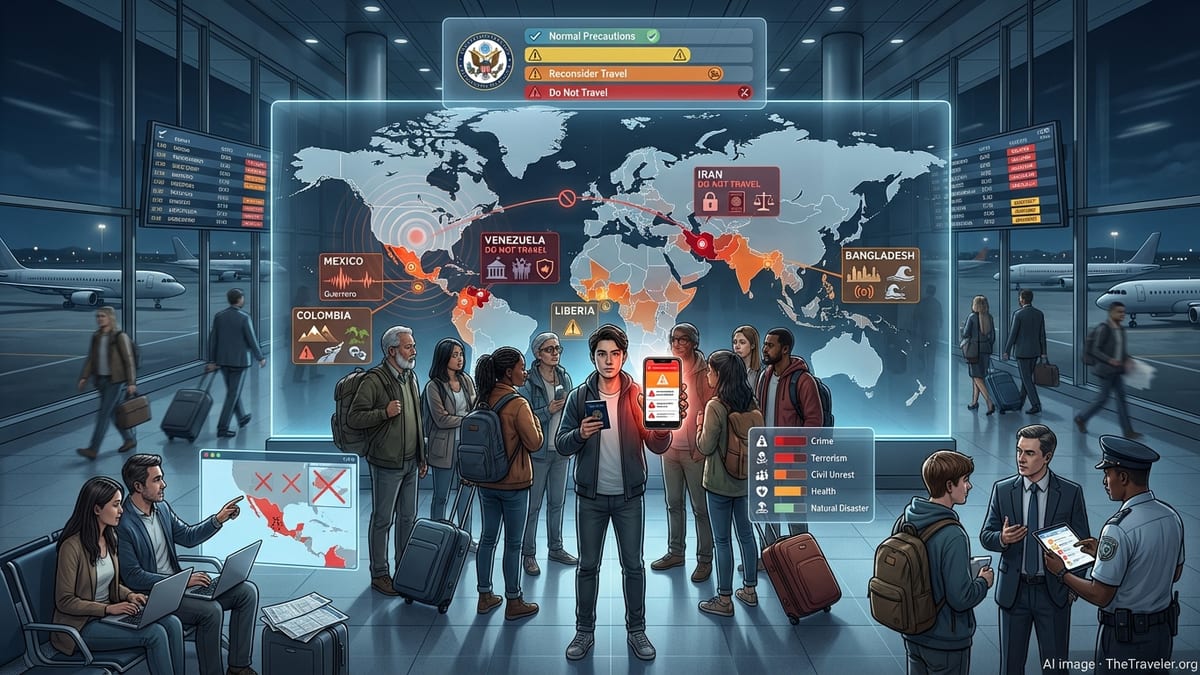
Shift From Broad Warning to Targeted Risk Assessment
The revised guidance moves Bangladesh from a more restrictive advisory to Level 2, described as a situation in which travelers are urged to exercise increased caution. Publicly available information from U.S. government sources indicates that this level is used when there are identifiable security, crime, health, or political risks, but not to the extent that travel is broadly discouraged.
The change represents a notable shift from earlier messaging that emphasized a higher degree of concern across the country. Recent advisory materials and summaries compiled by official platforms and secondary trackers highlight that the overall national risk profile is now assessed as more manageable for informed visitors, particularly in major urban centers and established tourist routes.
Analysts tracking government advisories note that the move is broadly in line with the way other Western governments have been fine tuning assessments for Bangladesh. While many retain cautious language about political tensions, crime, and periodic unrest, some have distinguished more clearly between Dhaka or other major cities and remote or conflict sensitive regions.
Chittagong Hill Tracts Remain Under Stringent Warnings
Despite the nationwide downgrade, the guidance for the Chittagong Hill Tracts remains significantly more restrictive. Advisory trackers summarizing the latest U.S. position continue to list this region as an area where travel is either strongly discouraged or not recommended at all due to unrest, crime, terrorism, kidnapping risk, and sporadic armed clashes.
The Chittagong Hill Tracts, encompassing the districts of Rangamati, Khagrachari, and Bandarban, have long been treated as a special case by foreign ministries. Travel risk assessments from several governments, including Australia, Canada, Germany, and New Zealand, similarly highlight this region as substantially higher risk than the rest of Bangladesh, citing a combination of political tensions, armed groups, and limited state presence.
Publicly available guidance frequently notes that access to parts of the Chittagong Hill Tracts may be controlled, with local authorities sometimes requiring advance permission for foreign visitors. Travel insurance providers and university risk offices also tend to classify the area at a higher risk tier than central and western Bangladesh, which can affect coverage and institutional travel approvals.
Persistent Concerns Along the Myanmar Frontier
The advisory update maintains particular attention on areas near the border with Myanmar, where regional instability continues to spill over. Reports from foreign ministries and consular services describe the frontier as unpredictable, citing cross border violence, refugee movements, and the potential for sudden security incidents.
Countries including Australia, Canada, and Germany continue to highlight the Bangladesh Myanmar boundary, especially parts of Cox’s Bazar district and adjacent zones, as sensitive. Public travel advice often urges travelers to avoid non essential movement close to the border, emphasizing that sudden closures, security operations, or localized clashes may occur with little notice.
Risk specialists note that the dynamics along this frontier are influenced both by developments inside Myanmar and by local tensions related to displacement and resource pressures. As a result, many governments separate their assessment of the border belt from their broader view of Bangladesh, even when overall country advisories are eased.
How Level 2 Affects Prospective Travelers
A Level 2 advisory typically signals that travel is possible for most visitors but requires heightened situational awareness. Official explanations from U.S. government information portals describe Level 2 as a state in which travelers should be alert to elevated risks and prepared to adapt plans if conditions change.
For Bangladesh, this means that visitors are now encouraged to pay close attention to local developments rather than avoid the country outright. Travel risk experts recommend monitoring political calendars for potential protests, following local news for updates on strikes or transport disruptions, and remaining aware of crime patterns in major cities.
Many institutional travel programs interpret a Level 2 rating as permitting travel with standard pre departure briefings, while student programs and corporate travel managers may still impose additional safeguards for specific neighborhoods or times of year. The standing higher warnings for the Chittagong Hill Tracts and the Myanmar border areas are likely to remain a barrier for organized tours and academic projects that had previously considered those regions.
Regional Context and Evolving Risk Landscape
The latest update places Bangladesh in a broad group of countries worldwide that share a Level 2 designation, ranging from popular tourist destinations to emerging markets with complex security environments. Comparative data compiled by public advisory lists shows that many countries with Level 2 status host significant numbers of international visitors but present recurring issues such as petty crime, targeted attacks, or political demonstrations.
In South and Southeast Asia, several destinations have experienced recent adjustments to their advisories as governments respond to changing security conditions, economic pressures, and traveler demand. Bangladesh’s downgrade to Level 2 aligns it more closely with nearby states that are viewed as broadly accessible but not risk free.
Observers of travel policy point out that such recalibrations do not remove underlying challenges, but they can influence traveler perceptions and commercial decisions. Airlines, tour operators, and international businesses often track advisory shifts when planning routes, marketing strategies, or staff deployments, even as they rely on their own security assessments.
For now, the message for travelers is a more nuanced one: Bangladesh is considered accessible for informed visitors who take reasonable precautions, while the Chittagong Hill Tracts and the Myanmar border zone remain flagged as areas requiring a substantially higher degree of caution or outright avoidance.